
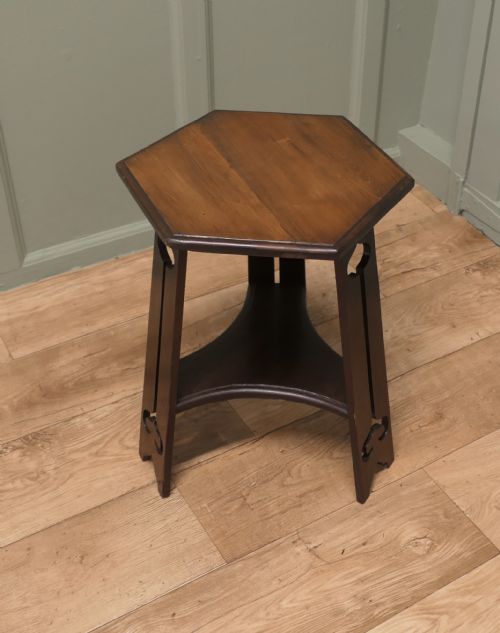

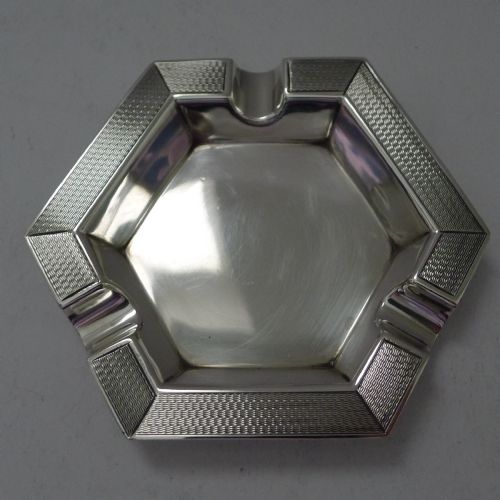
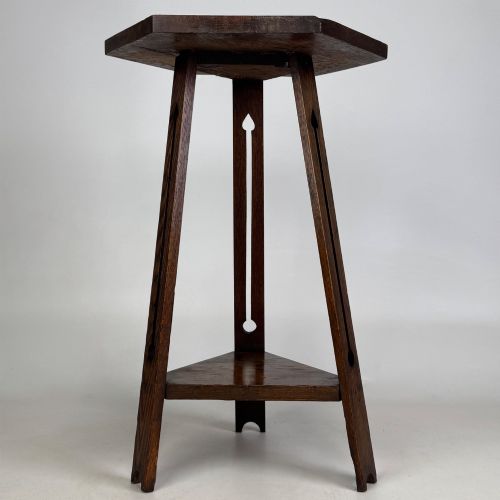
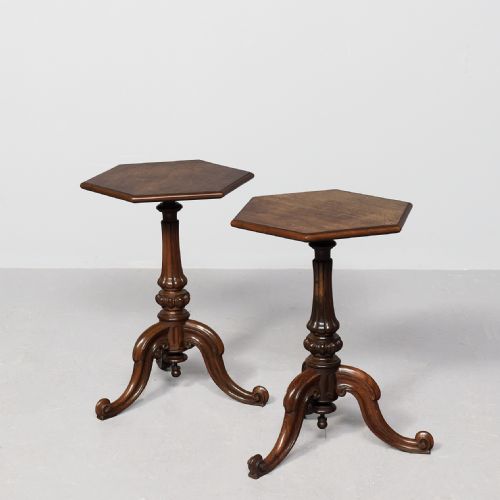
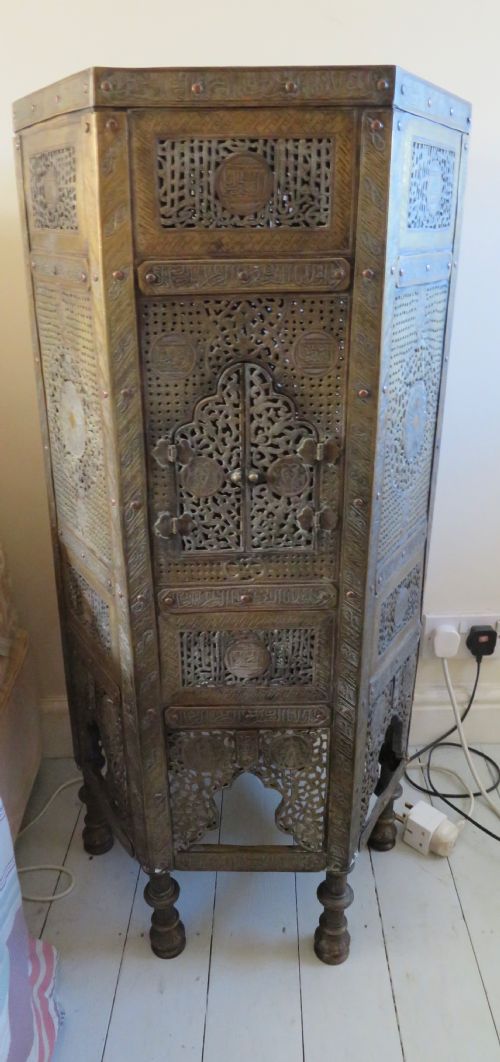


Antique Hexagonal Table
An antique hexagonal table brings six-sided symmetry and useful surface area to a room, ranging from inlaid Moorish designs to solid English oak.
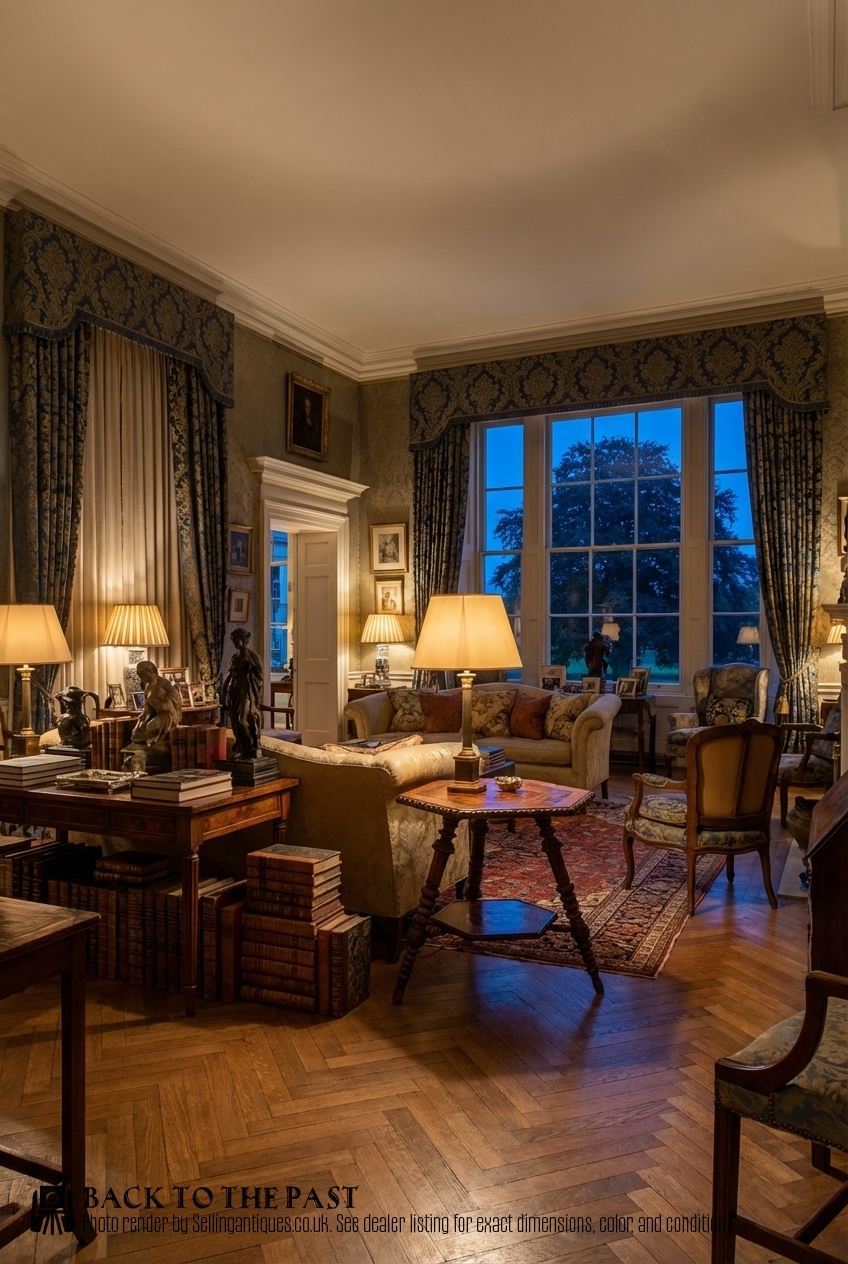
Antique Hexagonal Table
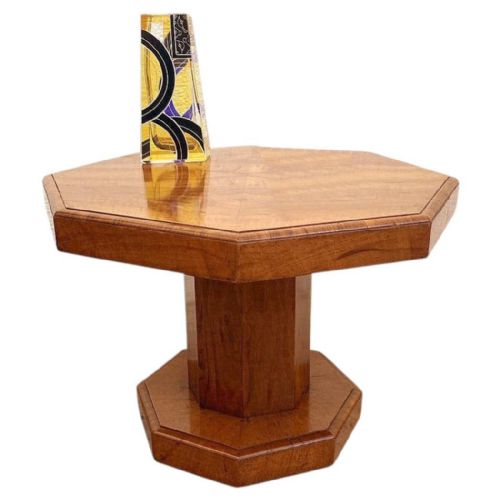
When you search for an antique hexagonal table, you encounter pieces designed primarily as occasional, side, or coffee tables, alongside specialised forms like games tables and plant stands. The six-sided format challenges makers to adapt traditional furniture plans into geometric shapes that fit easily beside seating or in corners.
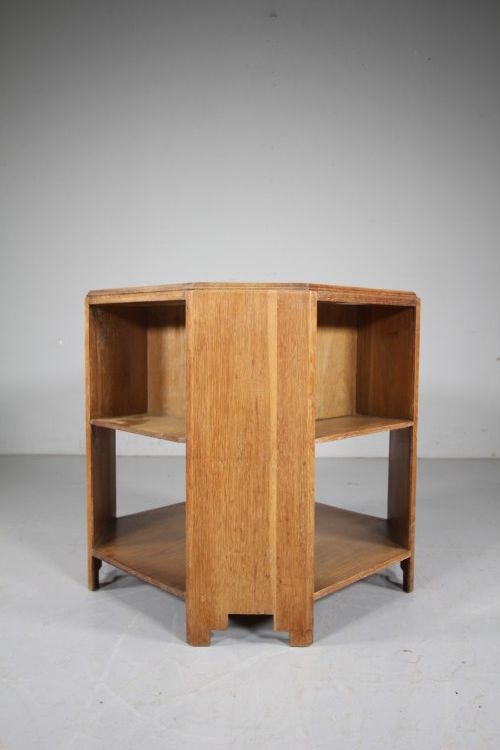
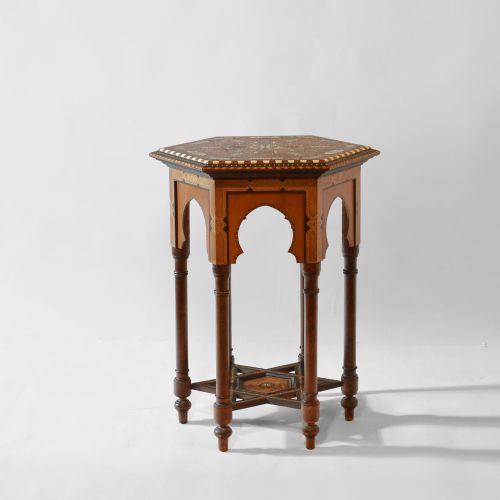
You are most likely to meet pieces originating from the nineteenth and early twentieth centuries, spanning Victorian, Edwardian, and Arts and Crafts aesthetics. British interpretations in mahogany, oak, and walnut sit alongside imported examples from Islamic workshops and the Far East.
The surviving selection includes both modest domestic furnishings and ambitious designs attributed to major retailers like Liberty and Co. Some examples rest on central pedestals, while others employ tripod supports or four turned legs.
Materials and Construction
Makers utilised a diverse palette of timbers, relying heavily on native hardwoods such as mahogany, walnut, and oak, alongside exotic woods like rosewood and pollard oak. These structural timbers provide the stable six-sided planes required for both plain surfaces and intricate decorative schemes.
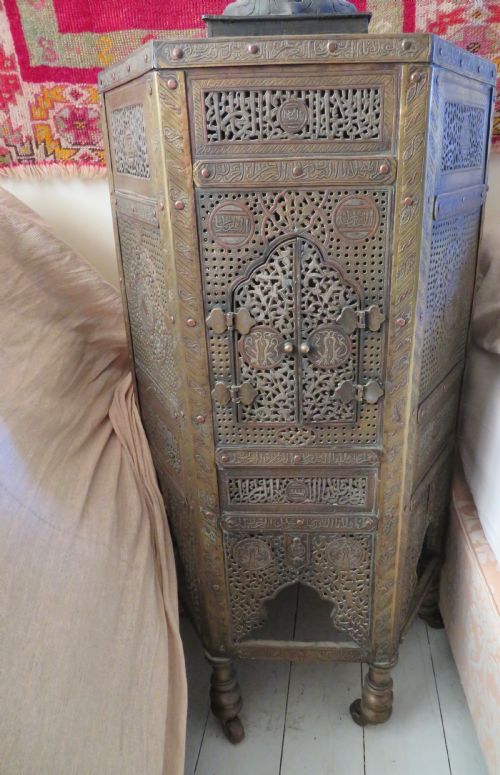
Decoration often involved elaborate inlay techniques, combining mother-of-pearl, white-metal, and copper into brass frames or dark wood bases, particularly in Moorish and Cairo-ware pieces. Joinery ranges from straightforward turned legs supporting solid tops to complex tilt-top mechanisms and pedestal cabinets.
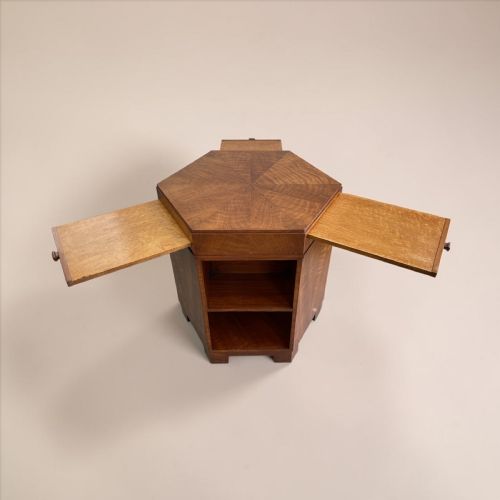
Some nineteenth-century tables include drop leaves or folding actions, proving that Victorian engineers loved a clever hidden trick.
The Distinction in Quality
Quality rests in the precision of the six-sided geometry and the integrity of the timber used for the top, where shrinkage or warping is readily apparent. Superior examples display seamless mitring and tight joints that maintain structural stability without relying on excessive glue.
In inlaid and decorative pieces, the standard is judged by the retention of the metal and mother-of-pearl elements within the wood or brass substrate. Finer items exhibit careful hand-carving and thoughtful selection of wood grain, whereas simpler domestic versions depend on straightforward turning and unadorned surfaces.
Gillows·Liberty and Co·William Neale
The Antique Hexagonal Table Glossary
- Kursi
- A low hexagonal table or stool originating from Middle Eastern traditions, typically heavily inlaid with metal and wood. These pieces serve primarily as occasional or coffee tables in modern interiors.
- Tilt-top
- A mechanism allowing the tabletop to pivot into a vertical position when not in use, saving space and displaying the underside construction. This feature appears frequently on Georgian and Regency examples.
- Cairoware
- Nineteenth and twentieth-century brass-wares from Egypt, often inlaid with copper and silver in geometric patterns. They provide the distinctive metal surfaces seen on imported hexagonal tables.
- Torchere
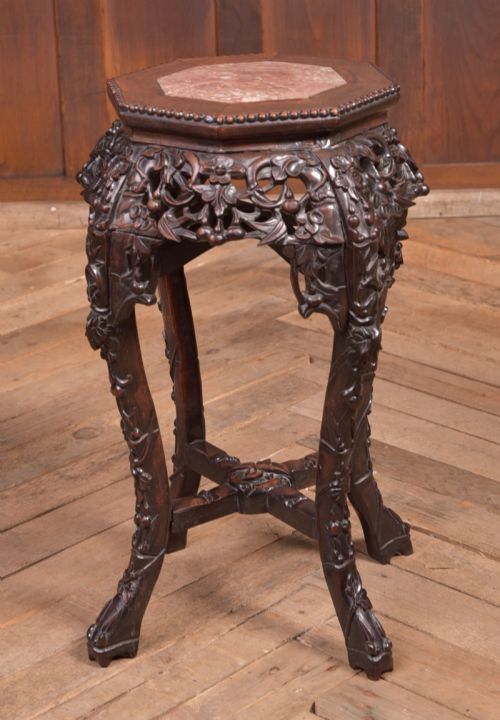
- A tall stand designed to hold a lamp, candle, or plant, frequently constructed with a small hexagonal top. These vertical pieces occupy minimal floor space while elevating decorative items.
- Specimen wood
- Furniture constructed from a variety of contrasting timber samples arranged to showcase different natural grains and colours. These tops often incorporate geometric banding that accentuates the six-sided form.
Antique Hexagonal Table: Frequently Asked Questions
Where do I put a hexagonal table?
A six-sided table fits naturally into room corners or beside curved armchairs where standard rectangular furniture might obstruct walkways.
The distinct geometry also works well as a central focal point or lamp stand, offering accessible surface space from multiple angles without sharp corners.
How do I date an oak hexagonal table?
Dating relies on examining the construction methods underneath, the treatment of the edges, and the style of the legs or pedestal base.
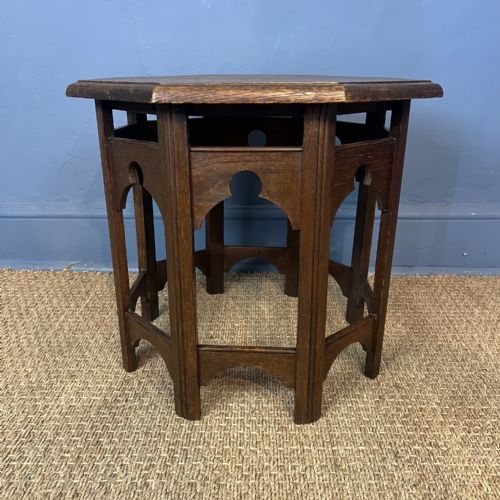
Early twentieth-century Arts and Crafts examples often show exposed joinery and simpler finishes, while nineteenth-century versions typically employ turned supports and darker patination.
Can I use an antique games table daily?
Games and occasional tables accommodate normal daily use provided you protect the wood and inlay surfaces from moisture and direct heat.
Careful placement away from radiators preserves the integrity of old adhesives and prevents the delicate veneers from lifting over time.