


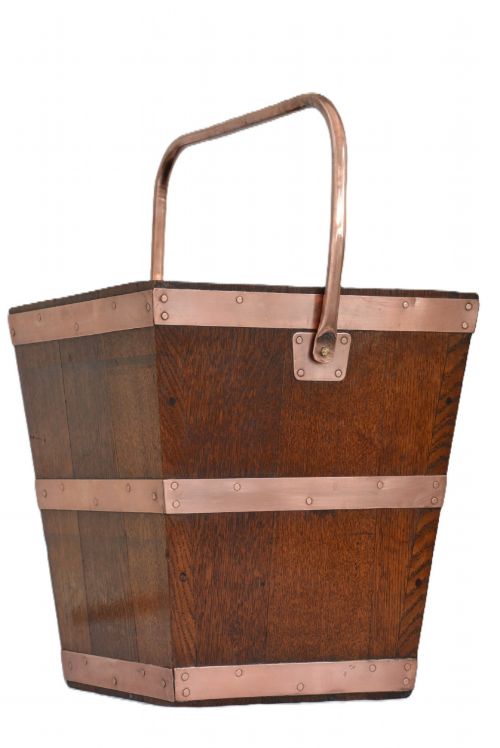


Antique Hearth Storage
Antique hearth storage keeps fireside fuel orderly beside the grate, ranging from brass coal buckets to timber log boxes.
Antique Hearth Storage
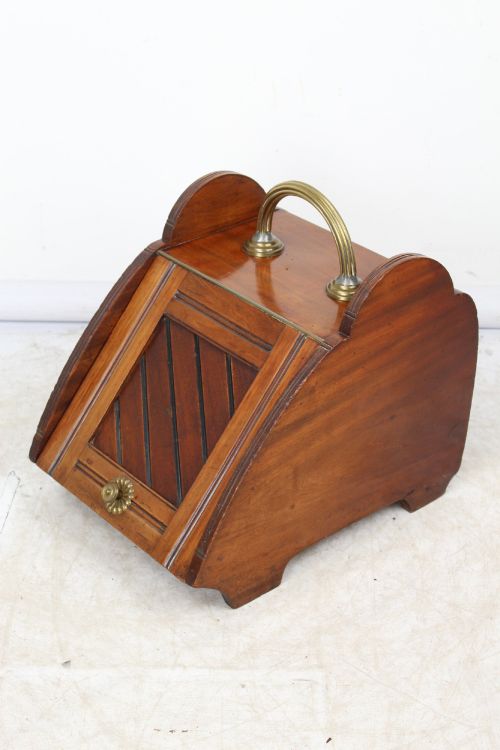
When buyers search for antique hearth storage, they encounter vessels designed to hold coal, logs, peat and kindling near the fireplace. The selection spans utilitarian country baskets and formal domestic coal boxes.
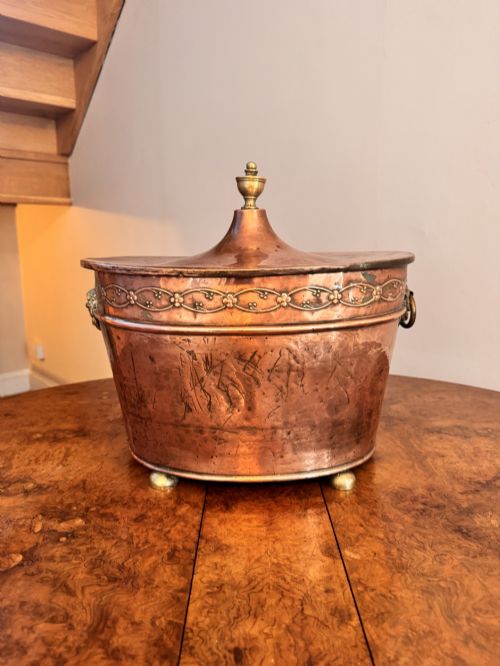
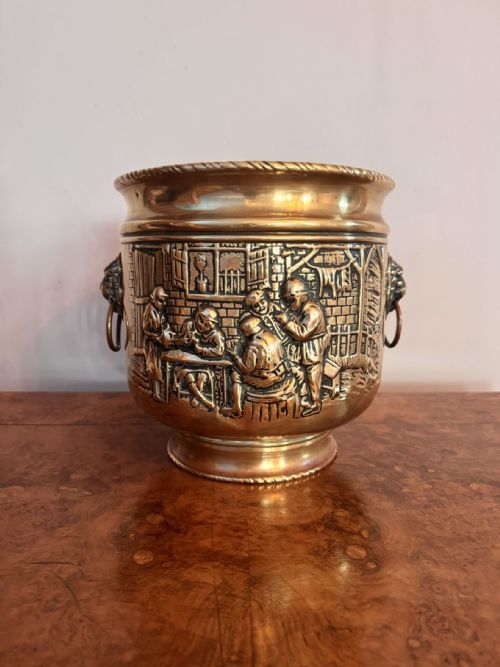
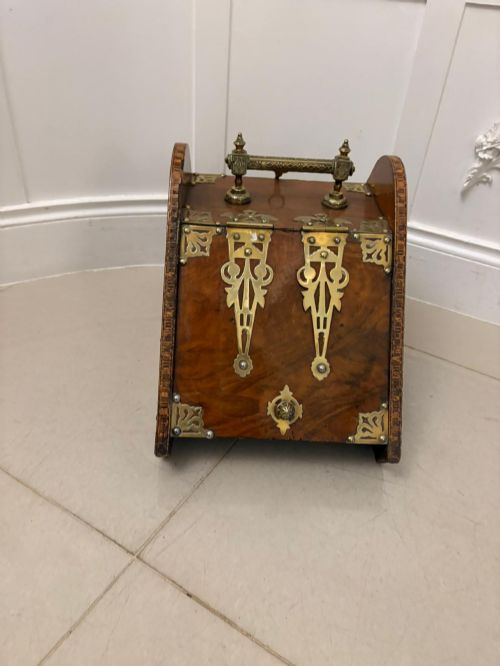
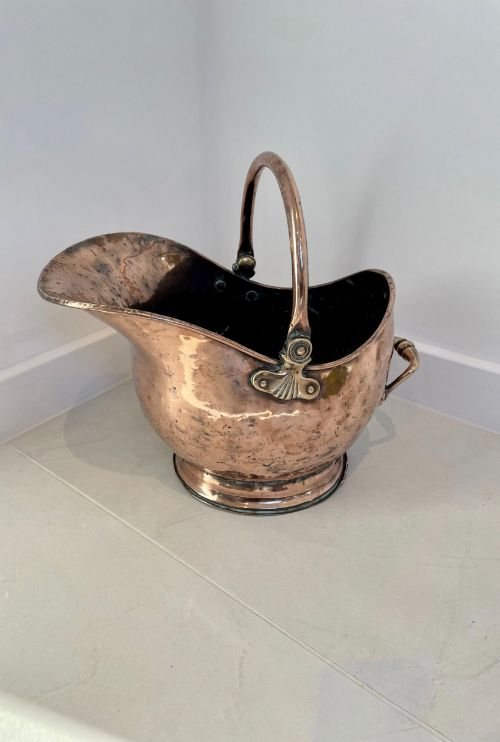
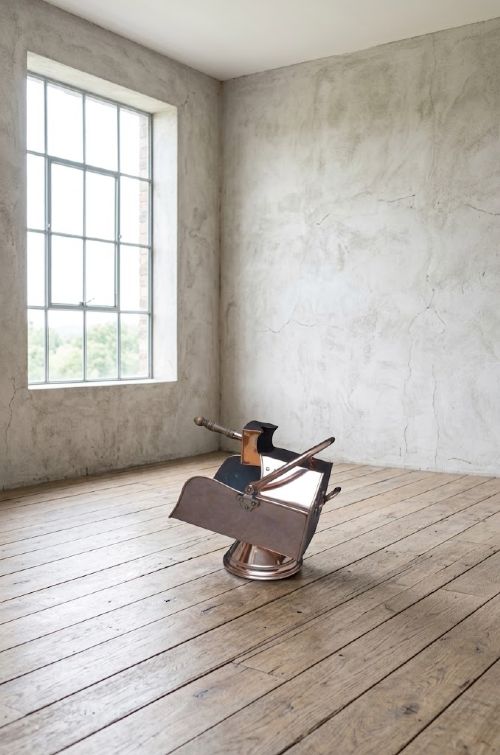
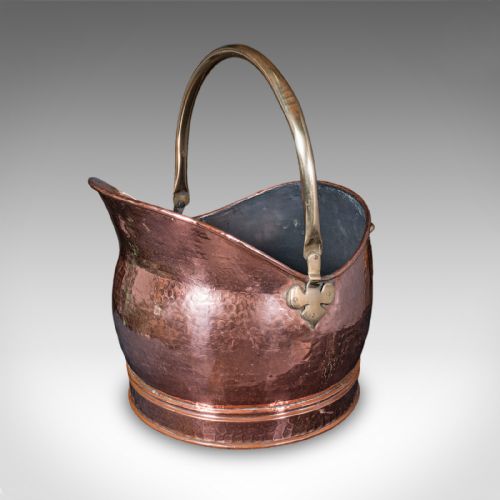
Victorian examples dominate the listings, frequently taking the form of copper helmets, brass buckets or oak purdoniums fitted with shovels and metal liners. Earlier Georgian and 18th Century pieces appear as coopered oak bunkers and leather buckets.
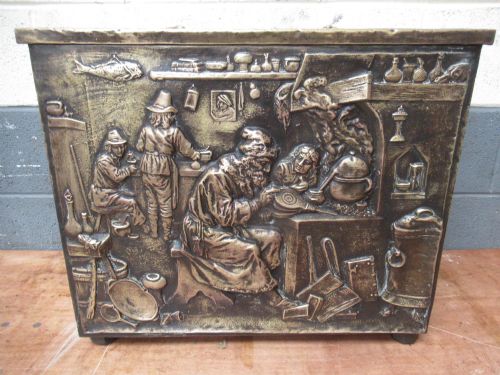
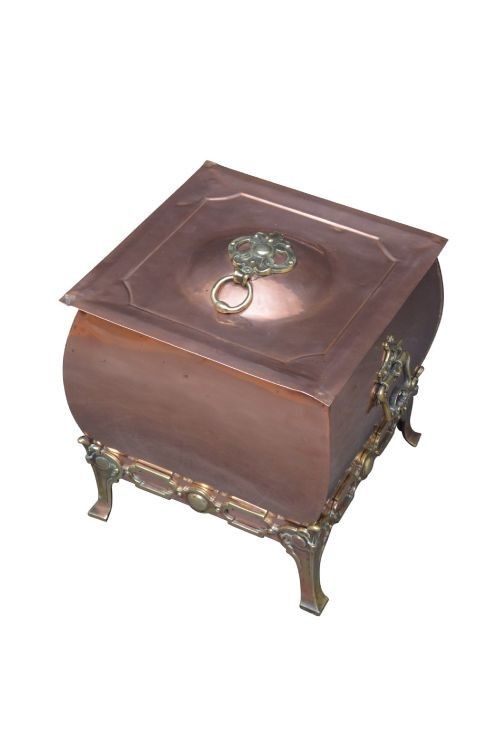
Regional variations include Scottish coopered peat buckets and Scandinavian woven pine baskets, alongside Arts and Crafts copper log bins set within iron frames.
Materials and Techniques
Metal vessels combine beaten copper and polished brass, often mounted on iron frames or secured with riveted seams. Hand finishing marks the surface of these scuttles and buckets.
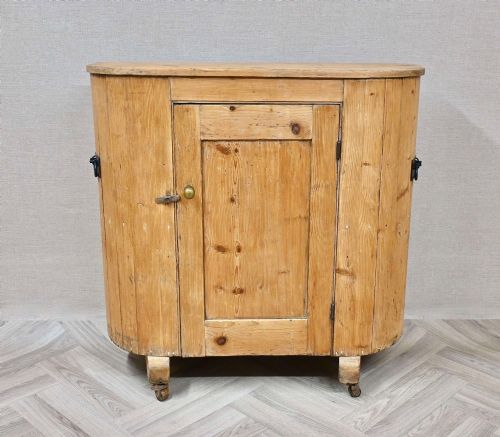
Wooden items utilise oak, pine, mahogany and walnut, frequently constructed using traditional coopering techniques with iron bands or brass mounts. Lined interiors protect the timber from damp fuel.
Antique Hearth Storage Retail Price Guide 2026
Typical asking prices for hearth storage among the pieces listed under this phrase on Sellingantiques today, from the lower quarter to the upper quarter. They describe what is for sale here now, not the wider market.
Listings span the 18th Century, Victorian and Edwardian eras, incorporating oak, copper, brass, wrought iron and hand-woven pine.
Evaluating Construction and Detail
Superior pieces display robust internal liners, substantial metal gauges and secure handles that bear the weight of heavy coal or logs. Inferior items show loose joints and thin metals susceptible to denting.
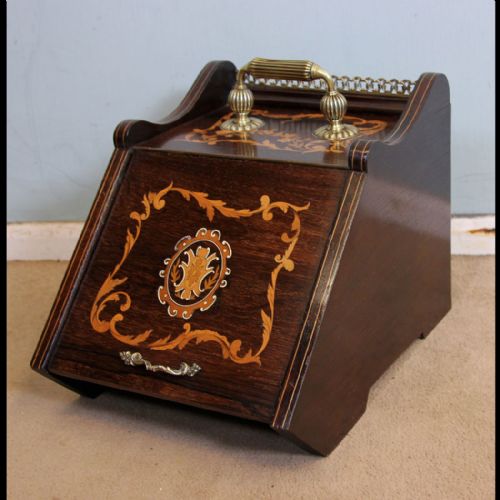
Decorative refinement elevates certain examples, such as inlaid rosewood, carved walnut panels and detailed brass mounts, distinguishing domestic furniture pieces from utilitarian receptacles.
William Soutter & Sons
The Antique Hearth Storage Glossary
- Purdonium
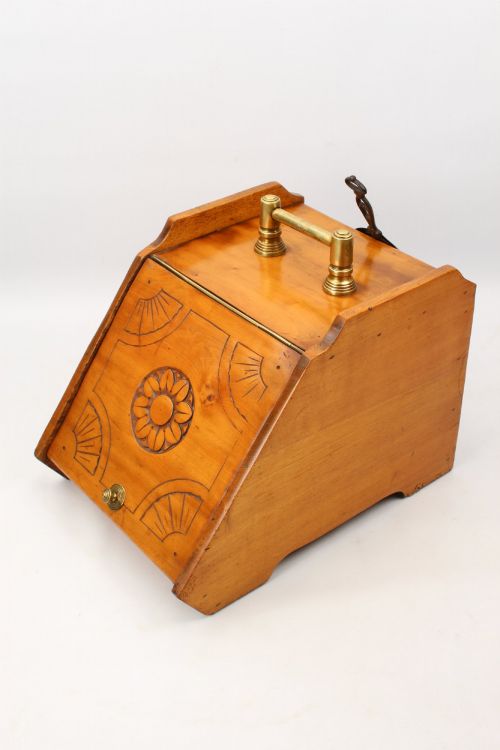
- A domestic coal box, typically Victorian or Edwardian in date, featuring a sloping front drop-down door and an internal metal liner to hold a removable coal shovel.
- Coopered
- Built from wooden staves bound together with metal or wooden hoops, a traditional method used for watertight buckets and heavy log bins.
- Coal Scuttle
- A metal container with a hinged handle and a shaped lip designed for carrying and pouring coal onto the fire.
- Kindling Basket
- A woven receptacle, often constructed from pine or willow, utilised for storing dry twigs and small wood pieces for starting fires.
Antique Hearth Storage: Frequently Asked Questions
What is an antique purdonium?
A purdonium is an enclosed coal box designed to sit neatly beside the fireplace without spilling dust onto the floor. These Victorian and Edwardian wooden cabinets usually contain a metal shovel and a removable liner.
They combine practical fuel storage with refined cabinet making, frequently incorporating brass handles, drop-down fronts and inlaid wood.
How do copper and brass bins differ?
Copper and brass bins serve similar fireside storage roles but present different visual qualities. Copper offers a warm, reddish tone that takes hand finishing and hammering well.
Brass provides a bright golden appearance, often polished to stand out against cast iron hearths and dark wood surrounds.
Were these vessels meant for coal or logs?
Hearth storage vessels served multiple fuel types depending on regional availability and household wealth. Smaller buckets and scuttles held coal or peat for daily burning.
Larger wooden boxes and iron-framed bins accommodated logs and kindling to supply open fires throughout the winter months.
How do I care for antique metal hearth storage?
Metal fireside pieces require gentle cleaning to preserve their surface character without stripping age. Dusting with a soft cloth prevents soot accumulation.
Avoid abrasive metal polishes that remove the natural patina built up over centuries of domestic use near the hearth.