

Antique Fireside Bin
An antique fireside bin serves to hold coal, logs or kindling cleanly beside a hearth while adding metal or timber texture to a room.
Antique Fireside Bin
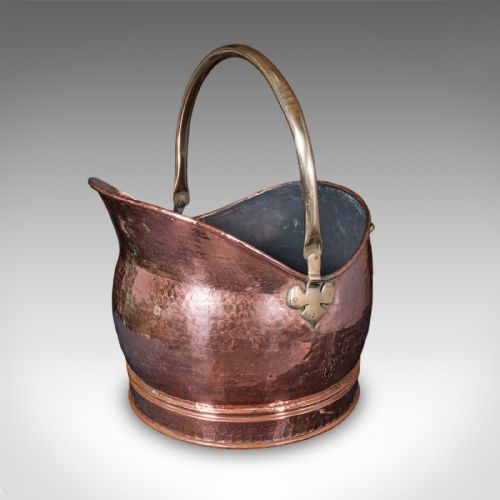
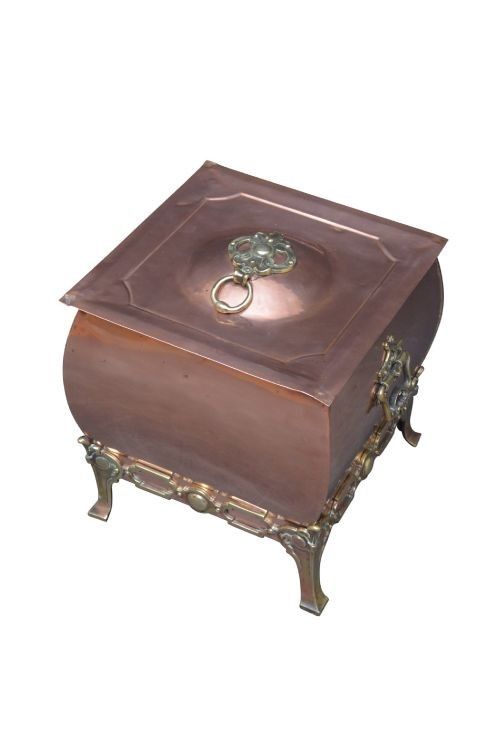
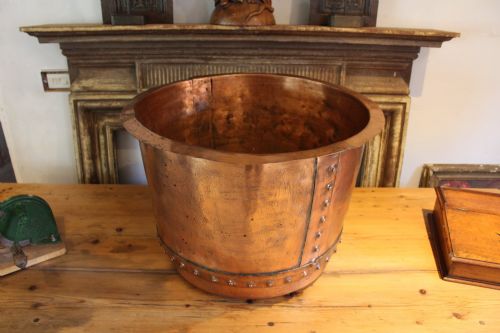
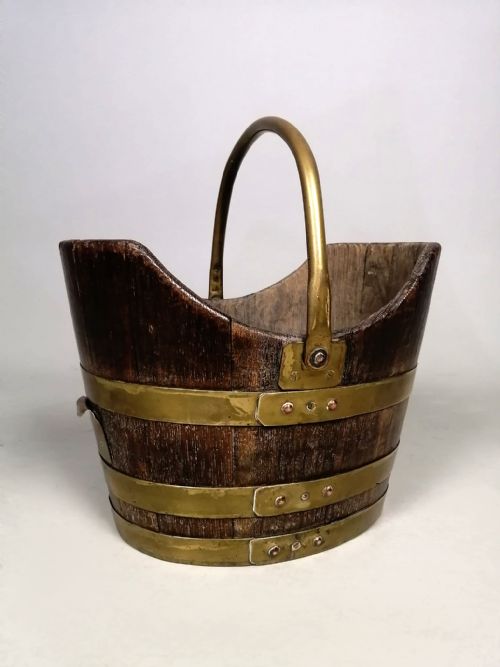
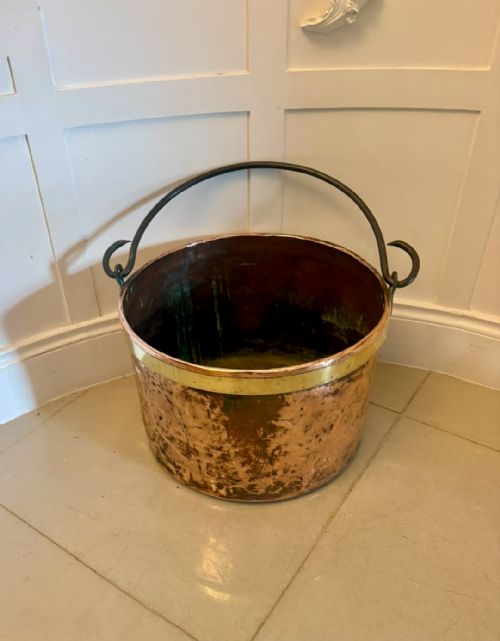
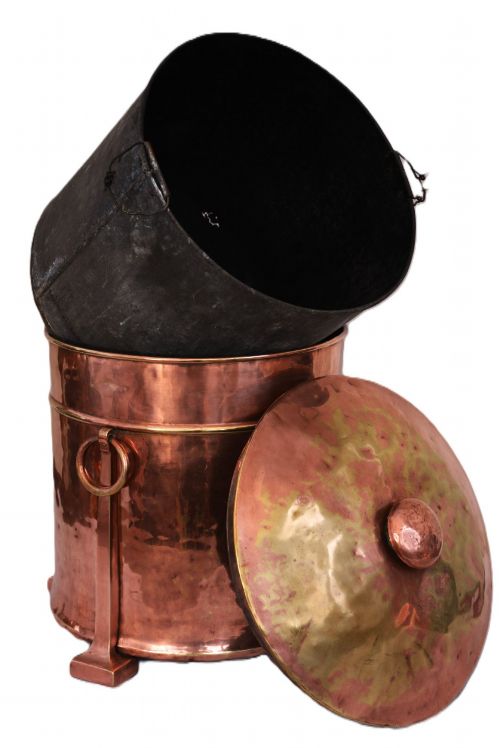
An antique fireside bin encompasses utilitarian vessels built to hold solid fuel such as coal, logs, and kindling beside a domestic fireplace. The term covers a variety of forms including coal scuttles, helmet buckets, purdoniums, and covered storage boxes.
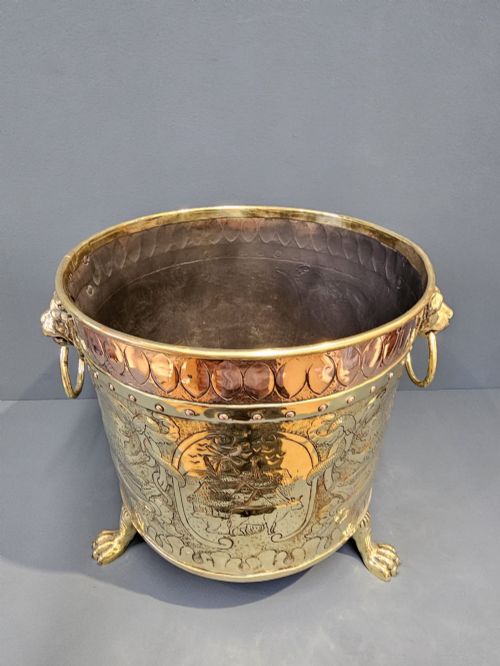
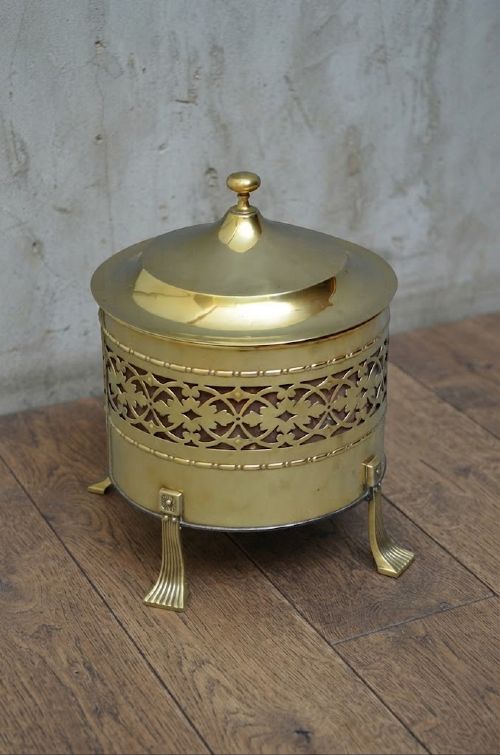
Most examples found on this page date from the Victorian and Edwardian eras, with occasional Georgian and later twentieth-century pieces appearing. These range from simple country oak boxes to decorative brass and copper buckets adorned with repoussé work or fretwork.
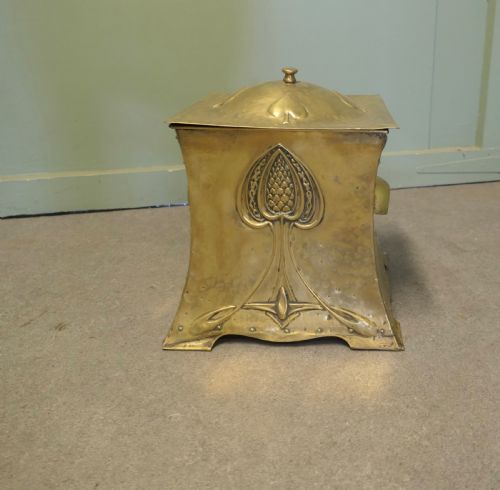
Makers utilised these containers to keep hearth areas tidy while incorporating prevailing design movements like Arts and Crafts and Art Nouveau into practical items. They serve today both as functional fuel storage and as decorative interior objects.
How they were made
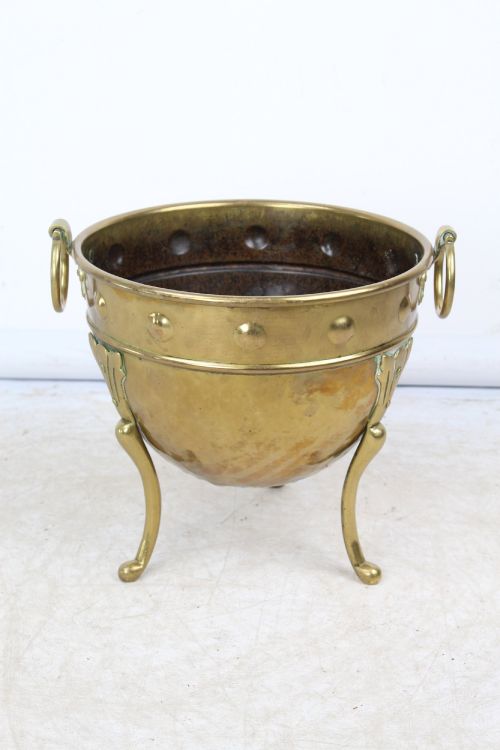
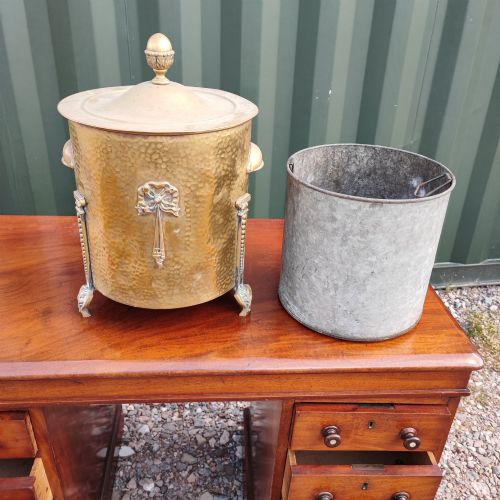
Metals such as brass, copper, and wrought iron were shaped through hammering, spinning, or riveting to form durable buckets and bins. Many feature embossed decoration, brass bands, or applied metal mounts to accent the polished surfaces.
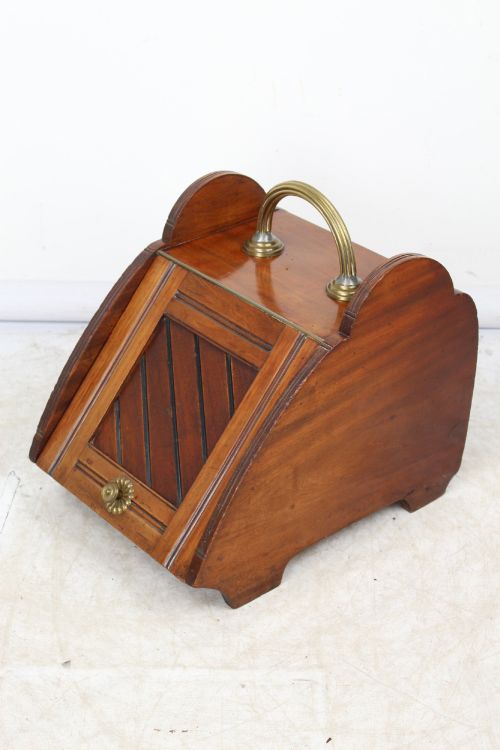
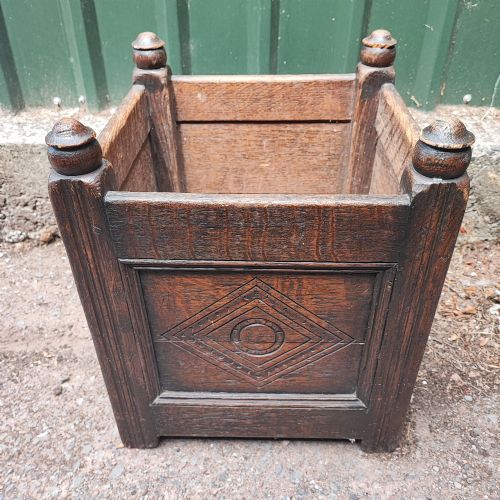
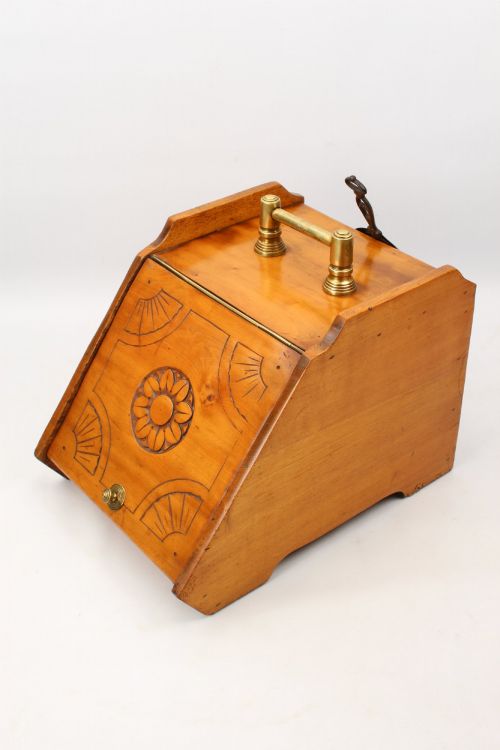
Timber versions rely on solid oak, mahogany, walnut, or pine, often featuring carved panels, dovetailed joints, and fitted metal liners. Purdoniums incorporate hinged wooden lids and drop-front mechanisms designed to conceal an internal metal coal shovel and scuttle.
Formats range from open coal buckets and helmet scuttles to lidded log bins and multi-functional coal box stools with needlepoint tops.
What varies in quality
Construction methods determine the structural integrity of each piece, distinguishing heavy gauge hand-riveted metal bodies from lighter stamped sheet construction. Solid timber boxes with properly fitted interior metal liners and original iron or brass handles demonstrate superior original utility.
The depth and crispness of hand-embossed decoration, such as repoussé tavern scenes or floral motifs, separate standard production items from finer artistic examples. Retaining original liners, matching shovels, and uncompromised surface patination elevates a piece within its type.
Henry Loveridge·Petrus Ramus·Percy Metal Works London
The Antique Fireside Bin Glossary
- Purdonium
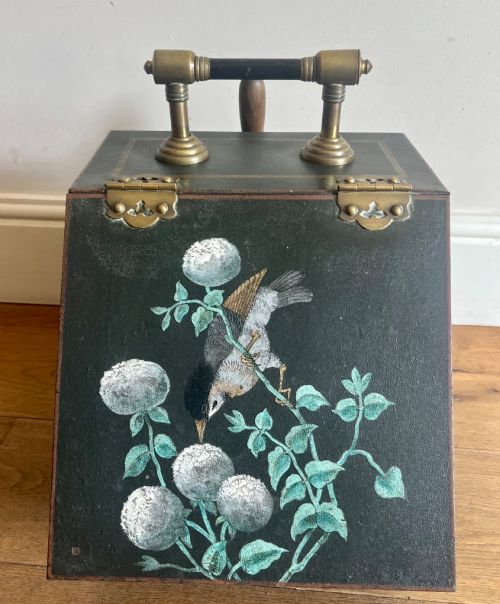
- A specialised type of coal box featuring a sloping front door that drops forward to reveal a removable metal liner or scuttle. This design kept coal dust contained while offering a neat cabinet appearance.
- Coal Scuttle
- A bucket or pail with a hinged handle, often shaped with a tapered lip or helmet-like spout to facilitate pouring fuel onto a fire. They appear frequently in brass and copper.
- Repoussé
- A metalworking technique where the artist hammers the metal from the reverse side to create a raised design in relief on the front. This method decorates many Arts and Crafts brass and copper bins.
- Tole Ware
- Lacquered or enamelled sheet metal items that provide decorative colour and pattern. They offer an alternative finish to polished brass or plain iron.
Antique Fireside Bin: Frequently Asked Questions
What is a purdonium?
A purdonium is a dedicated enclosed wooden coal box featuring a hinged drop-front door and an internal metal shovel or scuttle. It was designed to sit neatly in a parlour while keeping fuel dust out of sight.
These pieces typically date from the Victorian and Edwardian periods and often include brass handles and carved wood panels.
Can I still burn wood in them?
Many of these bins and buckets are sturdy enough to hold logs or kindling beside a modern hearth. Those with original waterproof metal liners are particularly practical for storing logs.
Vintage metal and timber bins also find modern use as umbrella stands or large indoor plant pots.
How do I clean brass and copper?
Maintenance depends on whether you prefer a bright polished finish or an aged dark patination. Traditional metal polish removes tarnish, while gentle washing with warm soapy water preserves older surfaces.
Avoid abrasive pads that can scratch thin hand-beaten sheet metal or remove antique lacquer.
How do I tell Victorian from Edwardian bins?
Victorian pieces frequently display heavier cast brass mounts, darker timber tones, and robust hand-riveted construction. Elaborate embossed detailing and Arts and Crafts motifs also characterise this era.
Edwardian examples often exhibit lighter oak construction, simpler geometric fretwork, and refined Art Nouveau influences.