


Brass and Copper Coal Box
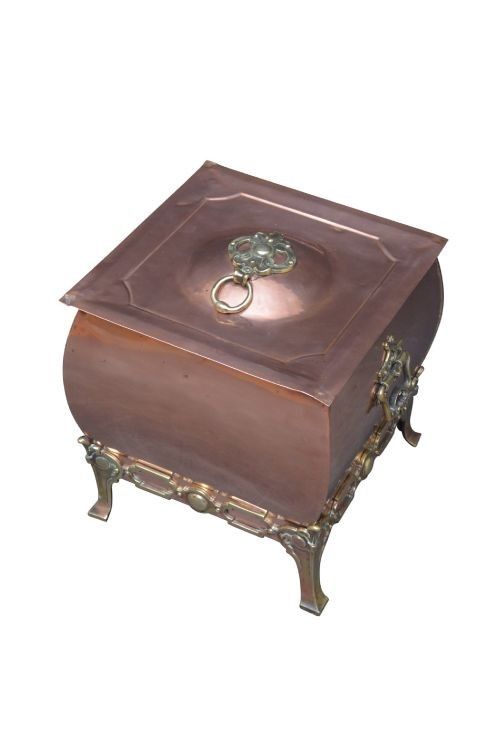
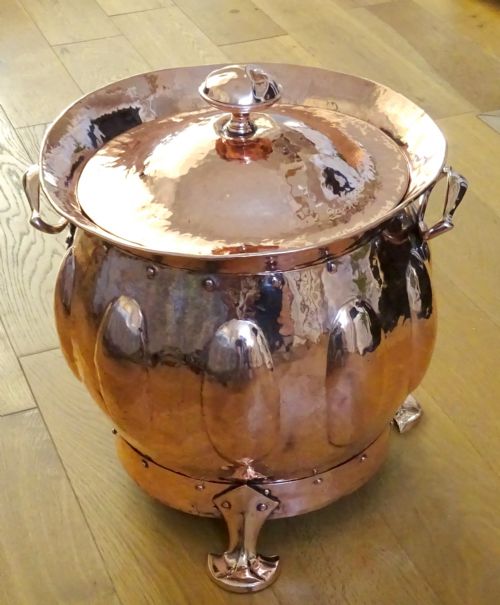
A brass and copper coal box is a hearth accessory designed to store fuel, combining robust metal construction with decorative fireside utility.
Brass and Copper Coal Box
A brass and copper coal box brings functional warmth to a fireplace, functioning primarily as a coal scuttle, log bin, or slipper box. These items span Victorian, Arts and Crafts, and Art Nouveau styles, reflecting the shifting tastes of the nineteenth and early twentieth centuries.
The pieces listed on this page range from plain metal log bins to heavily embossed copper and brass receptacles dated between eighteen seventy and nineteen thirty. Buyers will encounter helmet coal scuttles, lidded log bins, and Gladstone bag planters utilised for fireside storage.
How they were made
Construction relies heavily on sheet copper and brass, frequently paired with internal wooden linings or iron components to maintain structural integrity. Metal surfaces are shaped, joined, and occasionally copper plated.
Decoration is achieved through hand embossing on the metal panels, creating tactile patterns that characterise Arts and Crafts and Art Nouveau examples.
Some nineteenth century metalworkers turned luggage shapes into hearth storage by crafting rigid coal boxes that mimic Gladstone travelling bags.
What varies in quality
Quality depends on the crispness of the metal embossing and the weight of the brass and copper used in the body. Thicker metal plates and robust handles distinguish substantial utilitarian pieces from lighter decorative receptacles.
The integrity of internal wooden or iron components and the subtlety of stylistic details, particularly in Arts and Crafts and Art Nouveau iterations, define the upper tier of these hearth accessories.
The Brass and Copper Coal Box Glossary
- Coal scuttle
- A container specifically shaped for holding and carrying coal to the fire. These often feature a hinged lid and a sturdy handle.
- Slipper box
- A lidded box with a slanted top, traditionally used for storing slippers by the fire but adapted for coal. The shape resembles a traditional slipper.
- Gladstone bag
- A style of luggage featuring a hinged frame that opens wide, replicated in metal for fireside storage. This form is particularly associated with the Arts and Crafts period.
- Embossing
- A technique where metal is raised from the reverse side using hammers and punches to create decorative relief patterns. This method defines much of the surface ornamentation on copper boxes.
Brass and Copper Coal Box: Frequently Asked Questions
What were brass and copper coal boxes used for?
These boxes served as practical containers to hold coal, logs, or kindling right beside the hearth. They kept fuel tidy and concealed while adding a polished metallic accent to the fireplace.
Over time, many of these receptacles transitioned from purely utilitarian coal stores into decorative fireside storage and even indoor planters.
How do I date a copper coal box?
Dating relies heavily on stylistic markers such as Victorian ornamentation, Arts and Crafts hand embossing, or Art Nouveau flowing lines. Material clues like iron framing and oak linings also point to specific manufacturing decades between eighteen seventy and nineteen thirty.
Examining the construction methods and any structural hinges helps place the piece within its historical period.
Can I use an antique coal box for logs?
Most of these pieces were built to handle solid fuel, making them entirely suitable for holding logs or kindling today. Ensuring the internal lining is clean and dry helps preserve the metal and any underlying wood.
They function just as effectively as modern log bins while offering period character.
How do I clean brass and copper?
Maintenance generally involves gentle dusting and occasional cleaning with appropriate metal polishes to maintain the desired lustre. Many collectors prefer to leave a natural aged patina on Victorian and Edwardian copper rather than polishing it to a mirror finish.
Harsh abrasives should be avoided to protect hand embossed details.