


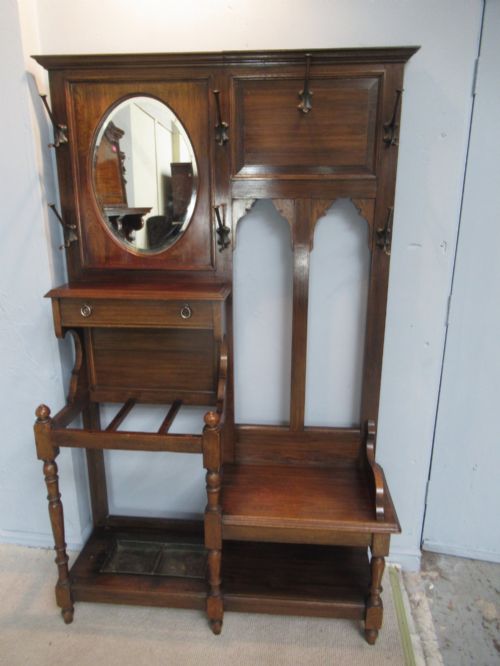
Antique Hall Umbrella Rack
An antique hall umbrella rack is a practical entryway fixture designed to keep wet walking aids contained.
Antique Hall Umbrella Rack
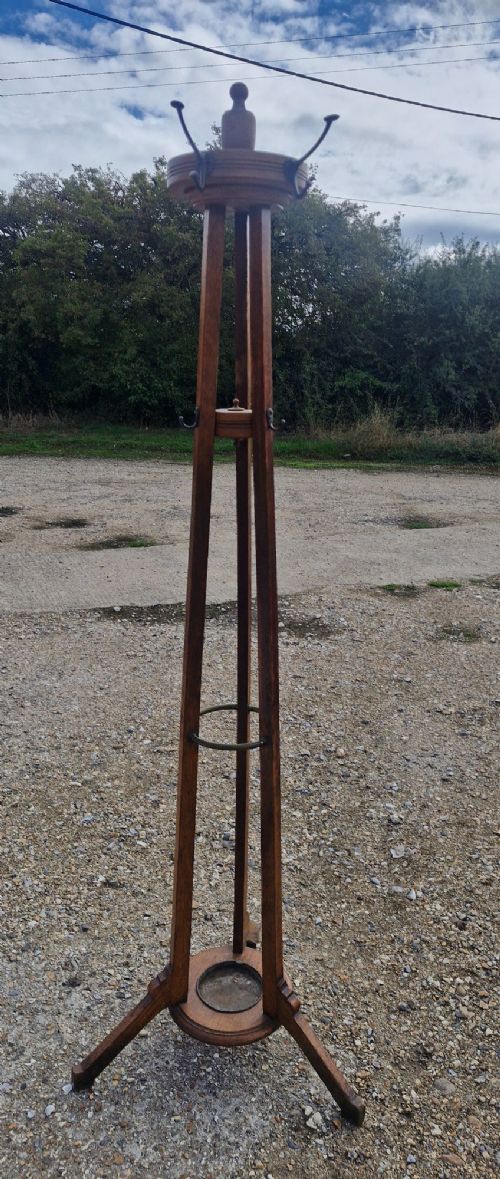
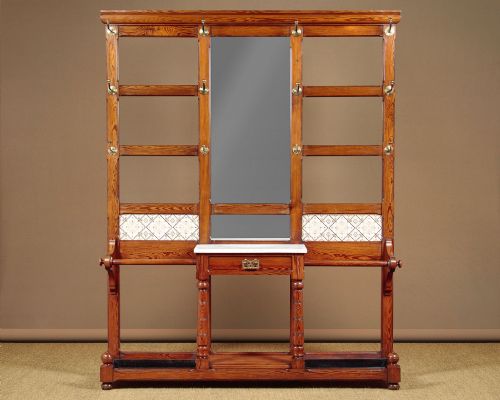
An antique hall umbrella rack serves as a designated domestic holding space for wet walking sticks, canes and umbrellas within an entranceway. These pieces range from dedicated standalone vessels to multifunctional hall furniture incorporating coat hooks, mirrors and integrated drip trays. The examples met most frequently on this page span the Victorian and Edwardian periods through to the early twentieth century.
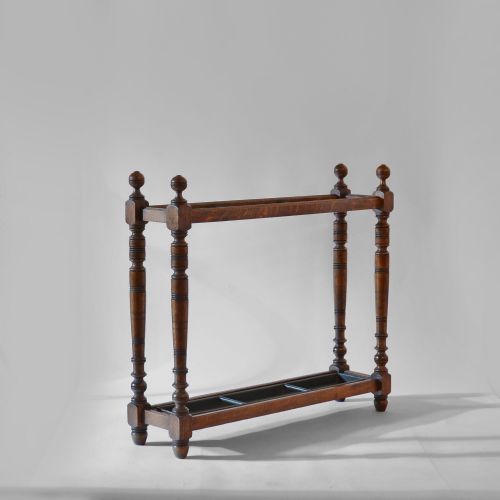
Forms vary considerably according to architectural placement and regional utility. Compact corner models and semicircular demi-lune designs share floor space with long linear frames and imposing multi-functional hall seat stands. Many incorporate segmented metal divisions to keep individual items upright and separated.
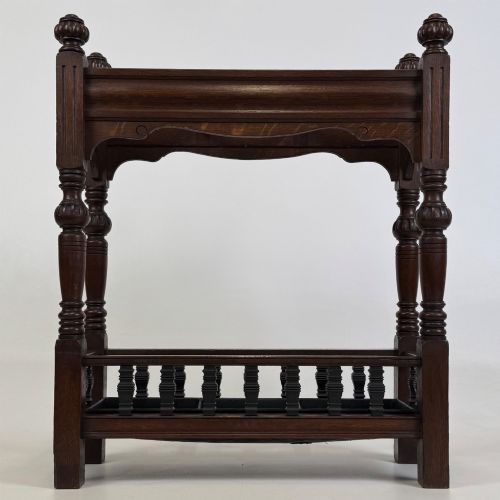
Material choice reflects the period of manufacture and intended domestic environment. Heavy cast iron examples suited damp ground floors, whilst timber frames constructed from oak, mahogany and beech complemented formal reception rooms.
Materials and construction methods
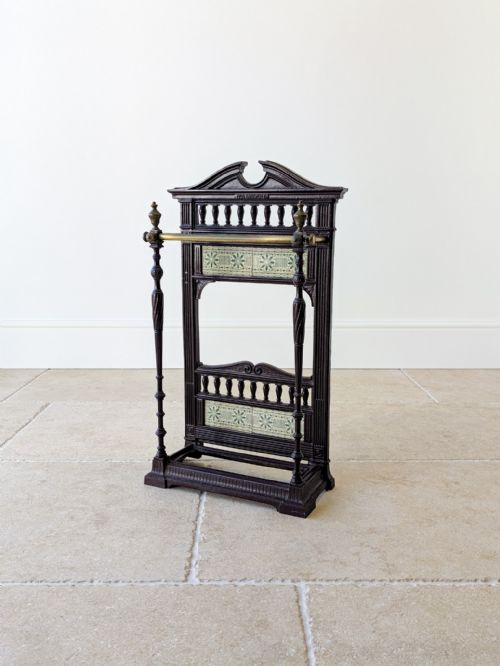
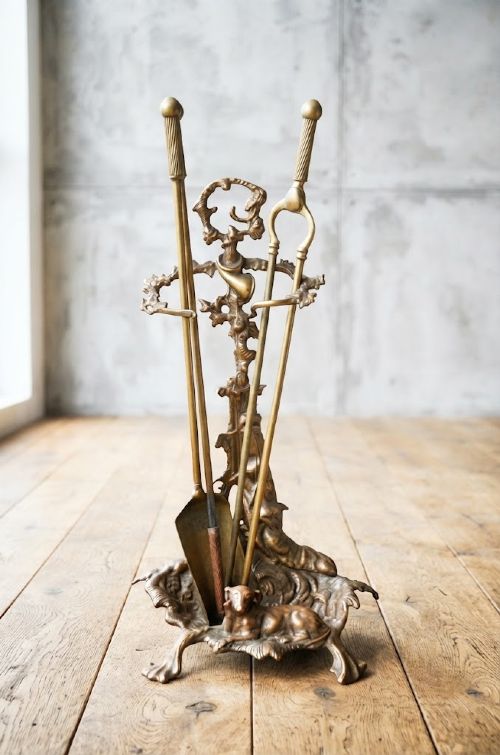
Foundries utilised cast iron and brass for structural rigidity and moisture resistance. Metal frames often featured openwork tracery, figural motifs or decorative drip trays positioned beneath the umbrella compartments.
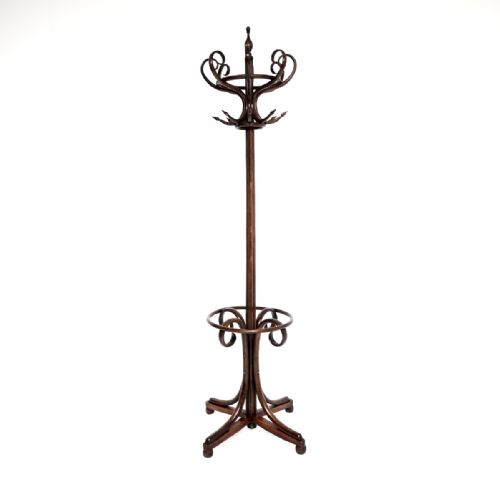
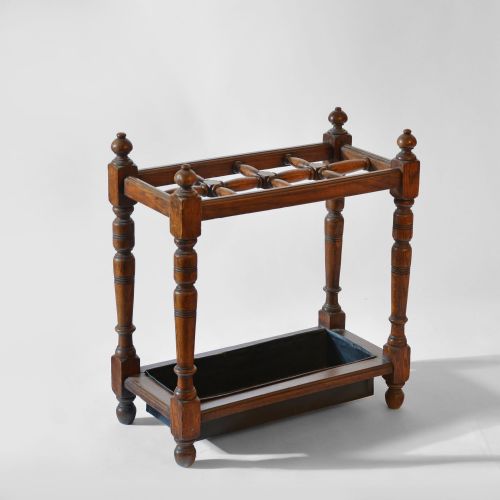
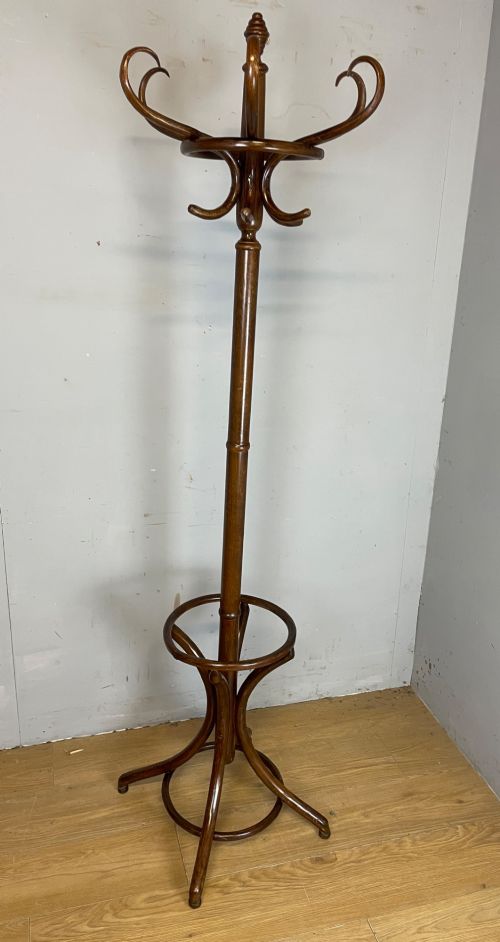
Cabinetmakers constructed timber variants using solid oak, mahogany and pine, frequently combining board panels with turned spindles. Bentwood pieces relied on steam-heated beech shaped into fluid curves, a technique popularised by makers such as Thonet.
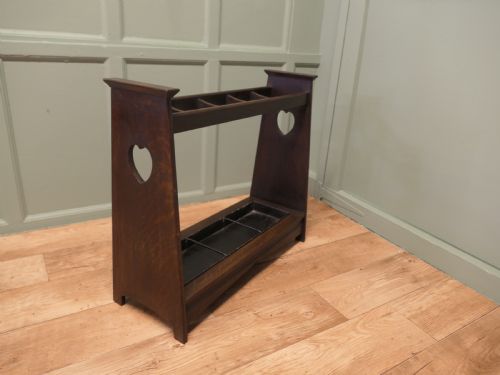
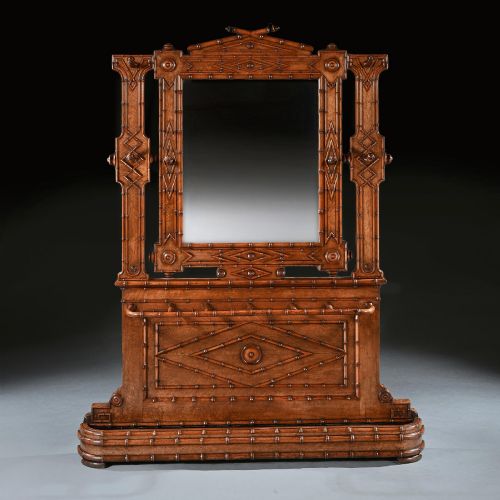
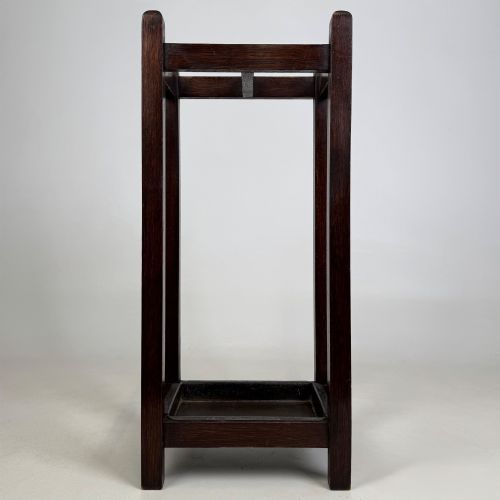
Secondary elements included galvanised or metal liners designed to catch rainwater and protect wooden bases from rot. Nickel plating and faux bamboo finishes appeared on later nineteenth and early twentieth-century interpretations.
Surviving examples demonstrate integrated hat hooks, mirrored panels, and removable metal drip trays.
Evaluating standard and manufacture
Quality reveals itself in the integrity of the framework and the retention of original components. Superior examples preserve their matching metal drip trays, removable liners and secure structural joints without extensive replacement hardware.
Detailing distinguishes standard production from finer workshops. Cast iron pieces with crisp, clean moulding lines and well-defined decorative relief contrast with softer castings lacking artistic definition.
Timber selection and joinery execution dictate durability. Oak and mahogany frames utilising pegged mortise and tenon construction demonstrate superior craftsmanship compared to lesser utilitarian pieces.
Coalbrookdale·Thonet·Liberty
The Antique Hall Umbrella Rack Glossary
- Demi-lune
- A half-moon or semicircular shape designed to fit flush against an entrance wall. This profile allows the stand to occupy minimal floor space in narrow corridors.
- Drip tray
- A shallow metal pan positioned beneath the umbrella compartment to catch moisture. These pans are frequently removable for emptying and cleaning.
- Bentwood
- Wood that has been rendered pliable through steam application and bent into curved forms. Beech is the material most commonly manipulated via this method.
- Hall stand
- A large piece of entrance furniture combining coat hooks, umbrella storage, a mirror and sometimes a bench seat. Many examples integrate multiple functions into a single unit.
- Aesthetic Movement
- A late nineteenth-century design style emphasising visual beauty over narrative subject matter. Pieces from this movement often feature stylized natural motifs and dark timber.
Antique Hall Umbrella Rack: Frequently Asked Questions
How do I stop water damaging the floor?
Most traditional pieces incorporate an original metal or zinc drip tray located at the base to catch runoff from wet umbrellas. Ensuring this liner is present protects wooden flooring from standing moisture.
For pieces missing their liner, modern protective trays or saucers can be discretely fitted inside the base compartment without altering the historical structure.
Where should I place a hall stand?
These items belong near the primary entrance of a home where outdoor garments and walking gear are removed. Hallways and boot rooms provide the natural environment for daily use.
Ensure adequate clearance space allows umbrellas to be lifted in and out of their designated divisions without striking surrounding walls or furniture.
How do I distinguish Victorian from Edwardian pieces?
Victorian examples generally feature heavier proportions, darker woods like mahogany, and ornate cast iron ornamentation reflecting nineteenth-century taste. Decoration often leans toward formal or gothic revival motifs.
Edwardian designs tend to exhibit lighter golden oak tones, cleaner architectural lines, and influences from the Arts and Crafts movement or Art Nouveau styles.
Can these stands hold walking sticks and canes?
Yes, the internal divisions and ring separators were originally manufactured to accommodate walking sticks, canes and riding crops alongside umbrellas. The narrower diameter of walking aids fits securely into partitioned metal grids.
Segmented iron frameworks prevent slender canes from slipping sideways or sliding out of alignment.