




Antique Green Water Pitcher
These antique green water pitcher options span earthenware, glass, porcelain and bronze across the nineteenth and early twentieth centuries, offering a range of decorative vessels for your collection.
Antique Green Water Pitcher
An antique green water pitcher encompasses a diverse assortment of ceramic, glass and metal vessels designed for serving or display, drawing on the search phrase for these items. Buyers encounter forms ranging from practical jug and bowl sets to monumental ewers and decorative pitchers spanning the Georgian, Victorian and Edwardian eras.
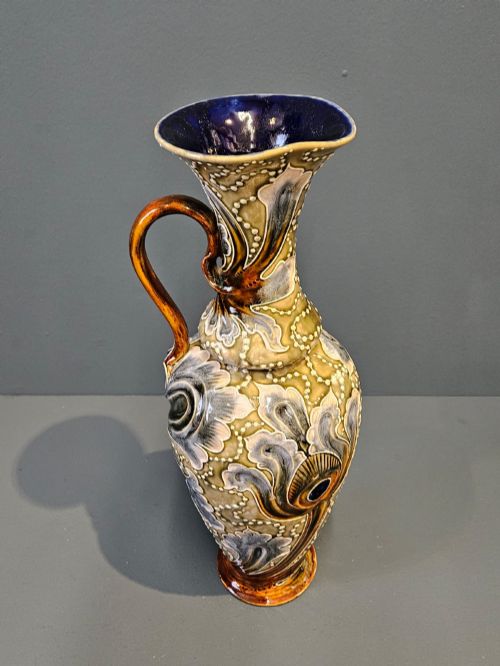
The material palette shifts from earthenware and stoneware to delicate glass and porcelain, with distinct regional traditions represented. English potteries like Doulton, Mason's and Worcester sit alongside Indian bronzes and continental works, reflecting wide stylistic influences.
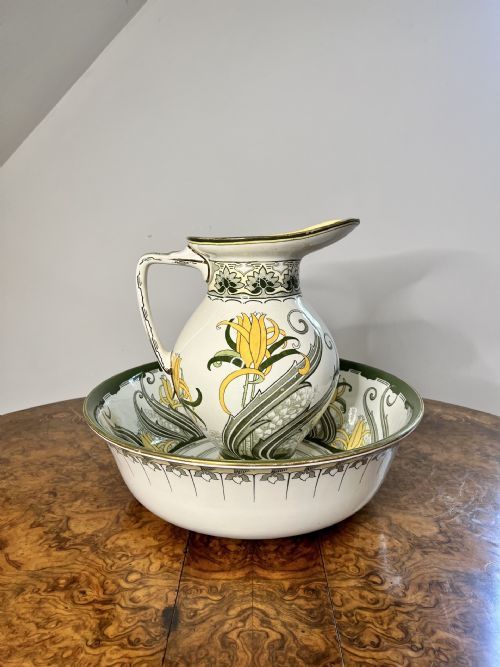
Makers utilised various periods including the Regency, Victorian and Art Nouveau movements to shape these green vessels. Whether searching for a majolica bullrush motif or an enamel painted glass ewer, the offerings display distinct historical character.
Materials and production
Ceramic pieces utilise earthenware, stoneware and porcelain bodies finished with specialised glazes or enamel paint. Potters shaped these materials into jugs, ewers and complex jug and bowl sets.
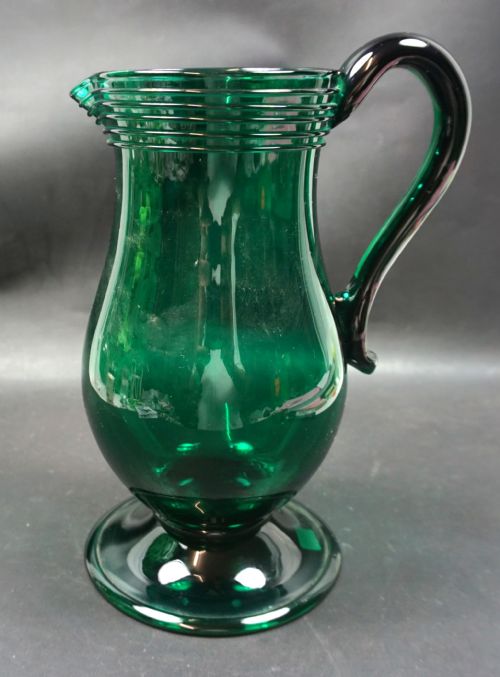
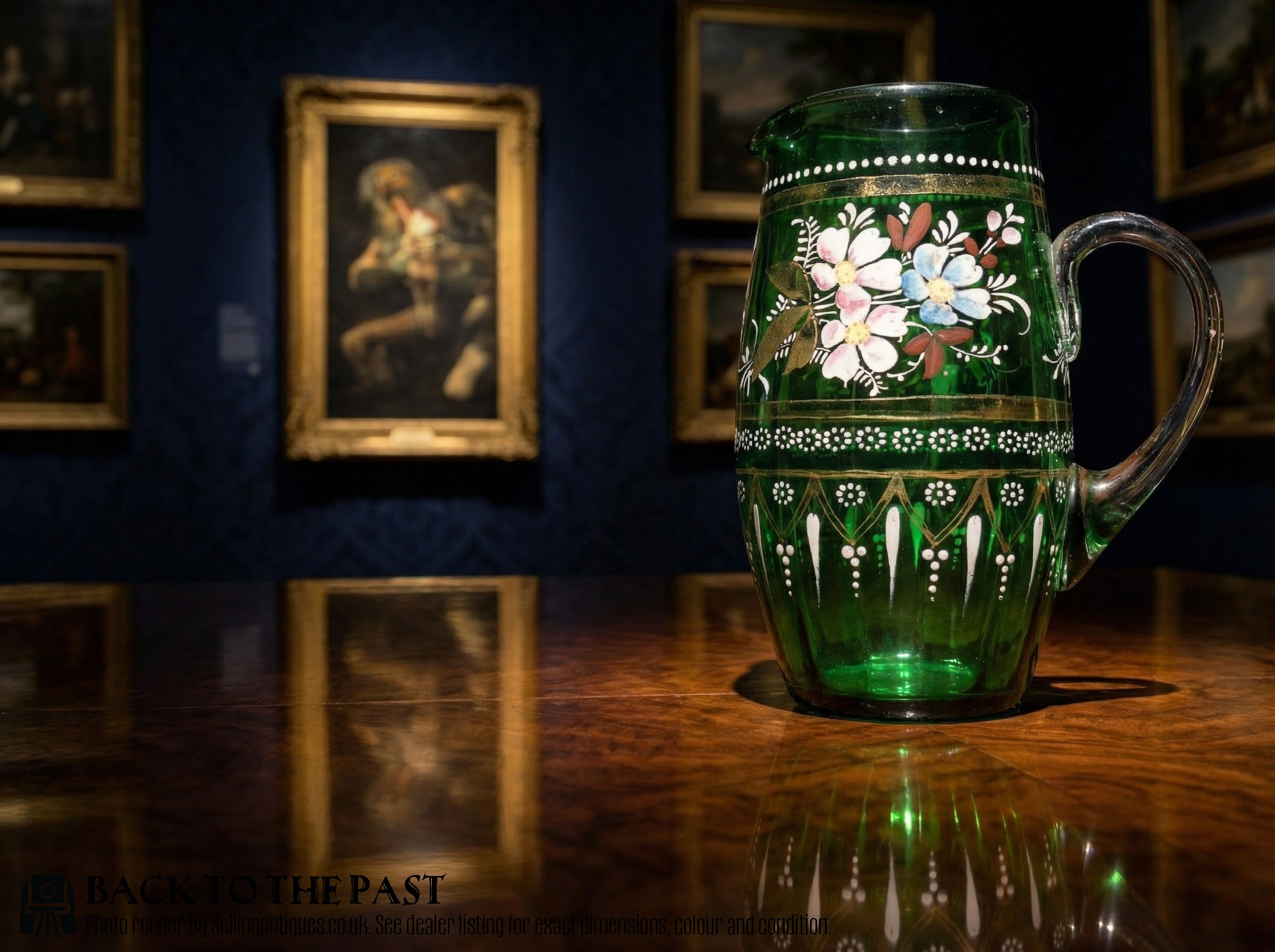
Glass examples incorporate folded feet, trail rims and detailed gilding applied during the nineteenth century. Artisans worked molten glass to achieve the rich green tones seen in Mary Gregory style pieces.
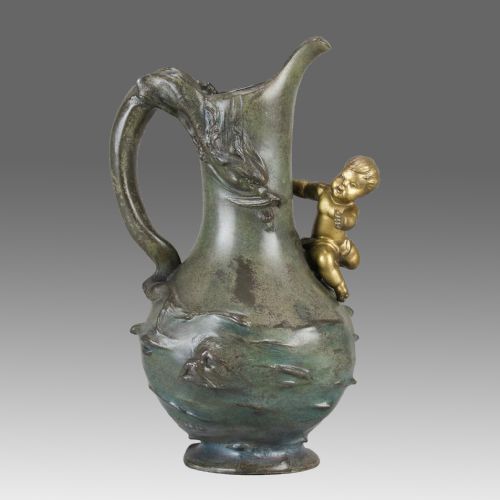
Metal vessels involve bronze casting techniques, demonstrated by Indian aftabas and Art Nouveau figural pieces. Makers integrated intricate handles and surface details into the bronze structure.
Listings feature nineteenth and early twentieth century periods, spanning Victorian, Edwardian and Art Nouveau styles.
Evaluating craftsmanship
Quality reveals itself in the precision of the modelling and the depth of the glaze or enamel finish. Finely rendered details on moulded ceramics and carefully applied gold leaf elevate a piece above standard production.
The crispness of execution in handles, rims and decorative motifs distinguishes superior examples from simpler ones. Expert manipulation of glass trails or bronze casting shows the skill of the original workshop.
Doulton Lambeth·Mason's·Chamberlain Worcester·Georges Van De Voorde·Ridgway·Royal Worcester·George Jones
The Antique Green Water Pitcher Glossary
- Ewer
- A large jug or pitcher with a wide spout and handle, traditionally used for holding water. Many examples serve a purely decorative function.
- Majolica
- A type of earthenware glazed with an opaque tin-lead glaze and brightly coloured. It gained popularity during the Victorian era for nature-inspired designs.
- Parian
- A fine-grained white porcelain resembling marble, sometimes produced in tinted variations like sage green. It was developed in the nineteenth century for decorative figures and vessels.
- Hydra
- A classical shape of ceramic jug featuring a distinct serpentine handle and rim profile. This form appears in nineteenth century ironstone productions.
- Aftaba
- A traditional metal ewer or water vessel of Indian origin. These pieces often feature elaborate spouts and handles cast in bronze.
Antique Green Water Pitcher: Frequently Asked Questions
How were these green water pitchers used originally?
Many pitchers served practical daily functions on washstands as part of jug and bowl sets for personal hygiene. Others functioned at dining tables for serving water or as decorative display ewers in parlours.
Over time, changing domestic habits shifted these vessels from utilitarian objects to decorative antiques collected for their artistic merit and historical craftsmanship.
What materials are common in these green pitchers?
The selection includes various ceramic bodies such as earthenware, stoneware, majolica, ironstone and porcelain. Glass and bronze also appear frequently across different stylistic periods.
Each material brings a distinct weight and finish, from the translucent quality of porcelain to the rich surface texture of glazed earthenware and cast bronze.
How do I distinguish Victorian pieces from Edwardian ones?
Victorian pieces often display heavier ornamentation, rich enamel painting, or classical revival motifs typical of the nineteenth century. They include elaborate majolica designs and detailed glasswork.
Edwardian items frequently lean towards cleaner lines and softer tones, reflecting the transition into the twentieth century and the early emergence of Art Nouveau influences.
Can I use an antique pitcher for serving water today?
While these pitchers were originally built for holding liquids, age, historical glazes and delicate materials mean many owners prefer display over daily use. Micro-cracks in old earthenware or fragile glass rims require careful handling.
If you choose to use one, hand washing in lukewarm water is essential to preserve the glazes, enamel paint and gold leaf.
What defines the Art Nouveau style in these pieces?
Art Nouveau examples feature organic, flowing lines inspired by natural forms rather than rigid geometric shapes. You will often see whiplash curves and figural elements integrated directly into the body of the jug.
These pieces emerged around the turn of the twentieth century, breaking away from historical revival styles to embrace a more fluid aesthetic.