



Antique Green Pitchers
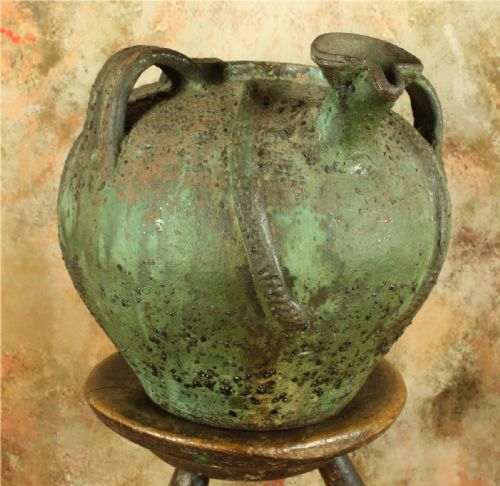
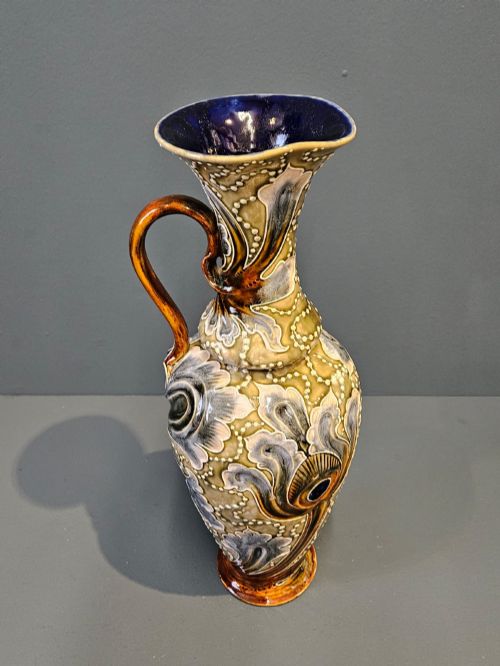
These antique green pitchers span earthenware, glass and bronze, offering rich colour and tactile form for daily use or display.
Antique Green Pitchers
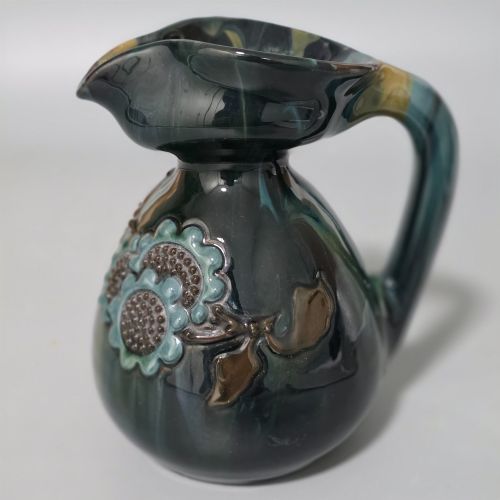
When searching for antique green pitchers, collectors encounter a diverse array of forms, ranging from Victorian majolica and Doulton Lambeth salt-glazed stoneware to Bohemian overlaid glass and Art Nouveau pewter-mounted vessels.
The material palette is broad, encompassing ceramic, earthenware, creamware, and glass, alongside metal works like bronze and gilt metal.
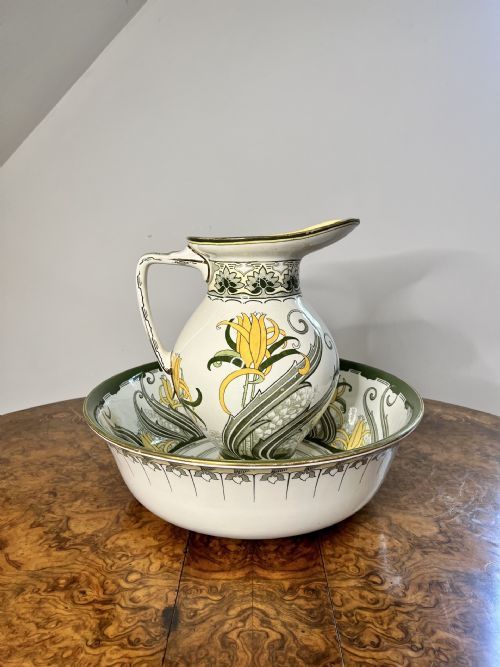
Most pieces date from the nineteenth century and the early twentieth century, spanning periods from Regency to Edwardian, with styles that move between Georgian classicism, exuberant Victorian revival, and flowing Art Nouveau designs.
Methods and materials
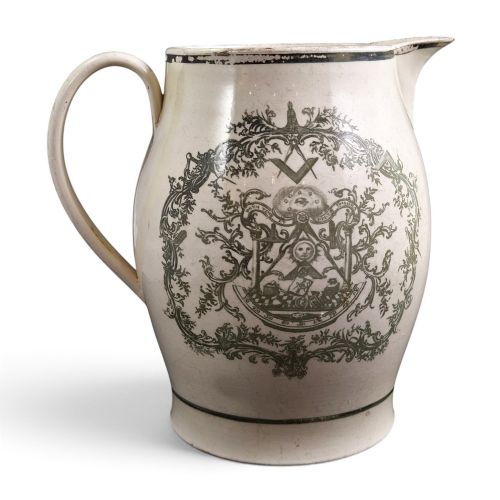
Pottery and ceramic examples utilise traditional earthenware, creamware, and majolica glazes, often moulded with botanical or figurative relief patterns before firing.
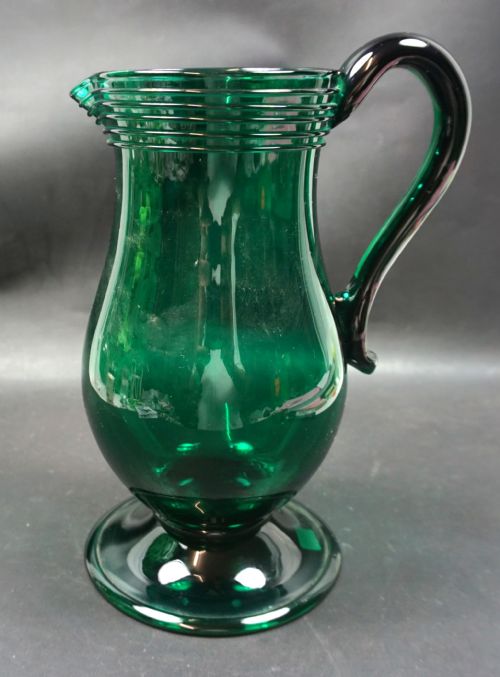
Glass vessels rely on hot-working techniques, combining green glass bodies with trailed rims, folded feet, enamel painting, gilding, or overlay cuts.
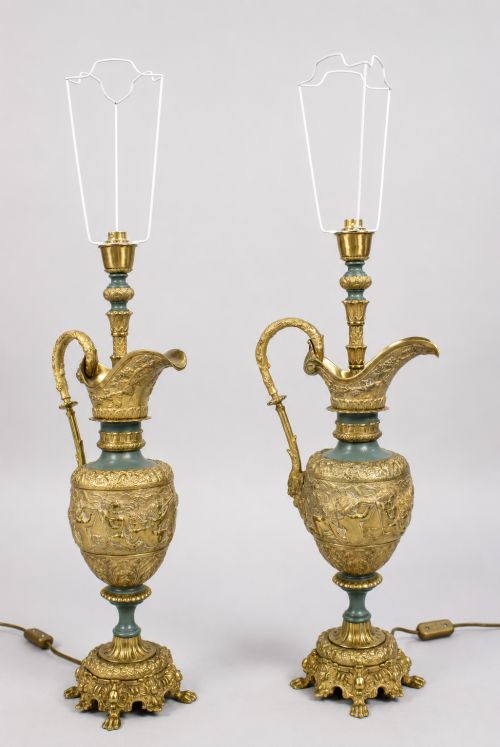
Metal items incorporate bronze, pewter, and gilt components, frequently cast with figural handles or mountings that frame the central vessel.
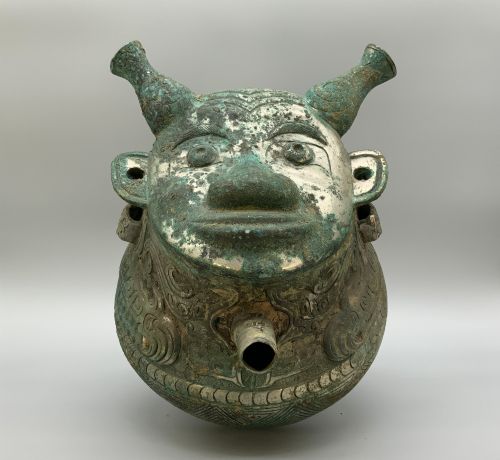
A curious bullrush jug stands alongside a hobbled cow creamer and a vessel bearing a human face.
Assessing quality
Quality rests upon the crispness of the moulding in ceramic and majolica pieces, where sharp relief and even glaze coverage distinguish finer workshops from commercial output.
In glass and metal, excellence shows in the weight of the material, the precision of applied trails or overlay cuts, and the integration of pewter or bronze mounts.
Sir Edmund Elton·Archibald Knox for Liberty Co·William Moorcroft for Macintyre·Georges Van De Voorde·Royal Worcester
The Antique Green Pitchers Glossary
- Majolica
- A type of earthenware covered in an opaque tin glaze and painted with brightly coloured metal oxides. This technique allows for vibrant greens and relief-moulded botanical motifs.
- Creamware
- A refined earthenware developed in England during the eighteenth century, possessing a pale yellowish cream colour under a clear glaze. It provides a smooth surface for painted decoration.
- Ewers
- Large pitchers with wide spouts and looped handles, historically used for pouring water or wine. Many antique examples serve decorative functions or operate as table lamps.
- Overlay glass
- A vessel formed by fusing two or more layers of contrasting glass colours together. Artisans then cut through the outer green layer to reveal the clear glass beneath.
Antique Green Pitchers: Frequently Asked Questions
How are antique green pitchers cleaned?
Dust ceramic and metal surfaces gently with a dry, soft cloth to preserve surface finishes and glaze integrity.
Avoid immersing antique glass or metal pieces in water, particularly those with gilding or enamel painting, and clean them only with a slightly damp cloth when necessary.
Can antique pitchers hold liquids safely?
Many ceramic and glass pieces were designed for functional service, but older earthenware and porous bodies can develop hairline fractures over time.
It is prudent to test vessels for leaks with cold water before using them to serve beverages at a table.
What defines Art Nouveau green pitchers?
Art Nouveau examples feature organic, asymmetrical lines inspired by natural forms, often incorporating whiplash curves, floral motifs, and maiden figures.
These pieces frequently combine green glass bodies with pewter or silvered metal mounts produced around the turn of the twentieth century.
How do I date a majolica green jug?
Dating relies on stylistic clues, registration marks stamped on the base, and the specific tones of the green lead-glazed earthenware.
Victorian pieces often display bold botanical or animal relief work, reflecting mid to late nineteenth-century manufacturing standards.