



Victorian Masons Jugs
Victorian masons jugs are robust ceramic pitchers shaped by nineteenth-century kilns, offering bold transfer prints and rich handles that anchor a room.
Victorian Masons Jugs
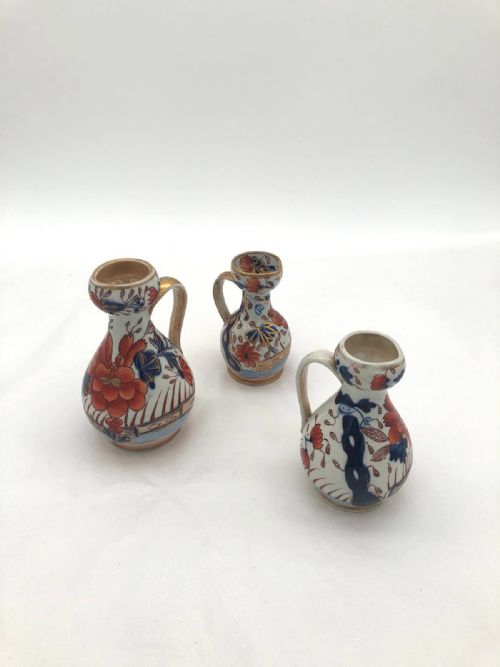
Victorian masons jugs comprise nineteenth-century earthenware and ironstone pitchers, appearing across forms such as crocus jugs, hydra shapes, and wash sets. These vessels range from grand basin sets to miniature examples, reflecting the versatile output of the potteries during the period.
The aesthetic leans heavily towards Chinoiserie and oriental-inspired decoration, often paired with grotesque handles or distinctive shapes like elephant's foot patterns. Buyers encounter both single decorative pitchers and graduated sets spanning the Georgian and Victorian eras.
Materials and Manufacture
Potters utilised durable ironstone and earthenware as the primary ceramic body, applying glazes to achieve a smooth finish suitable for daily use or display. This dense material allowed for substantial forms that survived the rigours of nineteenth-century households.
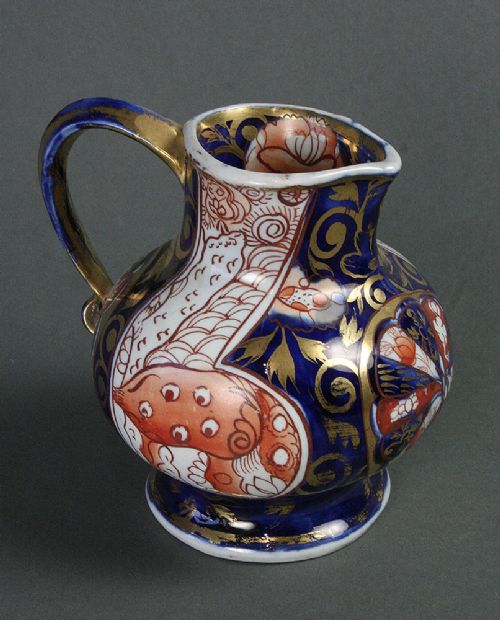
Makers embellished these pieces with enamel colours, cobalt blue grounds, and gold leaf or gilt details to highlight the moulded patterns. Transfer printing and hand-painting combined to create intricate Chinoiserie scenes and geometric scales.
Elephants foot patterns and grotesque serpent handles ensure these pitchers stare back at you from the shelf with distinct personality.
Assessing Quality
Quality rests in the crispness of the moulded relief, particularly on distinctive handles and serpent or grotesque motifs, where sharper lines indicate superior initial tooling. Finer pieces maintain rich saturation in the cobalt blue grounds and precise application of gold leaf.
Completeness within sets and the registration of transfer-printed patterns also divide standard production from exceptional examples. A well-preserved glaze without extensive crazing preserves the visual integrity of the underlying ceramic body.
The Victorian Masons Jugs Glossary
- Ironstone
- A patented ceramic material developed to provide the durability of stoneware combined with the refined appearance of porcelain. It forms the heavy body of many nineteenth-century pitchers.
- Chinoiserie
- European artistic interpretation of Chinese and East Asian decorative motifs, frequently featuring figures, landscapes, and fences. This style dominates the surface patterns on these ceramics.
- Hydra jug
- A specific pitcher form characterised by a flared rim, moulded serpent handle, and octagonal or faceted body. It draws inspiration from ancient Greek pottery shapes.
- Gilt
- A thin layer of gold or gold-coloured material applied to surface details and rims. It adds metallic contrast to the painted enamel designs.
- Crocus jug
- A vessel type traditionally designed for holding bulbs or cut flowers, featuring multiple spouts or a wide neck. These forms appear among the decorative pitchers of the era.
Victorian Masons Jugs: Frequently Asked Questions
What were victorian masons jugs used for?
These vessels served practical household functions ranging from serving liquids at tea tables to forming part of large wash sets in bedrooms. Some smaller versions acted as decorative ornaments or specialised floral containers.
Over time, their decorative merit shifted them from pantry utilities to display pieces valued for their vibrant patterns and sculptural handles.
How do I identify a hydra jug?
A hydra jug is recognised by its distinctive serpent-shaped handle and faceted or octagonal body profile. The rim often flares outward to create a wide pouring lip.
This classical shape distinguishes them from standard round pitchers found in the same period.
How should I clean these ceramic jugs?
Wash them gently by hand using lukewarm water and a mild detergent, avoiding abrasive sponges that can scratch the glaze. Submerging pieces with delicate gilt or enamel work for extended periods should be avoided.
Careful drying with a soft cloth prevents water spots on the ironstone surface.
Are these jugs dishwasher safe?
No, antique ceramics require gentle manual care rather than mechanical washing. The combination of high heat, strong detergents, and vigorous water jets in a dishwasher will damage the delicate gold leaf and enamel decorations.
Hand washing preserves the historic glaze and prevents structural stress to the ceramic body.