


Antique Green Man Carving
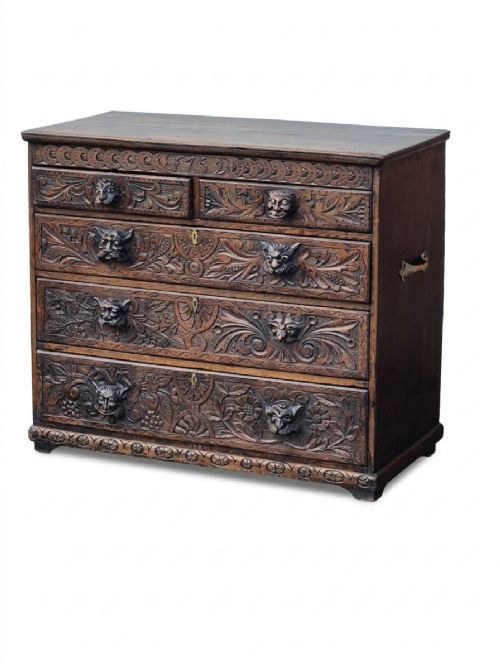
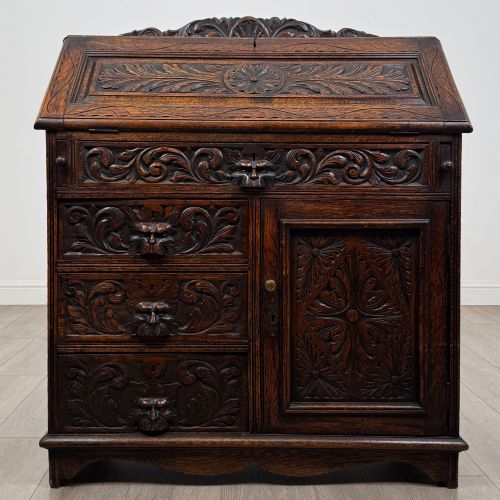
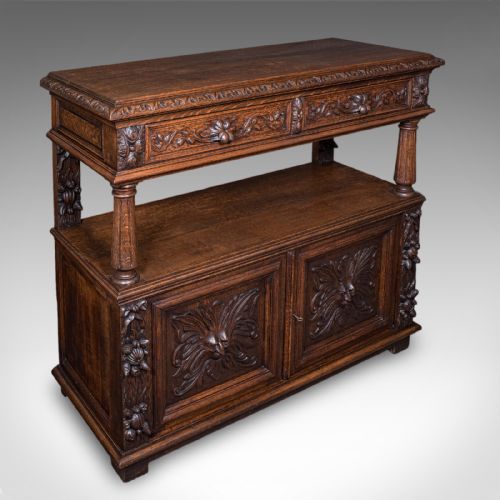
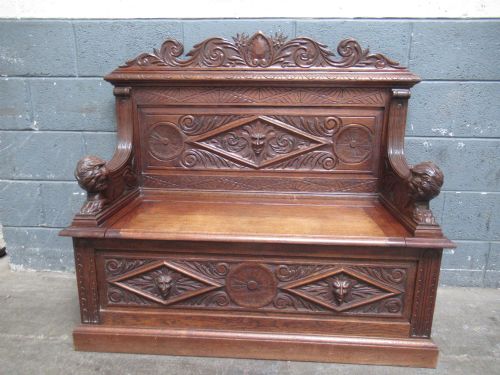
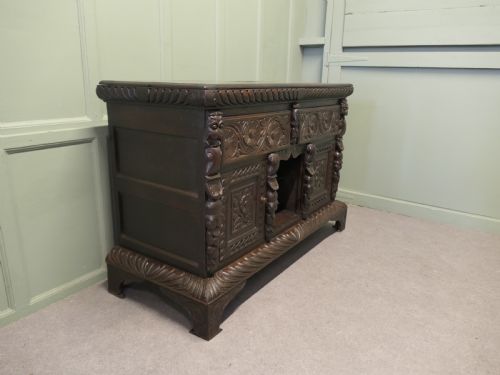
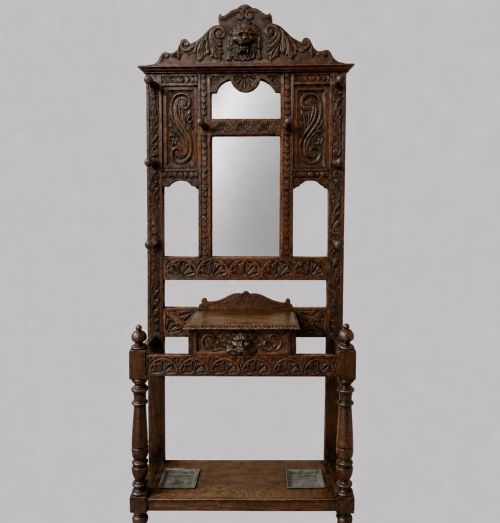
An antique green man carving brings foliate imagery and rustic folklore into furniture, most commonly appearing on nineteenth-century oak sideboards, desks, and hall stands.
Antique Green Man Carving
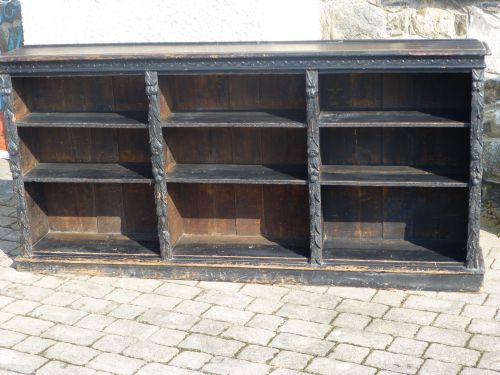
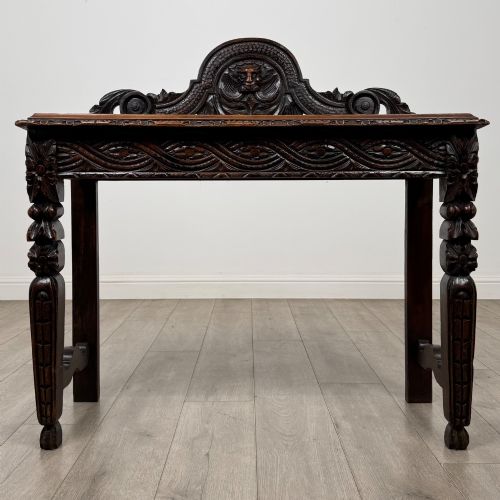
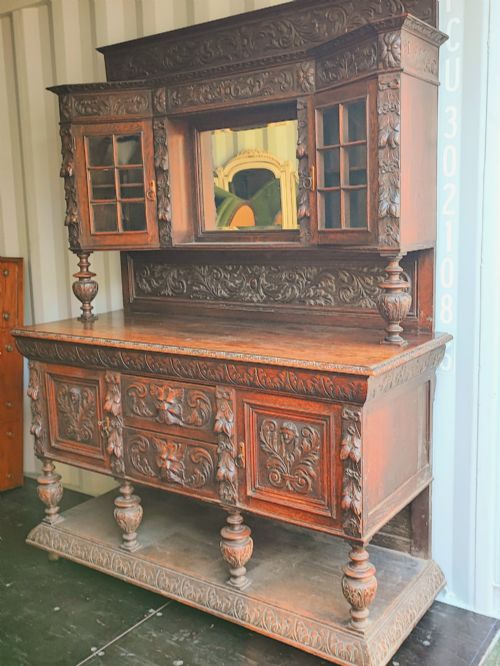
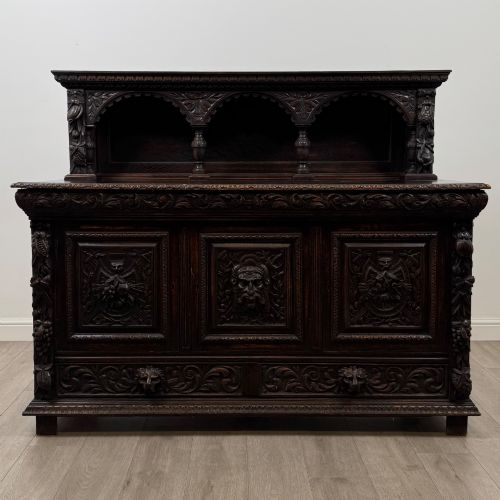
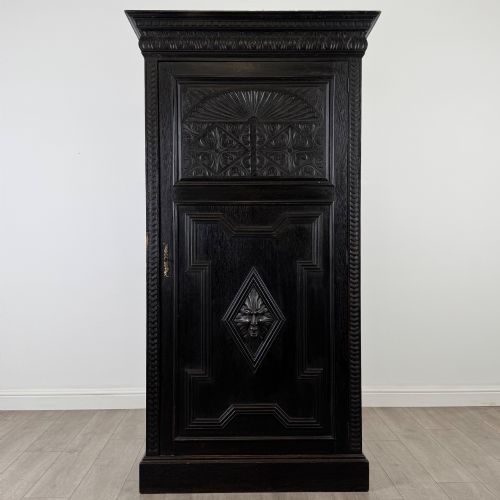
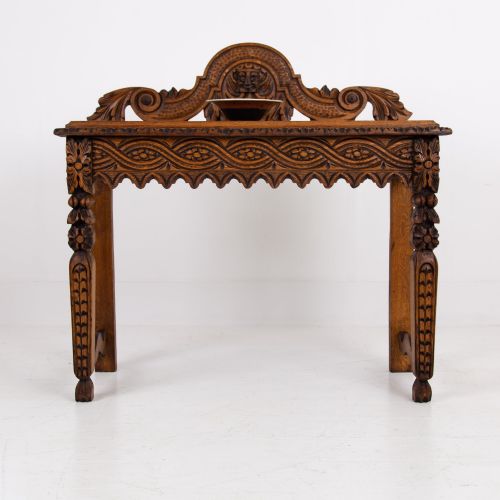
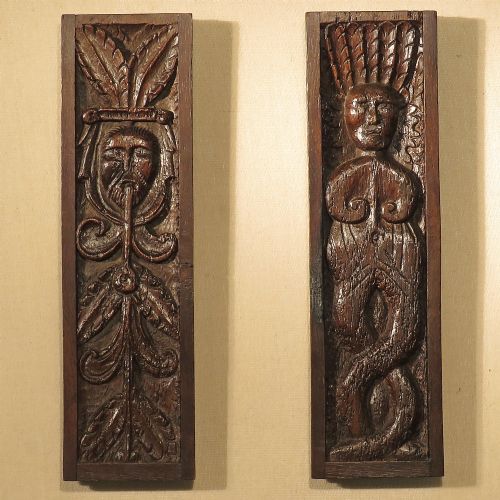
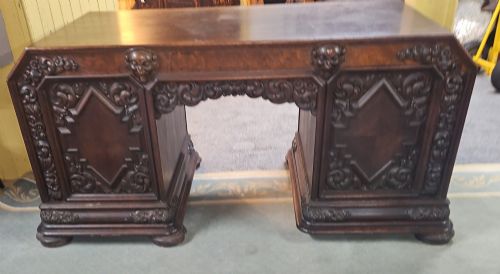
The pieces on this page span several practical household forms including monumental library bookcases, hall stands, sideboards, and writing desks. Alongside these larger items, earlier centuries are represented by standalone relief panels and architectural appliques in solid oak.
How they were made
The overwhelming majority of these pieces are constructed from solid oak, sometimes ebonised or finished as golden oak, which provided a stable timber for deep chisel work. Artisans carved the foliate masks directly into the structural panels, drawer fronts, and pediments of the furniture.
Secondary materials such as brass fittings, glass doors, leather writing inserts, and metal hardware support the primary woodwork. Joinery relies on traditional techniques suited to heavy timber, while decorative surfaces utilise relief carving and applied appliques.
What varies in quality
The distinction between ordinary and exceptional pieces lies entirely in the depth and animation of the carving. Master carvers rendered the foliage and facial expressions with high relief and dynamic movement, whereas lesser examples remain flat and formulaic.
Integration with the furniture form also dictates standard; superior items feature bespoke sculptural elements designed specifically for the piece, while standard work can feel like applied ornament rather than cohesive design.
Winterhalder & Hofmeier
The Antique Green Man Carving Glossary
- Green Man
- A sculptural motif showing a human face surrounded by or sprouting from leaves, vines, and branches. It symbolises rebirth and the cycle of nature in architectural and furniture decoration.
- Gothic Revival
- An architectural and design movement from the nineteenth century that revived medieval forms, pointed arches, and heavy carved woodwork. It serves as the primary stylistic context for these mask carvings.
- Frieze
- A broad horizontal band of sculpted decoration situated along the upper section of a sideboard, bookcase, or hall stand. Carvers frequently placed foliate masks within this architectural space.
- Applique
- A carved wooden element produced separately and fixed to the surface of a panel or cabinet. These range from sixteenth-century fragments to later decorative additions.
- Buffet
- A low sideboard or serving table designed for dining rooms and large hallways. These surfaces often carry prominent foliate masks on their central cupboard doors.
Antique Green Man Carving: Frequently Asked Questions
What is a green man carving?
A green man carving depicts a human face intertwined with foliage, leaves, and vines. It represents an ancient symbol of nature and rebirth.
In furniture design, these motifs appear predominantly on nineteenth-century revival pieces, integrated into panels, drawer fronts, and architectural pediments.
Which furniture types feature these carvings?
These carvings appear on larger household furniture designed for public rooms and hallways. Sideboards, bookcases, hall stands, and writing desks are the most common forms.
Smaller examples also exist as architectural panels or cabinet appliques originating from earlier centuries.
How do I date a carved oak piece?
Dating relies on examining the construction methods, timber patination, and the specific revival style employed. Victorian Gothic furniture typically combines heavy oak carcases with characteristic nineteenth-century hardware.
Earlier fragments from the sixteenth or seventeenth century display distinct hand-tool marks and timber shrinkage consistent with their age.
Where should I place a large carved sideboard?
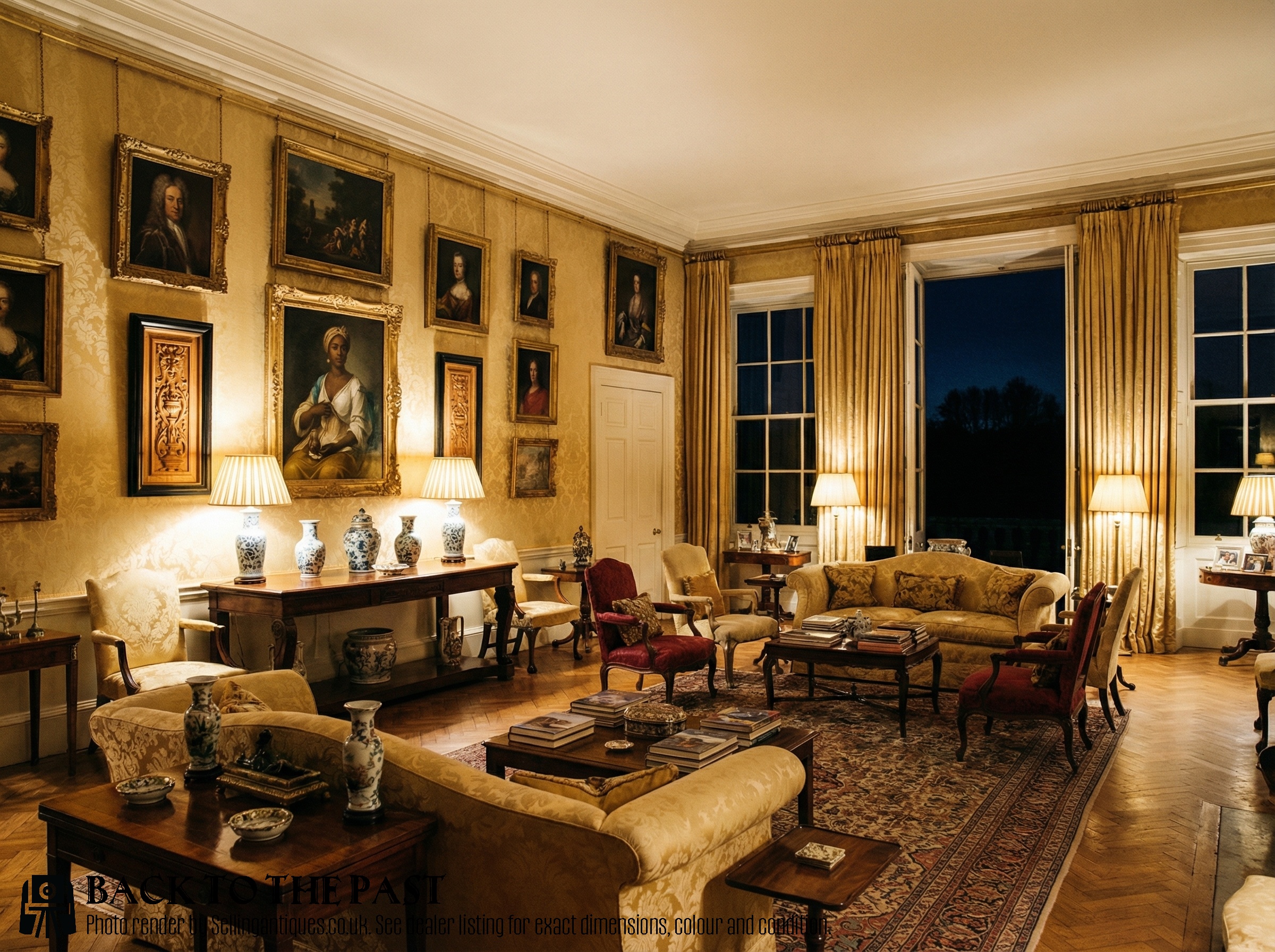
Large sideboards and buffets require generous wall space and structural support due to the heavy solid oak construction. They function effectively in dining rooms or spacious hallways.
Pairing them with rooms featuring traditional architecture allows the deep relief carving and dark timber to anchor the interior.