




Black Framed Wall Plaques
These black framed wall plaques bring together centuries of decorative craft, offering striking miniature art, reliefs and signage ready to hang.
Black Framed Wall Plaques
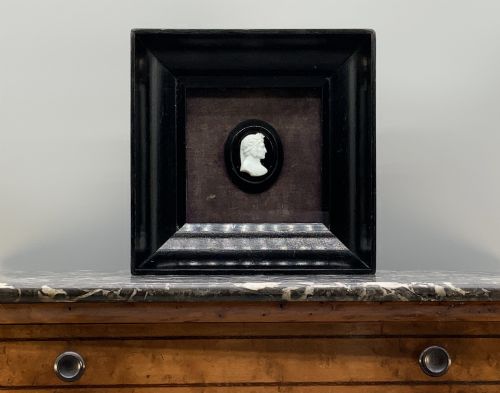
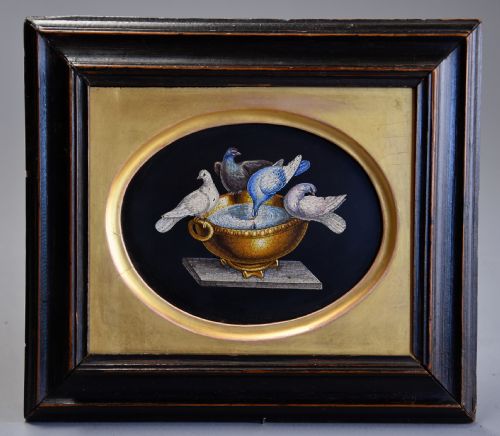
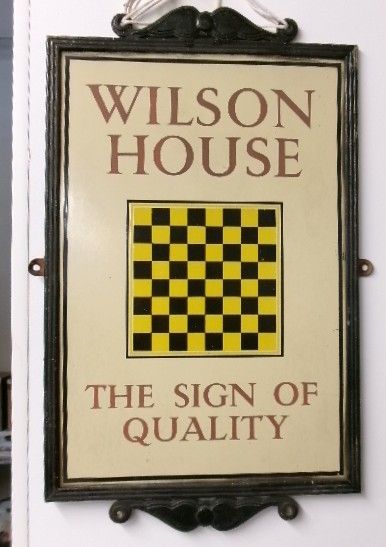
When you search for black framed wall plaques, you encounter a diverse gathering of decorative objects designed for hanging, united primarily by their dark surrounds. These pieces range from nineteenth-century Italian micromosaics and pietre dure marble pictures to early twentieth-century glass street signs and vintage advertising enamels.
The assortment spans multiple periods from the eighteenth century through to the interwar decades, taking forms such as carved ivory portraits, mother-of-pearl inlay panels and ceramic tiles. Ebonised wood and dark painted surrounds predominate, setting off the lighter materials held within.
Grand Tour souvenirs and religious shadowboxes sit alongside commercial signs and botanical roundels. This variety reflects how different eras turned to dark frames to give focus and gravity to intricate miniature scenes.
Materials and construction
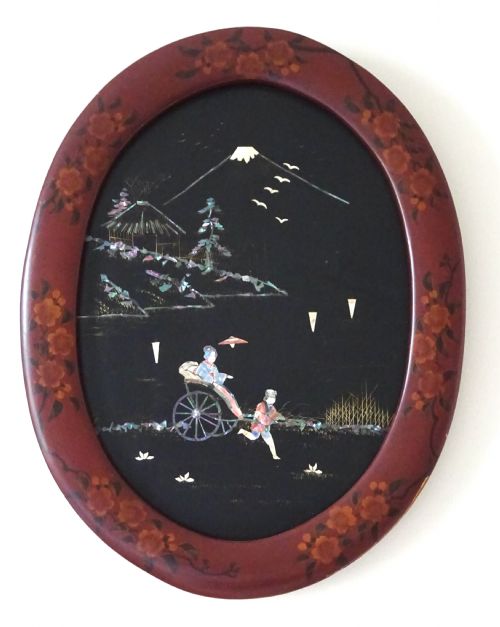
Makers utilised wood, slate, marble and metal as structural bases and mounting grounds, often employing ebonised wood to create a uniform dark boundary. Inlay techniques incorporated mother-of-pearl and abalone into red lacquered surfaces or dark wood panels to catch the light.
Detailed work relied on specialist mediums including micromosaic tesserae, carved ivory, pate-sur-pate ceramic and hand-carved Welsh slate. Glass and vitriolite served both protective framing functions and as the primary substrate for painted or enamelled signage.
Frames matched the period aesthetic, utilising moulded wood, papier-mâché and oak to secure relief panels, photographs and painted tableaux.
Listings feature works from the eighteenth, nineteenth and twentieth centuries, utilising materials from Welsh slate and oak to mother-of-pearl and vitriolite glass.
Assessing quality and execution
The distinction between standard examples and finer pieces lies in the precision of the handwork, whether in the minute tesserae of an Italian micromosaic or the crisp relief of a carved marble cameo. Superior execution shows in the fine detail of painted silhouettes, ceramics and inlaid mother-of-pearl foliage.
Materials dictate the upper tier of the range, where natural substances like marble, ivory and pietre dure demand expert carving and polishing. The integration between the central artwork and its dark frame determines the harmony of the finished piece.
The Black Framed Wall Plaques Glossary
- Micromosaic
- A picture assembled from tiny glass tesserae to form intricate pictorial scenes. These miniature works required immense patience from the artisan.
- Pietre dure
- An artistic technique using cut and fitted polished coloured stones to create geometric or figurative images. It appears in marble pictures and plaques.
- Ebonised wood
- Timber treated to mimic the dense, dark appearance of ebony. It provides a stark, clean border for colourful or reflective inlays.
- Pate sur pate
- A ceramic decorating method where liquid clay is applied in layers to a contrasting background to create a low relief design. Minton produced notable examples in this style.
- Vitriolite
- An opaque structural glass popular in the early twentieth century for signage and architectural cladding. It offers a glossy, durable surface.
Black Framed Wall Plaques: Frequently Asked Questions
What periods do these wall plaques come from?
The pieces span from the eighteenth century through the Victorian and Edwardian eras up to the 1930s. Grand Tour souvenirs and classical portraits often date to the earlier nineteenth century.
Later items include vintage commercial signs and interwar ceramic tiles. Each period utilises distinct materials such as Welsh slate, vitriolite glass and red lacquer.
How should I clean glass and lacquered frames?
Dust surfaces gently with a soft, dry cloth to prevent scratching delicate lacquer or mother-of-pearl inlay. Avoid chemical sprays and excessive moisture on old wood and painted areas.
Glass panels can be wiped with a damp cloth, taking care not to let liquid seep beneath the edge of the frame. Preserving the original finish requires minimal intervention.
Are these signs and plaques waterproof for outdoor use?
Most of these antique and vintage pieces are intended for indoor display, particularly items featuring delicate paper, ivory, micromosaic or fabric elements. Exposure to outdoor moisture and temperature changes can damage the materials.
Enamel advertising signs and vitriolite glass possess greater resilience, but older frames and metal fixings remain vulnerable to weathering. Indoor placement ensures the longevity of both frame and artwork.