


Antique Green Jewellery
Antique green jewellery brings together verdant gemstones and enamels across Victorian, Edwardian, and Art Deco designs to wear as rings, pendants, and brooches.
Antique Green Jewellery
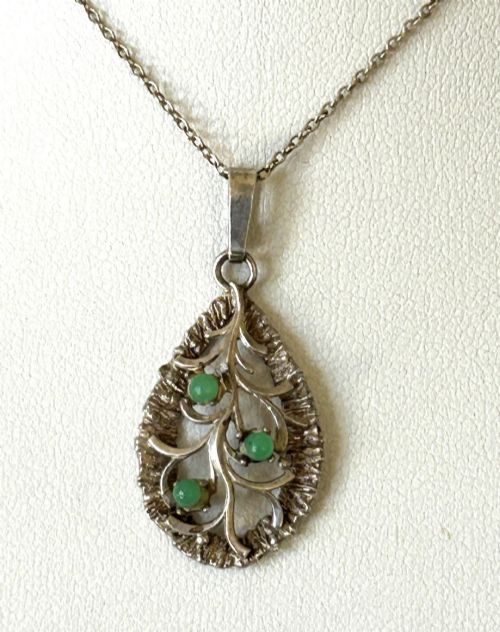
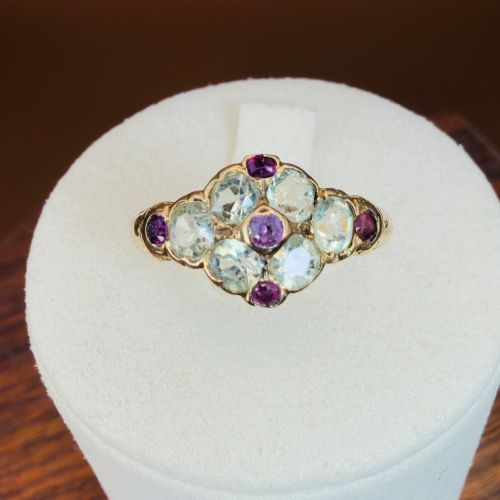
When searching for antique green jewellery, a buyer encounters pieces dominated by natural emeralds, peridots, and green jade, alongside enameled silver and gold items. The selections span from late Victorian and Edwardian work to Art Deco geometric settings and mid-century Scandinavian pieces.
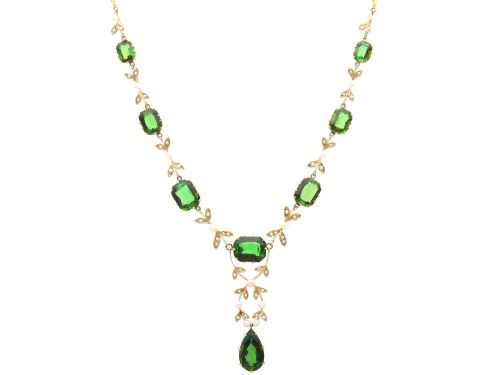
Pendants, cluster rings, and drop earrings form the most frequent encounters on this page, often pairing green stones with seed pearls or old-cut diamonds. The forms reflect prevailing stylistic shifts from flowing organic motifs to rigid geometric symmetry.
Materials and construction methods
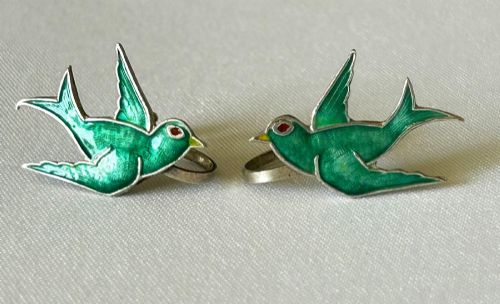
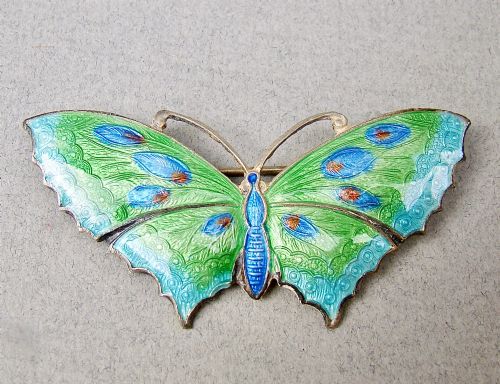
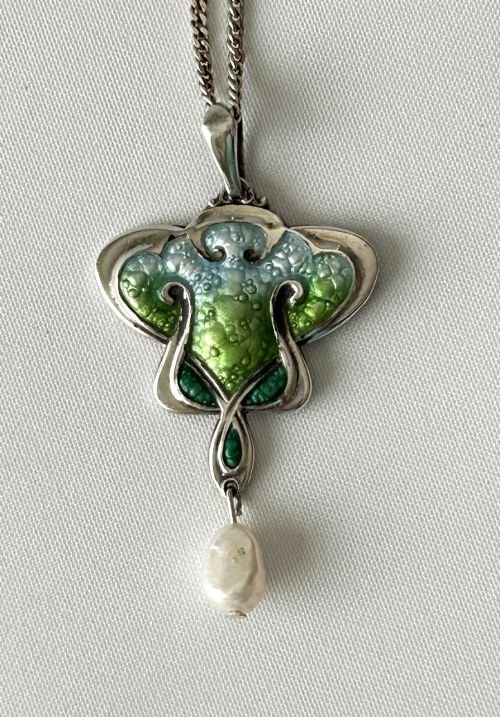
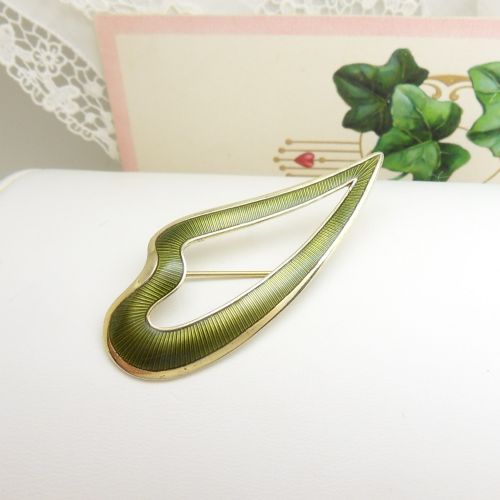
Goldsmiths utilised yellow gold, white gold, and platinum as structural settings, pairing precious metals with gemstone combinations like emerald, peridot, and tourmaline. Enamel work, particularly guilloché techniques on sterling silver, added vibrant translucent colour to brooches and decorative items.
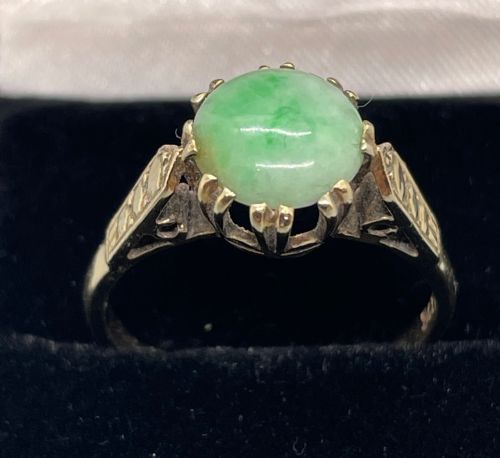
Gemstones received hand-cut facets or smooth cabochon polishes, set securely within claw, bezel, or channel mounts. Pearls and carved stones were integrated using pins, loops, and delicate chains characteristic of period benchwork.
Antique Green Jewellery Retail Price Guide 2026
Typical asking prices for green jewellery among the pieces listed under this phrase on Sellingantiques today, from the lower quarter to the upper quarter. They describe what is for sale here now, not the wider market.
A spinning fob lets the wearer rotate a bloodstone centre, offering two distinct faces for daily indecision.
Factors determining quality
The standard of antique green jewellery rests upon the saturation and clarity of the stones, with natural emeralds and unheated peridots commanding attention through their depth of hue. Metalwork execution dictates overall refinement, visible in the precision of platinum millgraining and the preservation of guilloché enamel surfaces.
Proportion and design integrity separate standard workshop output from exceptional creations, especially within distinct movements like Art Nouveau and Art Deco. Original settings and intact stone pairings maintain the historical value and visual harmony of each piece.
Georg Jensen·Murrle Bennett
The Antique Green Jewellery Glossary
- Cabochon
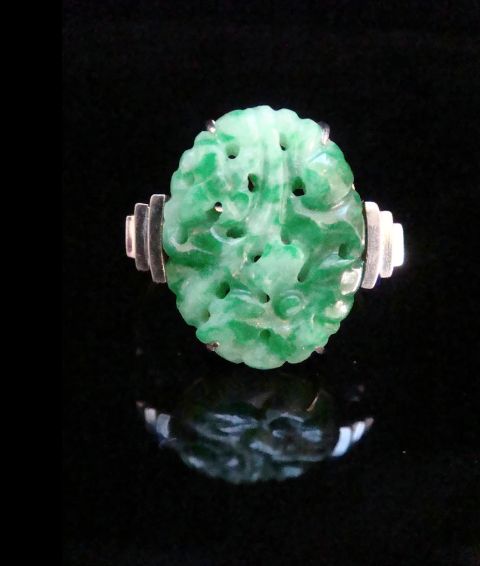
- A gemstone shaped and polished with a smooth, rounded surface rather than faceted edges. This style highlights the internal colour and optical properties of stones like jade and chrysoprase.
- Guilloché
- A decorative technique where a precise, intricate pattern is mechanically engraved into a metal substrate before translucent enamel is applied. It creates shimmering depth across silver brooches and compacts.
- Peridot
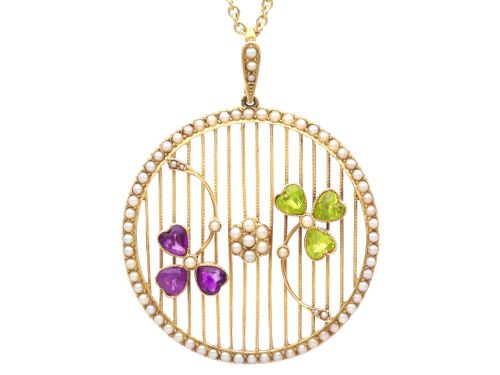
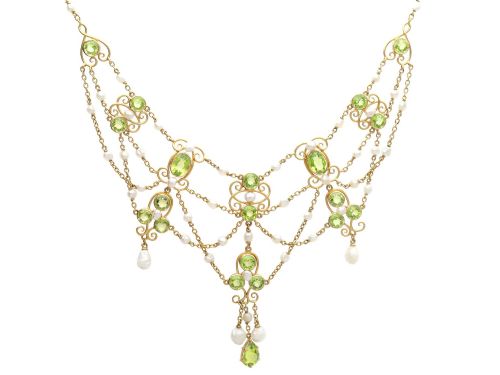
- A transparent yellowish-green silicate mineral frequently set in Edwardian and Suffragette jewellery. It appears alongside seed pearls in yellow gold pendants and drop earrings.
- Millgrain
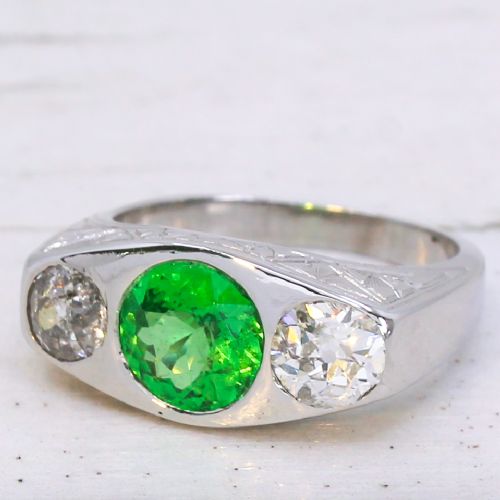
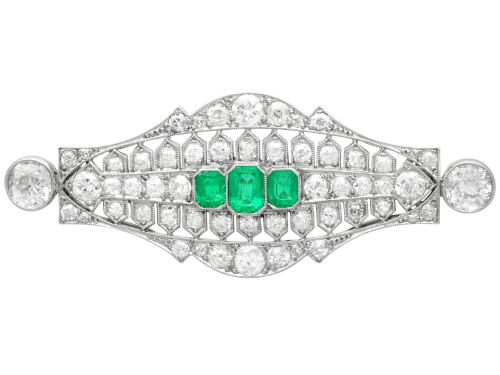
- A border of tiny raised metal beads decorating the edges of platinum or white gold settings. This technique defines period craftsmanship by framing stones with a neat, textured finish.
- Suffragette
- Jewellery featuring the symbolic colour triad of green, white, and violet, associated with the early twentieth-century women's suffrage movement. These pieces commonly incorporate peridot, pearls, and amethysts.
Antique Green Jewellery: Frequently Asked Questions
What periods do these green pieces come from?
The listings span multiple eras, beginning with late Victorian and Edwardian designs before progressing through Art Nouveau and Art Deco periods.
Mid-century Scandinavian items also appear, demonstrating how green gemstones and enamels remained popular across successive design movements.
Which green stones appear most often?
Peridot and emerald dominate the gemstone selections, accompanied by green jade, tourmaline, and chrysoprase.
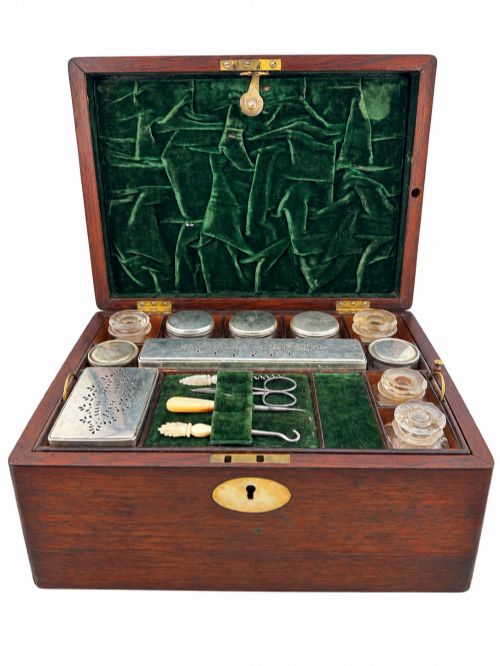
Enamel work and Connemara marble also provide the green coloration in specific silver brooches and trinket boxes.
How should antique green jewellery be worn?
Items like rings, drop earrings, and pendants adapt readily to daily wear when handled with appropriate care for their age.
Brooches and spinning fobs suit lapels and chains, allowing delicate settings and historic gemstones to be displayed securely.
How do I identify Art Deco green pieces?
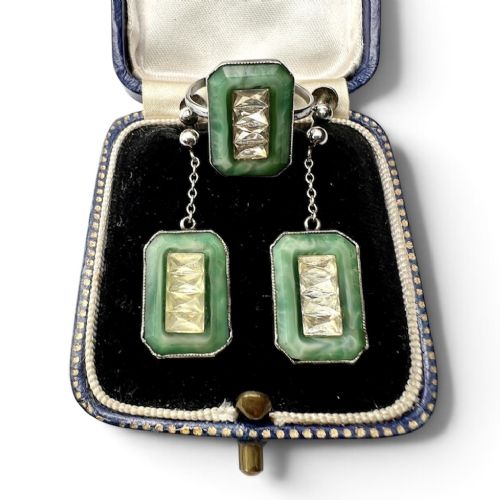
Art Deco designs rely on geometric platinum settings, calibre-cut emeralds, and sharp lines that contrast with earlier organic motifs.
These pieces frequently pair bright green jade or emeralds with structured diamond arrangements characteristic of the 1920s and 1930s.