




Antique Green Credenza
An antique green credenza brings deep colour and storied storage to a room, drawing the eye with painted finishes and rich timbers.
Antique Green Credenza
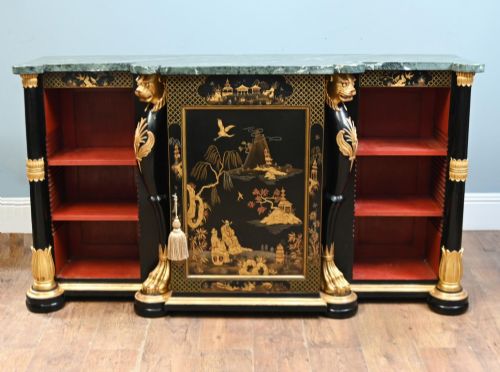
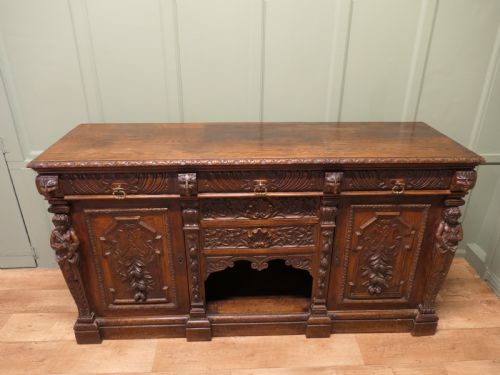
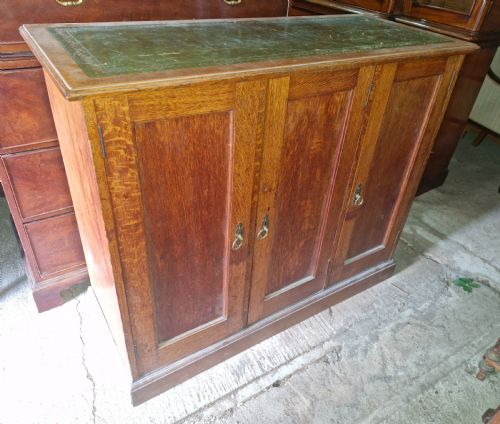
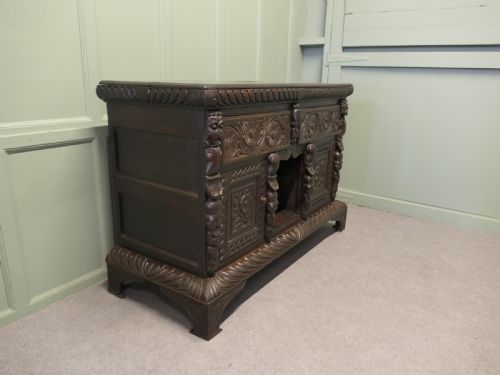
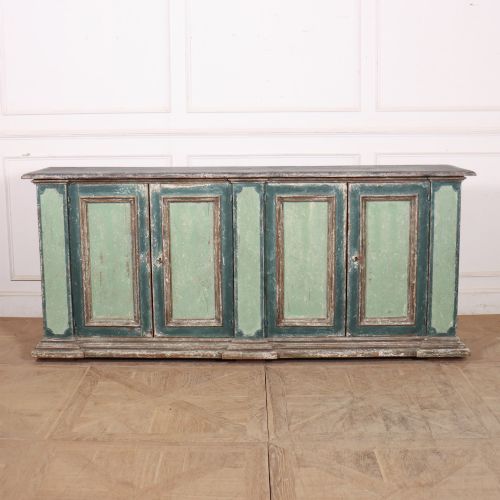
When buyers search for an antique green credenza, they encounter a range of substantial storage furniture encompassing sideboards, painted side cabinets, and dresser bases. These items span periods from the eighteenth century through the nineteenth century and into the early twentieth century, showing influences such as English Country, Regency, and Gothic Revival. The most frequent iteration on this page is the painted wooden sideboard or cupboard finished in green pigment, often featuring carved oak details or decorative panels.
The lineage of these items stretches across diverse European workshops, including English country houses, Scottish properties, Venetian studios, and French workshops. Forms range from monumental buffets and breakfront commodes down to compact side cabinets and kitchen cupboards. Each piece serves primarily as a grounding anchor for a dining room, hallway, or living space, offering deep surface areas and functional internal shelving or drawers.
Makers and decorators utilised local materials suited to their regional traditions, resulting in robust pine, heavy oak, and delicate fruitwoods treated with original or later green paint. Buyers will find that surface treatments vary considerably, from distressed kitchen finishes to elaborate Venetian painted scenes. The underlying architecture consistently prioritises utility alongside decorative presence, making them practical centerpieces for modern interiors.
How they were made
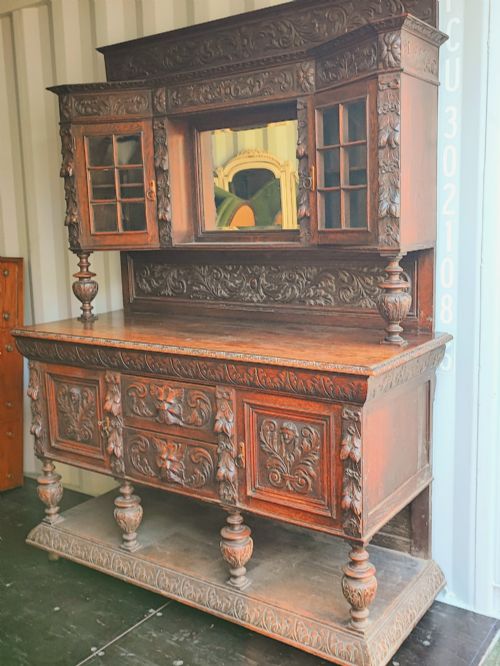
Craftsmen built these pieces predominantly from solid timbers like oak, pine, and mahogany, frequently employing hand-carved ornamentation such as green man motifs and linenfold panels. Structural joinery relied on traditional methods, including dovetailing for drawers and mortise and tenon joints for frames.
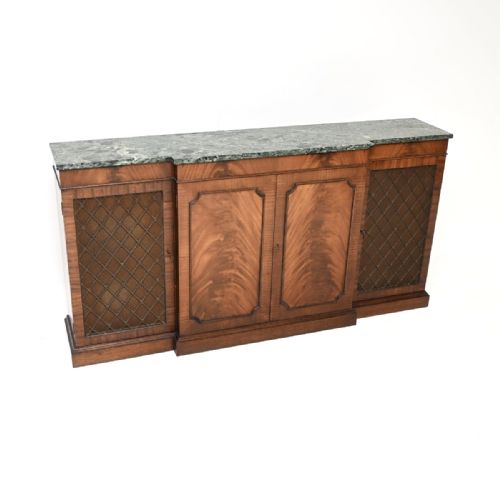
Surface decoration involved the application of lead-based or oil paints in green hues, sometimes layered over gesso or applied directly to bare wood. Finer examples integrated imported materials such as marble for top surfaces and brass mounts for key escutcheons and handles.
Antique Green Credenza Retail Price Guide 2026
Typical asking prices for green credenza among the pieces listed under this phrase on Sellingantiques today, from the lower quarter to the upper quarter. They describe what is for sale here now, not the wider market.
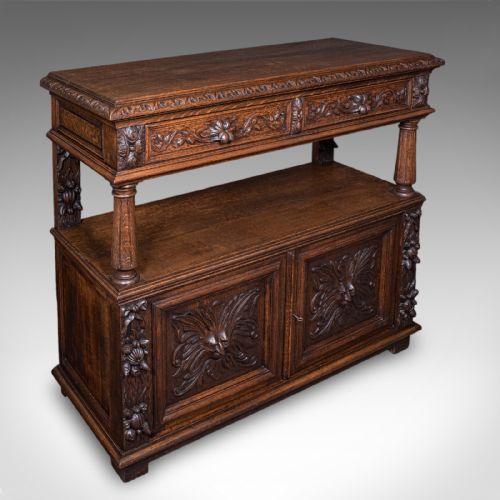
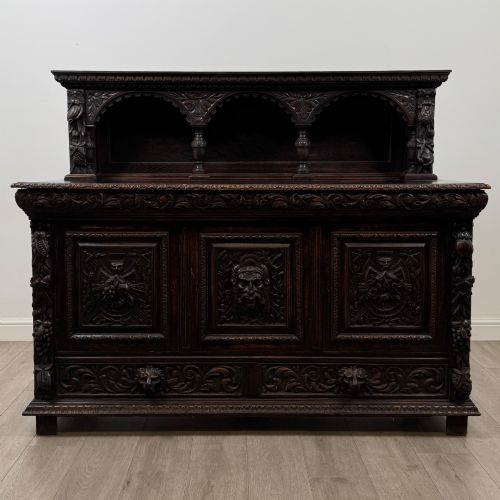
A watchful green man peers through carved foliage, guarding your dining linens with leafy suspicion.
What varies in quality
The distinction between tiers of quality rests heavily on the integrity of the timber and the sophistication of the carved or painted surface. Pieces retaining their original unstripped green paint layer command greater interest than those subjected to modern repainting.
Construction depth dictates value, with thicker cabinet walls, robust internal framing, and original hardware indicating superior workshop origin. The presence of secondary woods, hand-beveled marble tops, and intricate marquetry further elevates the standing of an individual piece.
Pauly et Cie·Melissa White·Gaudreaux
The Antique Green Credenza Glossary
- Dresser base
- A lower storage unit featuring cupboards and drawers, historically used in kitchens and dining spaces for food preparation and service. These pieces typically lack the upper plate rack associated with traditional tall dressers.
- Green man
- A sculptural architectural ornament depicting a human face surrounded by or entwined with foliage, vines, and branches. This motif frequently appears carved into heavy oak nineteenth-century furniture.
- Breakfront
- A cabinet design where the central section projects forward past the flanking side sections. This configuration adds architectural depth and visual weight to large sideboards and commodes.
- Commode
- A low standing cabinet or chest of drawers, generally originating from French or continental traditions. They often feature decorative painted finishes or marble tops.
- Chiffonier
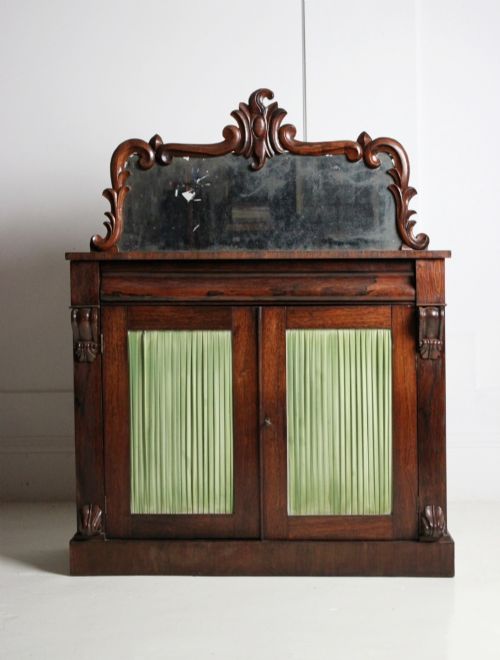
- A small sideboard or cabinet popular during the Regency and Victorian periods, usually fitted with doors enclosing shelves and sometimes topped with a raised gallery.
Antique Green Credenza: Frequently Asked Questions
What rooms suit an antique green credenza best?
These substantial storage pieces fit naturally into dining rooms, grand hallways, or spacious sitting areas where they provide both surface display space and deep internal organisation.
Their striking green painted finishes and rich timber grains allow them to act as grounding focal points against neutral or contrasting walls.
How do I care for painted wooden surfaces?
Maintain the finish by dusting gently with a soft, dry cloth and avoiding modern chemical polishes that can degrade historical paint layers.
Keep the furniture away from direct heat sources and strong sunlight to prevent the timber from warping and the pigment from fading over time.
Are these pieces suitable for everyday use?
Built from solid timbers like oak and pine, these robust items were designed for heavy domestic service and easily withstand daily household demands.
Internal shelving and deep drawers offer practical storage for tableware, linens, or modern media equipment while maintaining period character.
How can I tell a Victorian piece from earlier eras?
Victorian examples often display heavier, deeper carved ornamentation such as green man motifs and dark oak patination, reflecting the Gothic Revival influence.
Earlier eighteenth-century or Regency items typically exhibit cleaner architectural lines, finer mahogany veneers, or restrained brass mounts.