



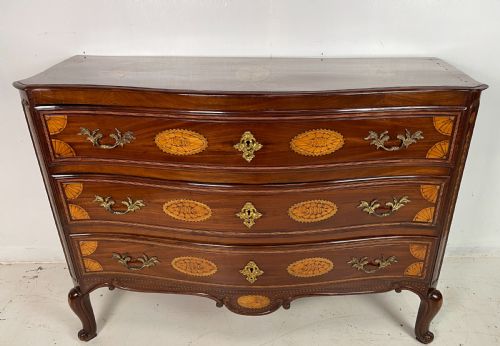


Continental Side Cabinet
A continental side cabinet brings regional European character and practical storage to a room through varied timbers and painted finishes.
Continental Side Cabinet
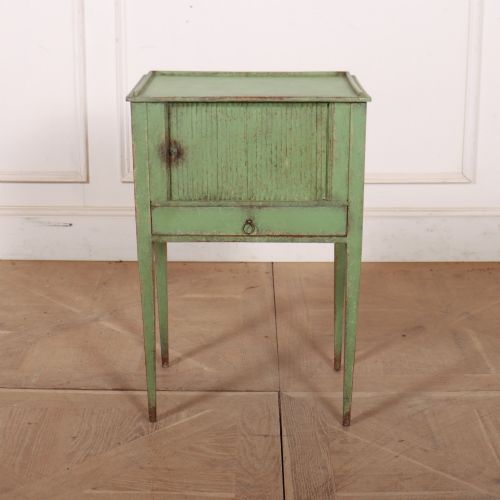
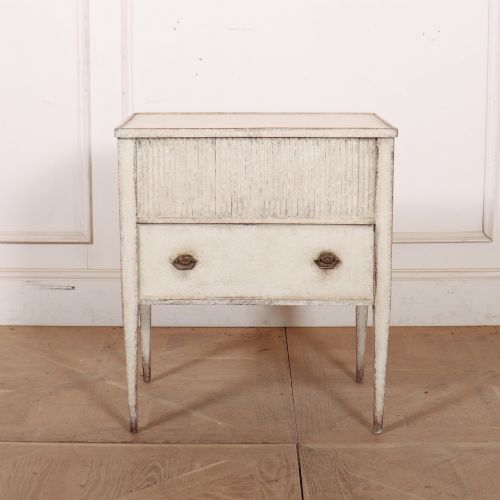
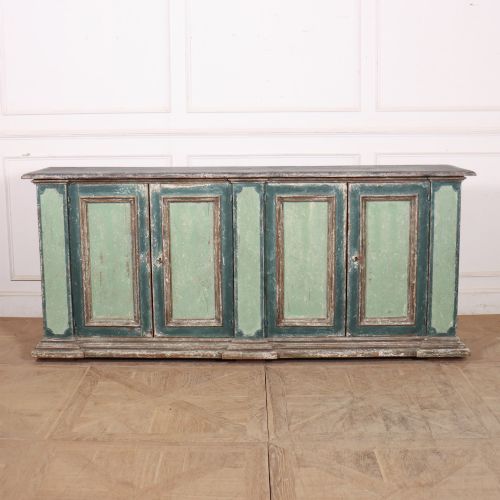
When you search for a continental side cabinet, you encounter a diverse group of storage furniture originating from European workshops outside Britain. These pieces span several centuries, encompassing compact bedside cabinets, commodes, larger sideboards, and display furniture.
The selections on this page demonstrate the broad geographic scope of the category, featuring regional interpretations from Italy, France, Germany, the Netherlands, and Flanders. Buyers seek these items to introduce distinct continental proportions and historical presence into domestic interiors.
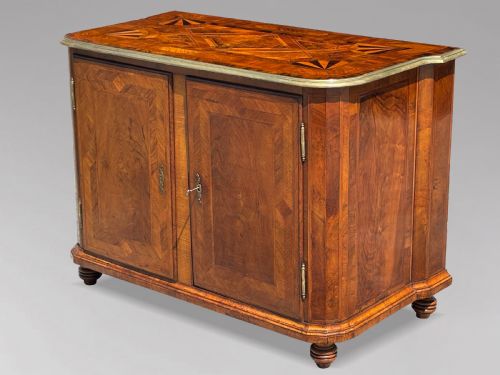
Provincial and formal expressions appear side by side in the inventory, ranging from simple painted pine country pieces to elaborate walnut and marquetry creations. Bedside tables and smaller cupboards dominate the current selection, offering practical surfaces alongside enclosed storage.
Materials and Construction
Cabinetmakers utilised a wide selection of native and exotic timbers, pairing structural woods like oak, pine, and elm with decorative veneers including walnut, mahogany, kingwood, and satinwood. Fruitwood and limewood also feature prominently, particularly in provincial and carved items.
Surface ornamentation defines many of these pieces, employing intricate marquetry inlays, parcel gilt highlights, and painted polychrome finishes on wood. Marble tops, frequently in white or Carrara varieties, provide durable and decorative surfaces on commodes and bedside cabinets.
Hardware and structural detailing incorporate brass for handles and mounts, alongside iron elements and glass panels for display doors. Construction techniques reflect traditional regional joinery, from heavy framing in Flemish Baroque examples to lighter pegged joints in painted pine country pieces.
Continental Side Cabinet Retail Price Guide 2026
Typical asking prices for continental side cabinet among the pieces listed under this phrase on Sellingantiques today, from the lower quarter to the upper quarter. They describe what is for sale here now, not the wider market.
The site's listings show a strong representation of 18th and 19th-century pieces, with walnut, pine, and painted wood serving as the most common materials.
Distinctions in Quality
The degree of refinement in the timber preparation and veneer selection largely determines the standing of a piece within its category. Finely figured walnut, burr elm, and precise marquetry indicate an ambitious workshop creation, whereas simpler painted pine pieces rely on charm and original surface patination.
The integrity of structural elements, the crispness of carved details such as columns or giltwood motifs, and the preservation of original marble tops separate standard regional furniture from exceptional examples. Finer cabinets exhibit harmonious proportions and meticulous attention to interior secondary woods.
The survival of original painted decoration or untouched surface finishes heavily influences the character of provincial pieces. Subtle signs of age in the timber and patination on brass mounts confirm the authenticity of the period construction.
The Continental Side Cabinet Glossary
- Marquetry
- Decorative patterns formed by the insertion of small pieces of veneer into a fitted wood ground. This technique creates complex floral or geometric designs across door fronts and drawer panels.
- Commode
- A low chest of drawers or cabinet originating in France, typically standing on relatively tall legs. These pieces often feature serpentine fronts and marble tops.
- Parquetry
- Geometric wood inlay work used primarily for flooring and table or cabinet tops. It forms repeating patterns such as cubes or chequers using contrasting timber grains.
- Parcel Gilt
- Partially gilded woodwork where gold leaf highlights specific carved details or mouldings against a painted or polished wood ground.
- Serpentine
- A furniture front or top shaped with a curving contour, sweeping outward in the centre and inward at the sides or vice versa.
Continental Side Cabinet: Frequently Asked Questions
What defines a continental side cabinet?
A continental side cabinet encompasses enclosed storage furniture originating from mainland Europe, distinct from British regional cabinetmaking traditions. These pieces include bedside tables, commodes, and smaller cupboards.
They serve as functional storage items while displaying the distinct design characteristics and timber choices typical of their country of origin, such as Italy, France, or the Netherlands.
How were these cabinets used historically?
These cabinets fulfilled various domestic storage needs depending on their size and room placement. Smaller bedside versions held night lighting and personal items, while larger commodes and sideboards stored linens or dining wares.
Display cabinets and wall shelves showcased valued objects, combining utility with decorative presentation in period interiors.
How do I style a continental cabinet at home?
A continental cabinet integrates well into both traditional and contemporary interiors as a focal storage piece or bedside table. Placing a lamp or ceramic object on the surface highlights the timber grain or marble top.
Allowing the piece room to breathe lets the distinct regional proportions and surface decoration become a natural feature of the room.
How can I tell different regional styles apart?
Regional styles reveal themselves through timber selection, decorative motifs, and construction methods characteristic of specific European countries. For instance, Dutch and Italian pieces often feature distinctive painted finishes or floral marquetry.
Flemish examples lean towards heavier oak construction and Baroque carving, while French commodes frequently utilise serpentine shapes and fine veneer work.