




Antique Graduated Drawers
These antique graduated drawers offer a practical storage solution built with descending drawer depths.
Antique Graduated Drawers
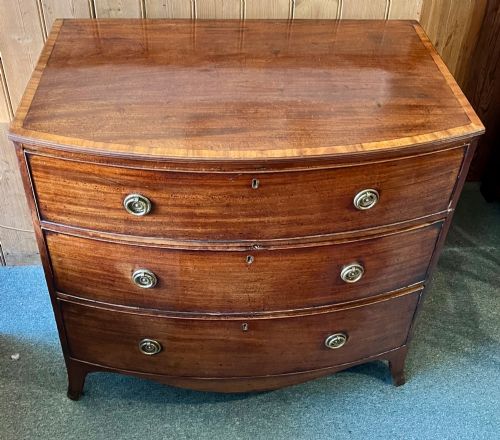
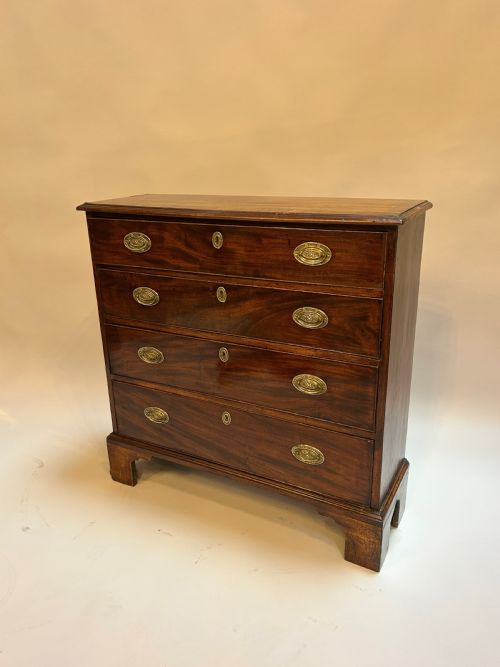
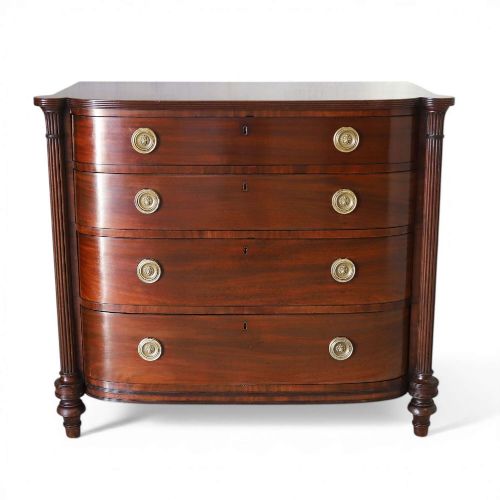
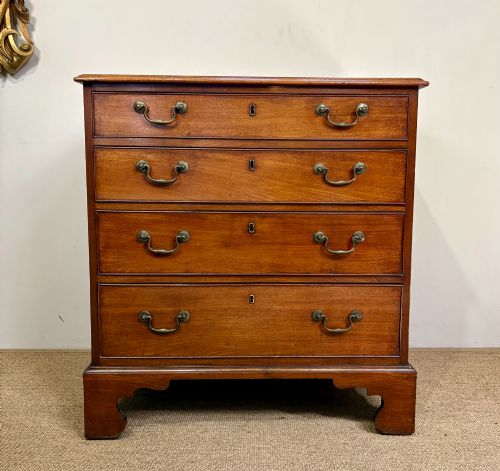
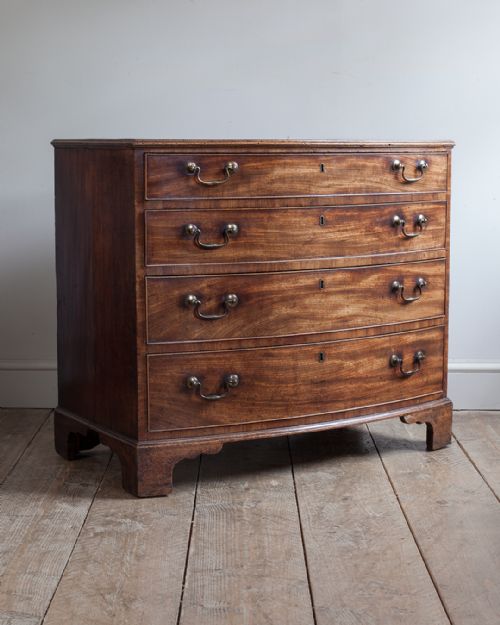
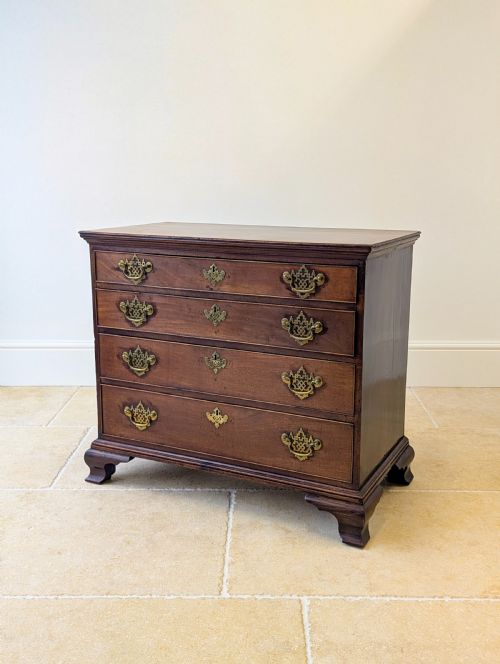
When you search for antique graduated drawers, you encounter timber storage pieces where the individual drawers decrease in depth from bottom to top. These chests and cabinets date primarily from the eighteenth and nineteenth centuries, spanning the Georgian, Regency, and Victorian periods.
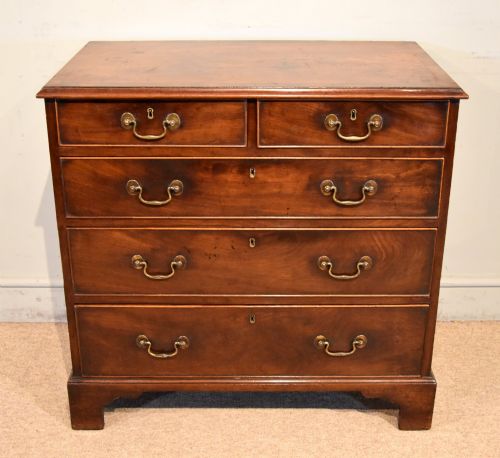
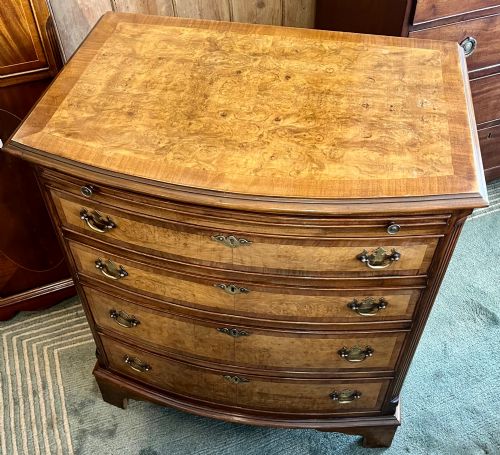
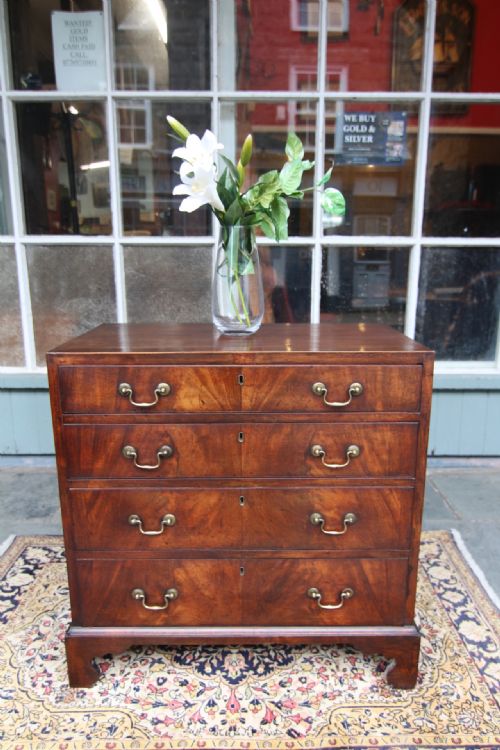
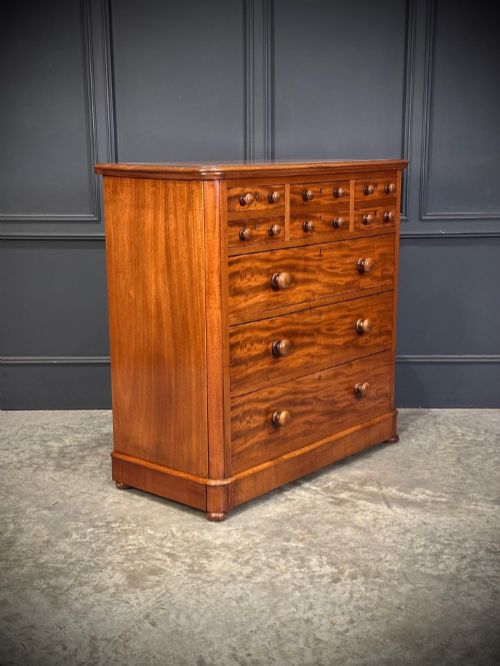
Mahogany, burr walnut, oak, and yew wood dominate the construction, often formed into bow-front, serpentine, or straight-front chests of drawers alongside bookcases. The most common form on this page is the classic mahogany chest of drawers, built with four or more graduated tiers.
Makers shaped these timber carcasses using dense hardwoods, frequently incorporating brass pulls or escutcheons on the drawer fronts. Pieces range from tall narrow formats to small proportions intended for intimate chambers or halls.
How they were made
Cabinet makers joined solid and veneered timbers such as mahogany, walnut, and oak using traditional hand-cut joints to form the main carcass and internal drawer structures. Timber selection prioritized rich grain patterns like flame mahogany and burr walnut for the primary visible surfaces.
Drawer construction relied on precise hand-cut dovetails joining the sides to the front and back boards, ensuring durability through decades of daily opening and closing. Metal hardware, specifically cast brass drop handles and keyplates, completed the assembly.
Antique Graduated Drawers Retail Price Guide 2026
Typical asking prices for graduated drawers among the pieces listed under this phrase on Sellingantiques today, from the lower quarter to the upper quarter. They describe what is for sale here now, not the wider market.
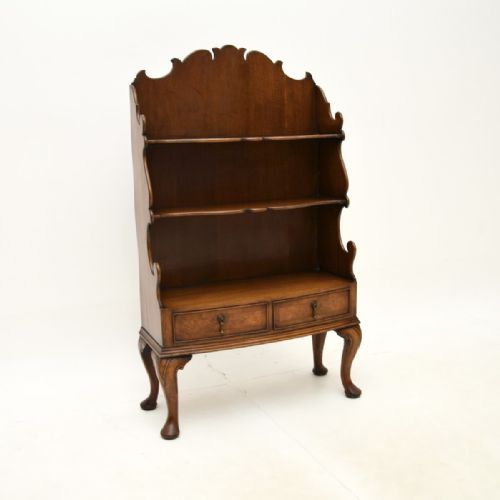
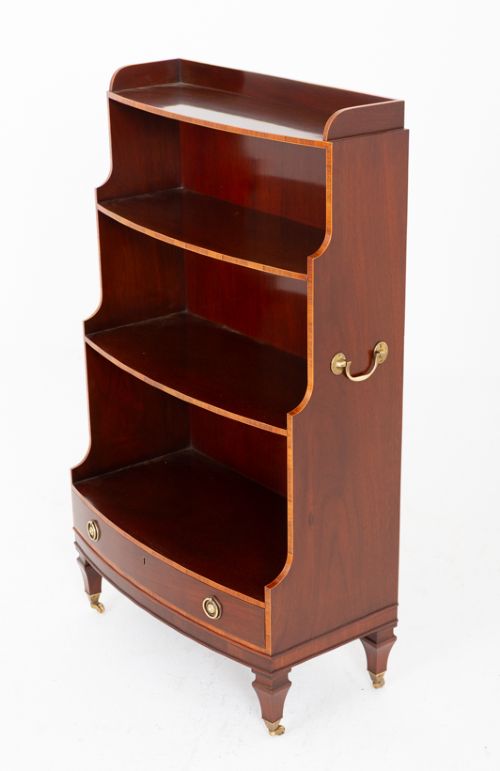
The inventory encompasses standard chests of drawers, shop counters, and open waterfall bookcases.
What varies in quality
The refinement of the timber figure and the crispness of the drawer joinery separate standard utility pieces from exceptional examples. Finer items exhibit carefully matched veneers across the graduating drawer fronts, maintaining continuous grain patterns from top to bottom.
Proportion and scale dictate the desirability of a piece, with smaller proportions and serpentine or bow-front profiles demanding greater skill from the original maker. The integrity of the secondary timbers and the original brass hardware further distinguish the grade of the work.
The Antique Graduated Drawers Glossary
- Graduation
- The intentional decrease in the depth of drawers from the lowest to the highest tier. This arrangement places heavier items at the bottom and lighter items near the top.
- Bow-front
- A convex curved cabinet or chest front that swells outward in the centre. This style gained popularity during the Regency and late Georgian periods.
- Serpentine
- A horizontally undulating front shape featuring a central convex curve flanked by concave sweeps. Cabinet makers utilised this intricate profile on high-status eighteenth-century pieces.
- Cross-banded
- A decorative border technique where thin strips of veneer are laid perpendicular to the grain of the surrounding surface. It frames the primary timber of drawer fronts.
- Flame mahogany
- A distinctive wood grain figure resembling flickering flames, achieved by cutting across the branch forks of the tree. Furniture makers prized this figure for principal display surfaces.
Antique Graduated Drawers: Frequently Asked Questions
What are graduated drawers?
Graduated drawers are a series of storage compartments stacked vertically where each drawer becomes progressively shallower toward the top of the piece.
This design created a balanced visual appearance while accommodating different categories of clothing or household items.
How do I date a chest of drawers?
Dating involves examining the timber species, construction joints, handle hardware, and overall architectural style of the cabinet.
Georgian pieces often feature fine oak secondary timbers and hand-cut dovetails, whereas later Victorian examples utilise heavier proportions and machine-assisted elements.
Where were these pieces used?
These chests functioned primarily in bedrooms, dressing rooms, and hallways for storing linens, garments, and personal documents.
Smaller proportional versions suited tighter spaces within townhouses and country residences alike.
How do I care for antique timber?
Maintain antique wood by keeping pieces away from direct heat sources and sudden fluctuations in atmospheric humidity.
Apply traditional beeswax periodically to nourish the surface polish and protect the grain.