


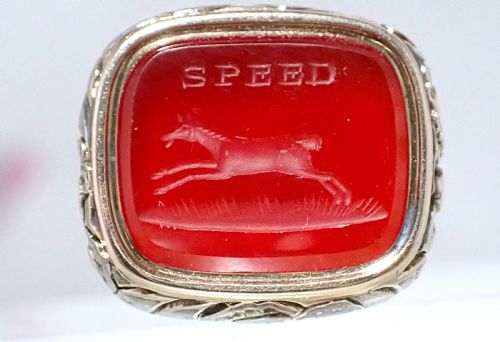


Antique Gold Fob Seal
An antique gold fob seal carries private ciphers and coats of arms into the palm, worn from watch chains across Georgian, Victorian, and Edwardian days.
Antique Gold Fob Seal
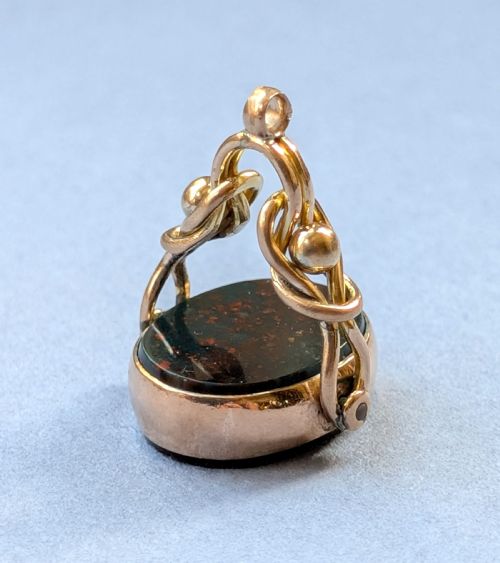
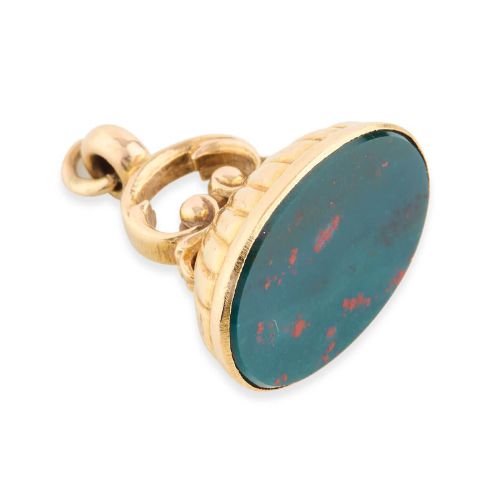
An antique gold fob seal is a pocket watch accessory that doubles as a personal stamp, suspended from chains or worn as pendants and charms. When you examine an antique gold fob seal on this page, you encounter small desk seals adapted for personal adornment, designed to impress wax with a family crest or initials.
The pieces appearing here span Georgian, Victorian, and Edwardian eras, alongside later twentieth century iterations. Most specimens combine gold casing or solid gold mounts with hardstone matrices, ranging from single fixed stones to spinning pivots.
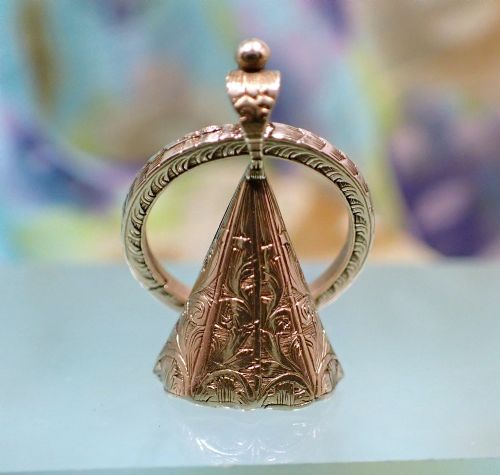
Makers shaped these items into varied formats, including ornate swivel pendants, pocket watch keys, and figural charms. Collectors find animal motifs, classical intaglios, and engraved names set into the base of each seal.
Materials and Construction
Goldsmiths constructed these seals using solid gold varieties alongside rolled gold, gilt metal, and gold-cased techniques over base cores. Metal mounts support hardstone matrices that provide a firm surface for intaglio cutting.
The stones mounted in these seals include carnelian, bloodstone, agate, chalcedony, citrine, sardonyx, rock crystal, and amethyst. Craftsmen carved intaglios directly into these minerals or utilised paste to simulate precious stones.
Mounts feature decorative casting, chasing, and engraving, uniting the suspension loop with the stone setting. Spinning versions incorporate internal pivots allowing two or three distinct faces to rotate within a single frame.
Site listings show Victorian, Georgian, and Edwardian periods using carnelian, bloodstone, agate, and various gold standards.
Distinctions in Quality
Quality rests upon the crispness of the intaglio carving and the depth of detail in the metal mount. Sharp figures, legible initials, and expressive animal motifs separate superior stones from routine production.
The choice of material dictates the tier of the piece, with solid higher carat gold and unblemished stones holding precedence over gilt metal and foiled paste. Heavier gold weight and substantial proportions elevate the presence of the pendant.
Integrity of the swivel mechanism and the secure seating of the stone determine structural standard. Pieces retaining matching split rings or original watch chains preserve greater historical context.
The Antique Gold Fob Seal Glossary
- Intaglio
- A design carved into the surface of a stone so that a raised impression results when pressed into sealing wax. This technique defines the functional matrix of every seal.
- Matrix
- The flat base of a seal bearing the engraved device or monogram. It makes direct contact with the hot wax.
- Fob
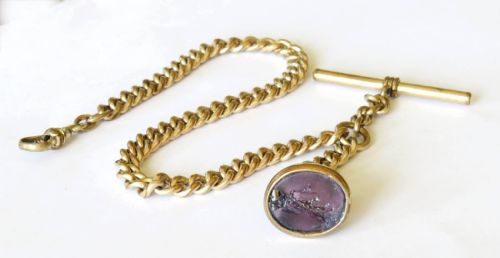
- A short strap, ribbon, or chain attached to a pocket watch, carrying seals or keys at the end. These items hung from a waist-coat pocket.
- Swivel
- A pivoting mount allowing a multi-sided seal to turn on its axis. This lets the user present different stones or initials.
- Cased
- Metal manufactured with a layer of gold bonded to a base metal core. This method achieved the appearance of solid gold at a lesser cost.
- Paste
- Glass cut and coloured to imitate gemstones. It appears frequently in Georgian and Victorian watch accessories.
Antique Gold Fob Seal: Frequently Asked Questions
How were fob seals used?
Owners attached these items to pocket watch chains to dangle from waistbands or waistcoats. They served as portable stamps, pressed into melted wax to close letters and documents.
When a letter required sealing, the owner detached the fob and used the carved stone matrix to stamp their personal mark.
What is an intaglio?
An intaglio is a design incised into a hardstone so the impression appears in relief when stamped into wax. Carvers worked in reverse so the resulting wax seal read correctly.
Subjects ranged from family crests and initials to classical figures, animals, and mottos.
What gold purity do these seals have?
Listings include solid gold standards such as nine carat and eighteen carat gold, alongside fifteen carat examples from the nineteenth century. Other pieces utilise rolled gold, gold cased techniques, or gilt metal.
Markings vary from clear hallmarks to unmarked gold tested through traditional methods.
How do I wear a fob seal today?
Many people suspend them from modern chains to wear as necklaces or add them directly to charm bracelets. They also function on traditional pocket watch albert chains.
The sturdy suspension loop on each seal accommodates most standard chains and jump rings.
What stones are common in seals?
Carnelian and bloodstone appear most frequently, offering a smooth surface suited for engraving initials or crests. Agate, chalcedony, citrine, sardonyx, and amethyst also provide colourful matrices.
Some examples feature rock crystal or foiled paste set within the gold mount.