


Antique Gold Coffee Table
An antique gold coffee table brings warmth and rich texture to a room, drawing the eye through gilded surfaces and polished lacquer.
Antique Gold Coffee Table
When you search for an antique gold coffee table, you enter a category defined less by a single historical workshop and more by decorative surface treatments applied across the nineteenth and early twentieth centuries. The pieces collected here span the Georgian, Regency, and Victorian eras, extending into early twentieth-century revivals.
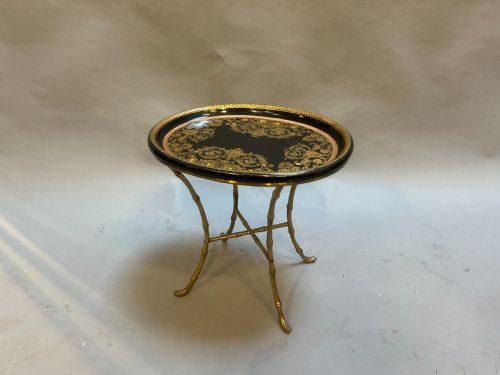
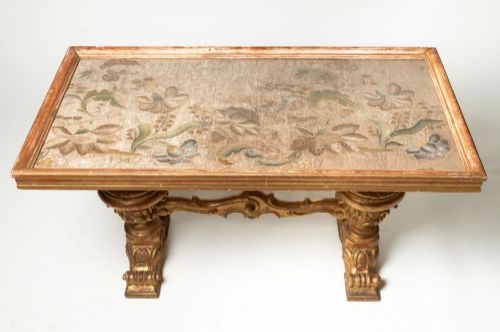
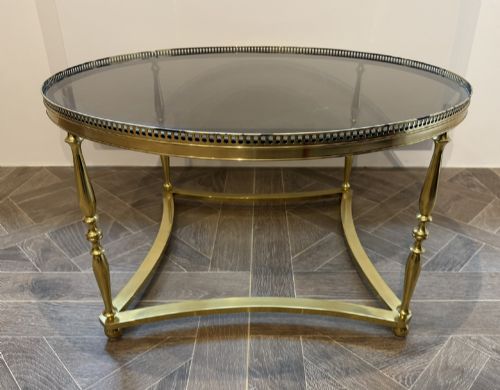
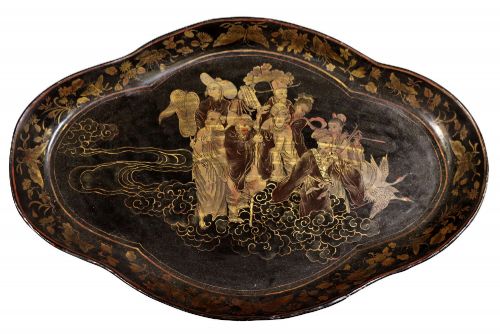
You are most likely to meet low tables adapted from earlier trays, such as papier-mâché trays mounted on stands, alongside giltwood occasional tables, brass-topped tables, and Chinoiserie lacquered nests.
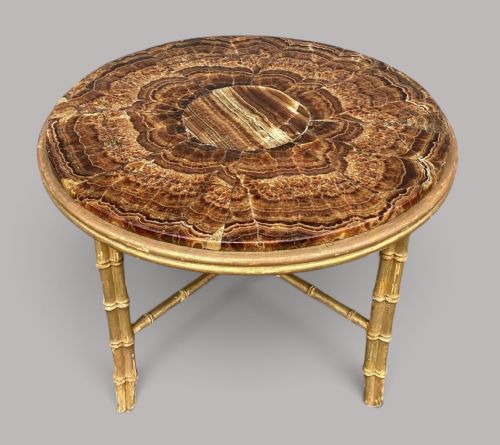
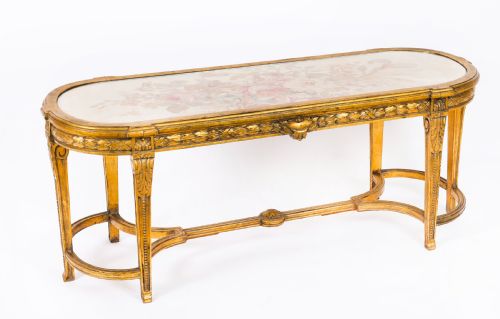
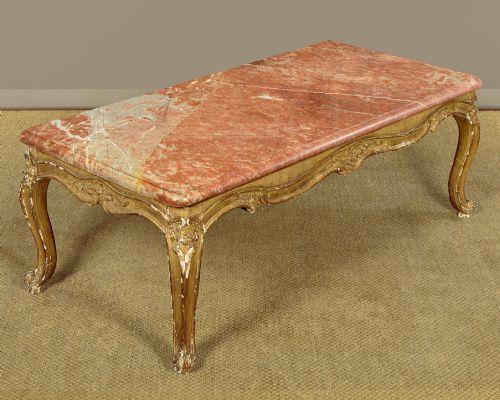
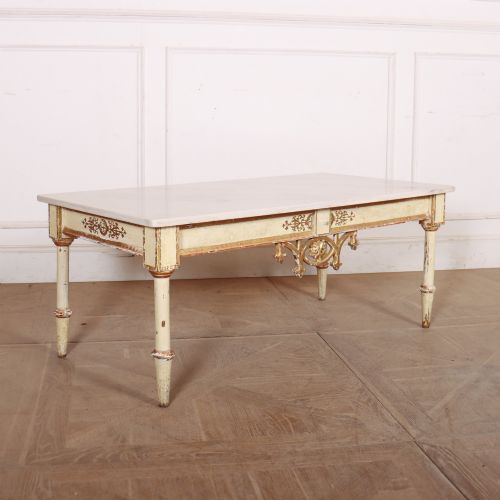
Forms vary from grand French Louis XVI style marble-topped low tables to English Chinoiserie tables and Anglo-Indian brass pieces, offering varied heights and footprints suited to modern interiors.
How these tables were made
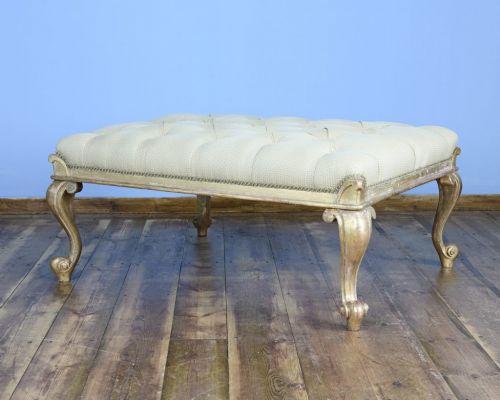
Makers applied gold leaf and gilt decoration to carved wooden frames, sometimes combining these gilded mounts with inset white or coloured marble tops.
Papier-mâché trays, built up from layers of paper pulp and glue, received smooth dark lacquering and hand-painted Chinoiserie decoration before being fitted onto wooden stands.
Brass, lacquer, and wood form the structural backbone of these pieces, utilising traditional joinery and hand-finishing techniques common to nineteenth-century workshops.
Form variations range from single occasional tables and lamp stands to complete sets of nests and zodiac-themed brass tops.
What varies in quality
The sophistication of the hand-painted decoration determines the visual success of lacquered and Chinoiserie surfaces, separating hurried commercial output from finer work.
The integrity of the gilding and the weight of materials such as marble and brass distinguish substantial pieces from lighter, later adaptations.
The harmony between a tray top and its supporting stand influences the overall proportion and structural stability of low-form tables.
Jennens And Bettridge·E Daligny
The Antique Gold Coffee Table Glossary
- Giltwood
- Wood that has been coated with gold leaf or a gold-coloured metallic finish. This technique creates a bright, reflective surface characteristic of formal period furniture.
- Papier-mache
- A composite material made from paper pulp mixed with glue and oil, then pressed and dried into sturdy trays. It provides a smooth base for lacquer and painted decoration.
- Chinoiserie
- European decorative style inspired by Chinese artistic traditions, featuring motifs of figures, landscapes, and pavilions. It appears frequently on black and gold lacquered tables and trays.
- Nest of tables
- A set of graduated tables designed to stack neatly beneath one another when not in use. They offer flexible surface space in principal rooms.
- Marble top
- A polished stone slab fitted to the surface of a table for durability and coolness. These tops frequently feature distinct natural veining.
Antique Gold Coffee Table: Frequently Asked Questions
Are these tables sturdy enough for daily use?
Most antique coffee tables and low stands handle everyday placement of cups and books without difficulty.
Heavier versions with marble tops offer solid weight, while lighter tray tables benefit from careful placement to protect their lacquered finishes.
How do I care for a giltwood surface?
Giltwood requires gentle dusting with a soft, dry cloth to prevent abrasion to the delicate gold leaf layer.
Moisture and cleaning chemicals should be kept away from the surface to preserve the underlying gesso and wood.
What is a papier-mache tray table?
These pieces combine a moulded papier-mâché serving tray, often decorated with Chinoiserie scenes, mounted onto a custom wooden stand.
They function as portable serving trays that were later converted into permanent low coffee tables.
How do I identify the period of a gilded table?
Period markers include the style of carving, such as Regency curves or Louis XVI neoclassical lines, alongside construction methods visible underneath.
Materials like hand-beaten brass and early paper pulp composites point directly to nineteenth-century production.