


Gilded Rococo Accent Table
These gilded rococo accent tables bring theatrical flourish and gleaming surface detail into a room, forged in centuries past for grand European interiors.
Gilded Rococo Accent Table
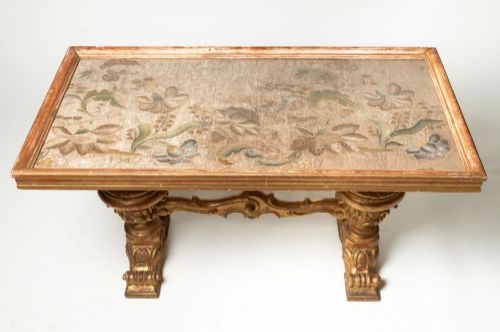
When you search for a gilded rococo accent table, you encounter diverse forms shaped by French and Italian tastes across the eighteenth, nineteenth, and early twentieth centuries. Side tables, centre tables, and occasional tables dominate the selection, often carrying the asymmetric curves and exuberant scrollwork characteristic of the revival styles.
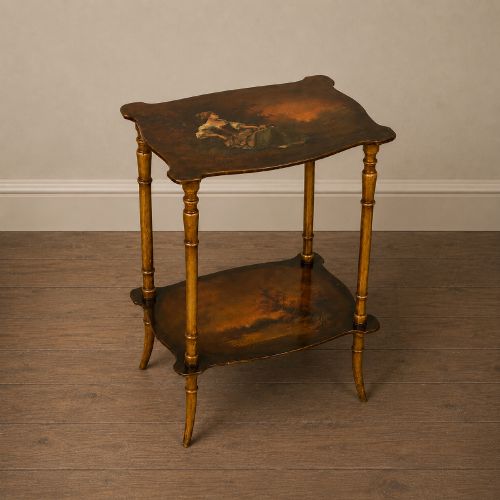
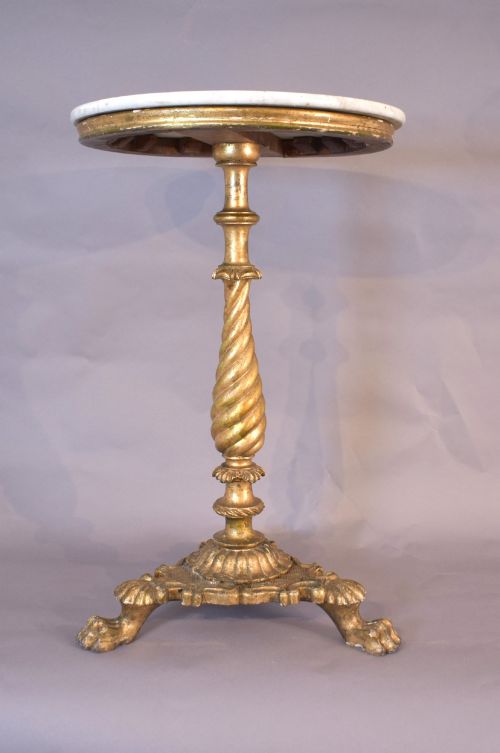
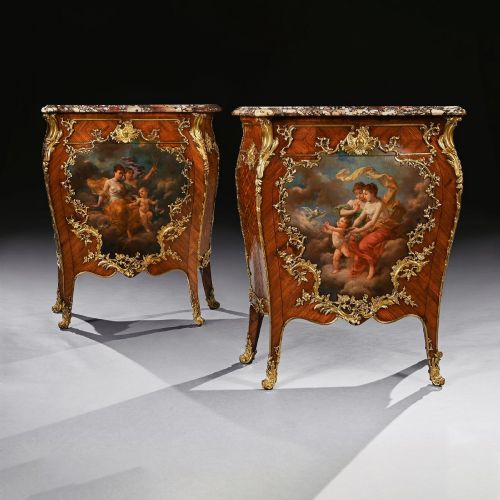
The pieces appearing here range from intimate tripod stands and two-tier étagères to grander marble-topped centre tables and side cabinets. Italian and French workshops produced the majority of these examples, employing elaborate paintwork and gilding to catch the light in formal reception rooms.
Buyers are most likely to meet nineteenth-century interpretations alongside Edwardian and later twentieth-century iterations. These later works faithfully echo earlier motifs, offering the visual drama of carved giltwood and ormolu mounts on a scale suited to modern homes.
How they were made
Craftsmen relied on timber frameworks of wood, kingwood, or mahogany as the structural base for these decorative surfaces. Giltwood and gesso were applied and carved to create high-relief scrolls, floral swags, and cherub motifs before being meticulously gilded.
Metal ornamentation played a central role, with gilt bronze and ormolu mounts fitted to corners, legs, and aprons to accentuate the fluid lines. Marble tops, frequently integrated into the designs, provided a cool and durable counterpoint to the glittering woodwork below.
What varies in quality
The crispness of the carving dictates much of the visual distinction between examples, separating fluid, deeply undercut foliage from softer, more mechanical moulding. Master workshops invested significant labour into hand-chasing gilt bronze and ormolu mounts, ensuring sharp definition that lesser pieces lack.
The application of the finish itself sets standards apart, where layered gilding and subtle burnishing create depth rather than a flat, uniform shine. Structural integrity in joints and the quality of the underlying timber determine whether a piece maintains its posture over generations.
Zwiener Jansen Sucesseur·Zwiener
The Gilded Rococo Accent Table Glossary
- Giltwood
- Wood that has been coated with thin sheets of gold leaf or powder over a prepared ground. This technique creates a luminous, warm metallic finish that defines much of the furniture from this tradition.
- Ormolu
- Finely ground high-carat gold applied to a bronze base through a mercury amalgamation process, or cast and chased brass. The resulting mounts provide bright, durable metallic highlights on furniture and lamps.
- Guéridon
- A small round table supported by one or more central columns or figurative legs. Originating in seventeenth-century France, these pieces frequently feature marble tops and gilt bronze mounts.
- Vernis Martin
- A type of simulated Japanese lacquer developed by the Martin brothers in eighteenth-century France. Artisans used multiple layers of varnish to achieve a translucent, glossy finish often adorned with painted scenes.
- Gesso
- A paint mixture consisting of a binder mixed with chalk, gypsum, or pigment used to prepare wood surfaces for gilding. It provides a smooth, absorbent base that allows carvers to achieve fine detail.
Gilded Rococo Accent Table: Frequently Asked Questions
Where should I place a gilded table?
These tables find natural homes in living rooms as lamp stands or beside armchairs where their reflective surfaces brighten darker corners. They also serve effectively in hallways as striking focal points beneath a mirror.
Because of their decorative nature, keep them away from direct heat sources and strong, continuous sunlight to protect the gilt finish and wood movement over time.
How do I date these tables?
Examine the construction methods, tool marks on the underside, and the type of wood used in the secondary framing. Eighteenth-century pieces often show hand-cut joinery and aged patination, while nineteenth-century revivals utilise machine assistance alongside traditional hand-carving.
Style provides another indicator, as nineteenth-century makers frequently blended Louis XV and Louis XVI elements or reproduced specific archival designs from royal collections.
Are marble tops original to the pieces?
Many tables designed in the French and Italian rococo traditions were conceived specifically to carry marble slabs. Original tops typically fit snugly into the wooden rebate with matching bevelled edges and natural underside staining.
Replacement marble is common in antique furniture due to accidental breakage over the centuries, so look for consistent wear patterns between the stone and the supporting frame.