


Antique Glazed Cabinet Desk
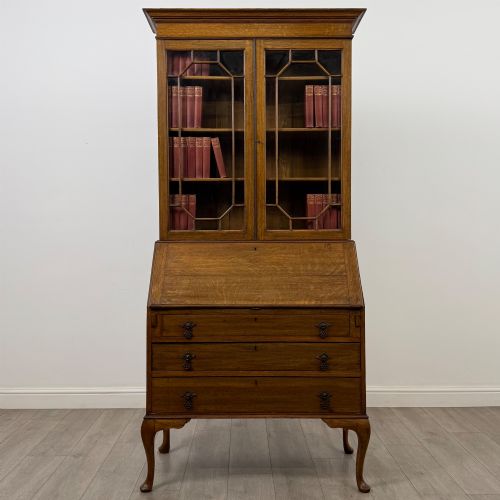
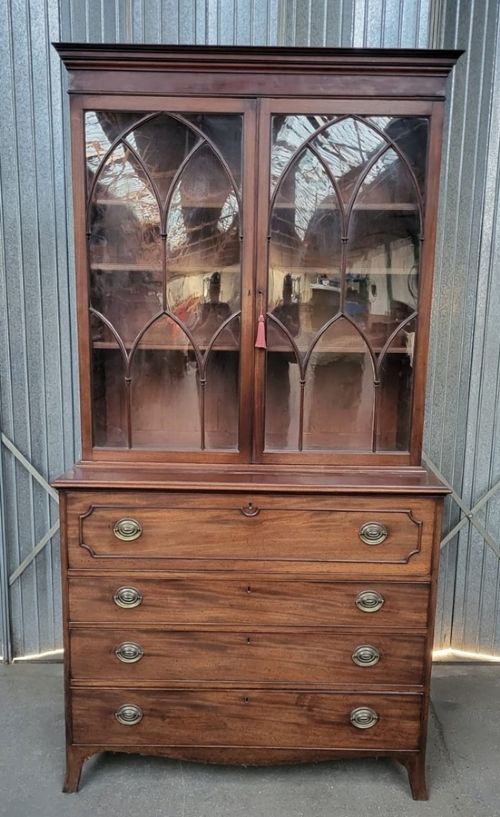
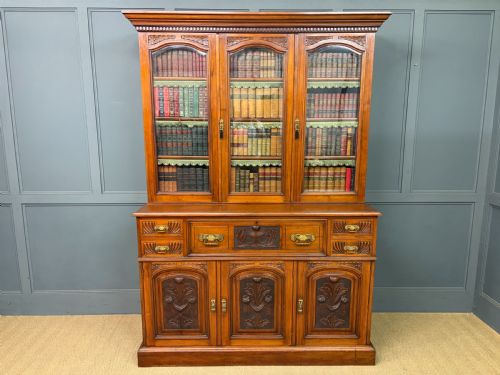
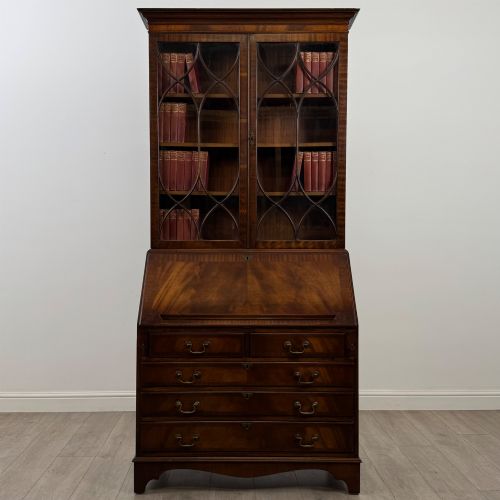
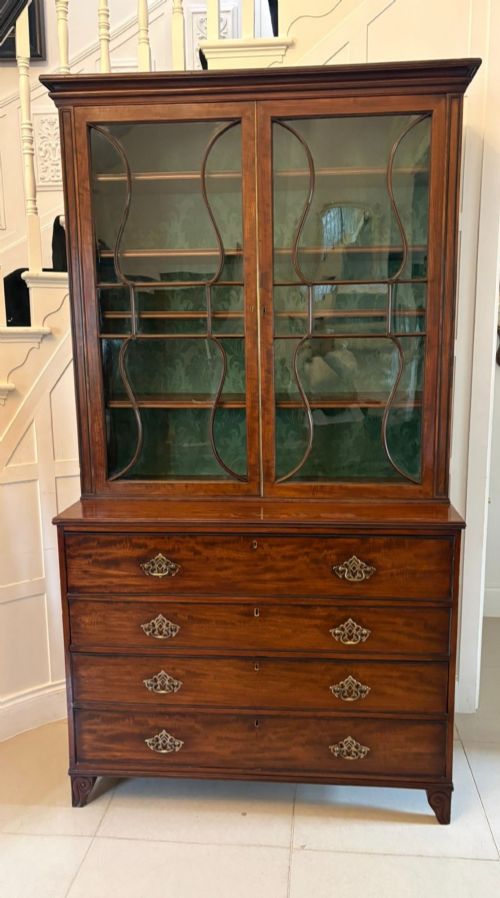
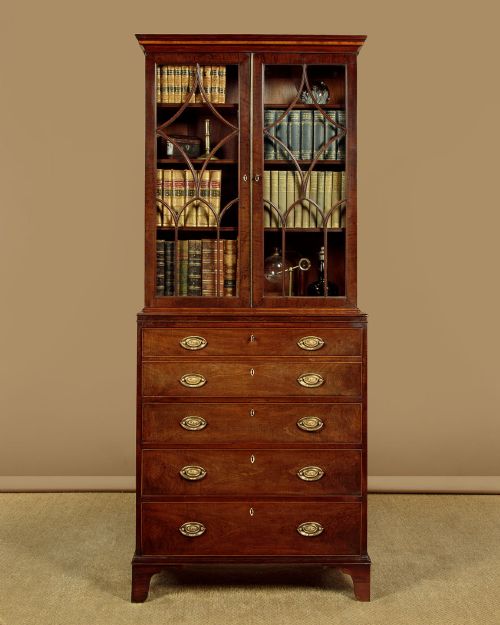
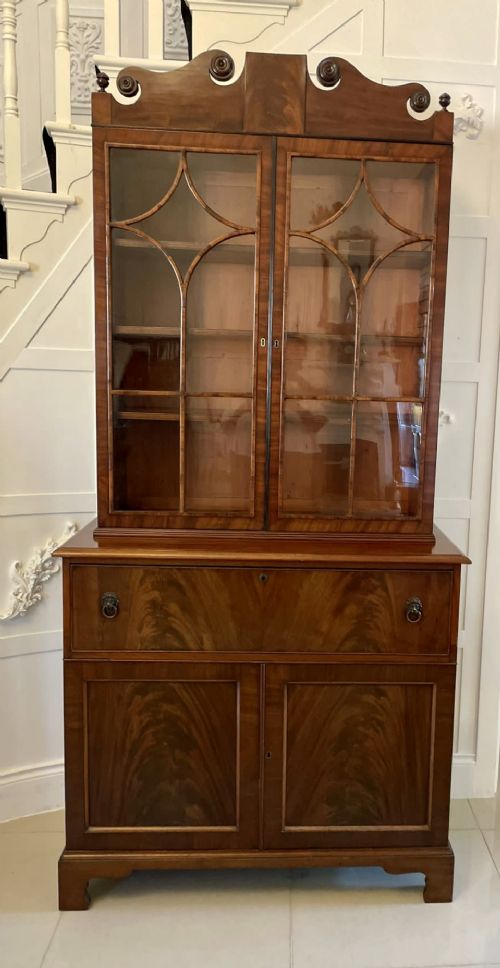
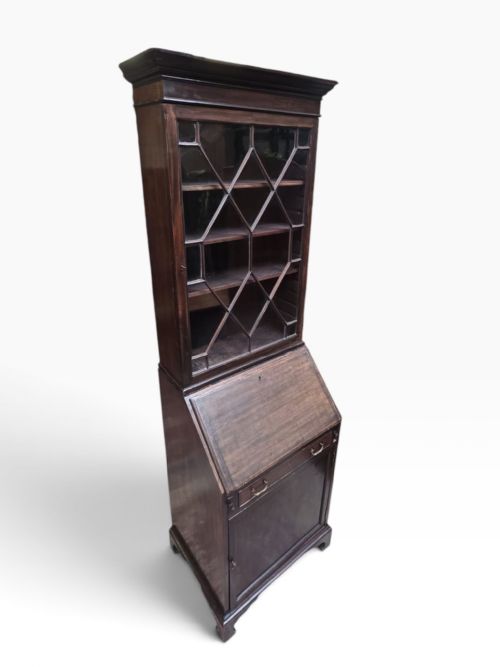
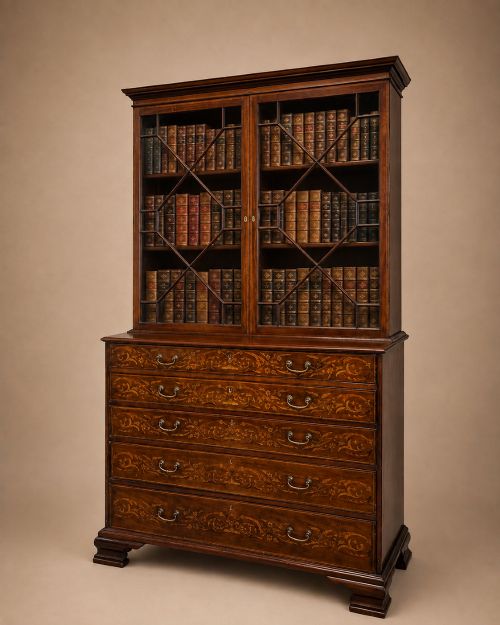
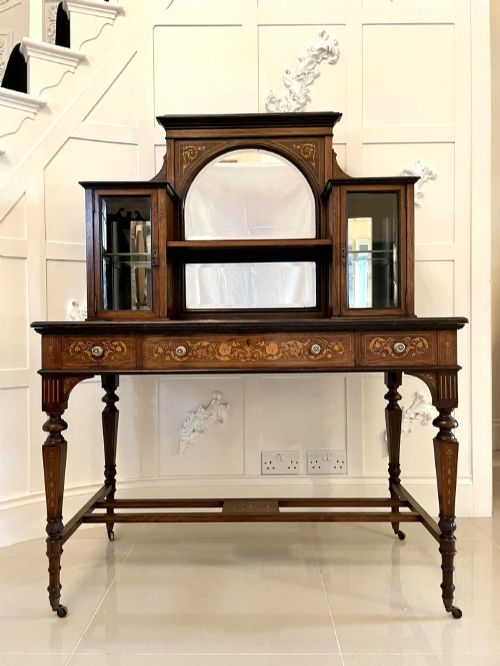
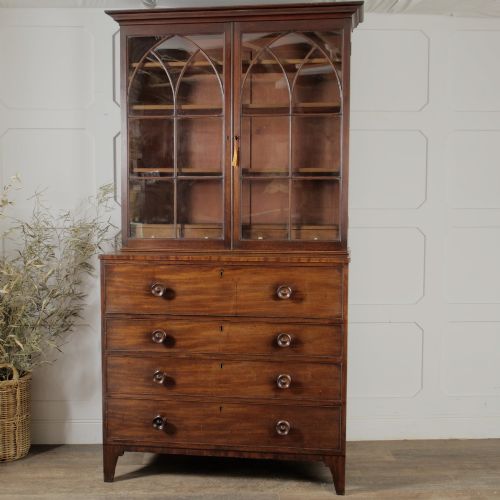
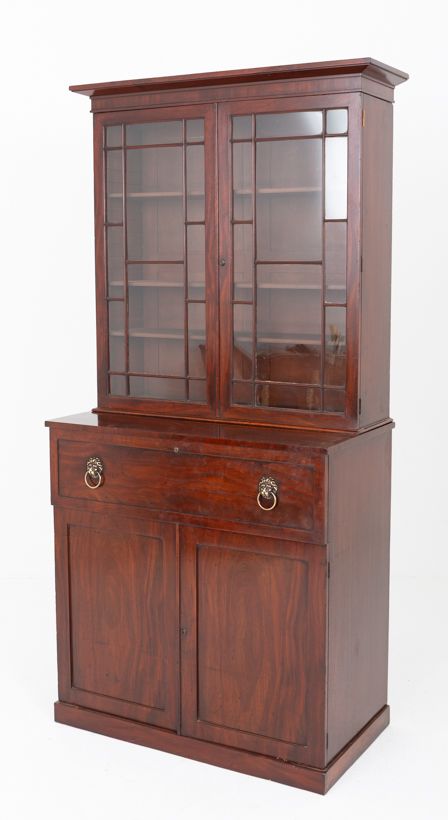
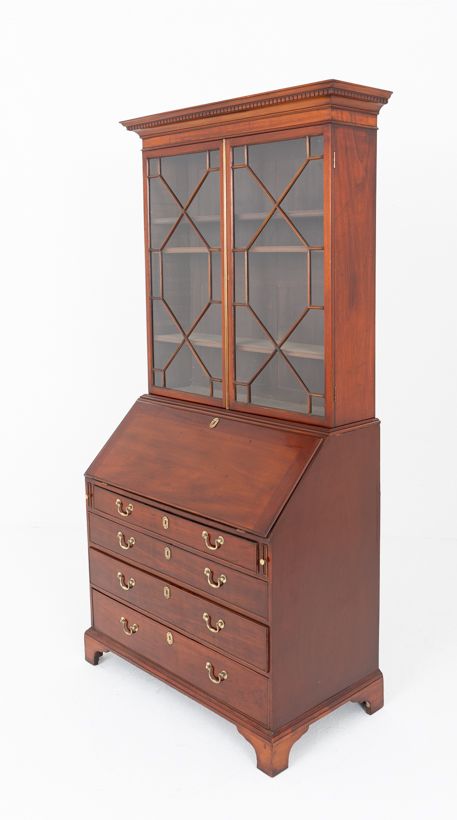
An antique glazed cabinet desk combines a writing surface and a display library in one substantial piece of furniture.
Antique Glazed Cabinet Desk
An antique glazed cabinet desk functions as both a working bureau and a shelved bookcase enclosed by glass doors. The evidence shows these pieces span the 18th century, Georgian, Regency, Victorian, and Edwardian periods.
Most examples encountered here take the form of bureau bookcases and secretaire bookcases built in mahogany, oak, and walnut. Makers utilised fitted interiors with small drawers and pigeonholes hidden behind drop-down writing flaps.
Makers also produced specialised variants including cylinder bureau bookcases and satinwood writing cabinets. Pieces emerge from English workshops as well as French and Italian makers.
Materials and Technique
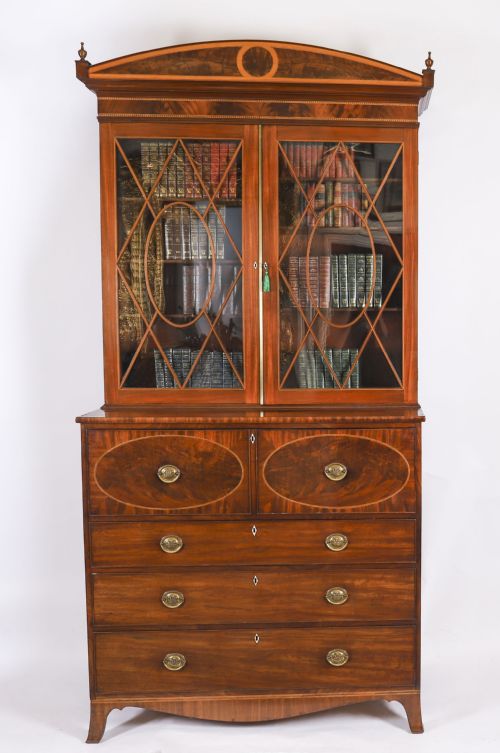
Cabinetmakers constructed the primary carcasses of these desks using solid timbers like mahogany, oak, and walnut, frequently applying figured mahogany, satinwood, and burr walnut veneers to the exterior surfaces. Brass hardware secures the doors and drawers while glass panels protect the upper shelving sections.
Craftsmen decorated surfaces with marquetry, inlay, and carved details, particularly during the Edwardian and Victorian eras. Interiors feature complex joinery to create fitted writing compartments with pigeonholes and small drawers.
One listed piece is a miniature mahogany bureau bookcase reduced to a quarter size as an apprentice furniture sample.
Distinctions in Quality
The selection of timber grain largely dictates the visual merit of the piece, with highly figured mahogany and burr walnut commanding attention. Finer examples display meticulous attention to the internal fittings of the bureau drawer, including secret compartments and neatly dovetailed partitions.
Structural integrity depends on the precision of the glazed door frames and the smooth operation of the drop-down writing surface. Pieces bearing attribution to known makers or incorporating complex marquetry demonstrate higher standards of workshop execution.
George Oakley·Tudor & Burrey·Edwards & Roberts·Gillows·Maple & Co·Mercier Frères
The Antique Glazed Cabinet Desk Glossary
- Secretaire
- A writing drawer or compartment that drops down to reveal a leather-lined desk surface and internal drawers. This feature conceals the workspace when not in use.
- Astragal glazed
- Glass doors divided by thin wooden strips into smaller panes. These light frames provide structural support for the upper bookcase section.
- Marquetry
- Decorative patterns formed by fitting together thin veneers of different coloured woods. Craftsmen applied these pictorial designs to drawer fronts and cabinet doors.
- Cylinder bureau
- A desk featuring a rolling semi-cylindrical wooden shutter that covers the writing surface. Pulling the shutter forward retracts it into the body of the cabinet.
Antique Glazed Cabinet Desk: Frequently Asked Questions
How do I use a secretaire drawer?
The secretaire drawer pulls outward from the cabinet like a standard drawer, but the front hinges downward to horizontal. This action exposes a leather writing surface and internal compartments.
Pushing the flap back up and sliding the drawer closed secures the contents of the desk.
Where should I place a cabinet desk?
These tall pieces require a sturdy wall with adequate clearance for the doors to open and the writing flap to drop. Placing them away from direct sunlight protects the timber veneers and internal leather surfaces.
Allow enough floor space in front of the cabinet to pull out chairs or stand comfortably at the desk.
How do I identify a Georgian bookcase?
Georgian examples often feature rich mahogany timbers, astragal glazed doors, and understated bracket feet. The proportions tend to remain restrained, focusing on architectural cornices and simple stringing inlay.
Interior fittings in these earlier pieces rely on solid secondary woods like oak and deal.