





Antique Glass Table Vase
An antique glass table vase brings a refined decorative presence to any room through rich colour and period craftsmanship.
Antique Glass Table Vase
When you search for an antique glass table vase, you encounter a diverse selection of decorative vessels designed to adorn surfaces throughout the home. The forms span simple blown cylinders to elaborate multi-trumpet epergnes and table lustres.
The pieces appearing in these records originate primarily from the nineteenth and early twentieth centuries. Victorian and Edwardian examples dominate the selection alongside Art Nouveau and Art Deco creations.
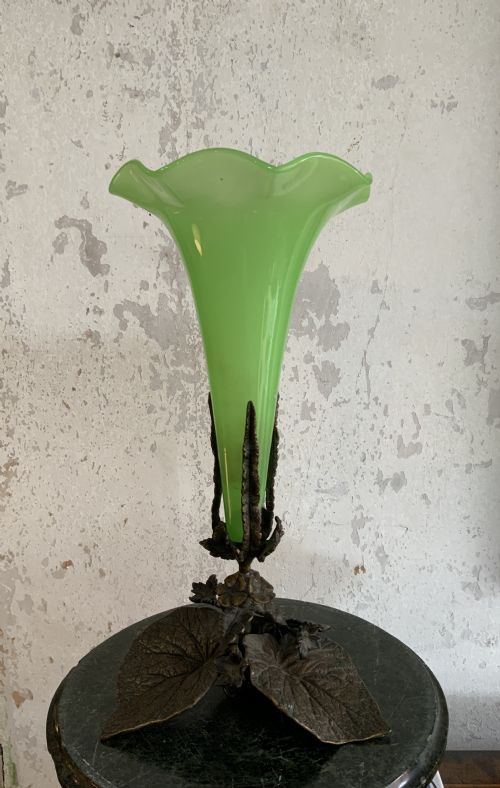
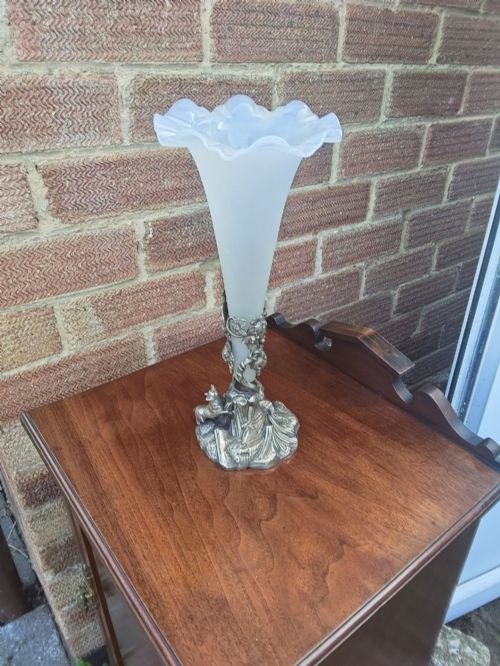
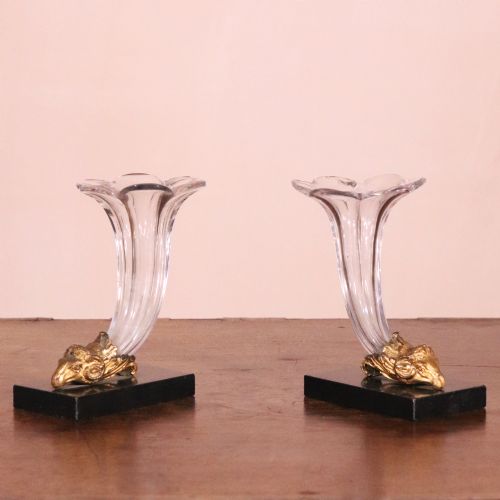
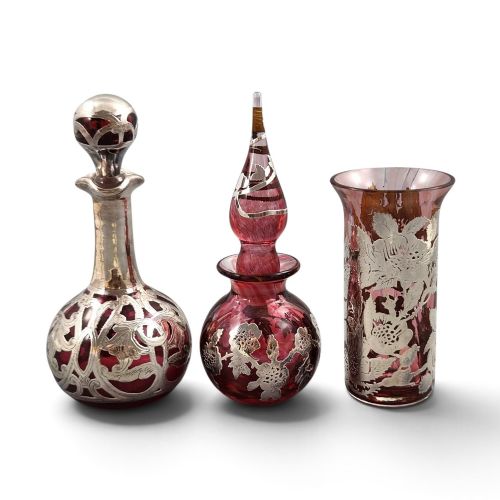
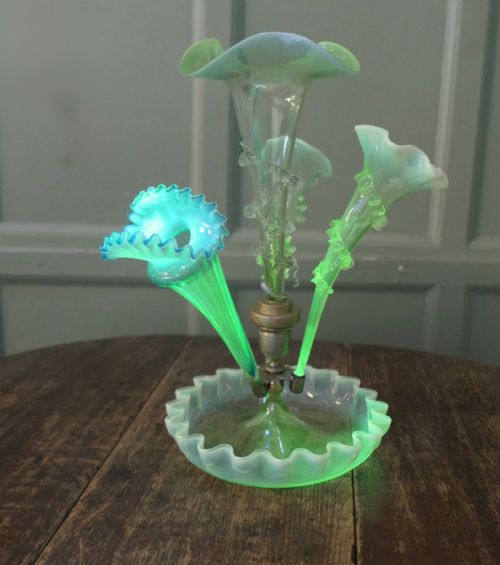
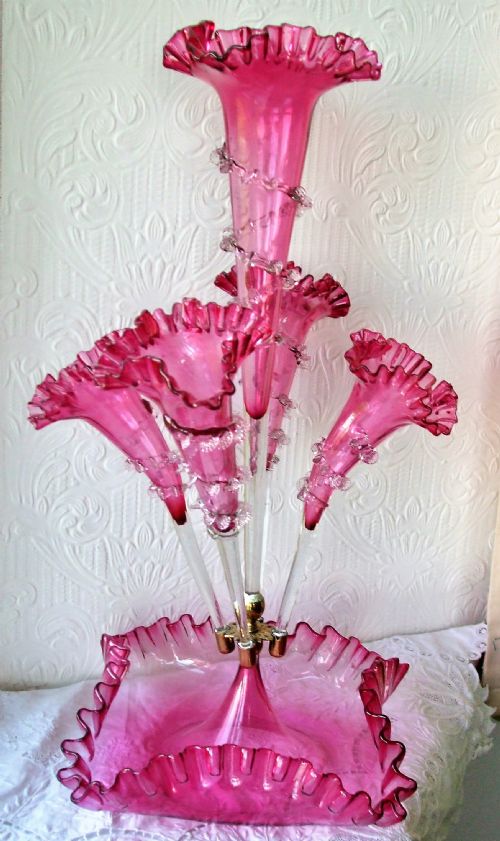
Makers utilised various supporting materials such as brass, bronze, silver plate, and carved wood to complement the glass bodies. You will frequently find cranberry glass, vaseline glass, and clear crystal shaped into centrepieces and mantel ornaments.
How they were made
Glassmakers employed traditional techniques including free-blowing, mould-blowing, and cameo carving to shape the vessels. Artisans frequently integrated metal mountings in gilt bronze, brass, or silver plate to support complex multi-trumpet configurations.
Surface decoration involved acid etching, polychrome enamelling, and the application of gold leaf or gilt decoration. Certain pieces incorporate intricate metalwork frameworks such as wrought iron or pierced silver to secure the glass components.
What varies in quality
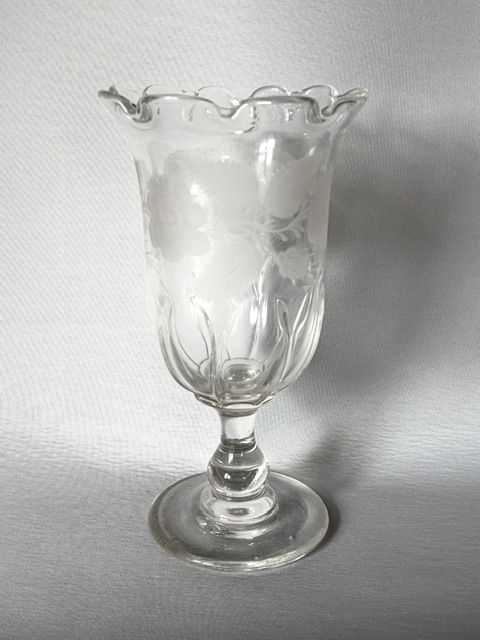
The standard of an antique glass table vase rests upon the depth of the colour, the clarity of the material, and the execution of surface ornamentation. Hand-applied enamelling and detailed acid etching display the skill of the original artisan.
The quality of the accompanying metalwork mounts, whether cast bronze, silver plate, or carved wood, significantly influences the overall character. Heavier glass bodies and well-balanced proportions separate finer examples from standard production pieces.
Emile Gallé·St Louis glassworks·Schneider·Karl Palda·Walker & Hall·Josiah Williams & Co·Moser
The Antique Glass Table Vase Glossary
- Epergne
- A central table ornament featuring a large bowl fitted with multiple detachable trumpets or vases. These structures frequently display cranberry or vaseline glass.
- Lustre
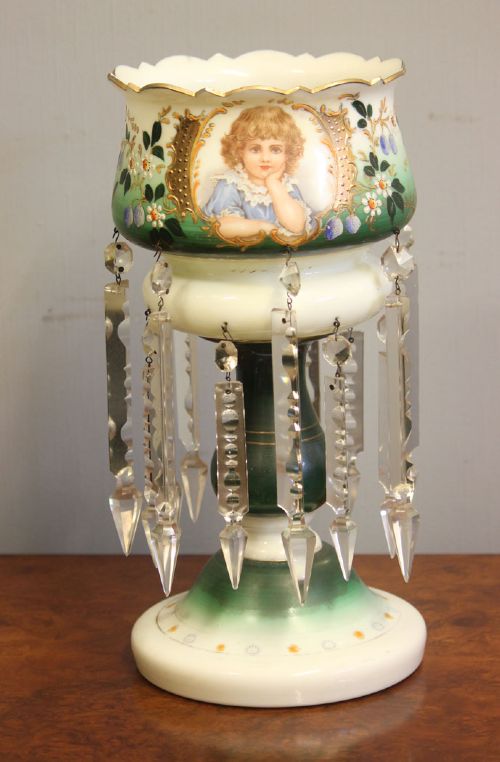
- A decorative table vase fitted with hanging glass prisms designed to catch and reflect candlelight. Victorian examples often appear in ruby or green glass.
- Vaseline glass
- A type of glass containing uranium dioxide that produces a distinctive yellow-green fluorescence under ultraviolet light. This material appears frequently in nineteenth-century lamps and epergnes.
- Cranberry glass
- A rich pink or red transparent glass created by adding gold chloride to the molten batch. It defines many Victorian table vessels and mantel ornaments.
- Celery vase
- A tall glass vessel originally designed to hold and display stalks of celery on the Victorian dining table. These pieces often feature heavy ribbing or etched patterns.
Antique Glass Table Vase: Frequently Asked Questions
How were table epergnes used?
Table epergnes served as striking centrepieces for formal dining tables during the Victorian period. Hosts filled the central bowl and hanging trumpets with fresh flowers, fruit, or sweetmeats.
In daily domestic life, these vessels functioned as decorative ornaments on sideboards and mantelpieces. The reflective qualities of the glass added brightness to candlelit rooms.
What is vaseline glass?
Vaseline glass is a distinct type of translucent yellow-green glass containing trace amounts of uranium. The material earned its name from its visual similarity to petroleum jelly.
Victorian makers utilised this glass for table vases, lamps, and epergnes because of its vibrant colour. Under ultraviolet light, the glass exhibits a strong green glow.
What distinguishes Victorian from Art Nouveau pieces?
Victorian glass table vases often feature symmetrical forms, vibrant cranberry or vaseline colours, and classical motifs like etching and gilt decoration. Epergnes and table lustres with hanging prisms are typical of this nineteenth-century era.
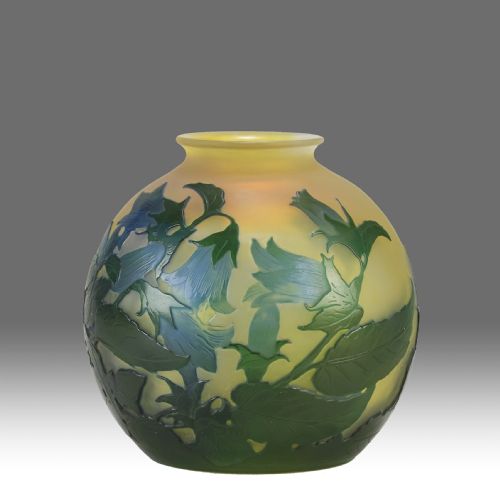
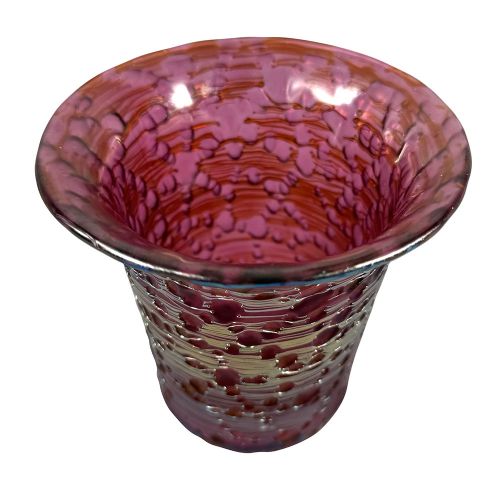
Art Nouveau pieces, emerging around the turn of the twentieth century, embrace organic asymmetry and iridescent finishes. Makers like Emile Gallé utilised cameo techniques to depict natural floral motifs.