




Blown Glass Trumpet Vase
These blown glass trumpet vase examples bring striking Victorian and Art Nouveau presence to a room, valued for their vibrant glass hues and soaring forms.
Blown Glass Trumpet Vase
When you search for a blown glass trumpet vase, you enter a sphere of Victorian and Art Nouveau table centrepieces, epergnes, and lily vases designed to hold single stems or grand floral arrangements. These pieces rise from compact circular or metal-mounted bases into wide, flared rims that resemble the bell of a musical instrument.
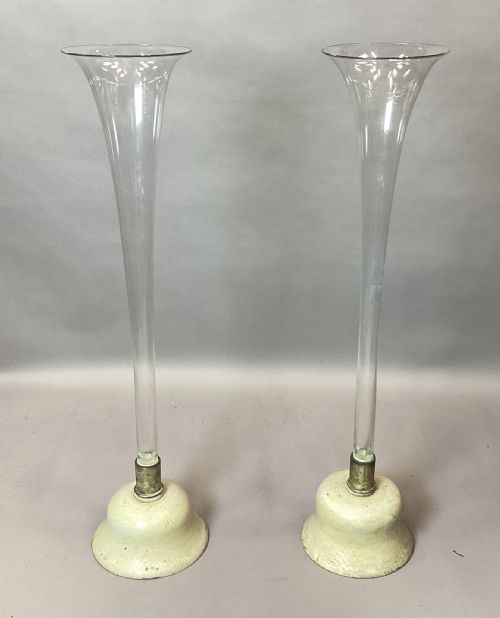
The versions you meet most frequently on this page belong to the nineteenth century, spanning the 1860s through to the turn of the twentieth century. They appear as standalone vessels or as part of multi-trumpet epergnes, sometimes paired in matching sets of two.
Origin details in the evidence point towards English and French workshops, utilising characteristic nineteenth-century glass production methods. The forms range from modest posy vessels to imposing forty-inch display pieces.
How they were made
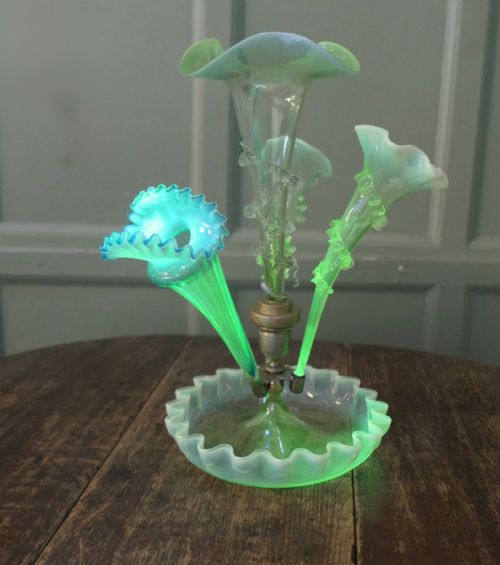
Makers shaped a blown glass trumpet vase by gathering molten metal on a blowing iron, inflating the glass, and manipulating the vessel while hot to create the characteristic fluted or flared trumpet rim. Artisans incorporated metallic oxides directly into the molten batch to achieve distinct colorations such as cranberry and uranium green.
Certain pieces combine coloured glass over crystal, or feature gold salt additives within the material to yield rich pink and ruby tones. Brass elements occasionally provide structural support or weighted mounting bases for larger epergne configurations.
Listings feature Victorian and Art Nouveau periods, with material options spanning cranberry glass, uranium glass, opalescent glass, and brass.
What varies in quality
Quality in a blown glass trumpet vase rests upon the depth and saturation of the glass colour, along with the symmetry and balance of the flared rim. Pieces displaying rich cranberry over crystal or well-distributed uranium glow demonstrate superior material control during the blowing process.
Scale and complexity also separate standard items from exceptional ones, particularly where single trumpets give way to tall paired lily vases or elaborate multi-trumpet epergnes with mirror bases.
The Blown Glass Trumpet Vase Glossary
- Cranberry Glass
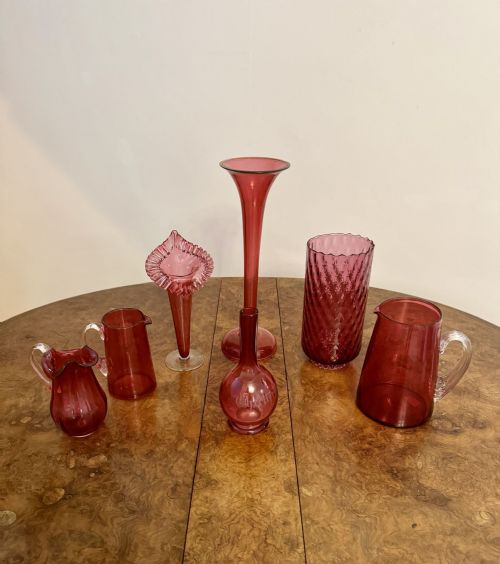
- A transparent pinkish-red glass coloured with gold chloride, widely favoured by Victorian makers for decorative tablewares. This striking hue defines many of the trumpet vases and epergnes from the period.
- Uranium Glass
- Glass containing a small percentage of uranium oxide, which causes the material to fluoresce brightly under ultraviolet light. It appears in several Victorian and Edwardian bases and epergne components.
- Epergne
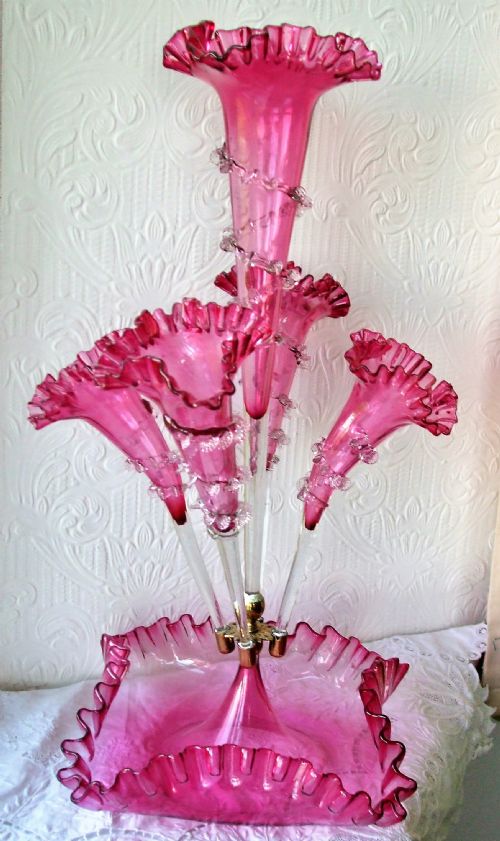
- A large table centrepiece featuring a central bowl surrounded by multiple detachable trumpet vases or baskets. These complex tiered vessels served as dramatic centerpieces for formal dining tables.
- Opalescent Glass
- Glass that exhibits a milky, translucent quality with a contrasting edge colour, created by cooling and reheating the glass during shaping. It adds a shimmering depth to the flared rims of trumpet vases.
Blown Glass Trumpet Vase: Frequently Asked Questions
What is a blown glass trumpet vase?
A blown glass trumpet vase is a nineteenth-century decorative vessel featuring a narrow base that flares outward into a wide, trumpet-shaped rim. These pieces were designed to showcase single stems or tall floral displays.
They appear as standalone items or as component trumpets within larger Victorian epergnes and table centrepieces.
How do I identify a Victorian trumpet vase?
Victorian trumpet vases are identified by their characteristic nineteenth-century silhouettes, hand-blown manufacturing traits, and traditional materials like cranberry and opalescent glass. Stylistic markers often link them to the 1860 through 1900 periods.
Examine the base and rim for free-blown characteristics, pontil marks, and the rich colour saturation typical of the era.
What colours do these vases come in?
The listings show a strong emphasis on cranberry glass, ruby tones, and pink shades, occasionally paired with clear crystal overlays. Uranium green glass also appears in bases and multi-trumpet assemblies.
These saturated hues were achieved by adding specific metallic oxides to the molten glass during production.
How were epergnes used on tables?
Epergnes served as grand dining table centrepieces during the Victorian era, holding fruit, sweetmeats, or cut flowers across multiple tiers. The detachable trumpet vases allowed hosts to arrange stems at varying heights.
Their substantial size and reflective mirror bases created a striking focal point for formal dinners.