
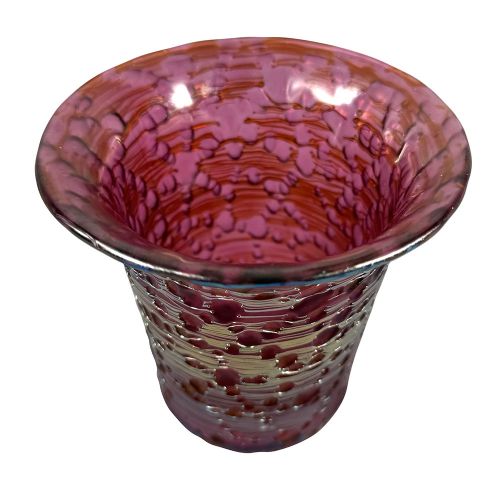


Vintage Iridescent Vase
A vintage iridescent vase catches the light with shifting metallic sheens, bringing colour and movement to any room.
Vintage Iridescent Vase
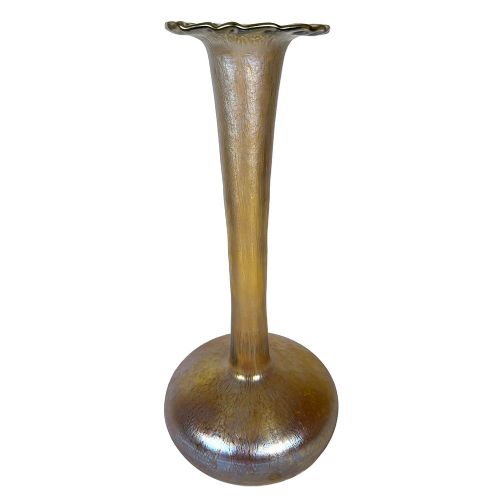
When you search for a vintage iridescent vase, you encounter pieces designed to reflect light through metallic surfaces and pearl finishes. These vessels span from the Edwardian era through the Art Nouveau and Art Deco periods, capturing the decorative tastes of the early twentieth century.
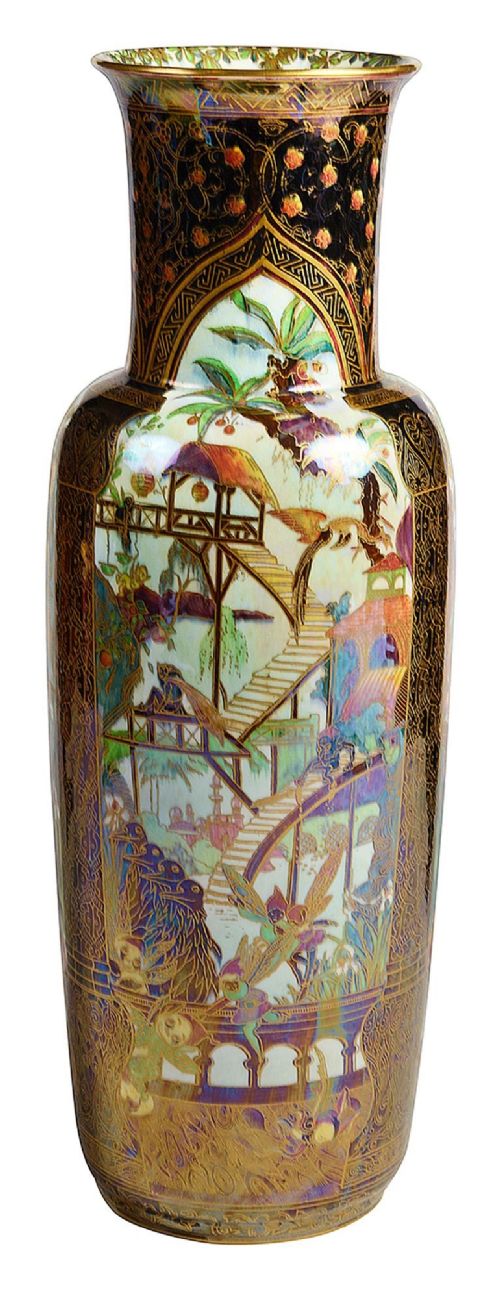
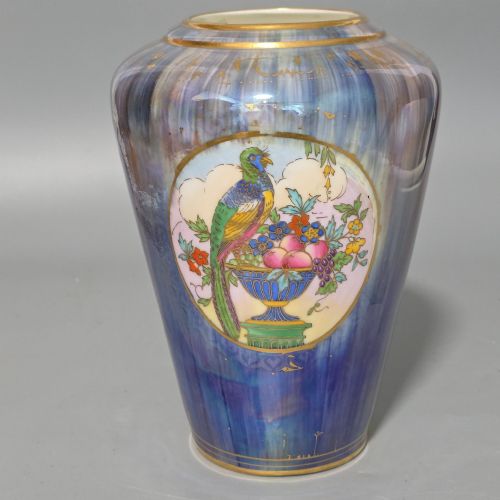
The versions you are most likely to meet on this page include earthenware with lustre glaze and glass forms shaped by prominent European and American makers. Forms range from large centrepieces and epergnes to smaller decorated vases.
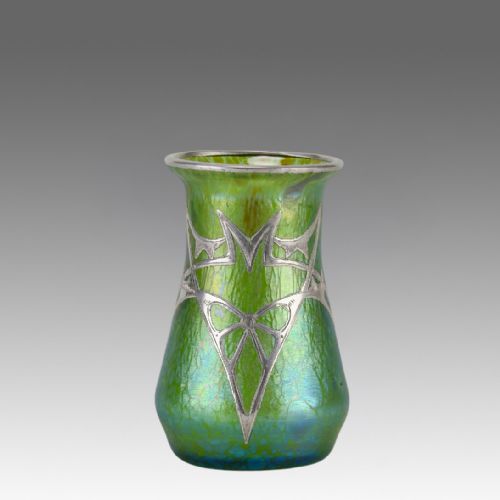
Makers utilised various techniques to achieve this optical effect, applying silver overlay, gold leaf, and enamel upon glass or ceramic bodies. Each period brought distinct silhouettes, moving from organic floral lines to geometric Secessionist patterns.
How they were made
Potters and glassmakers created iridescence through specialised chemical treatments applied to earthenware or molten glass. Lustre glazes and metallic oxides were fired onto the ceramic body to produce a shimmering, pearlescent finish.
Some workshops enhanced these forms further by applying silver overlay directly onto the glass or hand-enamelling intricate decorative motifs. Skilled artisans shaped lobed bodies and applied decorative elements such as snakes or handles while the material remained pliable.
One glass vase wears an applied snake that appears to slither purposefully toward the rim.
What varies in quality
Quality rests upon the depth and complexity of the optical sheen across the surface, alongside the precision of any hand-applied enamel or silver work. Stronger pieces display a lively play of shifting colours that catches the eye from multiple angles.
The execution of the underlying form also dictates the tier of the piece, with fluid Art Nouveau lobes or balanced geometric proportions marking out superior examples. Signed works by recognised designers and potteries show a greater attentiveness to finish and detail.
Daisy Makeig-jones·Johann Loetz·Richard Joyce·Charlotte Rhead·LCT Tiffany
The Vintage Iridescent Vase Glossary
- Iridescent glass
- Glass treated with metallic salts while hot to produce a rainbow-like sheen on the surface. This technique creates a shimmering finish that imitates ancient weathered glass.
- Lustre glaze
- A type of pottery glaze containing metallic elements that yield a pearlescent or metallic reflection upon firing. It is frequently found on earthenware vessels from the early twentieth century.
- Silver overlay
- Pure silver applied in decorative patterns over a glass or ceramic base, often bonded chemically or mechanically. It provides a striking contrast to the iridescent background beneath.
- Favrile glass
- A term patented by Louis Comfort Tiffany for his iridescent art glass. The process involves blending different coloured glass while molten to achieve a unique internal glow.
- Epergne
- A large ornamental centrepiece, typically featuring multiple arms or Trumpet vases for holding flowers or fruit. Edwardian examples often employ pearlescent glass for dramatic display.
Vintage Iridescent Vase: Frequently Asked Questions
What is a vintage iridescent vase?
A vintage iridescent vase is a decorative vessel made from glass or earthenware that exhibits a shimmering, rainbow-like surface finish. These pieces date primarily from the early twentieth century and reflect design movements such as Art Nouveau and Art Deco.
Maker techniques involved treating hot glass with metallic vapours or firing metallic oxides onto ceramic glazes to create the characteristic shifting sheen.
How do I identify Art Nouveau pieces?
Art Nouveau examples typically feature organic forms inspired by nature, including flowing lines, bulbous bodies, and motifs such as flowers or animals. Makers often utilised iridescent pink glass or applied decorative snakes to enhance the naturalistic theme.
Look for fluid silhouettes that avoid rigid symmetry, characteristic of the design ethos prevailing around nineteen hundred.
What is lustre pottery?
Lustre pottery refers to ceramic pieces finished with a metallic glaze that creates a glossy, reflective surface. Artists painted intricate patterns or fairy motifs onto these earthenware bodies before a specialised firing process.
Prominent potteries produced these decorative vessels to catch and refract light within Edwardian and Art Deco interiors.
How should I display my vase?
Display these vases in spaces with direct natural light or focused interior illumination to activate the iridescent surface sheen. Placing them near a window allows the shifting metallic colours to change throughout the day.
Ensure they rest on stable surfaces away from high-traffic areas, as many forms feature delicate applied elements like silver overlay or handles.