


Antique Glass Portrait Prints
Antique glass portrait prints capture likenesses through reverse painting and mezzotint techniques, offering historic subjects mounted under protective glazing.
Antique Glass Portrait Prints
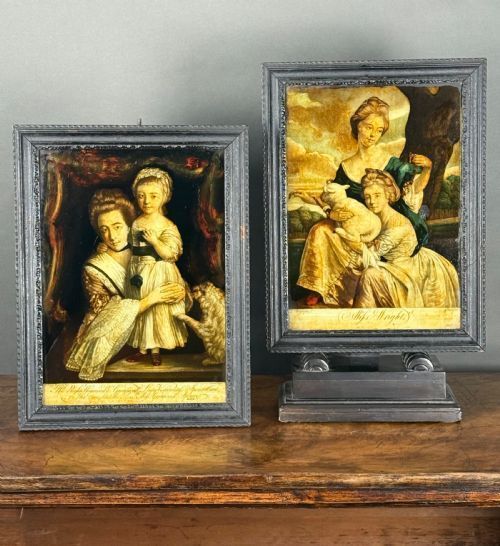
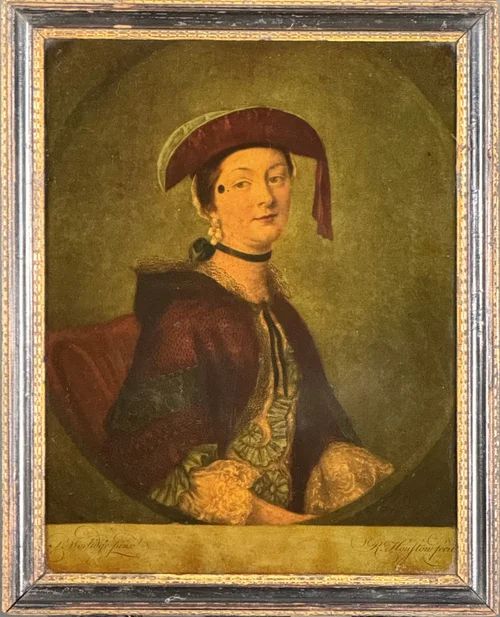
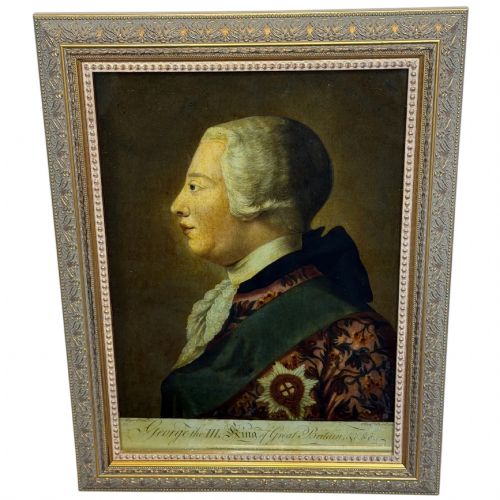
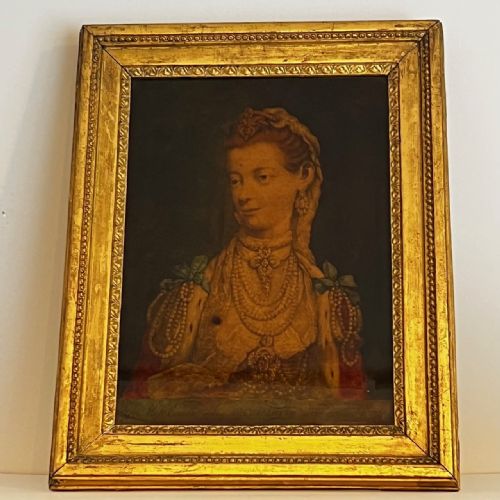
When buyers search for antique glass portrait prints, they encounter framed wall art that utilises reverse glass techniques to display historic figures and nobility. The pieces on this page span several eras, with Georgian examples featuring subjects like royalty and literary figures.
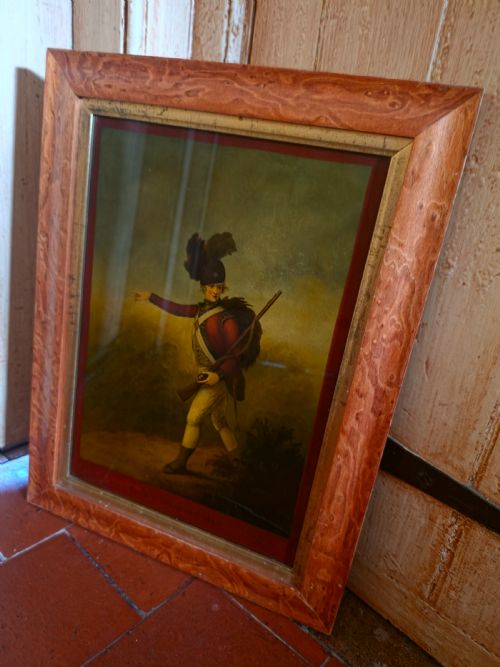
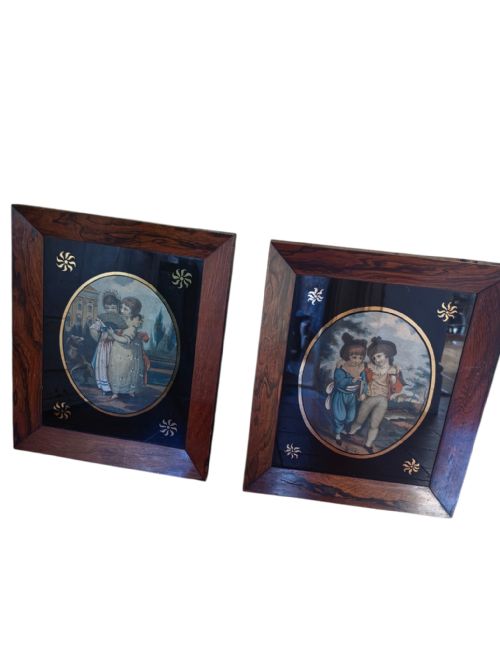
The assortment includes reverse glass mezzotints, chrystoleums, and oil paintings under convex glass. Georgian and 19th-century variants dominate the selection, often housed in rosewood or giltwood frames.
Materials and production methods
Craftsmen applied oil paint, pigment, and gold leaf directly onto the reverse side of glass sheets. This intricate process required laying down fine details first so they appeared correctly oriented when viewed through the front.
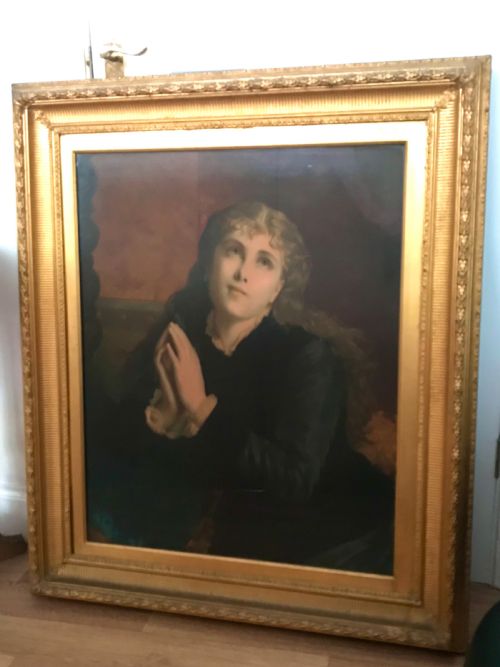
Completed glass panels were secured into wooden frames, frequently incorporating rosewood, giltwood, or ornate oval surrounds. Some later Victorian examples integrated paper prints treated with oil and pigment beneath curved glass.
Object types recorded across the site include reverse glass prints, chrystoleums, and framed wall art.
Assessing visual distinction
Quality separates through the precision of the reverse painting and the crispness of the underlying mezzotint engraving. Finer examples retain vibrant pigment and gold leaf adhesion without flaking or clouding.
The choice of framing contributes significantly to the overall presence, with period rosewood and dome-fronted giltwood surrounds elevating the visual impact of the portrait.
Charles Spooner·Richard Purcell·Robert Sayer·Abraham Cooper
The Antique Glass Portrait Prints Glossary
- Reverse glass painting
- A technique where an artist paints directly onto the back of a glass panel to be viewed from the unpainted front. This method protects the pigment from atmospheric dirt.
- Mezzotint
- A printmaking process of the intaglio family where the plate is roughened to achieve tones and rich darks. Eighteenth-century makers often transferred these onto glass.
- Chrystoleum
- A Victorian method of applying a hand-coloured paper print to the inside of a convex glass and then oiling it to make it transparent. The back was subsequently tinted by hand.
- Eglomise
- A process of applying cold gilding and painting on the rear face of glass. It creates a mirrored or metallic sheen behind the portrait.
- Convex glass
- Curved glass panes utilised in 19th-century frames to add depth and dimension to the portrait within. They project outward from the rebate.
Antique Glass Portrait Prints: Frequently Asked Questions
What is a reverse glass print?
A reverse glass print involves applying an engraving or painting directly to the rear of a glass sheet. The viewer looks through the smooth front surface to see the finished image.
This technique protects the delicate pigments from dust and fading over centuries. It requires the maker to paint fine details and highlights first.
How do I date an antique glass portrait?
Dating relies on the framing materials, the subject matter, and the specific engraving or painting style. Georgian pieces frequently depict royalty or literary figures in simple wooden frames.
Nineteenth-century examples often introduce chrystoleum techniques and convex glass. Costume details in the portraits also offer clear chronological markers.
Where were these portraits displayed?
These framed pictures hung in parlours and drawing rooms as displays of loyalty, taste, or fashion. Georgian and Victorian households favoured them for wall decoration.
Their reflective glass surfaces caught candlelight effectively in historic interiors. Pairs and sets were often arranged symmetrically.