



Antique Glass Picture Art
Antique glass picture art brings together delicate reverse glass paintings, mezzotints, and framed prints from the eighteenth and nineteenth centuries.
Antique Glass Picture Art
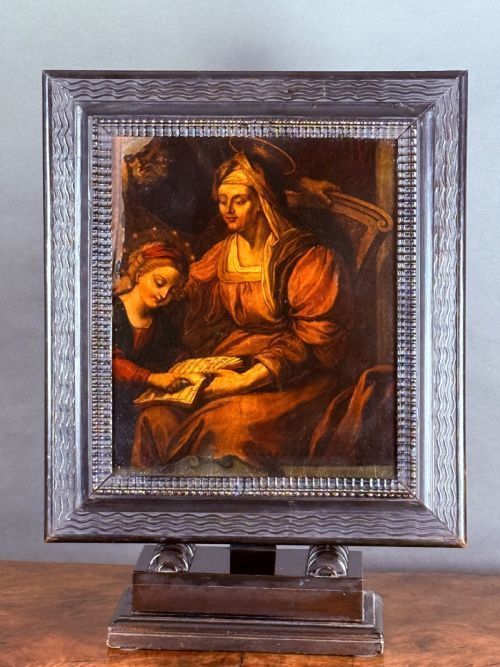
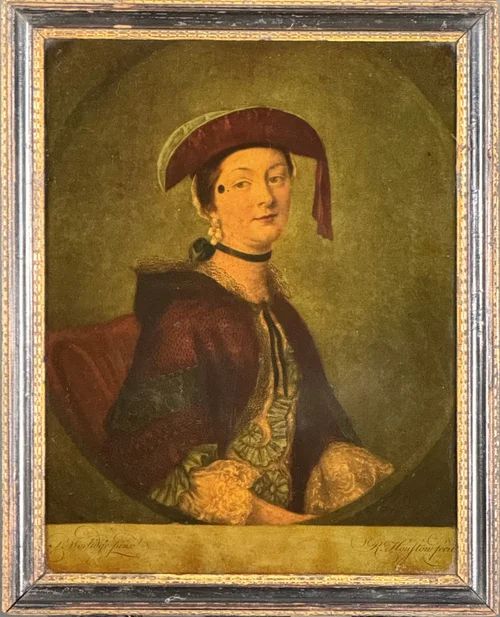
When you search for antique glass picture art, you are looking at wall pieces where the image is applied or transferred directly to glass, often protected behind wood frames.
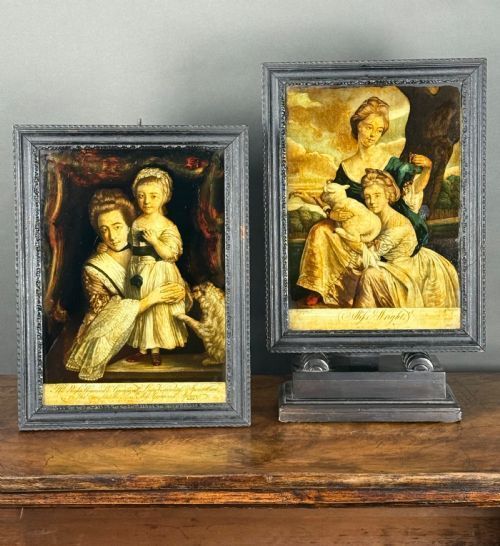
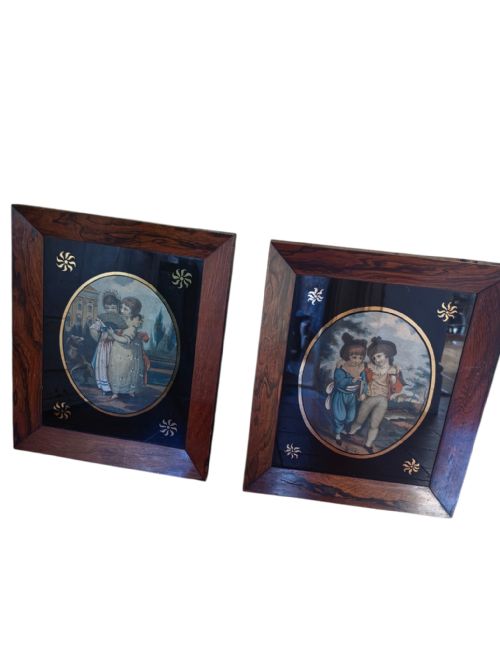
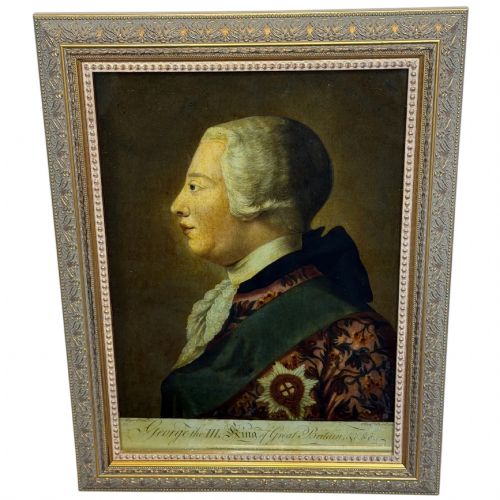
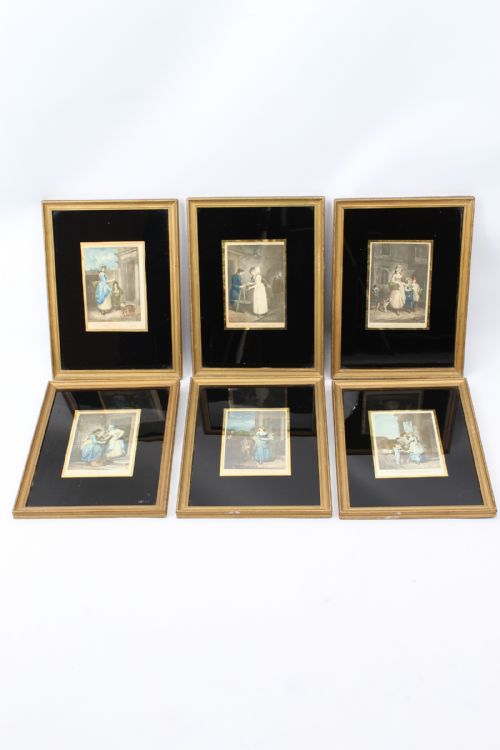
The versions you are most likely to meet on this page are eighteenth-century and nineteenth-century reverse glass mezzotints, alongside Georgian and Regency prints.
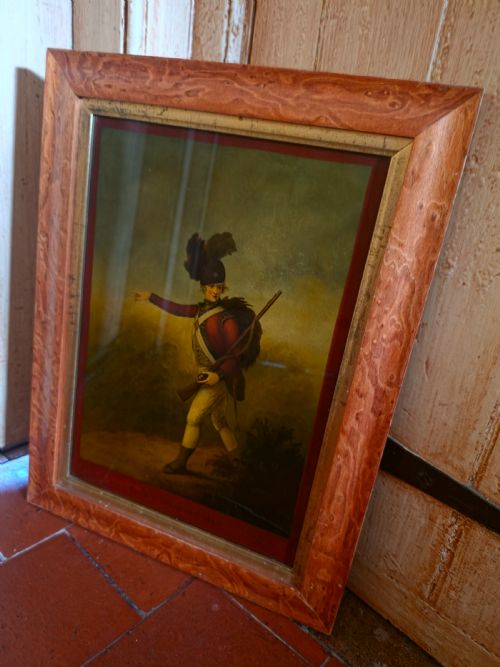
These works span portraits, religious scenes, allegorical figures like the seasons, and military subjects, created in Britain, continental Europe, and via Chinese export trade.
Materials and techniques
Makers produced reverse glass pictures by applying pigment, oil paint, or printed mezzotints face-down onto the glass plate so the image showed clearly through the front.
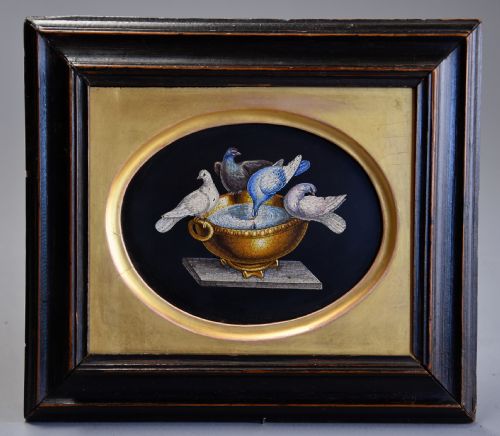
Compositions often combined paper prints with hand-colouring, pigment, and oil paint, sealed behind glass and housed in wood frames such as rosewood, giltwood, or ebonised timber.
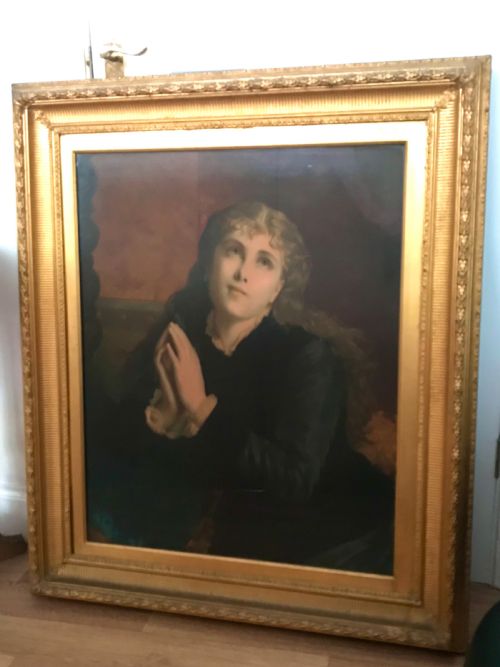
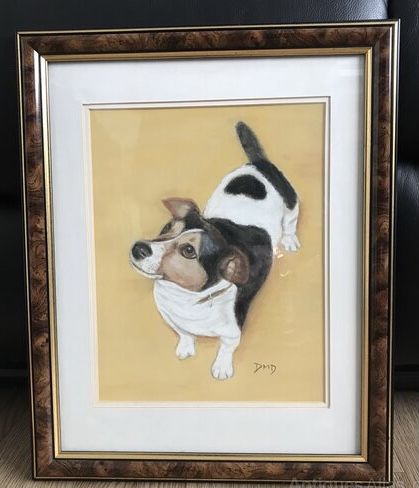
Dogs, cats, children, and saints share the glass surface across the centuries.
What separates the best pieces
Quality rests in the crispness of the transfer and the precision of the hand-applied pigment or colour, which brings depth to mezzotints and silhouette work.
The integration between the glass plate and its original frame dictates the integrity of the piece, as matching period frames preserve the historic context of the artwork.
Fletcher·Sebastiaan Vrancx·Charles Spooner·Richard Purcell·Robert Sayer·Abraham Cooper·Takabatake Kasho·W. Bishop·Richard Phillips·John Miers
The Antique Glass Picture Art Glossary
- Reverse glass painting
- An artwork painted directly onto the back of a glass pane to be viewed from the front. This technique protects the pigment from dust and atmospheric wear.
- Mezzotint
- A printmaking process of the intaglio family where tones are worked from dark to light. When applied to glass, the printed image is transferred face-down.
- Crystoleum
- A Victorian method of applying a colour print to glass, clearing the paper with oil, and hand-painting the back. This created a layered, dimensional coloured portrait.
- Eglomise
- A technique involving cold gilding on the back of glass panels, often combined with painted decoration. It creates a reflective, metallic border or background for the central subject.
- Armorial crest
- A design based on heraldic achievements and family coats of arms. These were occasionally painted on glass or rendered in needlepoint.
Antique Glass Picture Art: Frequently Asked Questions
What is a reverse glass painting?
A reverse glass painting is an image applied to the rear of a glass plate so that the viewer sees it correctly oriented through the front. Artists painted or transferred prints directly onto the glass surface.
This method created a glossy, luminous finish that protected the delicate pigments from direct exposure to the air.
How do I care for antique glass pictures?
Keep these pieces away from direct sunlight to prevent the fading of underlying pigments and paper components. Avoid hanging them in damp areas where moisture could affect the backing and framing.
Clean the glass gently with a dry microfiber cloth, ensuring no moisture seeps beneath the edges of the frame into the image layer.
What is a crystoleum?
A crystoleum is a Victorian picture technique where a paper print is stuck face-down to glass, made transparent with oils, and then hand-painted from behind. This built up realistic skin tones and clothing details.
These works were usually set into concave or deep decorative frames to enhance their illusion of depth.
Are these pieces in their original frames?
Many examples retain their period frames, ranging from simple rosewood mouldings to elaborate giltwood or ebonised surrounds. Original framing often corresponds to the manufacturing date of the glass art.
Checking the backing boards and fixings helps determine whether the frame and the glass picture have stayed together since creation.