
Antique Glass Paraffin Burner
An antique glass paraffin burner brings Victorian domestic illumination to a room, offering warm light through coloured fonts and decorative shades.
Antique Glass Paraffin Burner
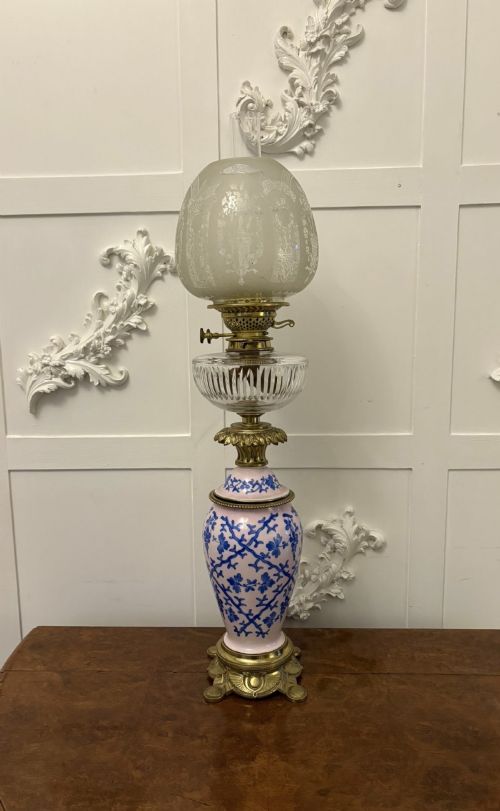
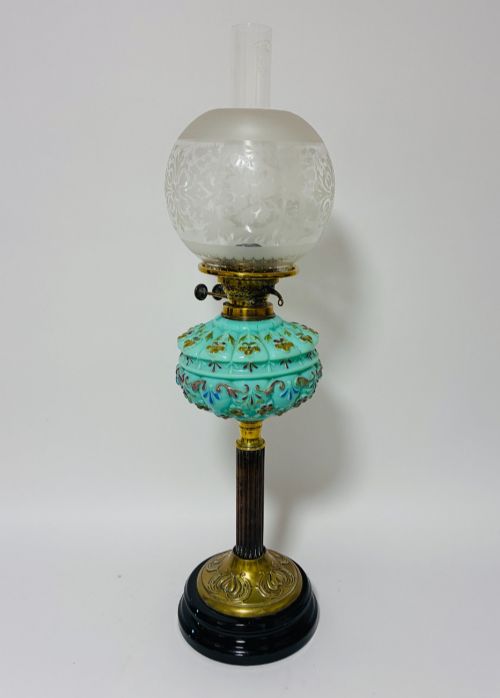
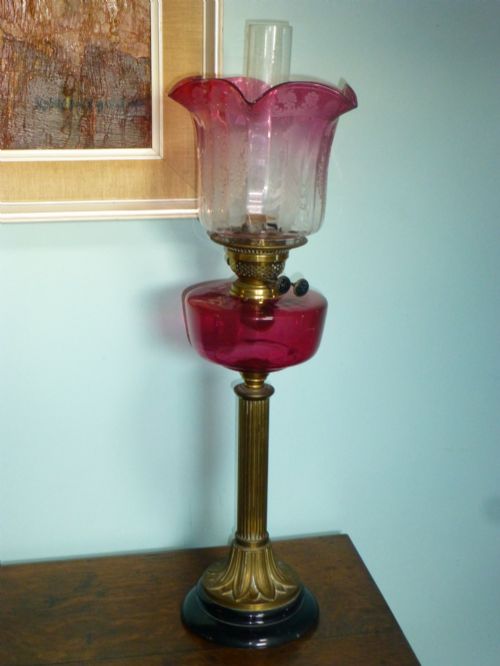
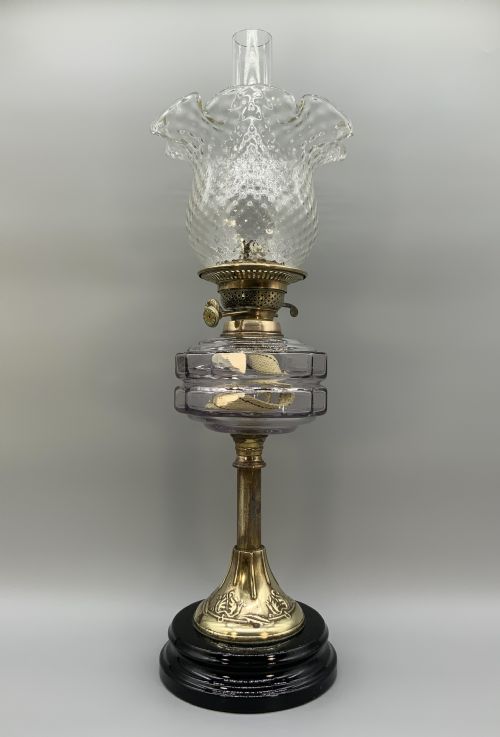
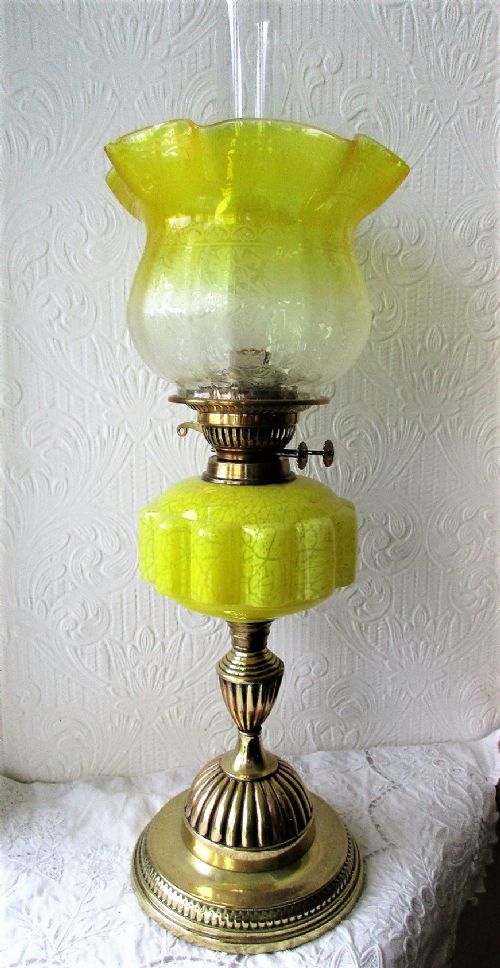
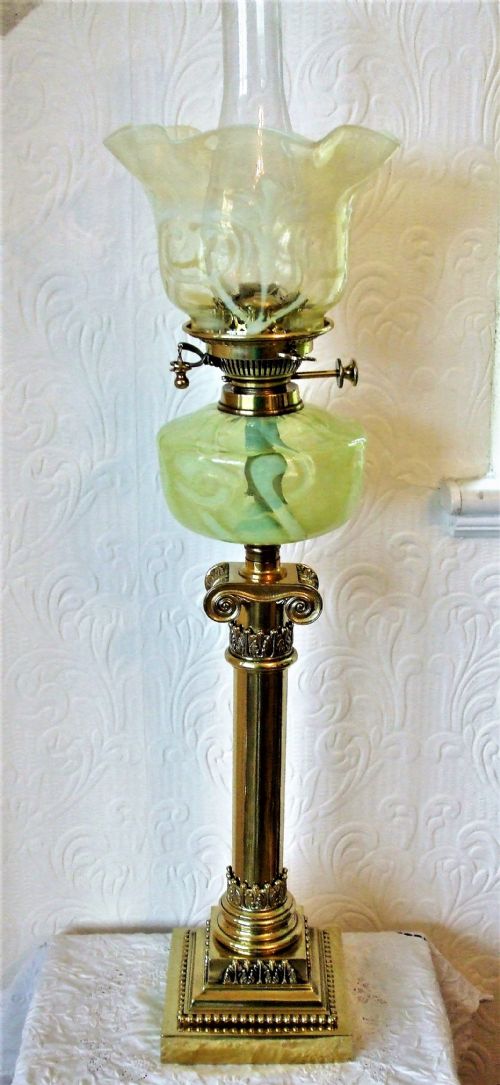
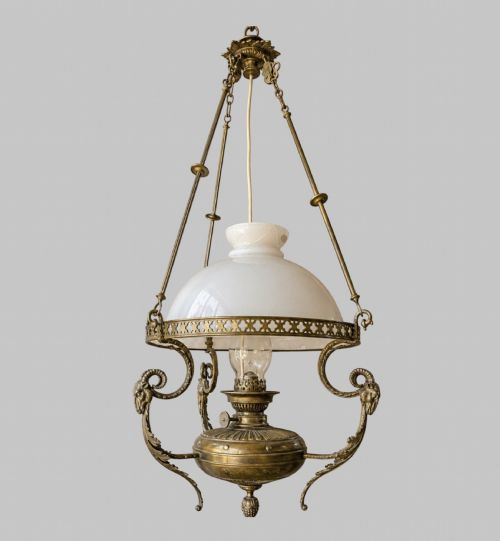
An antique glass paraffin burner combines a fuel reservoir with a burner mechanism, designed to provide illumination during the nineteenth and early twentieth centuries. These pieces appear in forms ranging from simple table lamps to elaborate column designs and hanging ceiling lights, drawing on Victorian and Edwardian aesthetics.
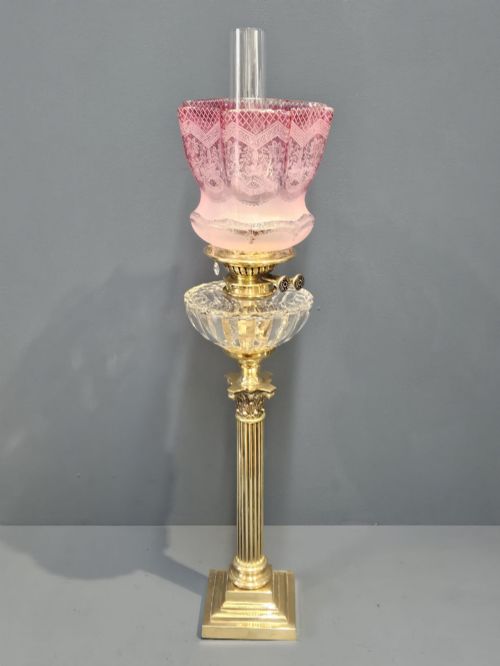
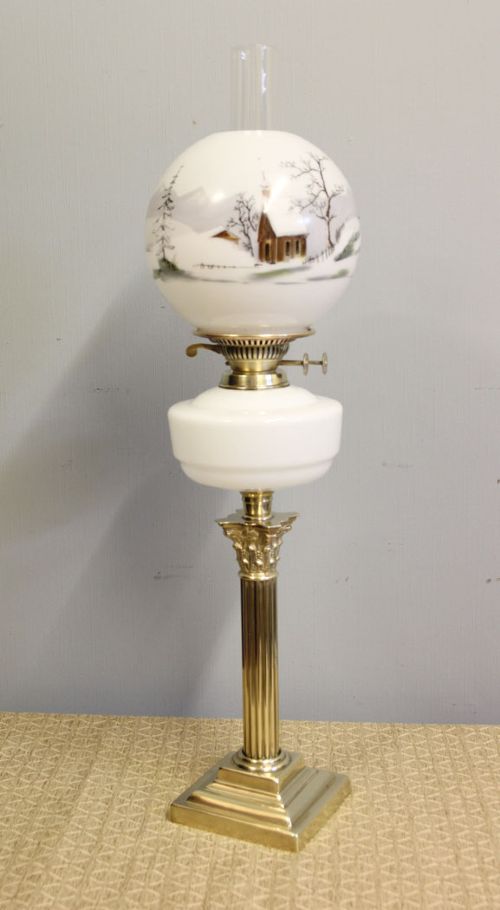
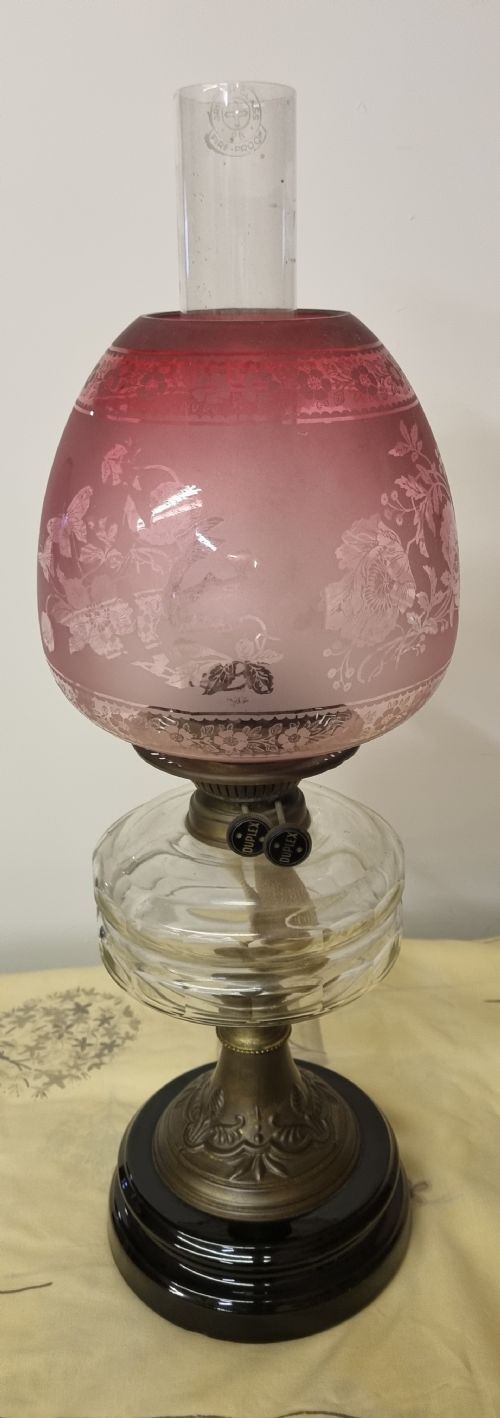
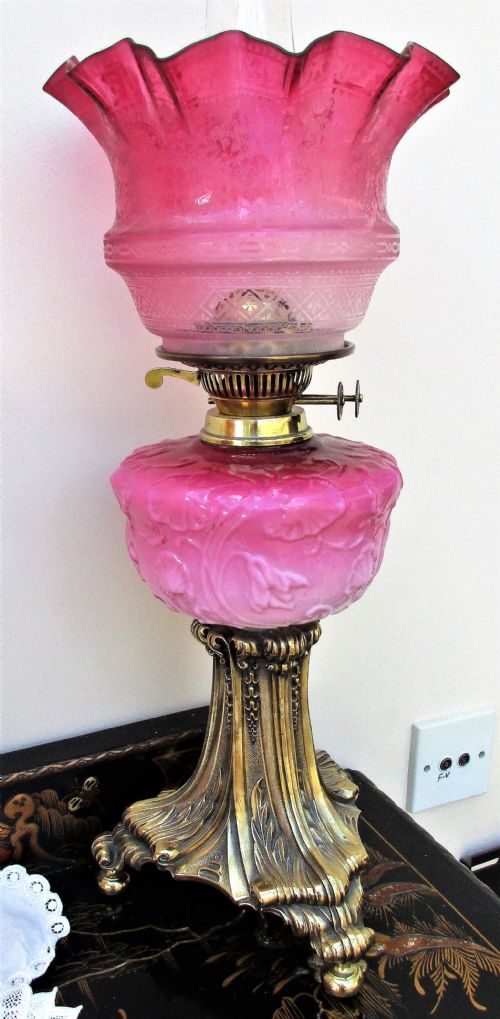
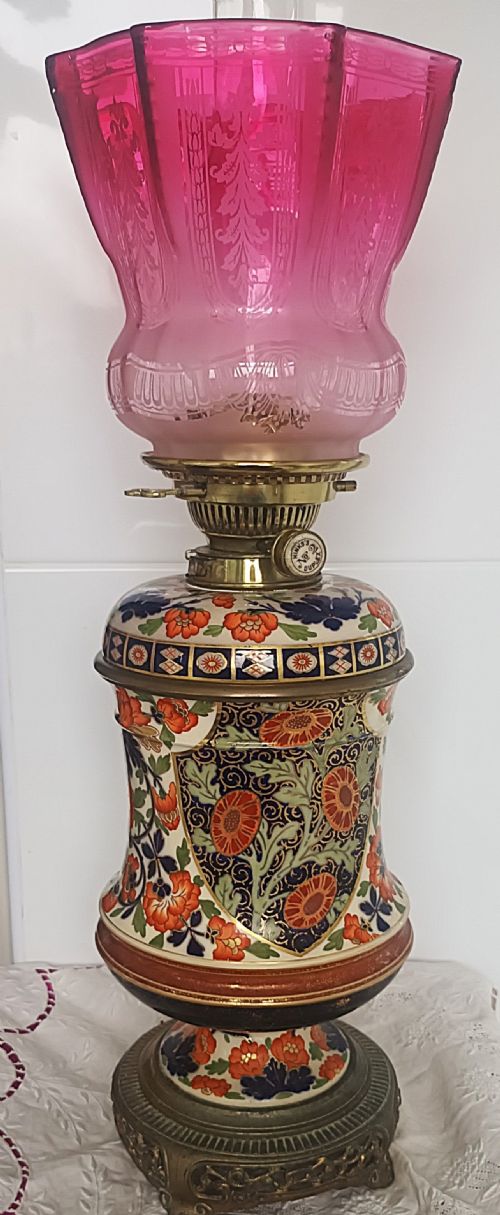
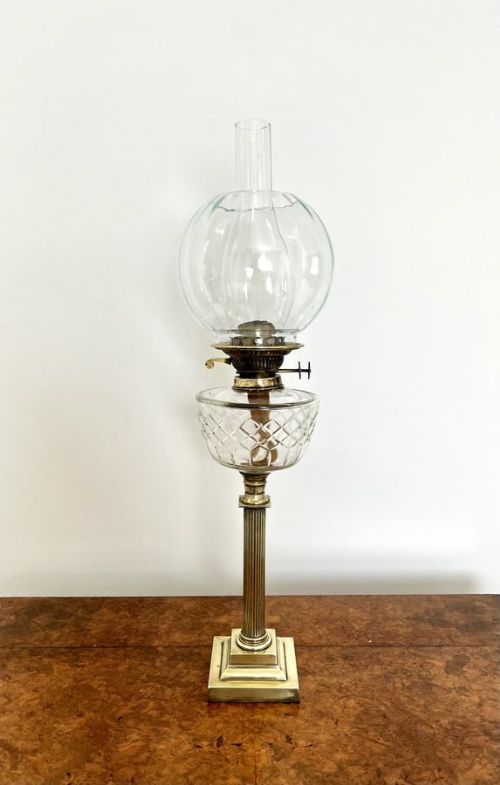
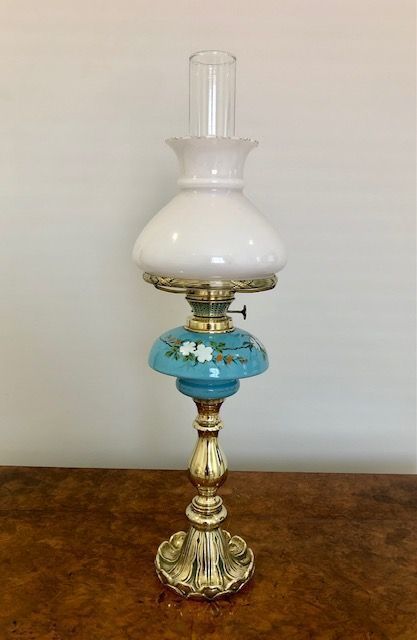
The version most commonly met on this page pairs a brass or ceramic column with a glass font, frequently topped by a cranberry glass, opaline, or etched tulip shade. They span periods from the Victorian era into the early twentieth century, reflecting the domestic lighting technology of the time.
How they were made
Makers utilised brass and ceramic for structural columns and bases, combining them with hand-blown and cut glass for the fonts and shades. Cranberry glass, opaline glass, and crystal were shaped and etched to create decorative reservoirs and colourful shades.
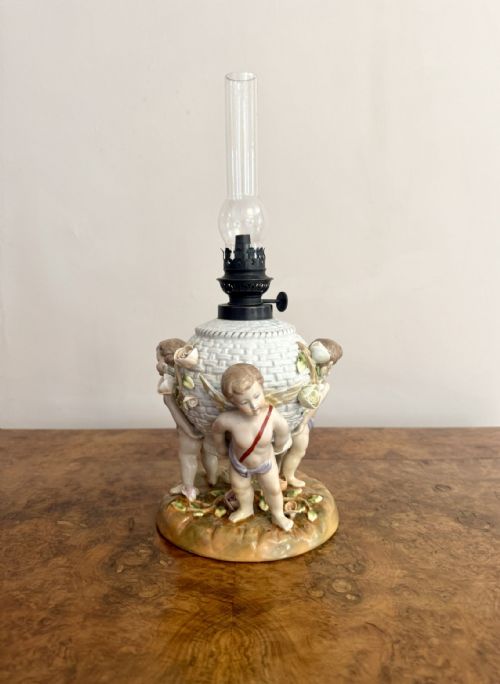
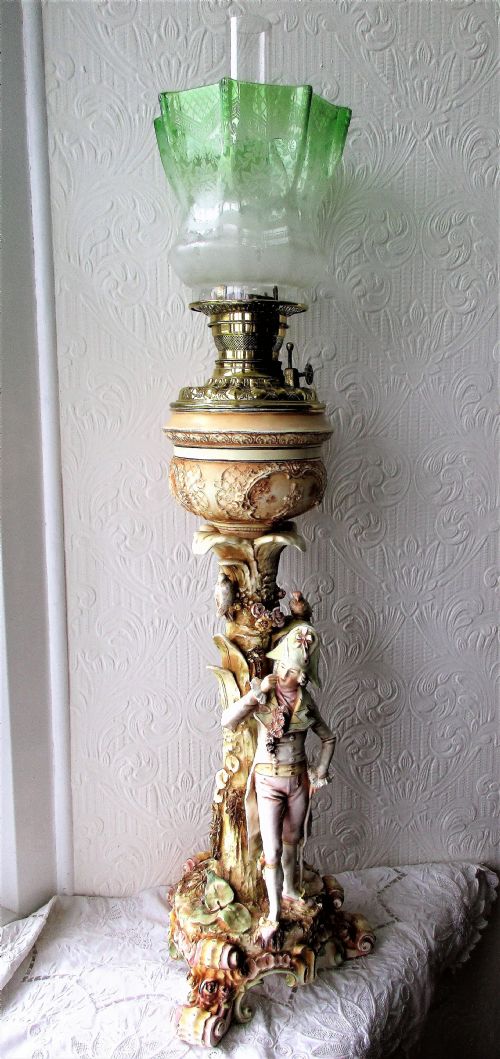
Metal components such as brass were cast and turned, while specialised burner mechanisms by makers like Hinks were integrated into the collar to regulate the flame. Certain examples incorporated figural porcelain elements or gilt decoration alongside the primary glass and metal structures.
Some Victorian pulpit lamps doubled as heaters, keeping both the room bright and the parson's tea warm.
What varies in quality
The quality of an antique glass paraffin burner depends upon the weight and finish of its brass or ceramic components, alongside the clarity and hand-finishing of the glass font and shade. Pieces featuring complex structural forms, such as Corinthian or ionic columns, show superior workmanship.
The inclusion of branded burner mechanisms, detailed hand-blown or etched glass shades, and refined decorative painting on porcelain or crystal elements distinguishes finer pieces from simpler domestic examples.
Hinks·Taylor Tunnicliff·Sitzendorf
The Antique Glass Paraffin Burner Glossary
- Font
- The reservoir that holds the paraffin fuel, commonly manufactured from clear, coloured, or cranberry glass.
- Duplex burner
- A double-wick mechanism designed to produce a brighter flame than standard single-wick lamps.
- Corinthian column
- An architectural column style frequently utilised for the stems of Victorian table lamps.
- Opaline glass
- A pale, translucent white glass popular for shades and decorative lamp bodies during the nineteenth century.
Antique Glass Paraffin Burner: Frequently Asked Questions
How do I operate an antique paraffin lamp?
Operating an antique paraffin lamp requires filling the glass font with suitable lamp oil and allowing the wick to saturate thoroughly before lighting. The wick height is adjusted via the thumbwheel on the burner mechanism to maintain a steady, smoke-free flame.
Original burners should be handled with care to preserve their mechanical components, and lamps are frequently displayed for decorative purposes rather than regular daily use.
How do I clean a glass paraffin burner?
Cleaning involves dusting metal parts gently and washing glass components with warm, soapy water while avoiding harsh abrasives on gilt decoration or etched surfaces. The burner mechanism should be kept dry to prevent corrosion of the brass.
Removable shades and fonts simplify the cleaning process, allowing each material to be treated with the appropriate method.
How do I date an antique paraffin lamp?
Dating relies upon stylistic markers such as the presence of Victorian Corinthian columns, Art Nouveau botanical motifs, or Edwardian opaline shades. Patent dates or maker names stamped onto the metal burner mechanism also provide precise chronological reference points.
Materials like cranberry glass and specific column designs help narrow the period of manufacture between the mid-nineteenth and early twentieth centuries.