



Antique Glass Liner
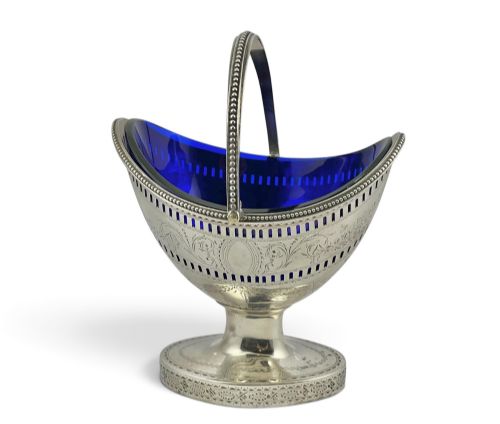
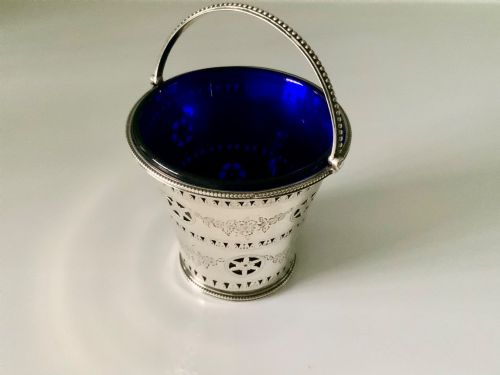
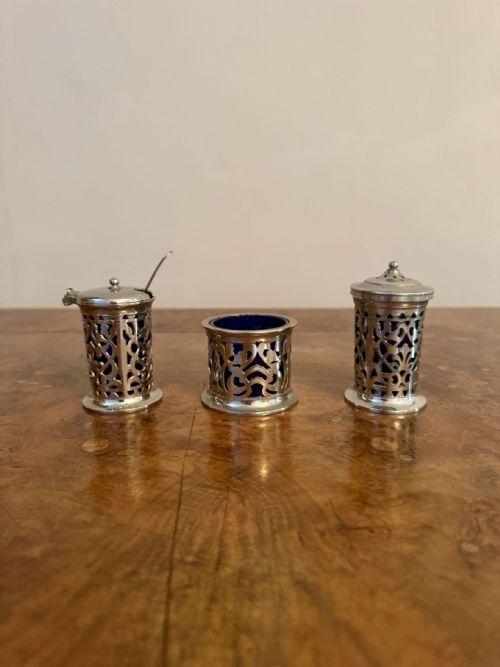
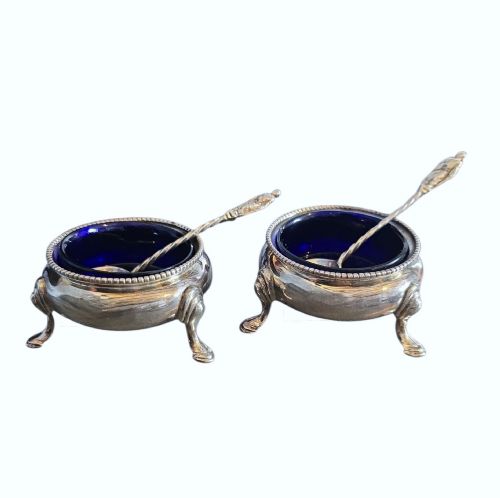
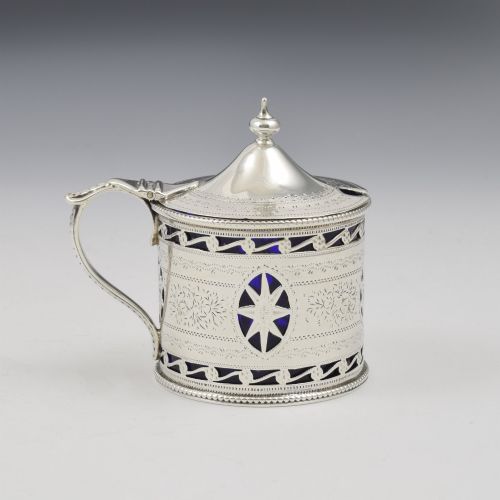
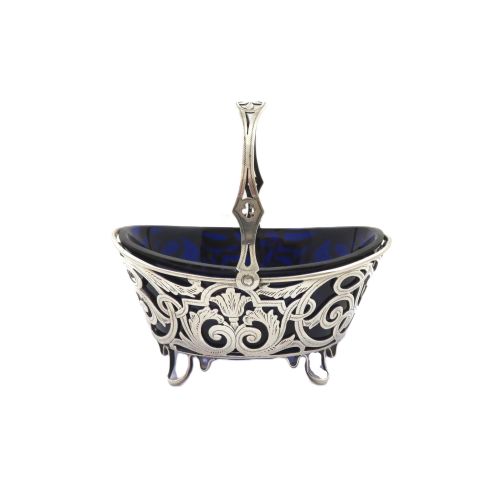
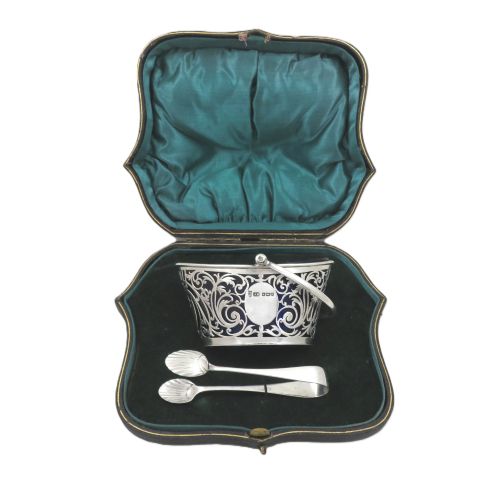
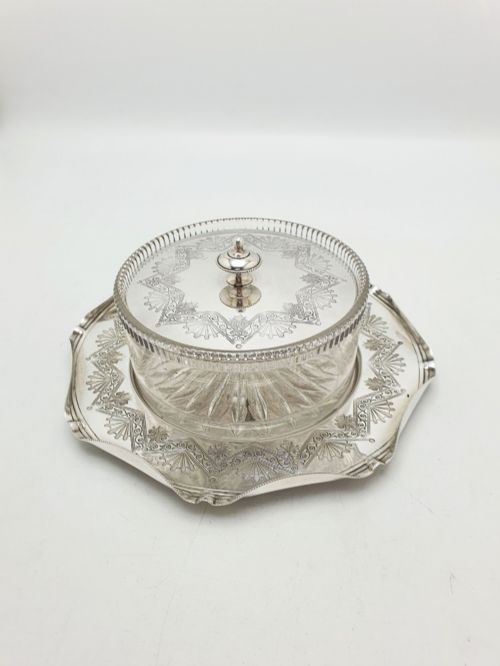
An antique glass liner provides the protective interior vessel for silver baskets, salt cellars and mustard pots.
Antique Glass Liner
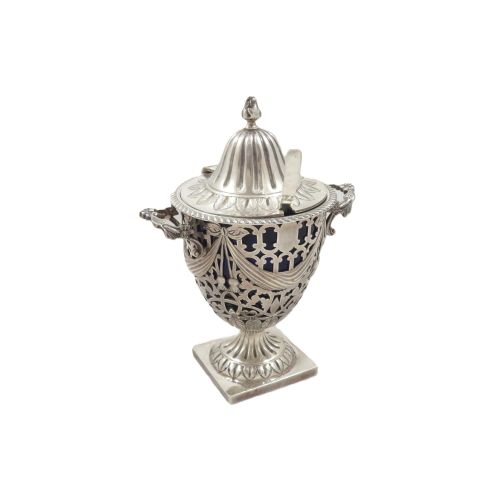
When searching for an antique glass liner, buyers encounter small blown or moulded inserts designed to sit inside openwork silver and silver-plated tableware. These functional vessels protect metal from corrosive foods like mustard, salt and butter.
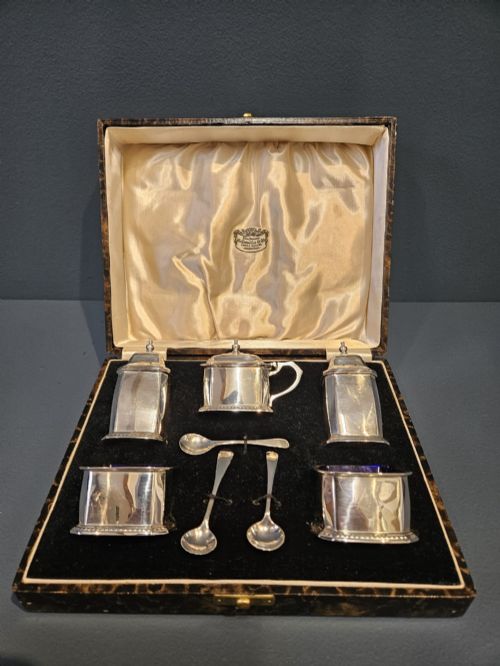
The selections span from Georgian sugar buckets and Victorian mustard pots to Edwardian condiment sets and Art Deco biscuit barrels. Blue glass, cobalt glass and cranberry glass versions appear frequently alongside clear and frosted varieties.
Materials and construction
The vessels combine blown or moulded glass with pierced, cast or wirework frames made from sterling silver, silver plate or 800 silver. Glass colours are achieved by adding metallic oxides to the molten batch during manufacture.
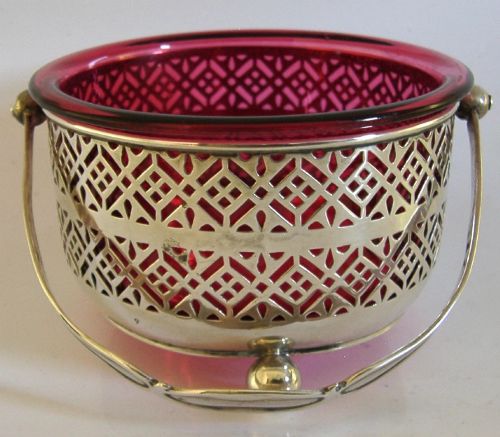
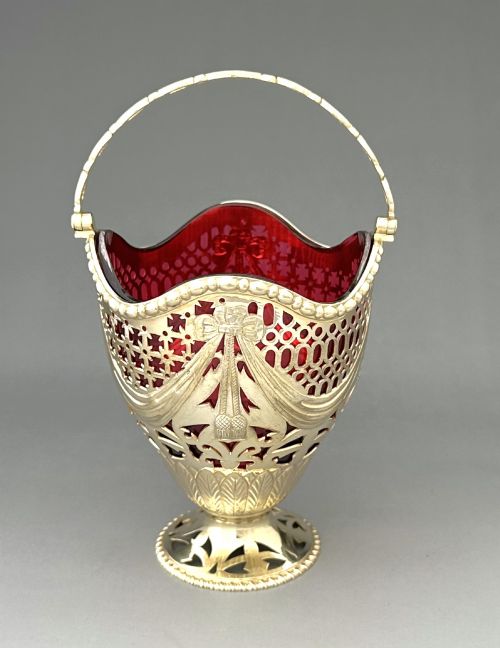
Metal mounts often feature intricate pierced or reticulated patterns, requiring skilled hand-sawing and soldering to house the fragile glass inserts securely.
Antique Glass Liner Retail Price Guide 2026
Typical asking prices for glass liner among the pieces listed under this phrase on Sellingantiques today, from the lower quarter to the upper quarter. They describe what is for sale here now, not the wider market.
The object forms include mustard pots, salt cellars, sugar baskets, butter dishes and biscuit barrels.
Assessing quality
Quality rests upon the originality of the pairing and the precision of fit between the glass insert and its metal mount. Hand-cut details, heavier gauge silver and original coloured glass liners command greater regard among collectors.
The presence of crisp piercing on the metal frame and uniform thickness in the blown glass walls distinguish superior examples from standard utilitarian pieces.
Goldsmith & Silversmith's·Nathan & Hayes·Aldridge & Green·William Neale·Mappin & Webb·Elkington & Co·WMF
The Antique Glass Liner Glossary
- Cobalt glass
- A deep blue glass coloured with cobalt oxide, commonly utilised for salt cellars and mustard pot inserts.
- Cranberry glass
- A rich pinkish-red transparent glass produced by adding gold to the molten mixture, often seen in baskets and vases.
- Pierced silver
- Metalwork decorated by cutting holes through the sheet to create ornamental patterns, allowing the coloured glass liner to show through.
- Cruet
- A small tabletop frame holding multiple condiment bottles or pots equipped with glass liners.
Antique Glass Liner: Frequently Asked Questions
What is an antique glass liner?
An antique glass liner is a removable vessel that sits inside a silver or silver-plated holder. These inserts protected the metal exterior from the corrosive effects of mustard, salt and damp condiments.
They appear in various forms, including salt cellars, sugar baskets, biscuit barrels and butter dishes. Most examples match specific silver containers from the Victorian, Edwardian and Georgian eras.
How do I clean an old glass liner?
Warm water and mild soap are best for cleaning vintage glass inserts. Avoid abrasive scrubbers that can scratch the surface or damage any original surface polish.
Sudden temperature changes should be avoided to prevent thermal shock, which can crack older glass. Dry the pieces thoroughly with a soft cloth before placing them back into their metal mounts.
Are replacement glass liners available?
Finding an exact replacement glass liner for a specific antique piece can prove challenging. Because period liners were often blown or fitted by hand, dimensions vary significantly between individual items.
Many collectors prefer to purchase pieces that retain their original glass insert. Matched or associated replacements require careful measurement of the interior frame dimensions.
How can I date my glass liner?
Dating the glass itself is often difficult without accompanying hallmarks. Experts look at the manufacturing technique, such as pontil marks on the base, alongside the style and hallmarks of the surrounding silver frame.
Victorian and Edwardian pieces frequently display standard assay office stamps on the metal holder. These silver hallmarks provide a reliable year for the complete object.