




Antique Glass Drinking Tumblers
Antique glass drinking tumblers bring heavy lead crystal and bright ruby flash glass to the table, offering tactile weight and historic charm for daily use.
Antique Glass Drinking Tumblers
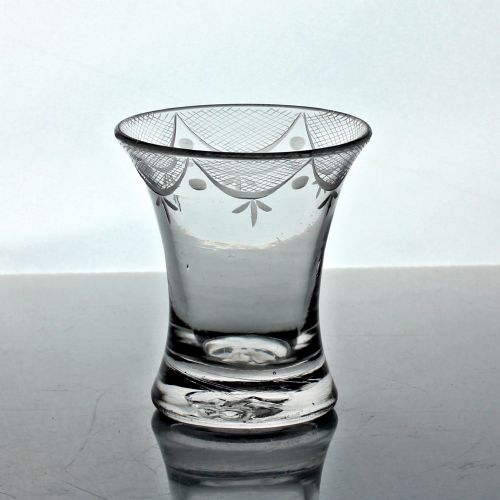
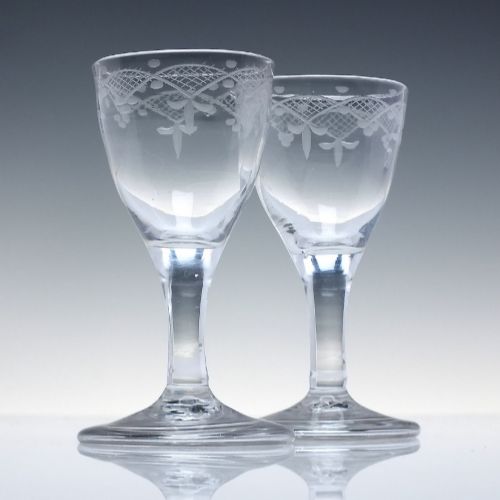
When you search for antique glass drinking tumblers, you encounter vessels designed for everyday spirits, beer, and wine across several centuries. The pieces on this page span Georgian, Victorian, Edwardian, and Art Deco periods, ranging from single firing glasses to large sets.
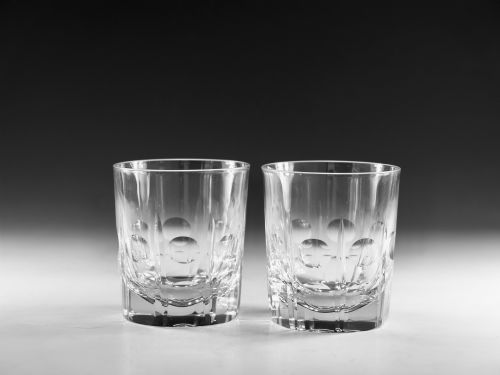
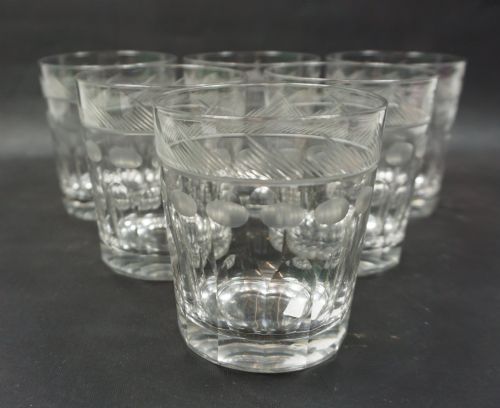
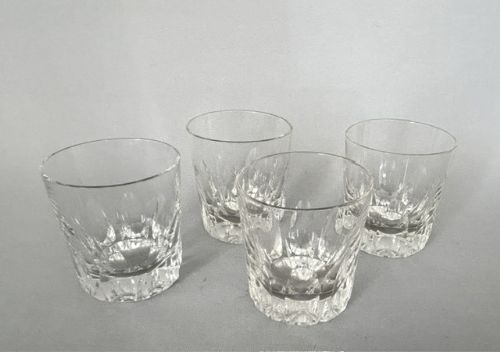
Most entries focus on traditional forms such as whisky tumblers, beakers, and dram glasses. You will find matched pairs and larger drinking sets shaped by English, Bohemian, and Continental makers.
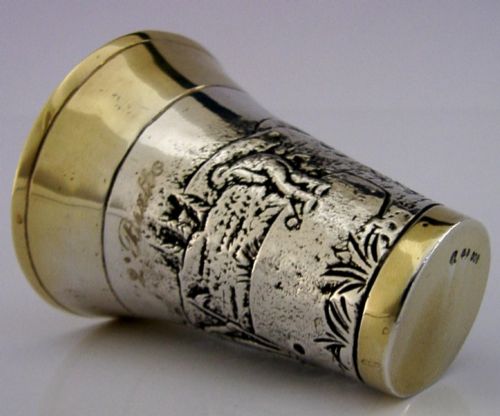
The materials cover clear lead glass, crystal glass, and ruby flash glass, often enhanced with silver mountings or parcel-gilt details. Each vessel reflects the drinking habits and social customs of its specific decade of manufacture.
How they were made
Glassmakers utilised lead glass and crystal glass formulations to achieve heavy walls and brilliant clarity. Molten metal was blown into moulds or shaped by hand before workers applied decorative finishes.
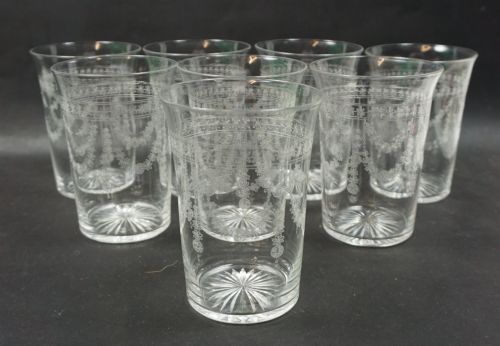
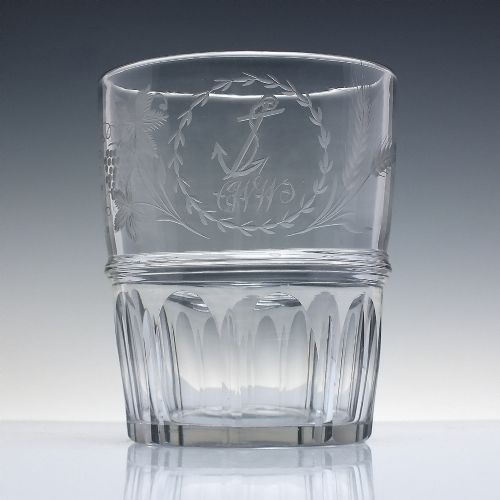
Surface ornamentation relied on wheel cutting, blaze cutting, and acid etching to produce crisp geometric and floral patterns. Artisans also employed engraving techniques to detail crests, scenes, and commemorative inscriptions.
Certain pieces incorporate applied elements like folded feet for stability, or feature 800 solid silver mounts and parcel-gilt accents added by metalworkers.
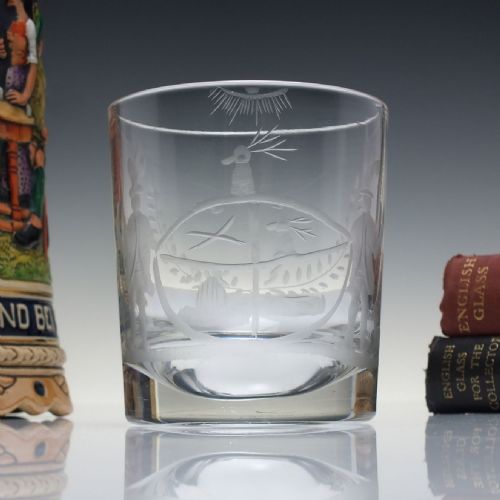
An eighteenth-century glass once toasted the Order of Odd Fellows, proving that historic drinkers loved a secret society just as much as a stiff whisky.
What varies in quality
The standard of an antique glass drinking tumbler depends heavily on the crispness of its wheel cutting and the depth of its engraving. Fine pieces display sharp, clean facets that catch the light without blurring.
Material composition dictates the heft and ring of the vessel, with high-lead crystal providing substantial weight and superior brilliance compared to standard glass. The presence of matching sets across multiple pieces also influences desirability.
Preservation of the surface detail, particularly on delicate acid etching and ruby flash coatings, separates standard domestic ware from masterwork examples.
The Antique Glass Drinking Tumblers Glossary
- Lead glass
- Glass containing metallic oxides that increase weight, refractive index, and working time. This formulation allows deeper and sharper cut decoration.
- Firing glass
- A heavy-footed drinking glass used in eighteenth-century clubs and lodges. The thick base was designed to be thumped safely on wooden tables.
- Ruby flash glass
- Clear glass coated with a thin outer layer of ruby-coloured glass before cutting. Cutting through the red layer reveals the clear glass underneath for strong contrast.
- Folded foot
- A rim turned under during manufacture to thicken and strengthen the base of a glass. This technique provides extra durability to seventeenth and eighteenth-century drinking vessels.
- Blaze cut
- A style of broad, shallow facet cutting that produces wide reflective planes. It creates a bold, sparkling effect across Georgian tumblers.
Antique Glass Drinking Tumblers: Frequently Asked Questions
Can I use antique tumblers daily?
Many sturdy lead crystal and Victorian glass tumblers remain suitable for careful daily use and modern dining.
Hand washing in warm water preserves the historic glass and prevents thermal shock from automatic dishwashers.
How do I date an old glass tumbler?
Dating relies on examining the weight, optical clarity, pontil marks on the base, and the specific cutting style.
Georgian and Victorian pieces exhibit different manufacturing traits and decorative motifs that separate them from twentieth-century Art Deco items.
What is the difference between crystal and glass?
Lead crystal contains a percentage of lead oxide that increases the material's density, refractive index, and acoustic resonance.
This composition makes crystal heavier and brighter than standard soda-lime glass.
Why do some tumblers have thick bases?
Thick bases provided necessary stability and ballast for heavy-handed toasts in historic taverns and dining rooms.
Such weight also protected the structural integrity of firing glasses and dram cups during active social gatherings.