
Cut Glass Whiskey Glasses
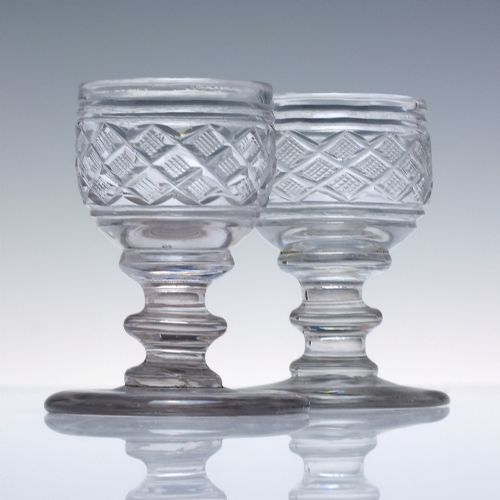
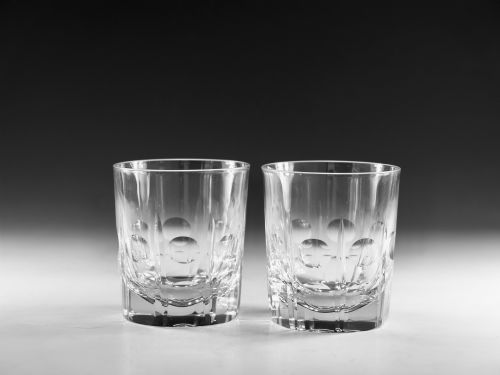
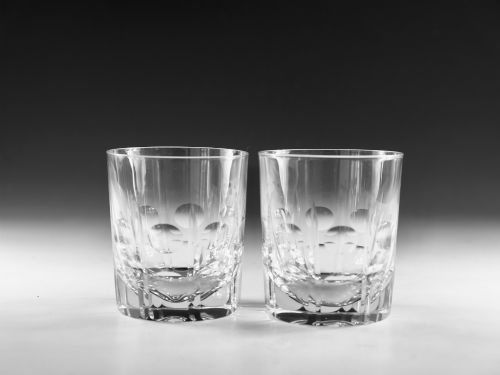
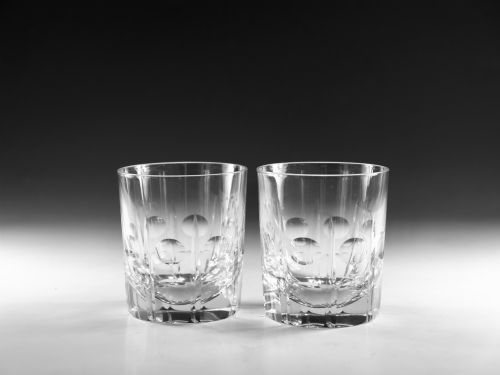
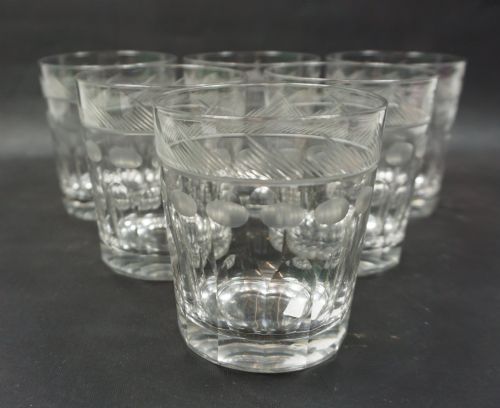
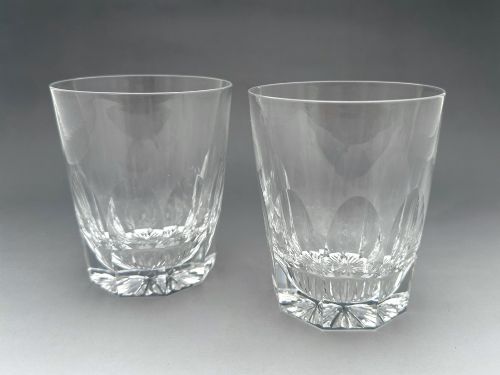
These cut glass whiskey glasses span the Georgian, Victorian, Edwardian and early twentieth century periods, offering heavy crystal weight and deep geometric cutting.
Cut Glass Whiskey Glasses
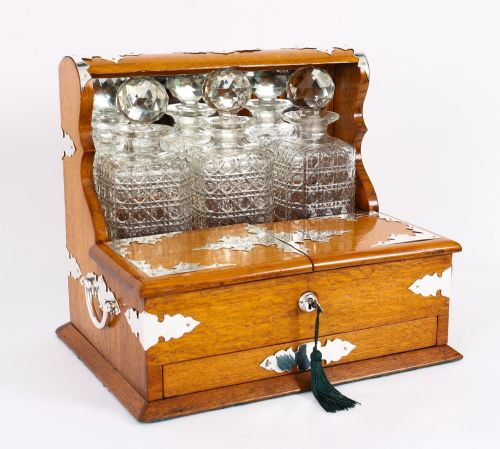
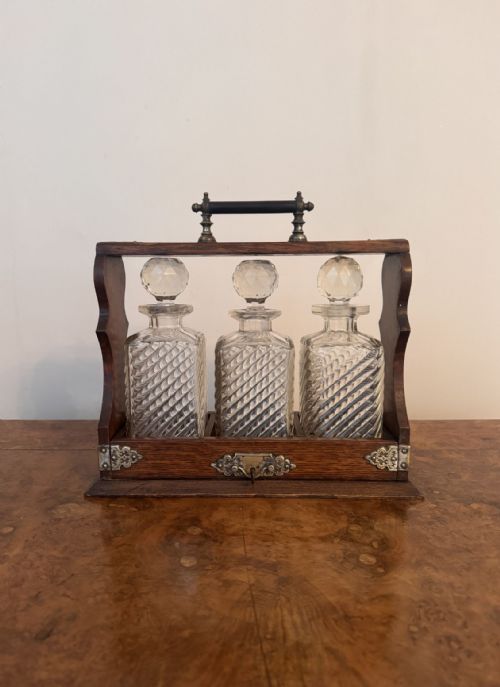
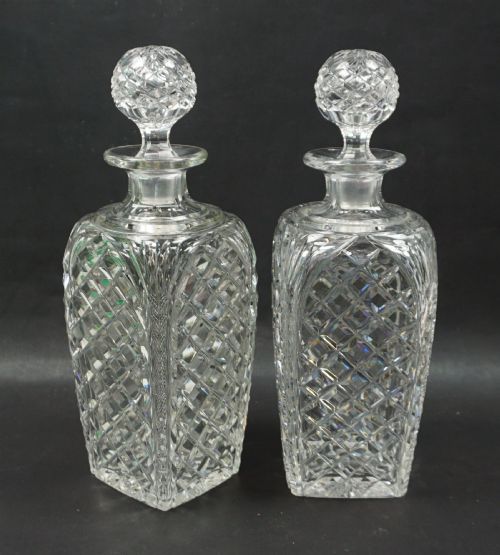
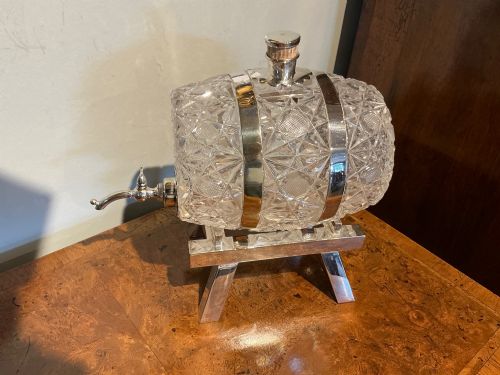
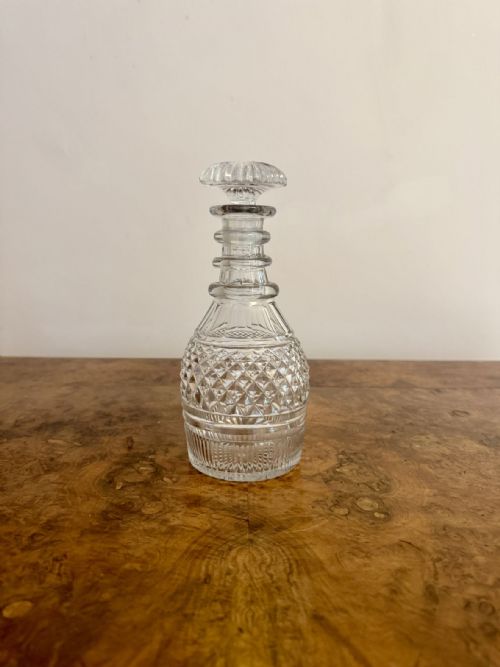
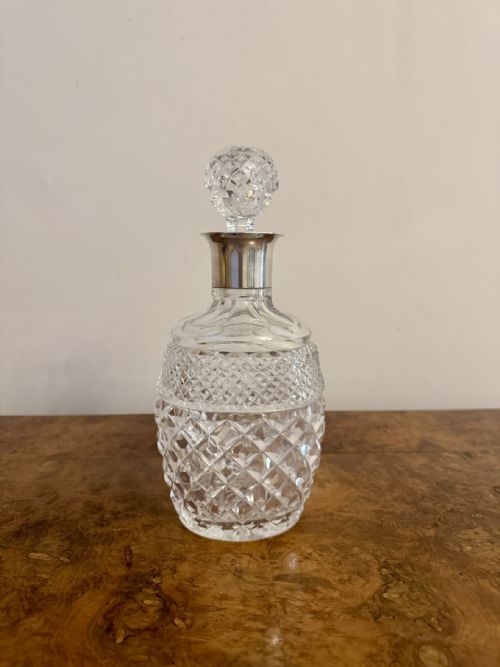
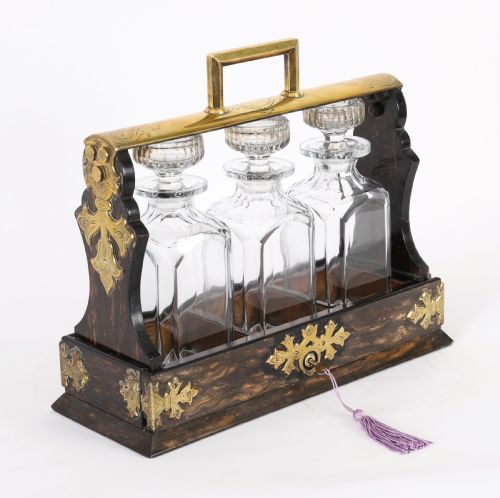
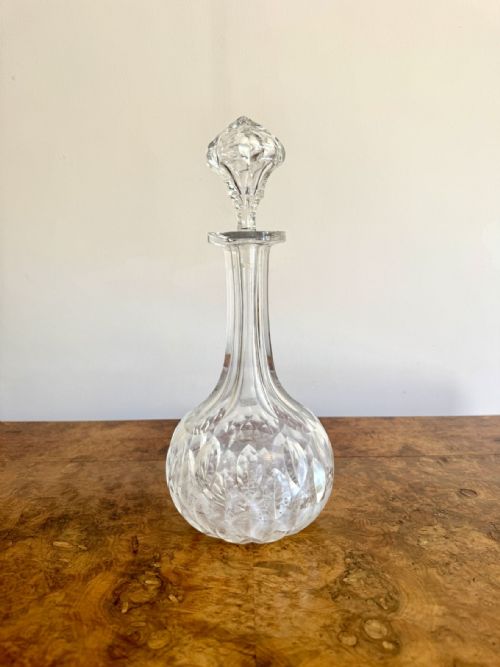
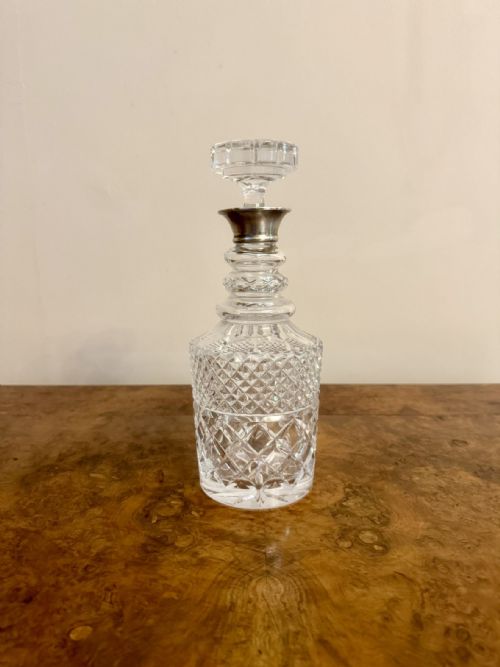
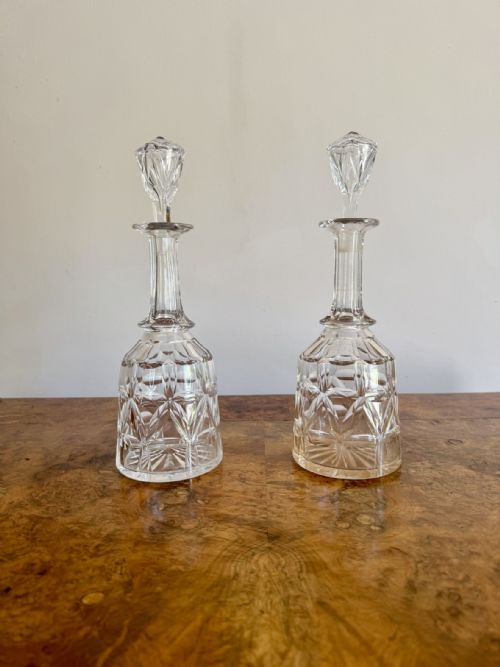
Cut glass whiskey glasses encompass sturdy drinking tumblers, dram glasses and spirit noggins designed for serving spirits. When searching for cut glass whiskey glasses, collectors encounter heavy lead crystal vessels alongside paired decanters and tantalus sets.
What varies in quality
The depth and precision of the wheel-cut facets dictate visual clarity and tactile weight. Crisp, sharp edges on hobnail or blaze cuts contrast with softer, worn patterns.
The integration of secondary materials defines the tier of manufacture, from heavy cast brass mounts to fitted sterling silver collars and hallmarked hardware.
Certain tantalus sets double as games compendiums, concealing card decks and counters beneath the whiskey decanters.
The Cut Glass Whiskey Glasses Glossary
- Tantalus
- A locked wooden cabinet holding spirit decanters visible behind a security bar. The mechanism prevents access to the whiskey bottles until a key is turned in the lock.
- Noggin
- A small drinking vessel or quarter-pint mug for spirits. These often feature silver mounts and a single handle alongside a pouring lip.
- Lead Crystal
- Glass containing metallic oxide that increases weight and refractive index. This material allows deeper facet cutting and produces a resonant ring when struck.
- Blaze Cut
- A decorative pattern of long, wide parallel facets. This style reflects light across the heavy base of Georgian and Victorian tumblers.
Cut Glass Whiskey Glasses: Frequently Asked Questions
How do I identify Georgian whiskey glasses?
Georgian whiskey glasses display heavy lead crystal composition with hand-cut facets and pontil marks on the base. They often possess thick walls and irregular dimensions compared to later manufactured items.
Examine the weight and clarity of the material to distinguish these early pieces from twentieth-century reproductions.
What is an antique tantalus used for?
A tantalus secures spirit decanters within an oak, coromandel or satinwood frame fitted with a metal locking bar. This device prevented household staff from consuming the owner's whiskey.
The locking mechanism holds the decanter stoppers in place so the bottles cannot be removed while the frame remains closed.
Are Edwardian decanters marked with dates?
Edwardian decanters rarely display direct production dates on the glass itself. Silver collars and mounts frequently bear hallmarks indicating the exact assay office and year of manufacture.
Look for sterling silver hallmarks near the rim to date the metal components attached to the glass body.
How should I clean cut glass?
Wash cut glass whiskey pieces by hand in warm water using mild detergent. Avoid sudden temperature changes to prevent thermal shock and cracking in heavy lead crystal.
Dry the pieces promptly with a lint-free cloth to maintain the clarity of the wheel-cut facets.