
Vintage Crystal Spirit Glasses
Vintage crystal spirit glasses are drinking vessels and serving pieces made to hold spirits, appearing here across Victorian, Edwardian, and later periods.
Vintage Crystal Spirit Glasses
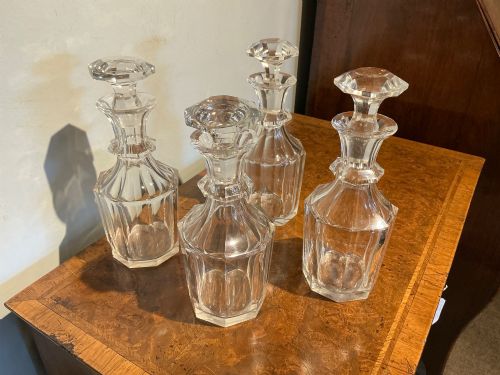
Vintage crystal spirit glasses encompass small drinking vessels, dram glasses, rummers, and whiskey tumblers designed for serving spirits. These pieces frequently accompany decanters, spirit barrels, and tantalus sets found within the same periods.
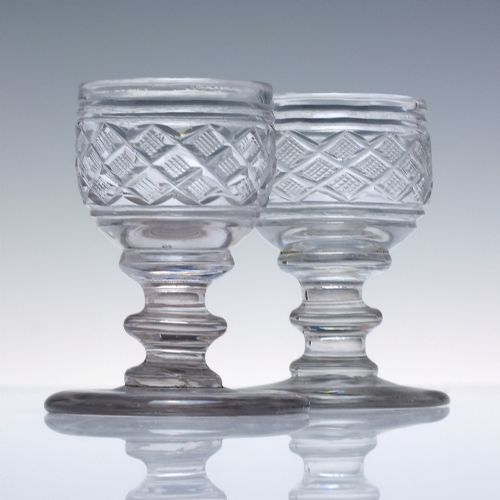
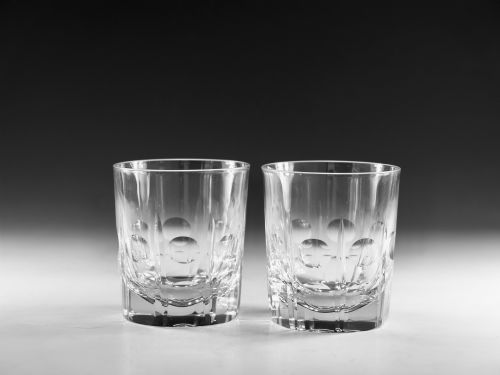
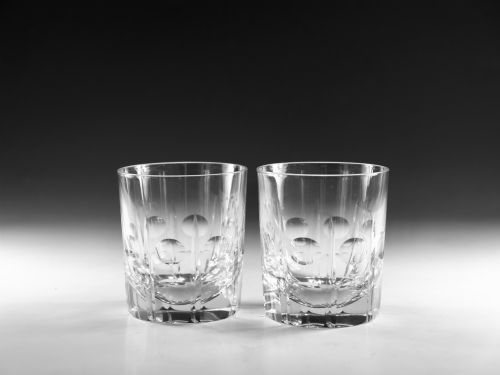
The selections span from Georgian Anglo-Irish dram glasses to Victorian whiskey tumblers and early twentieth-century examples. Buyers encounter individual drinking vessels alongside paired sets and matched groups originating from English, Irish, and continental makers.
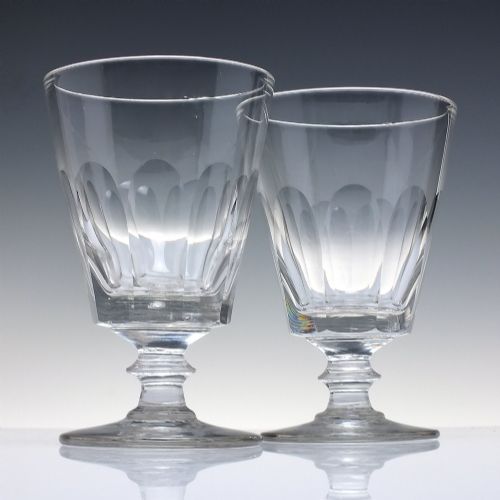
Forms range from straight-sided tumblers and small dram glasses to larger rummers intended for robust spirits. Each piece reflects the social dining and drinking habits of its respective decade, from the late eighteenth century through the art deco era.
How they were made
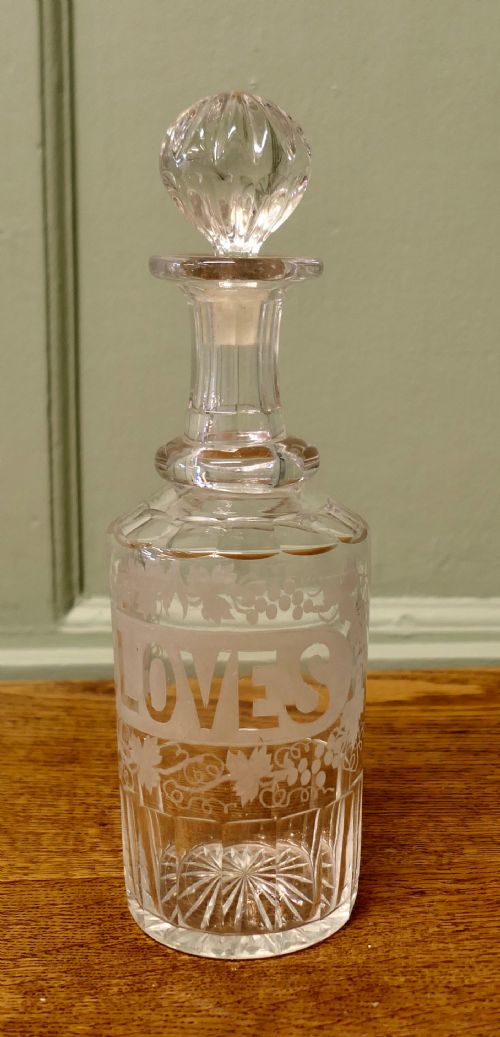
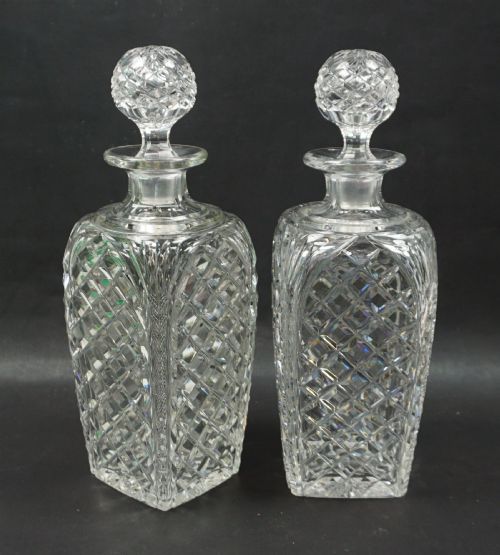
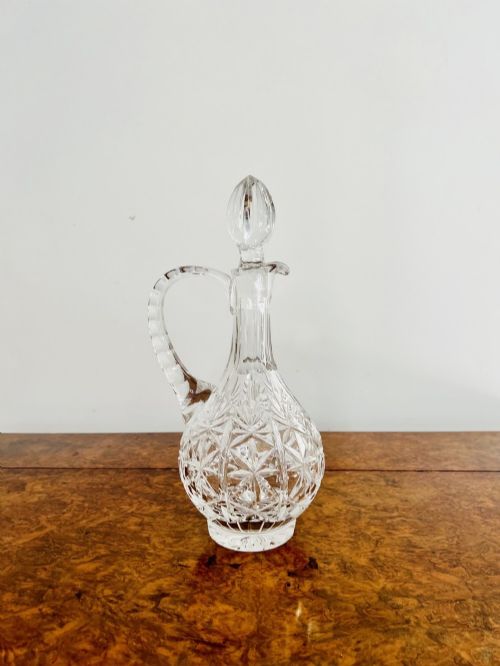
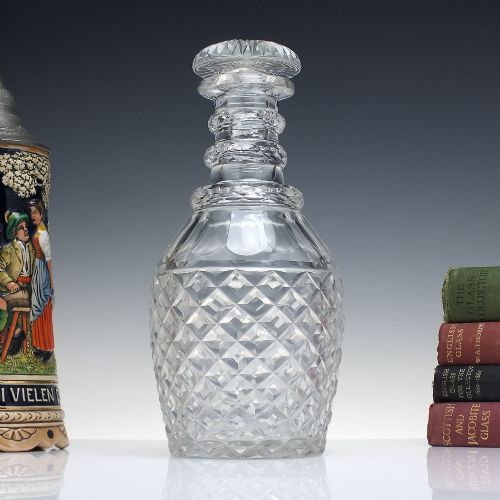
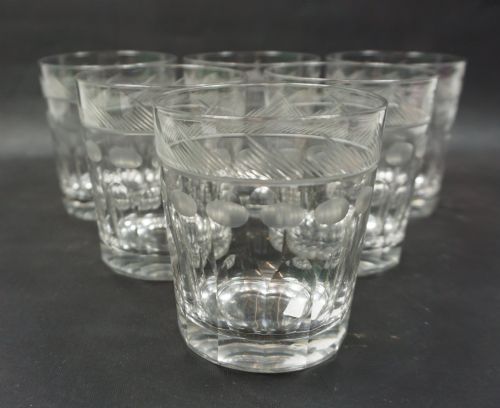
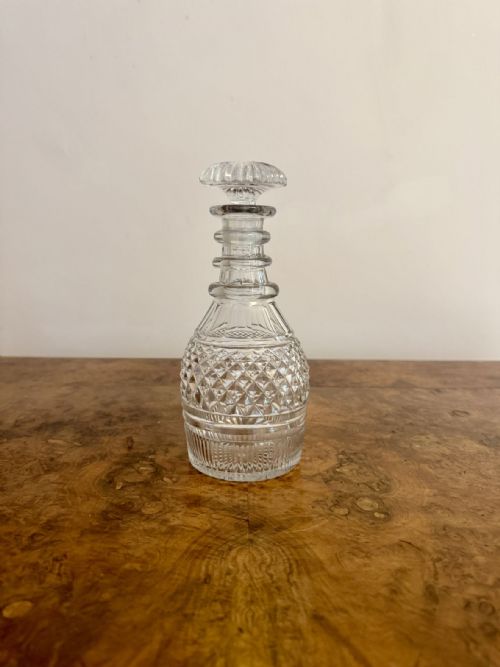
Makers utilised lead crystal, cut glass, and standard glass shaped through blowing and moulding techniques. Surface ornamentation often involved wheel-cutting or etching to create geometric and floral patterns across the body.
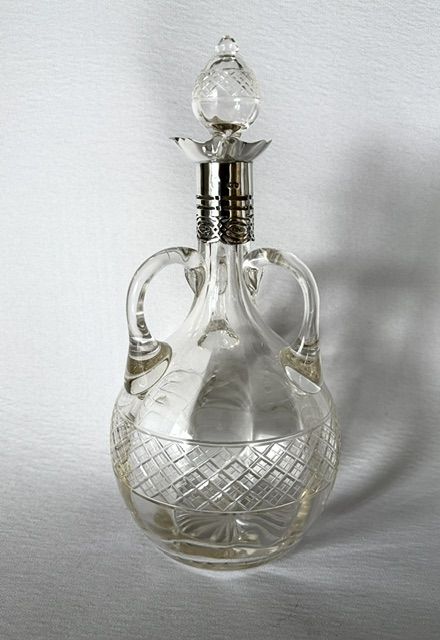
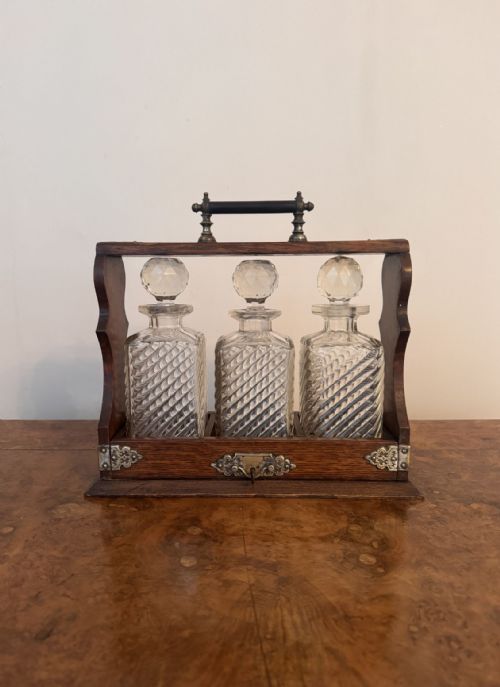
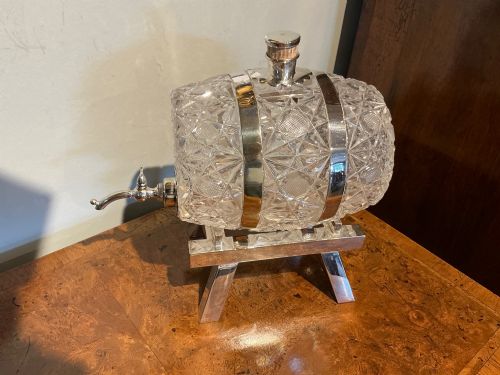
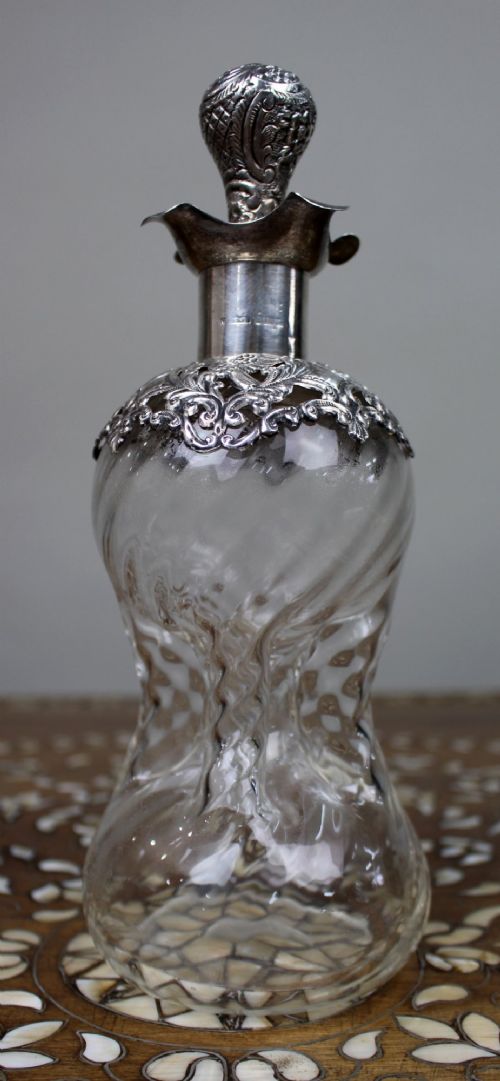
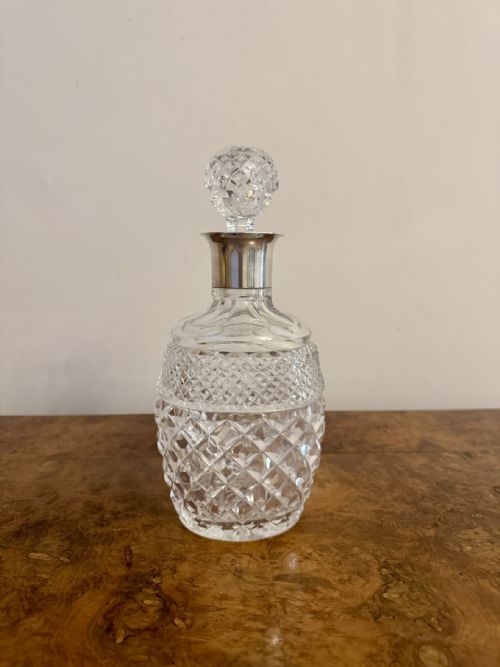
Many drinking vessels and associated decanters incorporate metal elements such as silver collars, silver plate mounts, and fitted wooden frames in oak, coromandel, or satinwood for locking tantalus mechanisms.
Several Victorian tantalus sets include hidden games compartments, ensuring guests remained entertained long after the spirits ran dry.
What varies in quality
Clarity and weight set the foundation for quality in these drinking vessels, with dense lead crystal offering superior refraction compared to standard glass. The crispness and depth of the wheel-cut facets demonstrate the skill of the glasscutter.
Mounts and hardware introduce another measure of distinction, particularly where silver collars, hallmarked components, or intricate wood-inlaid tantalus frames accompany the glass. Precision in the fit of stoppers and the alignment of cut patterns indicate finer workshop standards.
The Vintage Crystal Spirit Glasses Glossary
- Tantalus
- A locked wooden frame securing decanters to prevent unauthorized access to the contents. These units often feature silver-plated or solid silver locking bars and sometimes incorporate games compendiums.
- Rummer
- A large, heavy drinking glass popular in the nineteenth century. These vessels served punch, beer, or potent spirits.
- Dram glass
- A small historical drinking vessel sized for a single measure of spirits. Georgian and Victorian examples frequently display thick bases and robust cut decoration.
- Lead crystal
- Glass containing metal oxides that increase weight, brilliance, and workability for deep cutting. This material defines the heavier drinking vessels in the collection.
Vintage Crystal Spirit Glasses: Frequently Asked Questions
Can I use antique spirit glasses daily?
Many collectors use these sturdy Victorian and Edwardian tumblers for regular dining and entertaining. Their solid construction makes them suitable for holding spirits during modern gatherings.
Hand washing remains essential to protect older glass and any applied silver elements from modern dishwasher detergents. Storing them securely prevents chipping along the rims.
What is the difference between a rummer and a tumbler?
Rummers typically feature a stem and a larger bowl designed for generous portions of punch or heavy wines. Tumblers possess a flat base without a stem and narrower walls suited for neat spirits.
Both forms appear across nineteenth-century drinking sets. Their distinct shapes reflect the specific alcoholic beverages popular during those decades.
How can I date older spirit glasses?
Stylistic clues such as facet cutting patterns, pontil marks on the base, and glass weight help determine the period. Georgian pieces often show heavy foot rims and deeper hand-cut flutes.
Later Victorian and Edwardian examples introduce machine-assisted precision and standardised sizing within sets. Comparing the form to documented manufacturing styles clarifies the era of origin.