
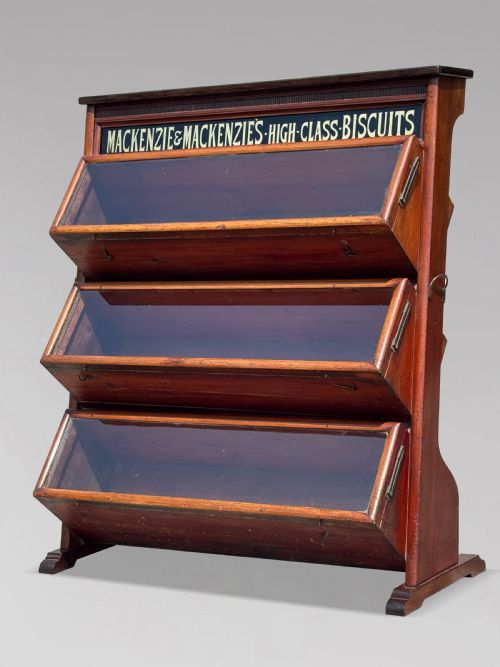
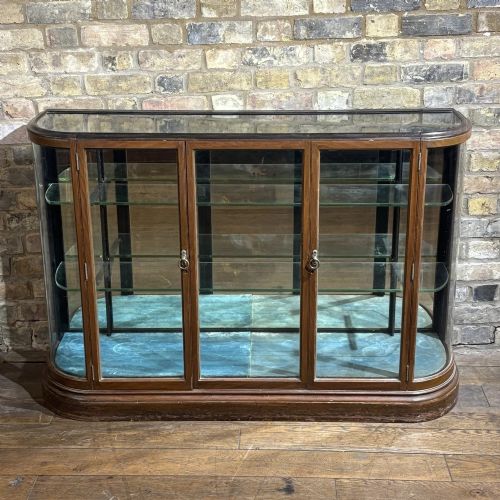


Antique Glass Display Counter
These heavy mahogany, oak and glass shop fittings turn merchandise into spectacle, offering a sturdy yet transparent stage for retail goods.
Antique Glass Display Counter
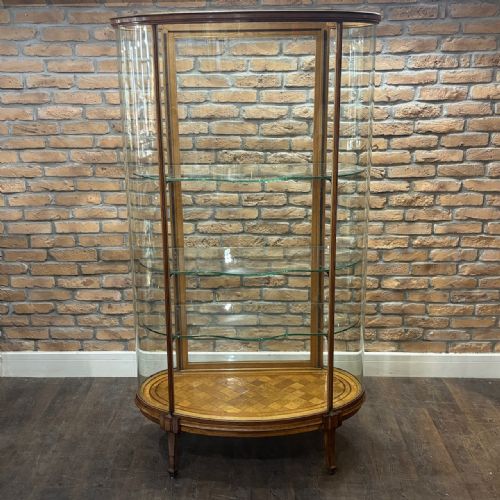
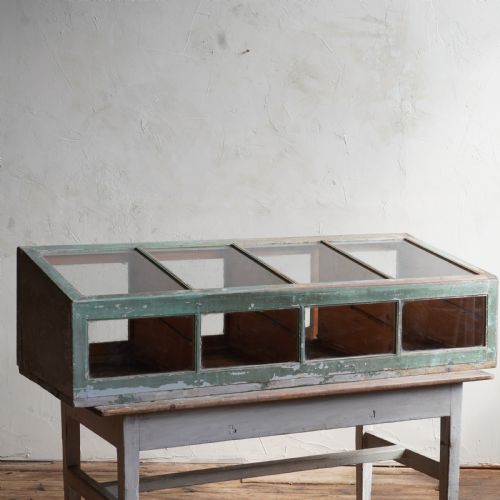
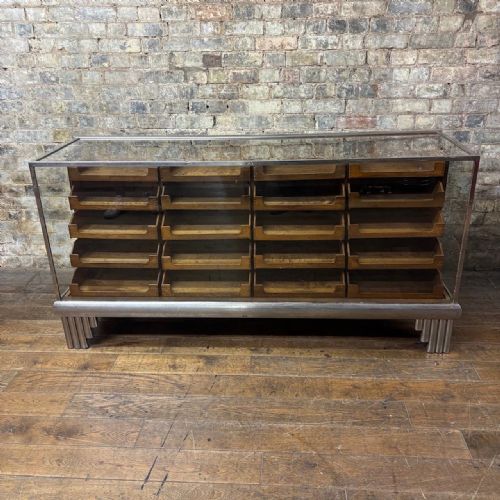
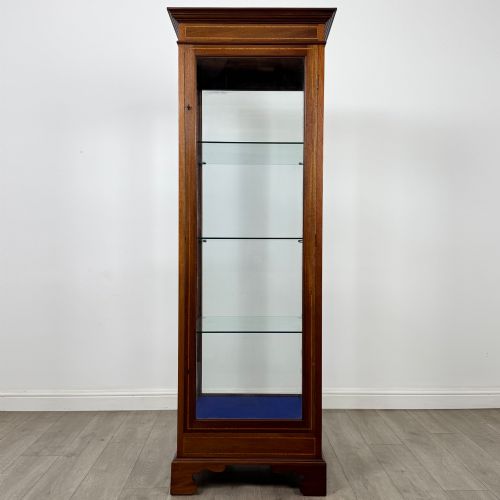
An antique glass display counter provides a clear boundary between customer and stock, serving as both furniture and salesman. You will find these pieces largely in commercial forms such as shop counters, haberdashery units, and freestanding vitrines.
The material record spans from the late nineteenth century through the 1930s, encompassing Victorian, Edwardian, and Art Deco iterations. Many pieces retain specific mercantile identities, linked to confectioners, drapers, and chemists.
Materials and Construction
Makers built the structural carcases of these counters primarily in dense timbers like mahogany and oak, housing expansive glass panels within the frame. Brass, chrome, and aluminium additions appeared as the twentieth century progressed, offering lighter framing for glass viewing areas.
Joinery methods prioritized rigidity to support heavy glass tops and shelves, frequently incorporating mirrored interiors to amplify light within the display cavity. Back doors sliding on wooden tracks allowed attendants to reach merchandise quickly from behind the counter.
Several counters retain original chocolate branding, having spent their youth persuading Edwardian children to part with their pennies.
Distinctions in Standard
The calibre of an antique glass display counter rests on the integrity of its timber framing and the clarity of its glazing. Pieces assembled by established shopfitters display tighter joinery and more ambitious forms, such as bow ends and pentagonal angles, than standard utility fittings.
Original hardware, including brass manufacturer plaques and functioning sliding doors, elevates a piece above modified or heavily reconstructed examples. The presence of specialised interior shelving or mirrors indicates a higher grade of original commercial commission.
F. Sage & Co·Dudley & Co·John Stow Ltd·Saml. Elliott & Sons
The Antique Glass Display Counter Glossary
- Vitrine
- A glass-fronted display cabinet or case designed for holding objects of interest. These units often feature glass on multiple sides to maximise ambient light.
- Haberdashery cabinet
- A specialised retail unit containing numerous shallow drawers with glass fronts, originally used for ribbons and threads. Collectors prize them for modular storage and desktop utility.
- Countertop display
- A smaller glazed case intended to sit atop an existing shop counter for point-of-sale merchandising. They frequently feature hinged or sliding rear doors for easy access.
- Bow end
- A cabinet or counter terminating in a curved glass panel rather than a flat front. This technique softens the rectangular silhouette and requires skilled glass-bending.
- Advertising cabinet
- A branded display unit commissioned by manufacturers such as confectioners or pharmaceutical companies to promote specific goods. They bear original company lettering on the glass or woodwork.
Antique Glass Display Counter: Frequently Asked Questions
How do I date an antique glass display counter?
Dating relies on combining the stylistic clues of the timber framing with the manufacturing techniques of the glass. Victorian and Edwardian examples lean toward heavy mahogany and brass, whereas 1930s pieces often incorporate chromium or aluminium frames.
Maker plaques and branded advertising elements etched into the glass provide definitive chronological markers. The presence of hand-beveled glass panels usually points toward the earlier end of the timeline.
Where were these counters originally used?
Merchants deployed these glazed units across high street shops, draperies, pharmacies, and confectioners to protect goods while keeping them visible. Countertop versions sat directly in front of the cashier to encourage impulse purchases of small items.
Larger freestanding vitrines and haberdashery counters stood along the shop floor to house textiles, tobacco, and luxury wares. Their sturdy construction was engineered to withstand heavy daily retail use.
How do I clean and maintain the glass?
Maintenance requires mild glass cleaner applied to a cloth rather than sprayed directly, preventing moisture from seeping into aged wooden frames or silvered mirror backs. Regular dusting keeps the interior surfaces clear and preserves the integrity of old timber.
Avoid harsh chemical solvents near painted lettering or advertising decals found on period confectionery cabinets. Gentle care ensures the original patination on the wood remains undisturbed.
Can these counters be used in a modern home?
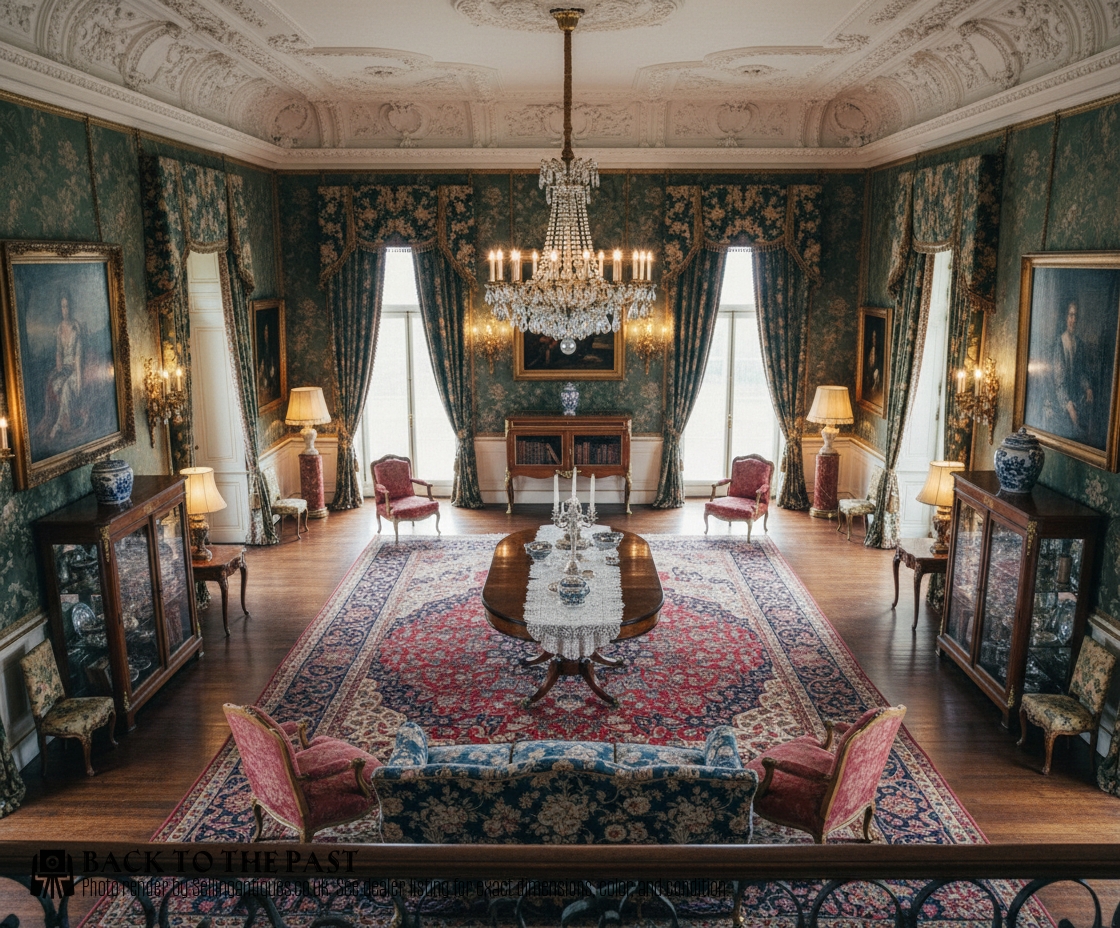
These pieces integrate well into contemporary interiors as kitchen islands, sideboards, or display storage for collections. Their transparent panels and glass shelves allow natural light to pass through, preventing them from feeling heavy in domestic spaces.
Living with them simply involves utilising the deep display capacity for ceramics, books, or textiles. The sliding rear doors remain practical for accessing stored items.