



Antique Glass Condiment Pot
An antique glass condiment pot sits on the dining table to hold mustard, salt, jam, or preserves with period character.
Antique Glass Condiment Pot
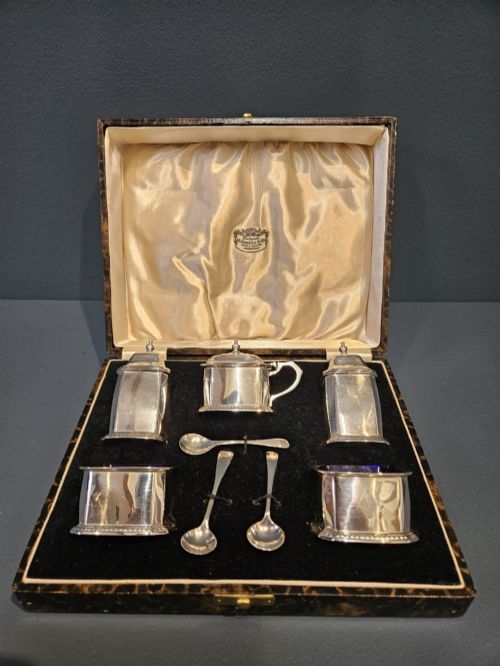
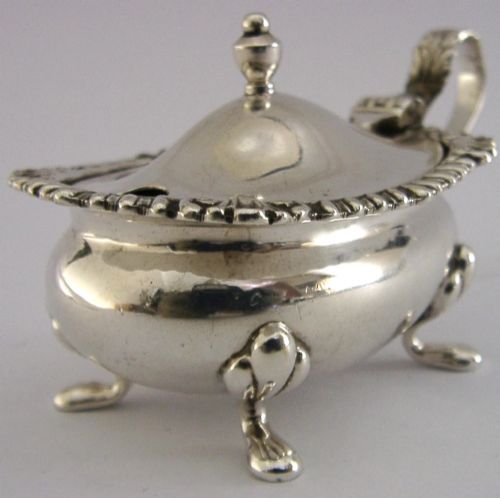
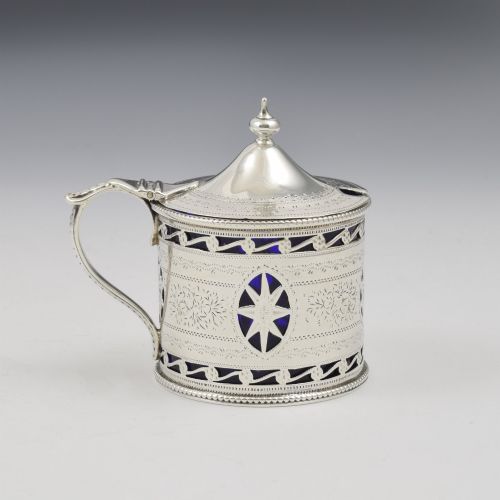
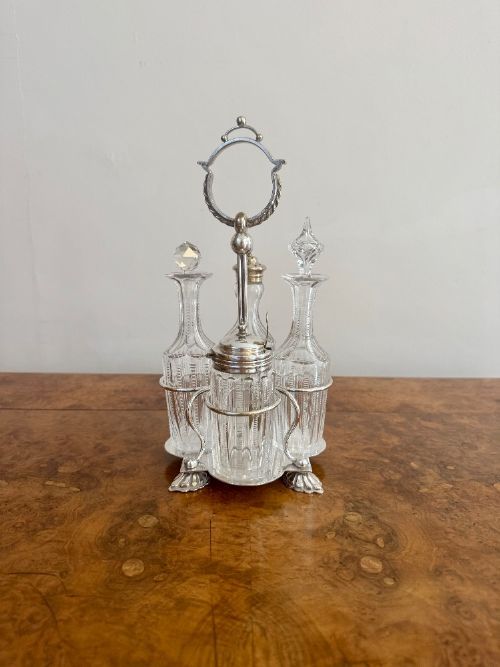
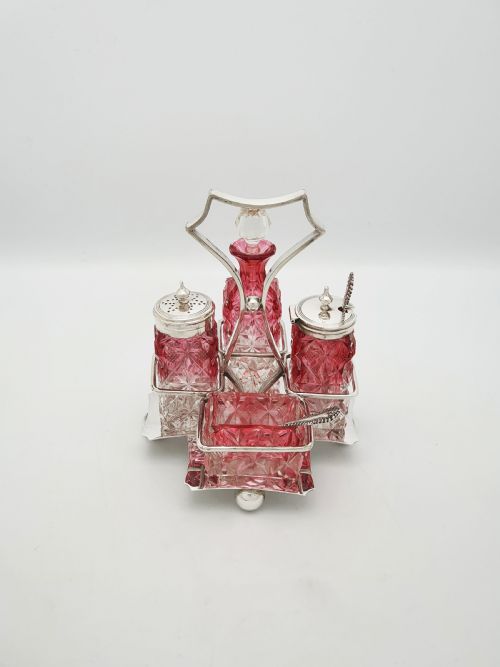
An antique glass condiment pot serves table salts, mustards, and preserves within protective metal mounts or as standalone vessels. The pieces range from single mustard pots and jam jars to multi-bottle cruet sets designed for dining tables.
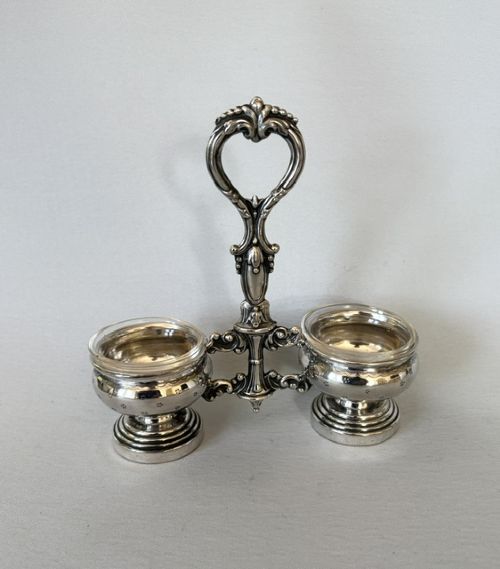
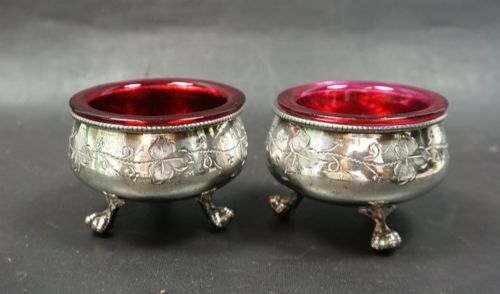
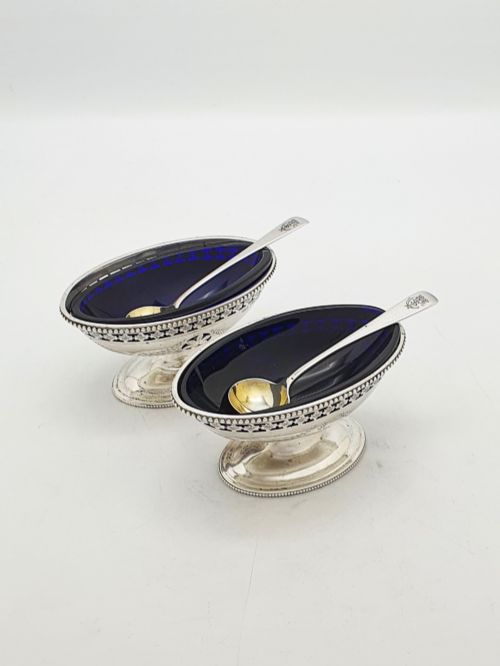
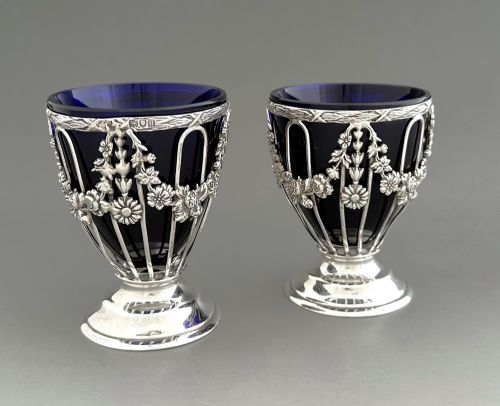
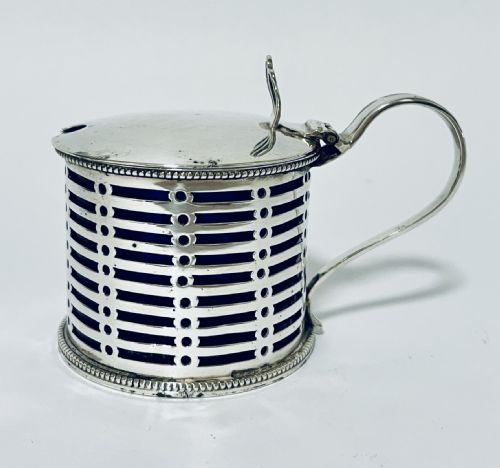
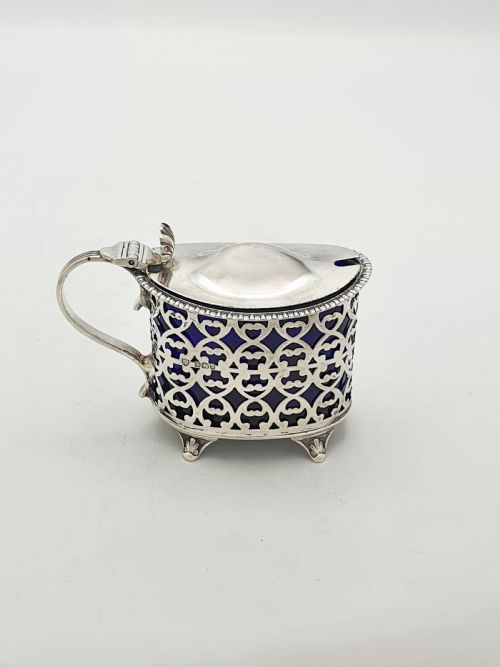
Victorian and Edwardian examples dominate the selection, often pairing cut glass or coloured vessels with sterling silver or silver plate. Collectors frequently encounter cobalt blue glass and cranberry glass liners nestled inside pierced silver frames.
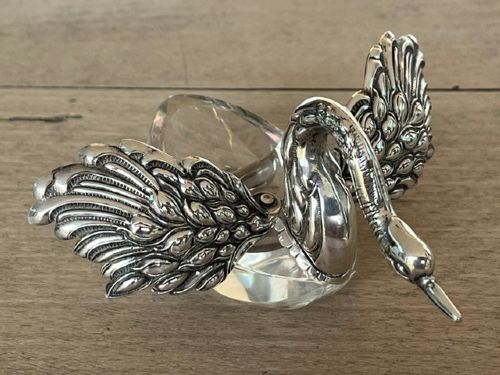
Forms span simple drum mustard pots, octagonal jars, and novelty designs shaped like apples or swans with movable wings. These domestic items reflect formal dining customs from the nineteenth century through the Art Deco era.
How They Were Made
Vessels are formed from clear cut glass or flashed and coloured glass, frequently paired with sterling silver or silver plate. Metal components utilise piercing, wirework, and casting techniques to secure the glass liners.
Makers shaped heavy crystal and moulded glass to fit snugly into hinged silver mounts, salt cellars, and preserve frames. Silversmiths applied hallmarks to sterling components, recording assay offices, makers, and date letters.
Some Edwardian salt cellars take the form of swimming swans with hinged, movable wings ready to guard your seasoning.
What Varies in Quality
The crispness of the glass cutting and the weight of the metal distinguish finer items from standard tableware. Substantial silver gauge and intricate piercing demonstrate superior workshop production.
The presence of matching coloured glass liners, original spoons, and clear hallmarks elevates an example. Novelty forms and delicate wirework also separate standard utilitarian sets from more ambitious pieces.
Nathan and Hayes·Hukin and Heath·Mappin Brothers·Asprey and Co·William Neale
The Antique Glass Condiment Pot Glossary
- Cruet set
- A matched collection of glass bottles and pots held in a metal stand for condiments.
- Salt cellar
- An open dish or container used to hold salt on the dining table before modern shakers.
- Mustard pot
- A small covered jar designed specifically to hold prepared mustard, frequently fitted with a glass liner and spoon.
- Silver plate
- A base metal coated with a thin layer of silver, common in tablewares from the Victorian period onward.
- Cranberry glass
- A rich pinkish-red glass created by adding gold chloride to the molten batch, popular in Victorian tableware.
Antique Glass Condiment Pot: Frequently Asked Questions
What is an antique glass condiment pot used for?
These vessels held table condiments such as mustard, salt, jam, and preserves during formal meals.
They sat on dining tables either individually or grouped inside multi-bottle cruet frames.
How do I identify the period of a silver condiment pot?
Look for hallmarks stamped on the metal mounts, which indicate the assay office, maker, and exact year of production.
Stylistic cues such as Victorian piercing or Art Deco geometric lines also help date the piece.
Are coloured glass liners original?
Cobalt blue and cranberry glass liners were commonly blown and fitted to match the metal frames during manufacture.
Checking that the glass sits correctly inside the mount helps confirm authenticity.
How should I clean antique silver and glass?
Wash the glass liner gently in warm soapy water and dry it thoroughly before returning it to the metal mount.
Polish the sterling silver or silver plate with a dedicated cloth, avoiding abrasive cleaners near the glass.