


Silver Plate Condiment Set
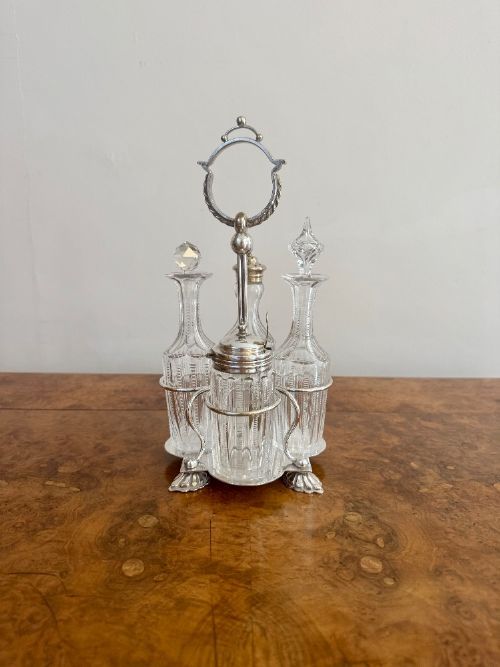
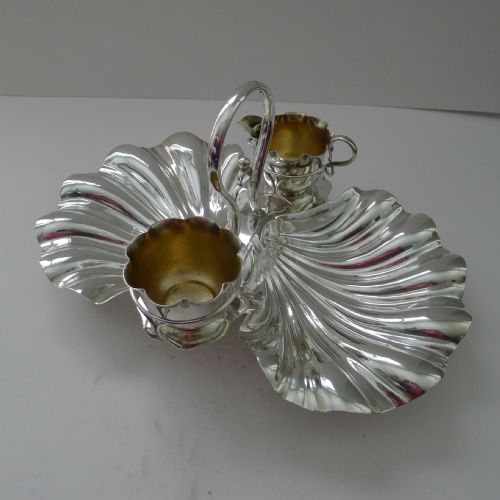
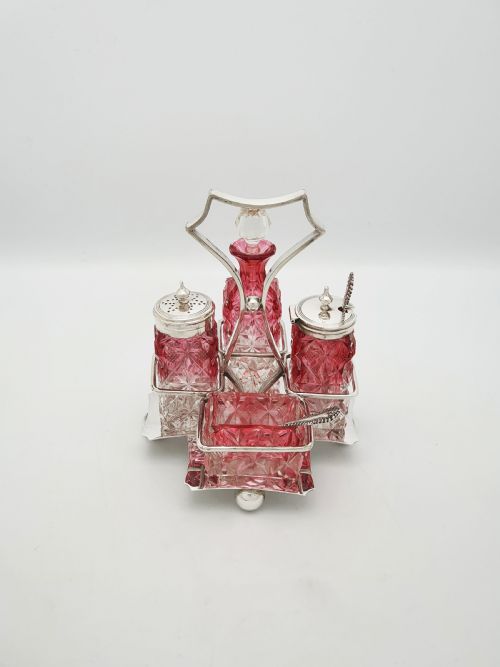
A silver plate condiment set brings polished metal frames together with cut glass bottles to hold salt, mustard, and vinegar on the dining table.
Silver Plate Condiment Set
A silver plate condiment set gathers multiple seasoning vessels into a single organised stand for dining convenience. The pieces visible on this page date predominantly from the Victorian and Edwardian eras, alongside Georgian survivals and later Art Deco designs.
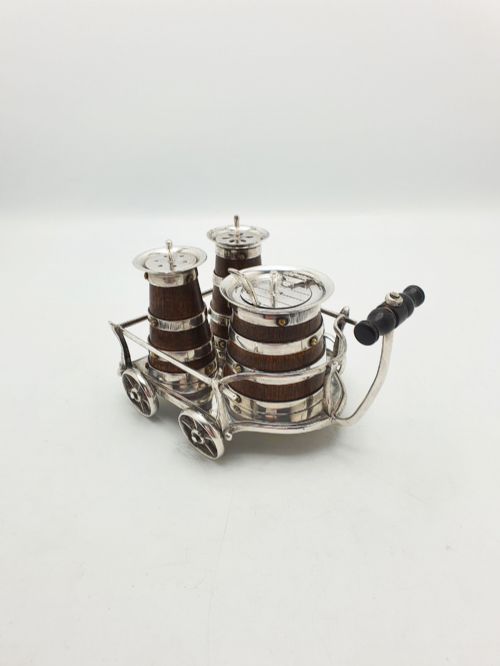
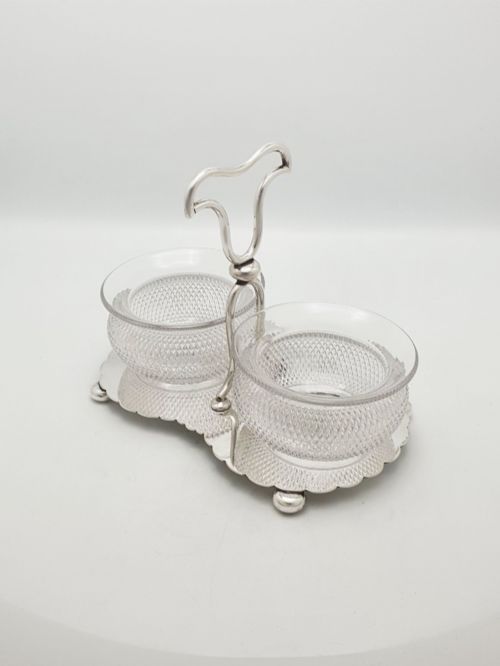
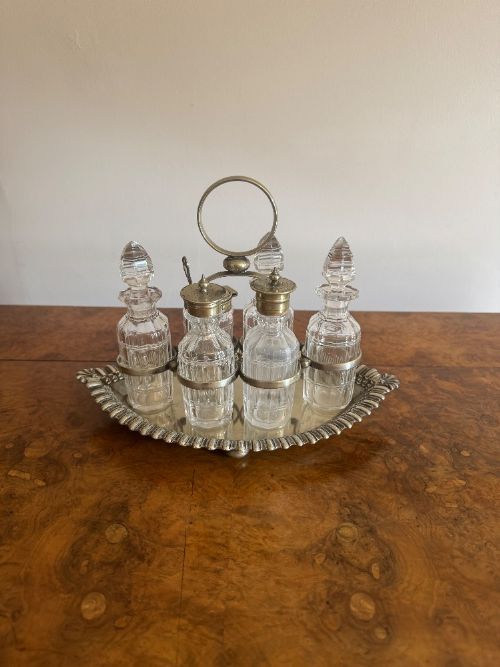
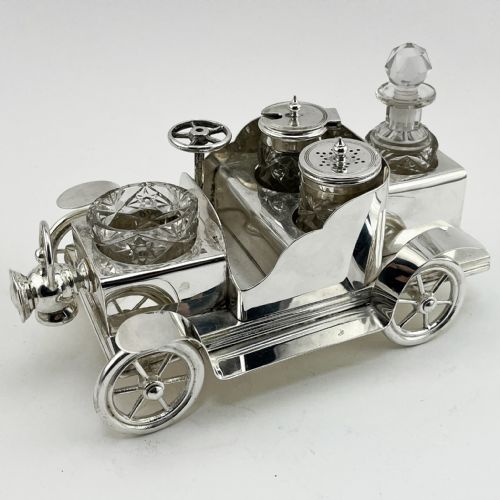
Forms range from multi-bottle cruet frames with handles to bachelor sets, novelty car models, oak barrels, and individual preserve dishes. Buyers find everything from large six-bottle stands for formal dining to compact salt cellars with glass liners.
Makers utilised various supportive media alongside metal, incorporating cut glass, cranberry glass, oak, walnut, and mother-of-pearl. These assemblies served everyday household needs as well as specific culinary presentations like strawberry dishes and caviar servers.
Materials and construction
Workshops built these sets using electroplated nickel silver or old Sheffield plate as the metal base for frames, stands, and wirework holders. Craftsmen shaped metal handles and feet, often adding ornate chased decoration or simple geometric lines depending on the period style.
Vessels within the frames required separate glassblowing and cutting skills to produce decanters, jars, and liners in clear, cranberry flashed, or cobalt glass. Organic elements like oak, walnut, and mother-of-pearl provided contrasting bases and trays for specific condiment pots.
Victorian silversmiths fashioned novelty cruets as vintage cars, farmyards, and hunting scenes, proving that nineteenth-century dining tables appreciated a sense of humour.
Judging execution and preservation
Better examples display heavier gauge metal plating that withstands decades of polishing without exposing the base nickel or copper underneath. Superior stands feature robust framing where wirework joints remain secure and handles lift straight without loose fittings.
The integrity of the glass components heavily influences overall standard, with undamaged cut facets and matching stoppers marking superior production. Elaborate novelty forms, such as car or equestrian cruets, achieve higher regard when the mechanism and figurative details show precise casting.
Daniel Arter·Mappin Brothers·Walker & Hall·Mappin & Webb·Roberts & Belk·John Grinsell & Son·Ashbury
The Silver Plate Condiment Set Glossary
- Cruet set
- A collection of glass bottles or cruets for oil, vinegar, salt, and mustard, held together in a metal stand. These assemblies formed a central feature on dining tables from the eighteenth century onwards.
- Electroplated nickel silver
- A method of depositing a thin layer of silver onto a nickel silver base using electrical current. This technique became widespread during the nineteenth century to produce affordable tableware.
- Old Sheffield plate
- An early form of plated metal created by fusing a sheet of silver to a copper ingot before rolling them together into plates. Items made this way often reveal thin lines of copper along exposed edges.
- Cranberry glass
- A type of transparent glass coloured with gold chloride during manufacture, yielding a distinctive pinkish-red hue. It appears frequently in Edwardian preserve bowls and cruet bottles.
- Bachelor cruet
- A smaller, scaled-down version of a standard condiment set designed for single diners or small households. These compact pieces typically hold three or four bottles rather than six or seven.
Silver Plate Condiment Set: Frequently Asked Questions
What is a cruet set?
A cruet set is a matched collection of small bottles and jars held within a dedicated frame for table condiments.
These pieces held liquids like oil and vinegar alongside dry seasonings such as salt and pepper for meals.
How were condiment sets used?
They sat centrally on the dining table or sideboard so diners could easily season food during a meal.
Specific versions catered to breakfast tables, afternoon tea preserves, or formal evening dinners.
How do I date a silver plate stand?
Dating relies on the structural style, manufacturing marks, and associated materials like cranberry glass or oak.
Victorian pieces often display ornate decoration, while Edwardian and Art Deco examples favour lighter wirework or geometric forms.
How do I care for silver plate?
Gentle cleaning with a dedicated silver cloth prevents tarnish build-up without wearing away the plated surface.
Glass liners and bottles lift out easily for washing in warm soapy water away from the metal frames.