



Victorian Novelty Cruet
These Victorian novelty cruet sets bring practical dining table condiments into imaginative figural forms, combining whimsy with period craftsmanship.
Victorian Novelty Cruet
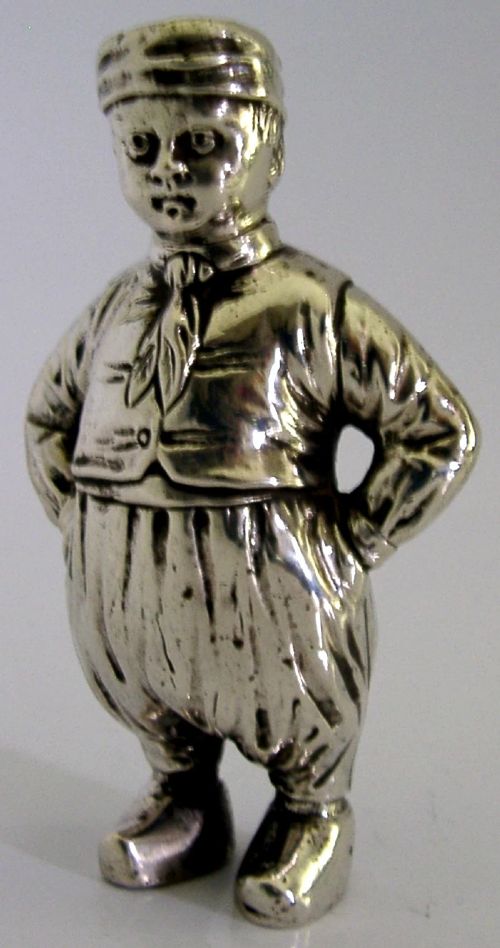
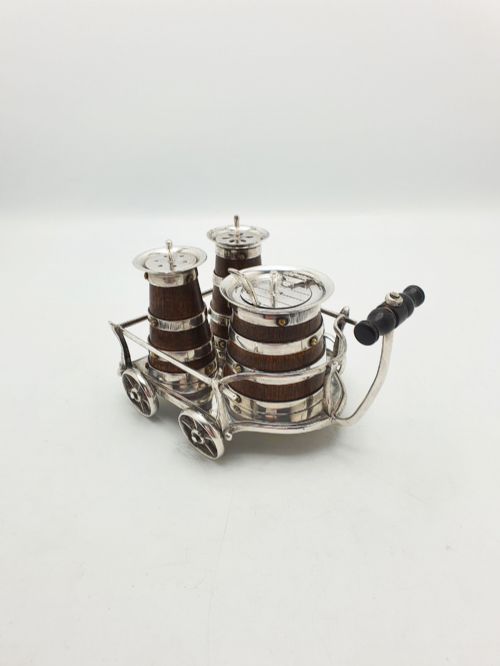
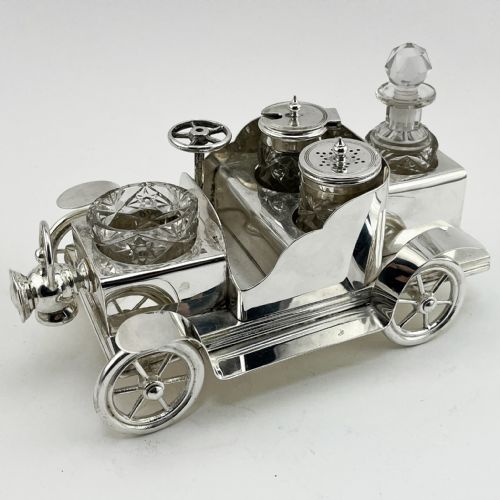
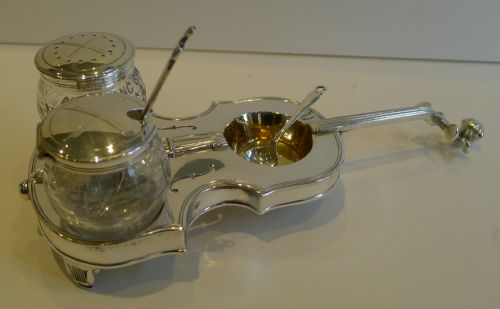
A victorian novelty cruet set combines functional salt, pepper, and mustard containers with playful figural or thematic shapes designed to amuse dining guests. These pieces take the form of animals, vehicles, barrels, or everyday objects rather than standard geometric cruet frames.
The versions most commonly met on this page include silver plated animal figures such as chicks, donkeys, and camels, alongside transport and sporting themes like carriages, vintage cars, and oak barrels. Cruet sets and condiment sets appear across Victorian and Edwardian periods, stretching from the 1870s into the early twentieth century.
Makers utilised distinct forms like Butler style trays, egg baskets, and even musical instruments to hold cut glass bottles and silver pots. Each piece serves as both a functional tabletop accessory and a sculptural conversation piece.
Distinctions in quality and execution
Quality separates mass-produced tablewares from finely cast figural pieces through the crispness of the detailing on animals and mechanical elements. The articulation of feathers on chick peppers or the realistic rendering of harness details on equestrian sets marks superior workshop output.
The integration of materials also dictates overall standard, particularly how securely silver plated mounts fit alongside fitted cut glass bottles and solid oak sections. Heavier casting and clear registry marks point to more deliberate craftsmanship.
Dinners in the 1880s gained extra charm when passing around a salt cellar shaped like a rolling chicken or a donkey.
Sampson Mordan·Mappin and Webb
The Victorian Novelty Cruet Glossary
- Cruet set
- A matched collection of bottles, jars, or shakers designed to hold condiments like oil, vinegar, salt, and pepper for the dining table. These sets sit within a dedicated stand or frame for easy transport.
- Silver plate
- A manufacturing method where a thin layer of silver is bonded to a base metal, typically copper or nickel brass. This technique allowed makers to produce elaborate decorative tableware at a more accessible cost.
- Condiment set
- A smaller grouping of open salt cellars, mustard pots, and pepper shakers intended for individual or shared table placement. They share stylistic themes with larger cruet frames.
- Figural
- A design style where an object takes the literal shape of a human, animal, or recognizable item rather than an abstract geometric form. In this category, animals and vehicles dominate the aesthetic.
Victorian Novelty Cruet: Frequently Asked Questions
What is a Victorian novelty cruet?
A victorian novelty cruet is a functional dining table condiment set shaped to resemble animals, vehicles, or everyday objects. These pieces held salt, pepper, or mustard while doubling as decorative sculptures.
Craftsmen produced them primarily in silver plate, oak, and glass during the late nineteenth and early twentieth centuries.
How were these cruet sets used?
Victorian diners placed these sets on the dining table or sideboard to dispense salt, pepper, mustard, and vinegar during meals. Guests and hosts would pass the figural trays or select individual shakers as needed.
Their amusing shapes also served to spark conversation among guests at formal dinners.
What materials are most common?
Silver plate over base metal is the most widespread material used for the frames and figural bodies. Cut glass and plain glass bottles provide the containers for condiments, often paired with solid oak bases.
Solid silver and 800 silver also appear in smaller standalone pepper pots and shakers.
How do you date a novelty cruet?
Dating relies on stylistic clues, registered design numbers stamped into the metal, and manufacturing techniques typical of the Victorian and Edwardian eras. Pieces often carry registration marks that point to specific decades between the 1870s and 1900s.
Material combinations like oak and silver plate also align with distinct periods of late nineteenth-century dining fashion.