





Antique Glass Bells
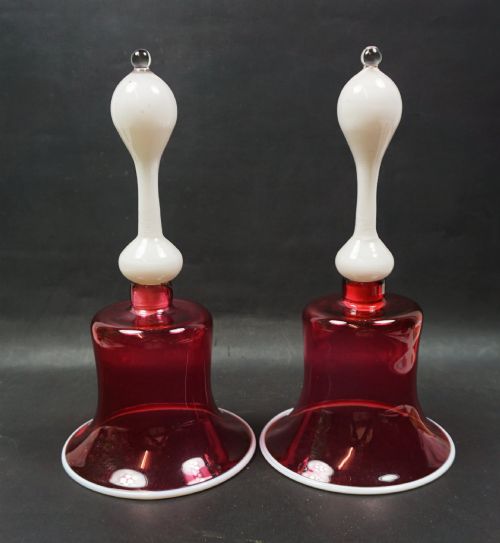
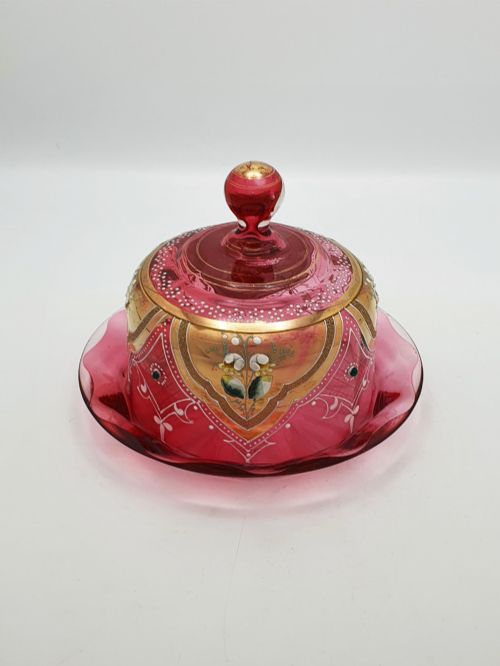
These antique glass bells include ruby hand bells, cranberry pairs with white handles, and crystal bell-shaped decanters.
Antique Glass Bells
When you search for antique glass bells, you are looking at functional table bells, decorative hand bells, and bell-shaped vessels such as decanters. The pieces meeting this search span the Victorian and Edwardian eras, alongside earlier Georgian glass forms that share the characteristic bell profile.
You will most commonly encounter Victorian ruby and clear hand bells from the late nineteenth century, alongside Edwardian cut glass bell-shaped decanters. These objects combine practical utility with decorative appeal, utilising coloured glass and clear crystal.
The selection also encompasses related bell forms, including glass door pulls and hanging bells from European workshops. Each variation demonstrates the versatility of glass as a medium for sound and shape during the nineteenth and early twentieth centuries.
What varies in quality
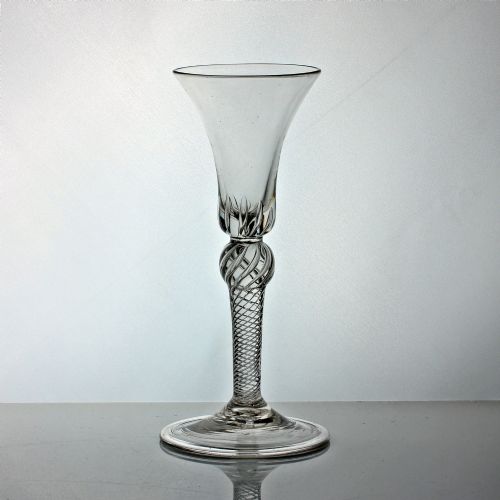
Clarity and weight separate standard utility vessels from superior examples, particularly in lead crystal decanters and table bells. The precision of the cut facets and the resonance of the tone when struck indicate the purity of the metal and the skill of the blower.
The integration of applied handles and rims dictates the structural success of hand bells, with clean joins and balanced proportions marking out better workshops. Surface decoration, such as gilding or enamel work, ranges from simple linear banding to elaborate hand-painted detailing.
Listings for antique glass bells feature Victorian and Edwardian examples alongside Georgian glass forms, utilising lead crystal, cranberry glass, and ebonised wood.
The Antique Glass Bells Glossary
- Cranberry glass
- A transparent pink-red glass coloured by the addition of gold chloride to the molten batch. It gained popularity during the Victorian period for decorative tableware and bells.
- Lead crystal
- A high-clarity glass containing lead oxide, which increases the weight, refractive index, and acoustic resonance of the object.
- Bohemian ruby
- A deep red glass traditionally produced in the Bohemia region, frequently decorated with wheel-cut motifs or gilding.
- Bell-shaped decanter
- A serving vessel featuring a wide, tapering base resembling a hand bell, designed to provide stability on dining tables.
Antique Glass Bells: Frequently Asked Questions
Were antique glass bells used for calling servants?
Many Victorian hand bells and table bells served a practical purpose in domestic settings for summoning assistance between rooms. Their metal clappers or internal strikers produced a clear tone designed to carry across a house.
Other examples functioned purely as decorative objects or table ornaments, particularly those fashioned from coloured glass with delicate applied handles.
How can you tell Victorian glass bells from later copies?
Examine the base for signs of wear, such as fine scratches and a smooth pontil mark where the piece was snapped off the blowpipe. Victorian glass often exhibits slight irregularities and bubbles within the metal that modern reproductions lack.
The weight and depth of colour in ruby or cranberry pieces also provide clues to period production methods.
What is the difference between a glass bell and a decanter?
A glass bell is designed to produce sound when struck or shaken, featuring a handle and an open flared rim. A bell-shaped decanter adopts the same wide-based silhouette for stability but functions as a liquid container with a fitted stopper.
Both forms utilise similar glass-blowing techniques from the Victorian and Edwardian eras but serve entirely different domestic roles.