


Bohemian Red Glass
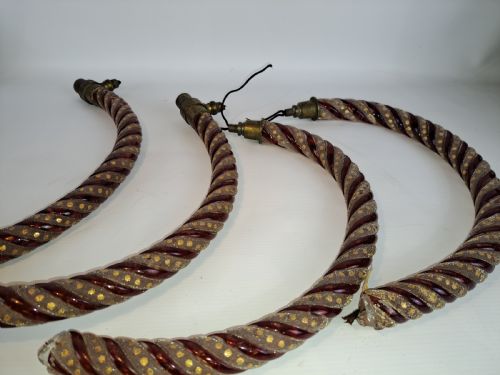
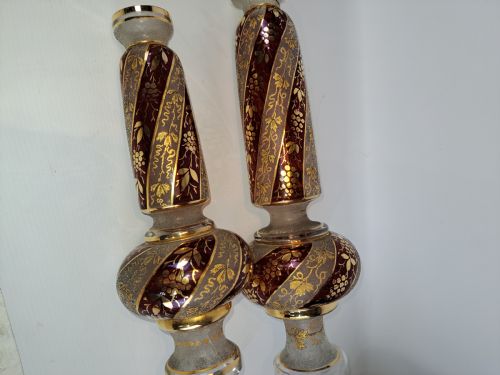
These pieces of bohemian red glass span centuries of skill, offering rich colour and heavy decoration to any room.
Bohemian Red Glass
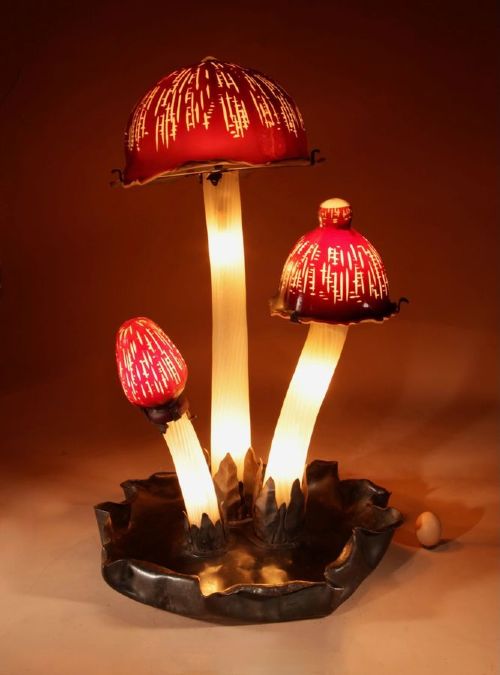
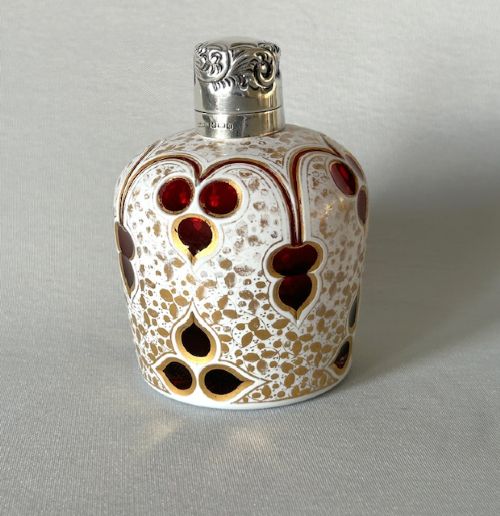
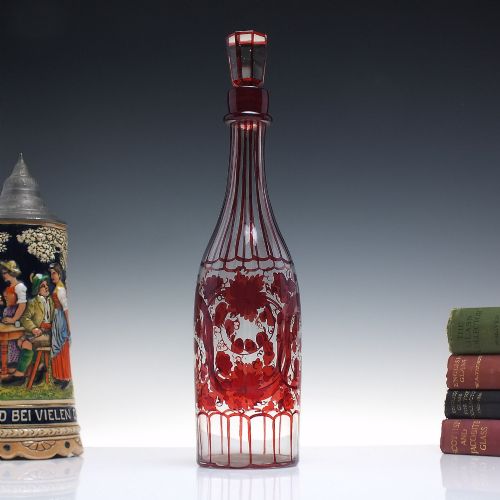
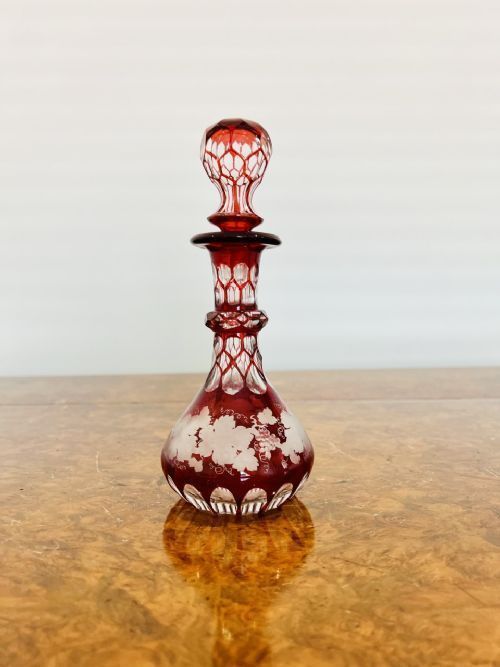
When you search for bohemian red glass, you encounter a variety of functional and decorative items originating from Central Europe. Vases, decanters, scent bottles, and mantel lustres dominate the selection, alongside table lamps and drinking vessels.
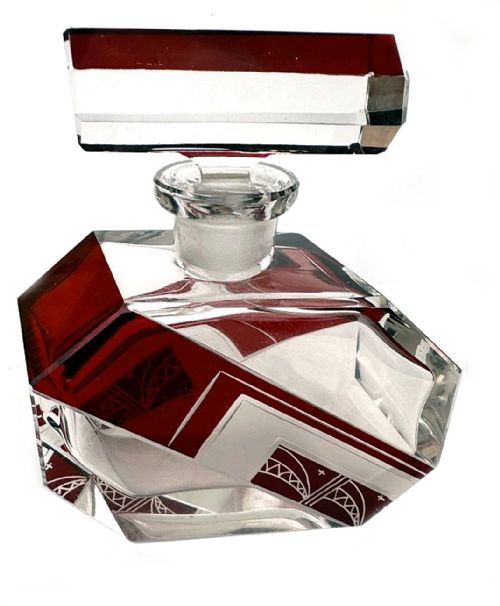
The objects span multiple periods, with Victorian and nineteenth-century examples appearing frequently alongside Edwardian, eighteenth-century, and nineteen-thirties Art Deco designs. Pieces range from small perfume bottles to large pairs of lustres and chandelier components.
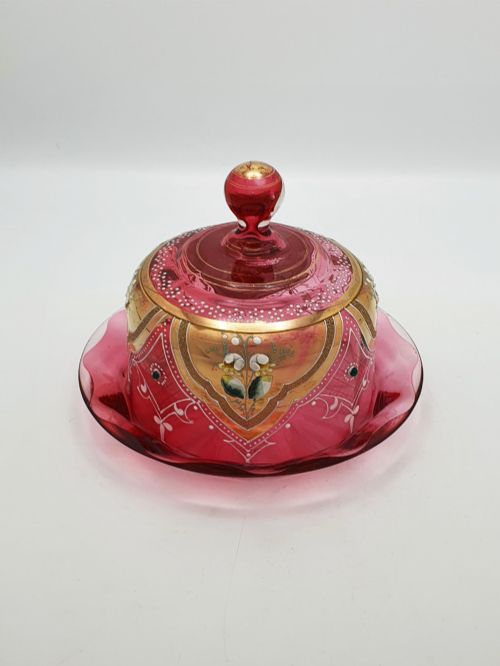
Makers and workshops utilised various forms such as ovoid vases, covered jars, and beakers. The selection balances utilitarian glassware with ornamental display items intended to catch the light.
How they were made
Craftsmen utilised ruby glass, cranberry glass, and crystal as base materials, often applying overlay techniques to create contrast. Molten glass received shape through blowing and moulding before artisans added cut glass facets.
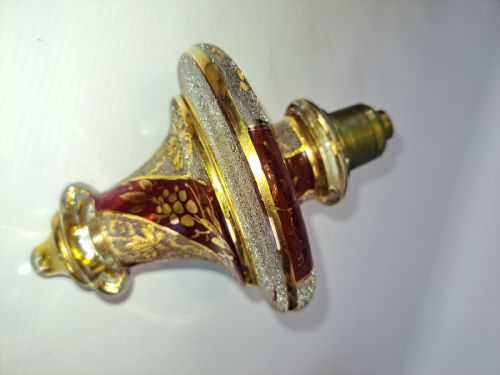
Decoration relied heavily on surface work, including hand painting, enamel, and gold leaf gilding. Etched and engraved details cut through layers of glass to expose contrasting tones underneath.
Listen closely to the ganging bells; they ring with centuries of Central Eastern European toast-making history.
What varies in quality
The crispness of the cutting and the depth of the engraving separate standard items from finer works. Hand-applied gilding and enamel work show varying degrees of precision and detailing by the artisan.
The richness and saturation of the red colouration differ across periods, alongside the weight and clarity of the crystal or glass body.
Karl Palda·Moser
The Bohemian Red Glass Glossary
- Flash glass
- A thin layer of coloured glass applied over a colourless or contrasting base glass before cutting. This technique allows artisans to cut through the top layer to reveal the contrasting glass beneath.
- Mantel lustre
- A decorative ornamental vase hung with cut glass prisms or spear-shaped pendants. They gained popularity on fireplace mantels during the Victorian period to reflect candlelight.
- Mary Gregory glass
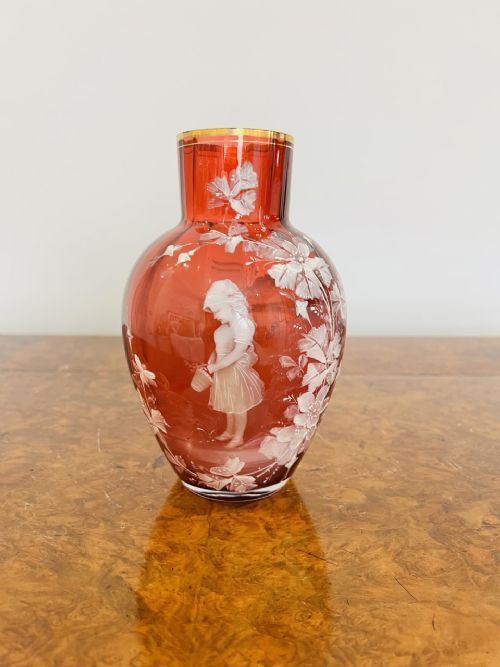
- Glassware decorated with white enamel silhouettes of children, often depicted in natural settings. The style originates from the late nineteenth century.
- Tazza
- An elevated shallow bowl or cup supported by a stem and foot used for serving or display. These pieces often feature gilded borders and etched motifs.
- Overlay
- A manufacturing method involving multiple layers of coloured glass fused together. Cutting away sections of the outer layer creates patterns and panels.
Bohemian Red Glass: Frequently Asked Questions
How do I clean bohemian red glass?
Wash the glass gently in warm water using mild soap and a soft cloth. Avoid harsh scrubbing brushes that might damage surface gilding or enamel decoration.
Dry the pieces immediately with a lint-free towel to prevent water spots, particularly on items featuring cut glass or gold leaf details.
Are these glass items suitable for daily use?
Most decorative items and perfume bottles serve best for display rather than heavy everyday service. Decanters and wine glasses can handle careful use during special occasions.
Hand wash all vintage drinkware and avoid placing pieces in modern dishwashers to protect the historical glass body.
How can I tell Victorian pieces apart from Art Deco ones?
Victorian examples tend to feature ornate cutting, heavy gilding, and romantic motifs like painted children or floral scenes. They often include mantel lustres and overlaid vases.
Art Deco items from the nineteen-thirties display geometric lines, opaque finishes, and sleek perfume bottles or decanter sets associated with designers like Karl Palda.
Why do some items feature frosted glass?
Frosted finishes create a matte texture that contrasts sharply against polished ruby red panels or gilded surfaces. Artisans used acid etching or mechanical abrasion to achieve this effect.
This technique highlights the layered construction of flash glass objects and adds depth to lighting components and chandelier stems.