


Vintage Red Glassware
These vintage red glassware pieces span eras from Georgian wine glasses to Art Deco vases, offering rich colour and deep historical character for the table.
Vintage Red Glassware
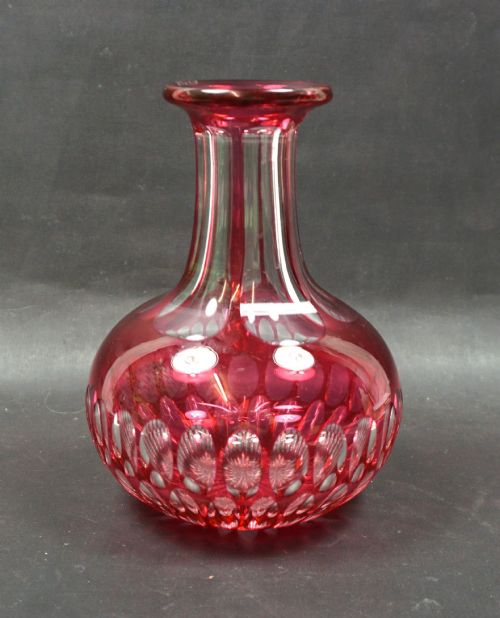
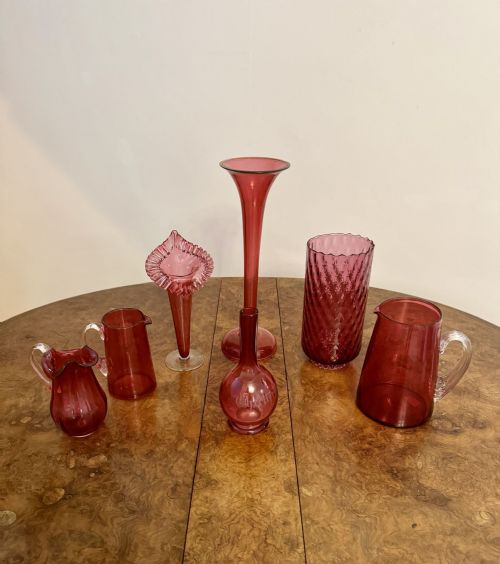
Vintage red glassware encompasses functional tableware and decorative items collected for rich tone and traditional forms, with vintage red glassware appearing most frequently in Victorian cranberry and ruby styles.
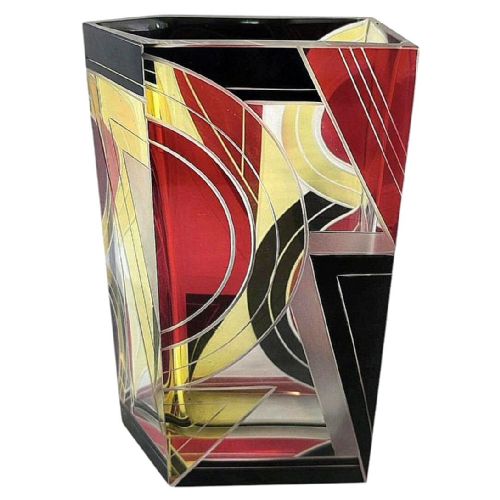
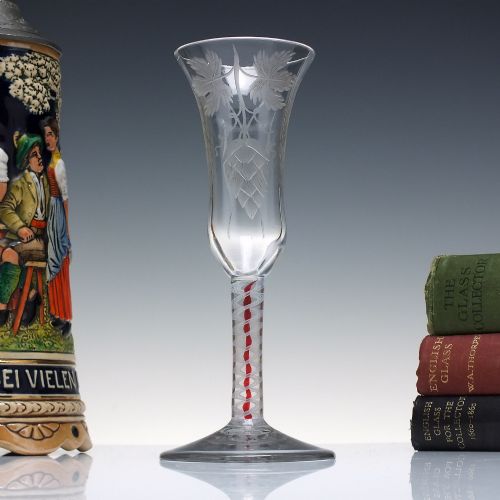
The selection on this page ranges from Georgian colour twist ale glasses and 18th century European pieces to Edwardian wine decanters and 1930s Czech Art Deco decanter sets.
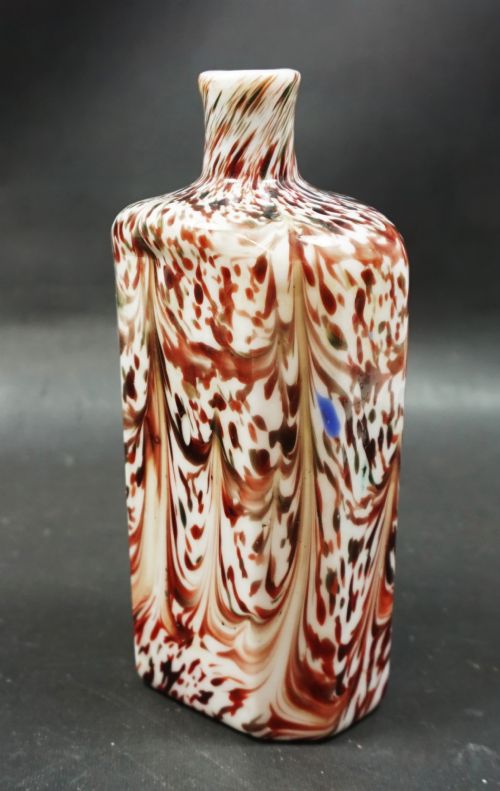
Forms include wine glasses, champagne coupes, carafes, decanters, vases, lidded biscuit jars, and apothecary carboy vessels designed for practical service or display.
Materials and Techniques
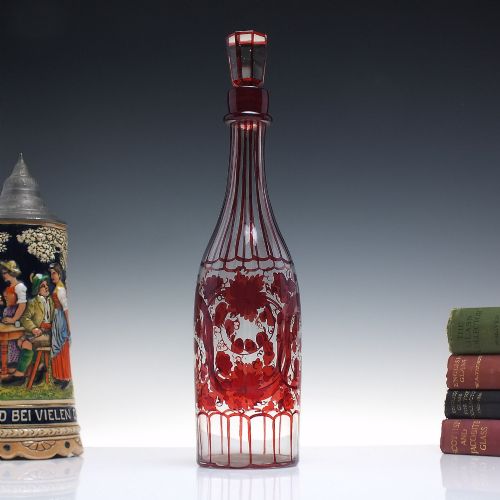
Maker methods involve lead glass, clear glass, milk glass, and cut crystal layered with cranberry or ruby glass overlays to create deep tonal contrast when cut or engraved.
Decoration includes hand-painted enamel, floral and geometric motifs, colour twist stems, and detailed engraving depicting scenes or botanicals such as convolvulus and fruiting vines.
Materials represented across the inventory include cranberry glass, ruby glass, lead glass, milk glass, cut crystal, enamel, and silver plate.
Judging Quality in Red Glass
Quality rests upon the depth and saturation of the red hue, the clarity of the underlying crystal or milk glass, and the precision of hand-cut facets or wheel engraving.
Execution of delicate details, such as hand-painted enamel figures, gilded accents, and the uniform wall thickness of hand-blown stemware, distinguishes finer vessels from standard production.
The Vintage Red Glassware Glossary
- Cranberry glass
- A transparent pinkish-red glass coloured with gold chloride, widely utilised during the Victorian period for tableware and decorative items. It creates a distinctive warm glow under natural light.
- Ruby glass
- A deep, rich red glass achieved through the addition of copper or gold to the molten batch. It differs from cranberry glass in its darker, more saturated hue.
- Overlay
- A technique where a layer of coloured glass is fused over a base of clear or contrasting glass before being cut away. This exposes the underlying material to form geometric or floral patterns.
- Colour twist
- An optical effect within glass stems created by incorporating coloured glass threads into the molten metal during drawing and twisting. It is a defining characteristic of Georgian drinking glasses.
- Mary Gregory glass
- Victorian glassware decorated with white enamel silhouettes of children, foliage, or birds, often set against cranberry or ruby backgrounds. The enamel is typically applied by hand.
Vintage Red Glassware: Frequently Asked Questions
How do I clean vintage red glassware?
Wash these pieces by hand in warm water using a mild, non-abrasive detergent. Avoid soaking items with gilded accents or delicate enamel work.
Dry them immediately with a lint-free cloth to prevent water spots and preserve the polished finish of the crystal and coloured layers.
Can I use these wine glasses daily?
While hand-blown stemware and decanters are structurally sound, their age and delicate engraved surfaces suggest careful handling. Reserve them for special occasions to protect the historical glass.
Hand-washing is essential, as modern dishwashers can cloud the glass or damage painted enamel and gilt decoration over time.
What is the difference between cranberry and ruby glass?
Cranberry glass relies on gold chloride to produce a lighter, pinker red tone that resembles the fruit. It became especially popular in Victorian tableware.
Ruby glass is denser and darker, achieved through different metallic oxides. It absorbs more light and offers a much deeper crimson appearance.
How do I date antique red glass?
Examine the form, pontil mark on the base, and decorative style to determine the era. Georgian pieces often feature colour twists, while Victorian items lean towards cranberry tableware and Mary Gregory enamel.
Art Deco examples from the 1930s display geometric shapes, opaque finishes, and streamlined Czech designs distinct from 19th-century silhouettes.