



Antique Glass Barware Set
These antique glass barware set pieces bring the hospitality of earlier centuries straight to the modern sideboard.
Antique Glass Barware Set
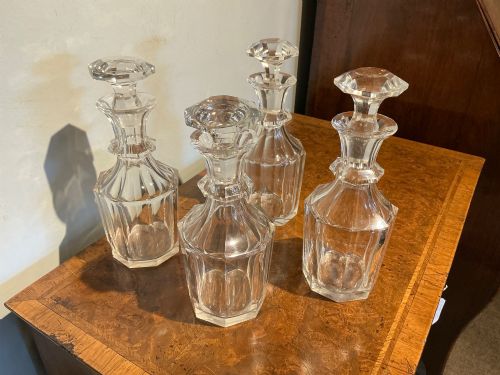
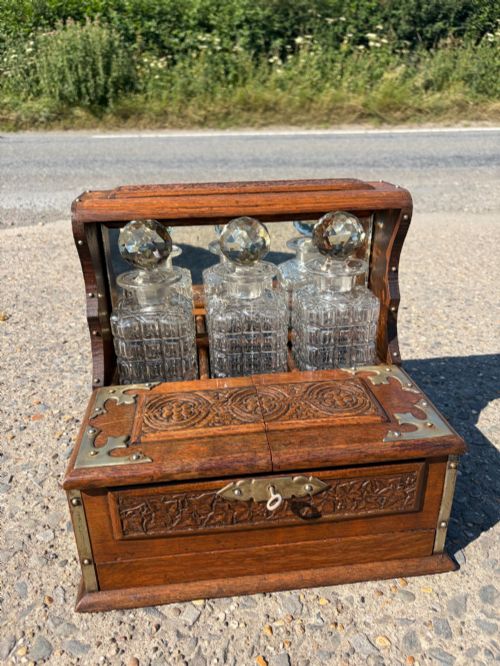
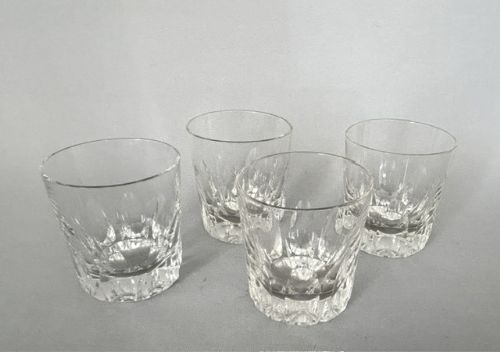
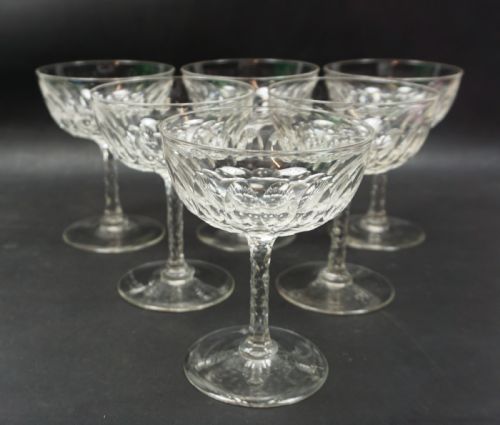
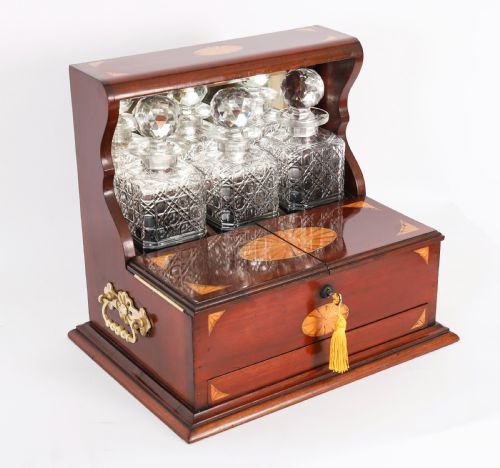
An antique glass barware set gathers together the glassware and serving vessels used for spirits, wine and liqueurs in domestic interiors from the nineteenth and early twentieth centuries. When searching for this phrase, a buyer meets everything from locking oak tantaluses fitted with cut crystal decanters to delicate champagne coupes and cordial glasses.
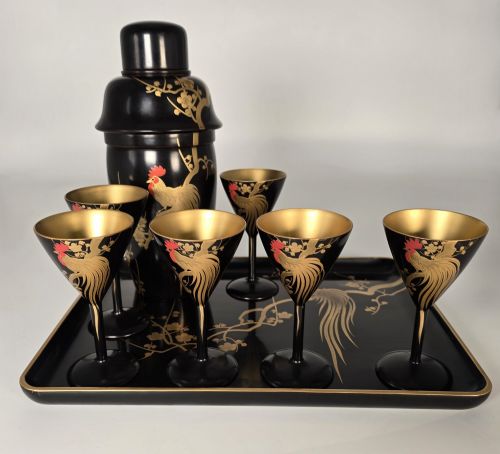
The selections span the Victorian, Edwardian and Art Deco periods, encompassing English, continental and Japanese craftsmanship. Forms range from simple sets of whisky tumblers and liqueur decanters to complex fitted boxes like the cave a liqueur containing small glasses and matching bottles.
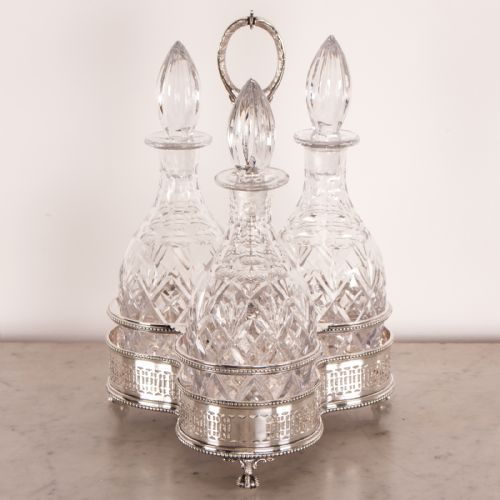
Oak, satin wood and walnut frames often house the glass components, frequently secured with silver plated mounts and locking mechanisms. Buyers also encounter standalone ice buckets, cocktail sticks in cut glass holders, and tall hock decanters designed for formal dining.
Cut crystal, moulded glass and plated metalwork
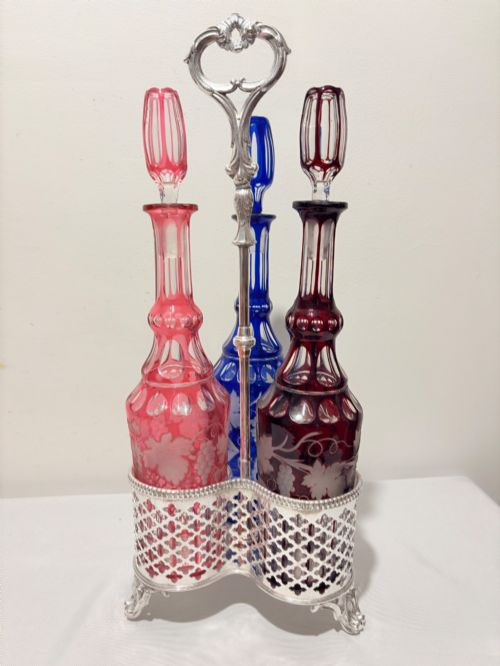
Production relies heavily on lead crystal and cut glass, shaped by blowing, moulding and hand-cutting to create facets that catch the light. Optical blowing and engraving appear on pieces like spirit decanters, while ruby glass and colour over crystal techniques introduce deep hues.
Metalwork forms an integral part of many sets, utilising silver plate, brass, wrought iron and brass to construct frames, ice bucket liners, and locking tantalus mechanisms. Timber enclosures in oak, walnut and satin wood incorporate marquetry stringing and leather details to house the glassware securely.
Listings feature oak, walnut, satin wood, and leather alongside heavy cut crystal, silver plate, and brass fittings.
Clarity of crystal, precision of joinery and completeness
Quality rests significantly on the brilliance and clarity of the glass, where deeply cut facets and heavy lead crystal indicate superior manufacture over thin, plain moulded alternatives. Maker attribution, such as Baccarat or Val Saint Lambert, elevates a set through refined finishing and heavier materials.
The integrity of the housing affects value greatly, distinguishing well-fitted oak or walnut tantaluses with original silver plated mounts and working locks from altered or poorly repaired boxes. Complete matched sets containing all their original glasses or decanters command greater interest than assembled groups.
James Dixon & Sons·Walker & Hall·Baccarat·James Powell·Val Saint Lambert
The Antique Glass Barware Set Glossary
- Tantalus
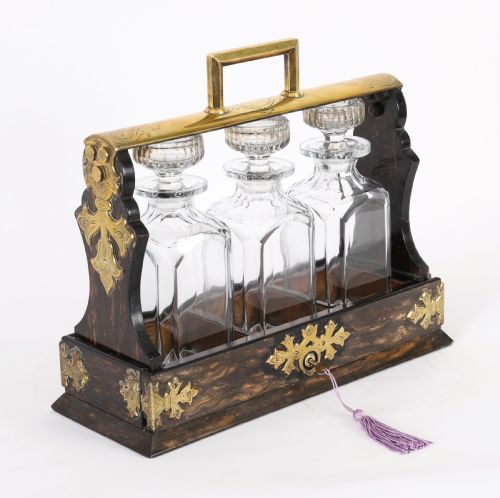
- A locking drink cabinet that holds decanters securely within a wooden frame and metal bar to prevent unauthorized access while displaying the contents. The locking mechanism typically operates via a key that releases the top bar.
- Cave a liqueur
- A fitted box or casket, often veneered in exotic woods and lined with velvet or silk, designed to transport and display a set of small liqueur decanters and matching glasses. These portable cellars originated in France and gained popularity across nineteenth-century drawing rooms.
- Champagne coupe
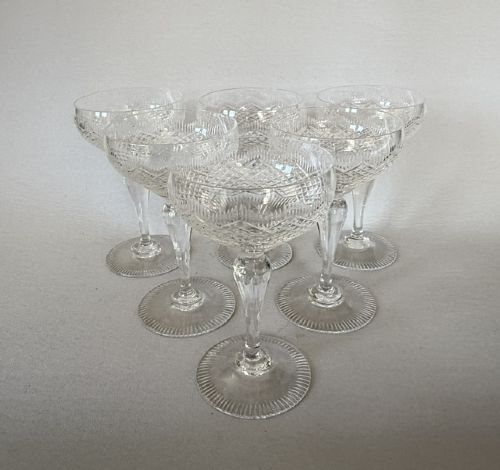
- A shallow, broad-bowled stemmed glass designed originally for sparkling wine, frequently featuring facet-cut stems and intricate moulding during the Victorian and Art Deco eras. Their wide brim allowed the bubbles to dissipate quickly.
- Cut crystal
- Glass containing lead oxide that is cut and polished with geometric or floral patterns using abrasive wheels, creating high refractive brilliance. This material feels noticeably heavier than standard soda-lime glass.
- Silver plate
- A thin layer of silver fused to a base metal such as copper or Britannia metal, widely utilised for the handles, mounts, labels and trays of late nineteenth-century drinking sets. It offered the appearance of solid silver at a lower production cost.
Antique Glass Barware Set: Frequently Asked Questions
What is a tantalus barware set?
A tantalus set is a locking wooden frame that holds two or three decanters securely in place. The metal bar across the stoppers prevents anyone from pouring a drink without the key.
These pieces were used in Victorian and Edwardian dining rooms to keep expensive spirits safe from domestic staff while still displaying the host's hospitality.
How do I date a glass decanter?
Dating relies on the shape of the bottle, the pontil mark on the base, and the style of the stopper. Nineteenth-century examples often feature heavy lead crystal with deep hand-cut facets and star-cut bases.
Later Edwardian and Art Deco pieces introduce sleeker silhouettes, lighter frames, and factory-engraved labels like brandies and whiskies.
Were these sets used daily?
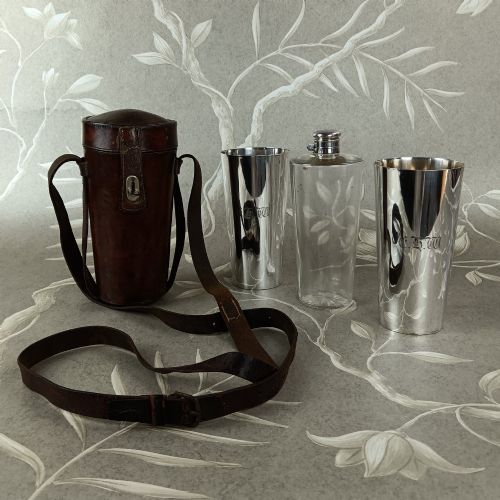
Many barware sets served formal after-dinner routines, where hosts offered liqueurs and spirits in the drawing room. Other items, such as campaign spirit sets, were designed for travel.
Today, they function well on sideboards or drinks trolleys, holding modern spirits while retaining their historical character.
What is colour over crystal?
Colour over crystal involves casing a layer of coloured glass over a clear crystal base. The artisan then cuts through the outer coloured layer to reveal the clear crystal underneath, creating high-contrast patterns.
This technique appears frequently on nineteenth-century hock decanters and ruby glass pieces, adding rich colour to the display.