


Nineteenth Century Glass Decanters
Nineteenth century glass decanters are heavy, brilliant serving vessels crafted to hold wine and spirits on the Victorian table.
Nineteenth Century Glass Decanters
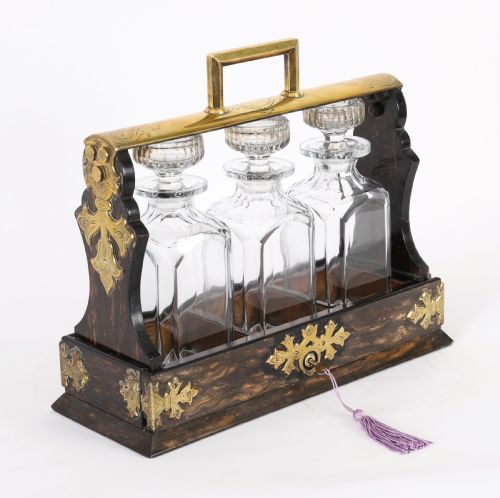
When searching for nineteenth century glass decanters, you encounter a varied selection of vessels spanning the Victorian era and earlier Georgian periods. These pieces include tall hock decanters, novelty duck jugs, ship's decanters, and fitted tantalus sets housed in coromandel wood.
The objects served functional roles for wine, champagne, claret, cider, and lemonade in 19th century households. Many examples incorporate silver plate, sterling silver mounts, or brass details alongside clear glass and lead crystal.
Regional styles range from English and French to Venetian latticino work. You are most likely to meet cut crystal bodies combined with silver-plated hardware or engraved decoration dating from the mid to late 19th century.
What varies in quality in nineteenth century glass decanters
Quality rests on the depth and crispness of the glass cutting, the clarity of the crystal, and the weight of the vessel. Superior pieces display flawless transparency and precise geometric or organic cutting that feels substantial in the hand.
The standard of mounts creates a distinct difference between everyday items and top tier examples. Heavy silver plate, intricate sterling silver casting by known makers, and well-fitted wooden cabinetry elevate the overall standard of the object.
One enthusiastic Victorian duck decided to masquerade as a silver and cut glass novelty jug.
Richardsons Birmingham·Asprey And Co
The Nineteenth Century Glass Decanters Glossary
- Lead crystal
- Glass containing lead oxide, which increases brilliance, weight, and the refractive index. This material allows for deep, sharp cutting.
- Tantalus
- A locking wooden frame, often made of coromandel wood, that holds decanters securely while displaying them visibly. The mechanism prevents the removal of stoppers until the lock is opened.
- Claret jug
- A specialised pouring vessel designed for red wine, frequently featuring a silver-plated or sterling silver hinged mount and handle.
- Ship's decanter
- A form with a broad, flat base and conical body designed to prevent tipping on board rolling ships. The shape provides stability on dining tables as well.
- Latticino
- A Venetian glass technique utilising opaque white threads embedded within clear glass to form delicate net patterns.
Nineteenth Century Glass Decanters: Frequently Asked Questions
What is a ship's decanter?
A ship's decanter is a specific glass vessel with a wide base that tapers upwards to a narrow neck. This triangular profile kept the container stable during maritime travel.
The wide footprint prevented tipping when the vessel sat on a rolling ship. Later examples retained this practical shape for domestic dining tables.
Can I use these decanters daily?
You can use these vessels for serving wine and spirits provided you handle them with care. Hand washing is essential to preserve the clarity of the glass and any silver plate.
Keep in mind that older glass is softer and heavier than modern equivalents. Store them securely on stable surfaces away from extreme heat.
What is a tantalus?
A tantalus is a locking stand designed to hold decanters securely in place. The wooden frame, often seen in coromandel wood, prevents guests from pouring drinks without a key.
It earned its name from the mythological figure Tantalus because the drinks are visible yet out of reach. These sets typically house three cut crystal decanters.