




Cranberry Glass Wine Decanter
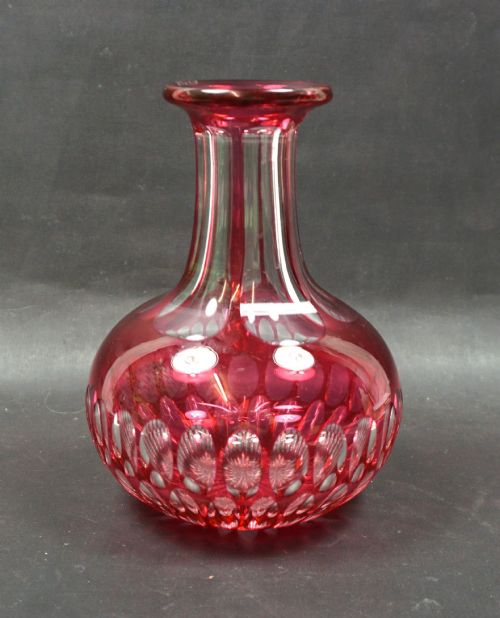
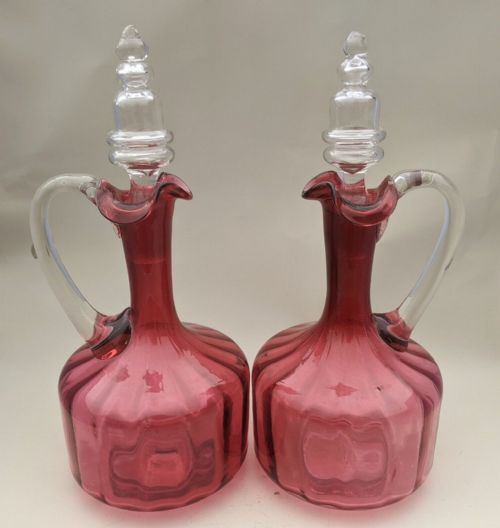
These cranberry glass wine decanter pieces bring rich ruby colour to the table, formed by Victorian and Edwardian makers from blown and cut glass.
Cranberry Glass Wine Decanter
A cranberry glass wine decanter is a table serving vessel shaped for wine, claret or hock, appearing primarily in Victorian and Edwardian styles from the nineteenth and early twentieth centuries. When searching for a cranberry glass wine decanter, collectors encounter single bottles, matched pairs and serving sets complete with matching glasses.
The evidence shows English origins spanning the decades from eighteen-forty to nineteen-ten, taking the form of decanters, carafes, serving bottles and wine jugs. These pieces range from simple blown vessels to substantial overlay examples and tall hock decanters designed for formal dining.
How they were made
Maker workshops produced these items using blown glass and cut crystal techniques, frequently employing a cranberry or ruby glass overlay upon clear glass. Skilled artisans shaped the molten material by hand before cooling and finishing each vessel.
Decoration often involved wheel engraving, creating detailed patterns of birds among vines or fruiting vines across the body. Certain examples incorporate silver plate or sterling silver mounts, adding functional collars and stoppers to the glass body.
Gold is the secret ingredient that gives cranberry glass its rich, berry-like hue, meaning actual precious metal lurks inside every pinkish-red decanter.
What varies in quality
Quality in these decanters rests upon the depth of the ruby coloration and the crispness of the cut crystal facets or wheel engraving. Pieces featuring detailed bird and vine motifs or substantial sterling silver mounts demonstrate superior craftsmanship compared to plain vessels.
The presence of matching pairs or original associated wine glasses elevates an object's status within the range. Heavier metal mounts and clear glass overlays reveal the higher tier of nineteenth century production.
The Cranberry Glass Wine Decanter Glossary
- Cranberry glass
- A transparent pinkish-red glass created by adding gold chloride to the molten batch. It gained immense popularity during the Victorian era for tableware.
- Overlay
- A technique where a layer of coloured glass is fused over a core of clear glass. Cutting through the outer layer reveals the clear glass beneath in decorative patterns.
- Hock decanter
- A tall, slender wine bottle traditionally utilised for serving white hock or similar German wines. They often feature elongated necks and tapering bodies.
Cranberry Glass Wine Decanter: Frequently Asked Questions
What is cranberry glass?
Cranberry glass is a transparent pinkish-red material produced by introducing gold into the glass melt during production. It became a defining aesthetic of the Victorian period.
Craftsmen utilised this vibrant medium for decanters, jugs and entire table services designed to catch candlelight during formal dinners.
How old are these decanters?
The available pieces span the nineteenth and early twentieth centuries, primarily dating from the Victorian and Edwardian eras. Specific examples in the record date from eighteen-forty through to nineteen-ten.
Stylistic cues and occasional silver hallmarks help narrow down the decade of production for individual vessels.
Were they used for wine?
These vessels were designed specifically for serving wine, claret and hock at the dining table. Their rich colour helped protect certain wines from light degradation.
Many survive today as decorative display pieces or functional serving bottles for modern dining.
How do I care for my decanter?
Gentle hand washing in warm water preserves both the historic glass and any delicate silver mounts. Harsh detergents and modern dishwashers should be avoided entirely.
Lifting the decanter by the body rather than the stopper prevents accidental drops and damage to the neck.