

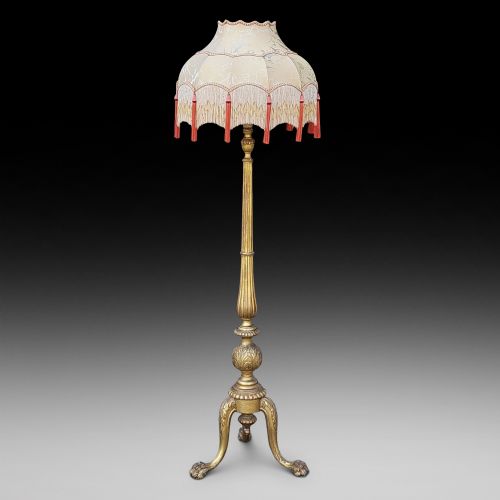
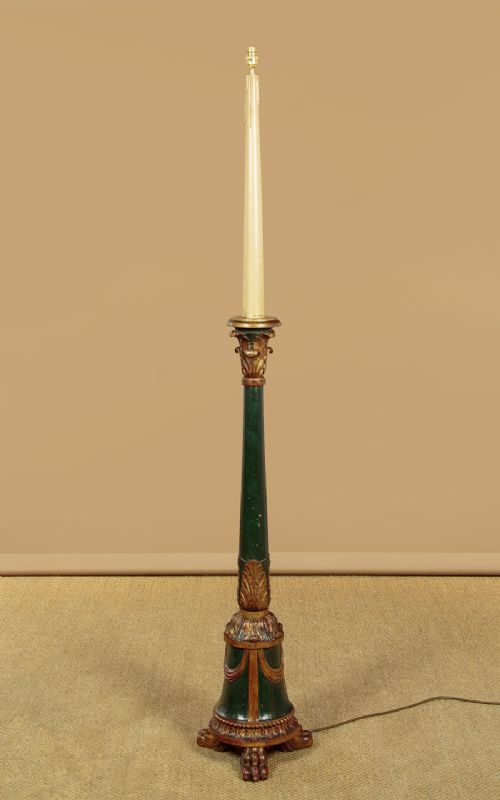


Antique Gilt Floor Lamp
An antique gilt floor lamp brings vertical presence and warm illumination to a room, drawing on decades from the Victorian era through the early twentieth century.
Antique Gilt Floor Lamp
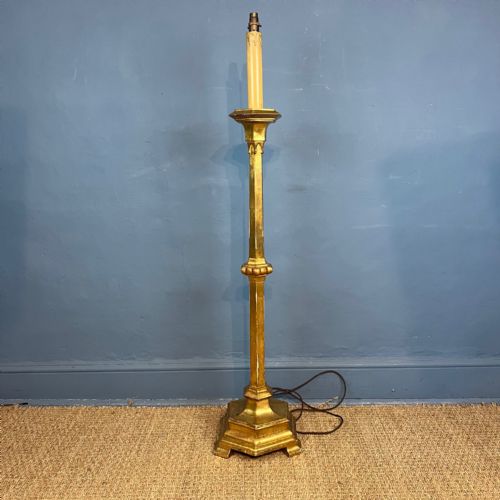
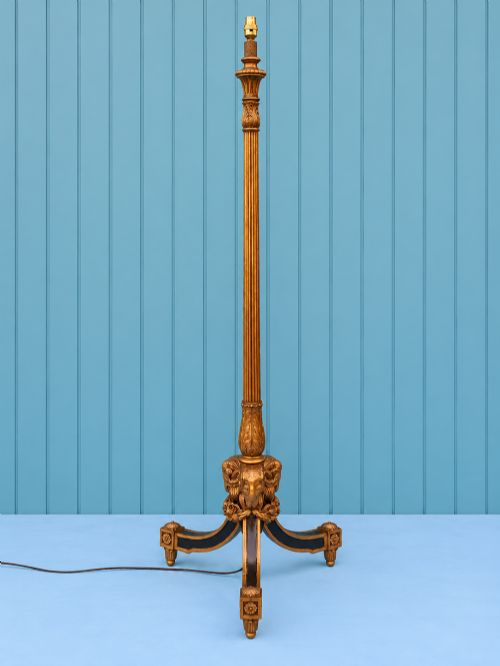
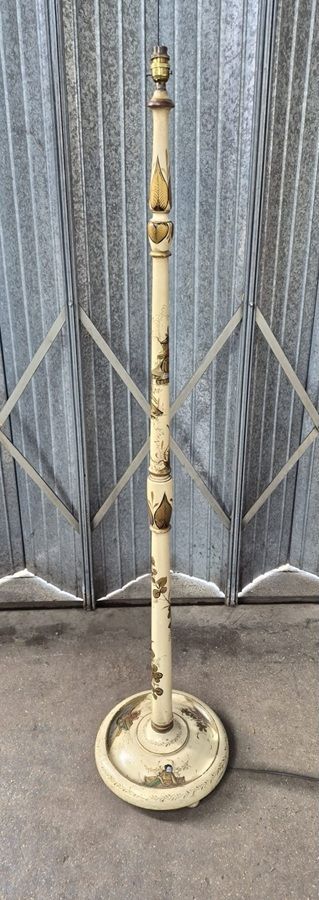
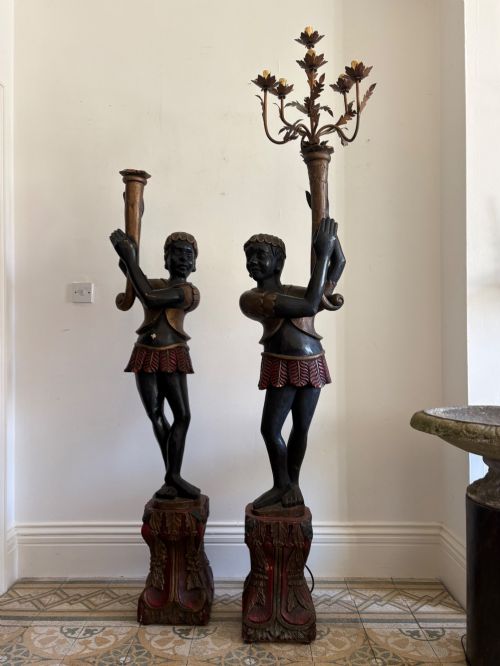
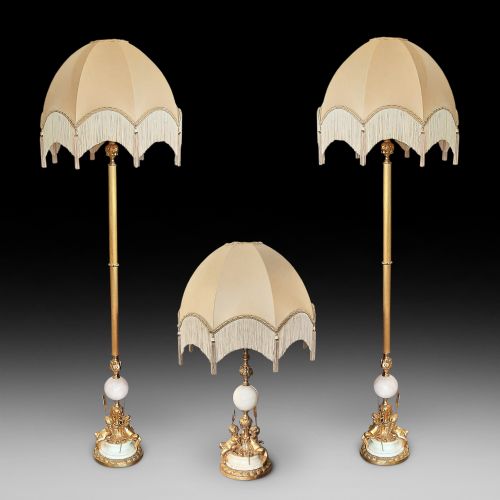
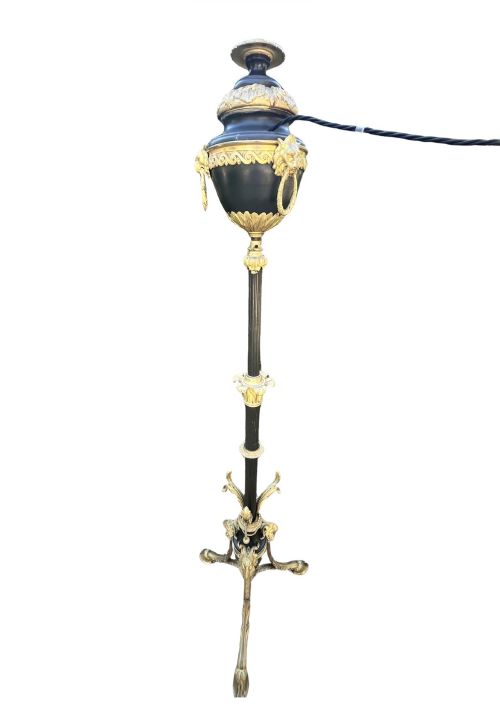
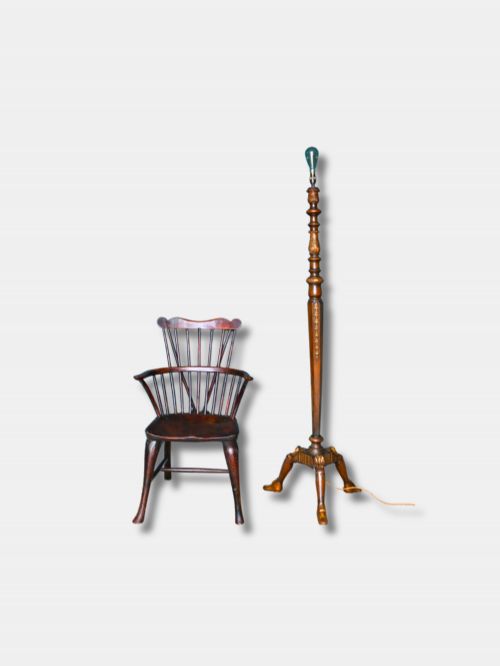
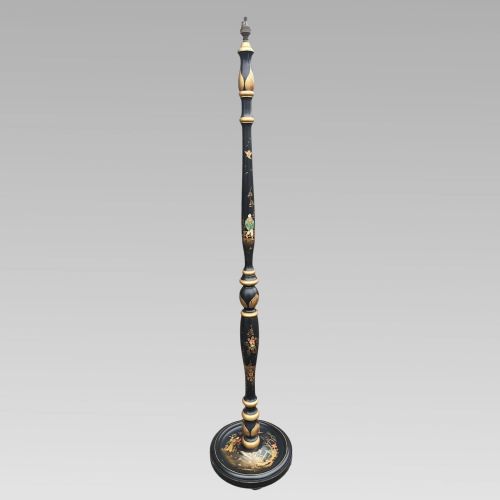
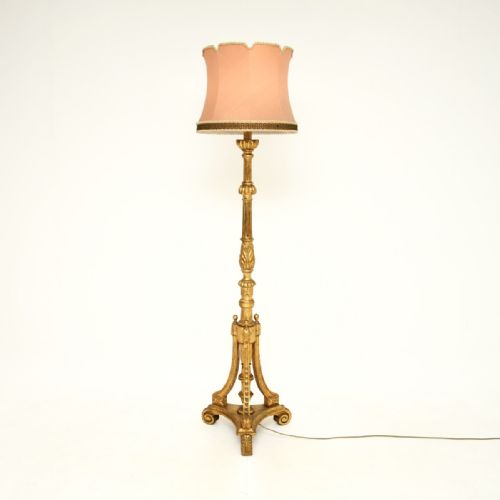
An antique gilt floor lamp stands as a tall lighting fixture designed to illuminate a room from floor level, frequently referred to in listings as a standard lamp or torchere. The pieces seen here span from the nineteenth century through the 1930s, encompassing styles such as Neoclassical, Chinoiserie, and Hollywood Regency.
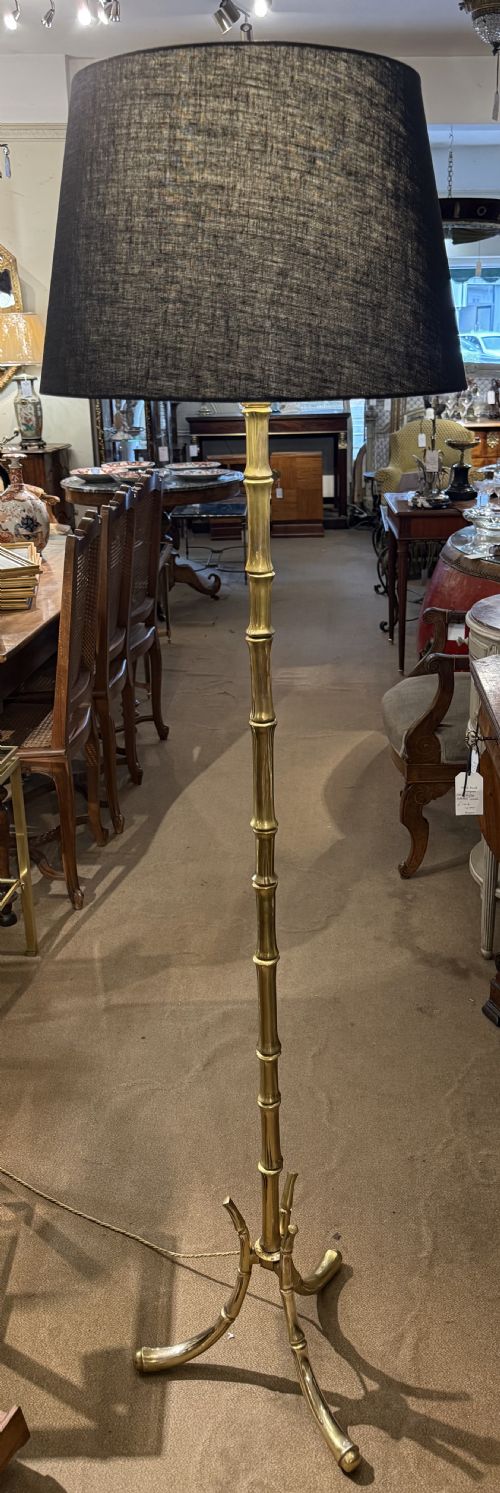
Buyers encounter carved wood and gesso frames alongside gilt bronze and brass structures, reflecting diverse European aesthetics from Italian Florentine workshops to French boudoir designs. Standard lamps from the Edwardian period and the 1920s appear regularly, often featuring tripod bases or figural elements.
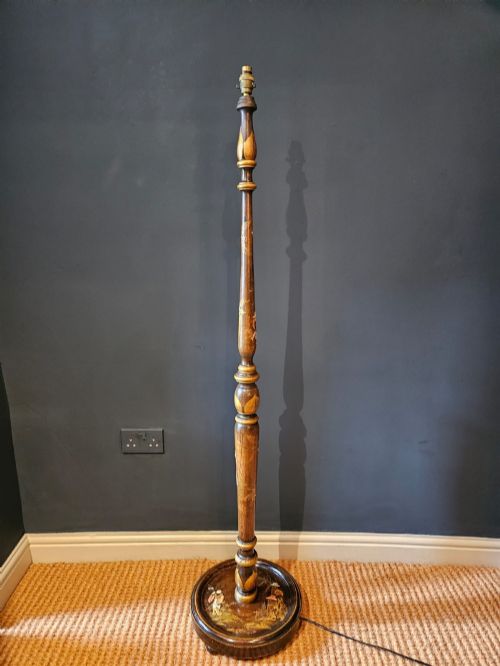
The selection ranges from lacquered black and red Chinoiserie poles to gilded ormolu columns and parcel gilt woodwork. Each format serves the practical purpose of elevated lighting while carrying the decorative hallmarks of its period of origin.
How they were made
Maker's hands shaped these items primarily from wood, gesso, and brass, applying gold leaf or paint finishes over carved surfaces. Carved giltwood and gesso pieces rely on traditional joinery and hand-applied metallic leaf to achieve their reflective surfaces.
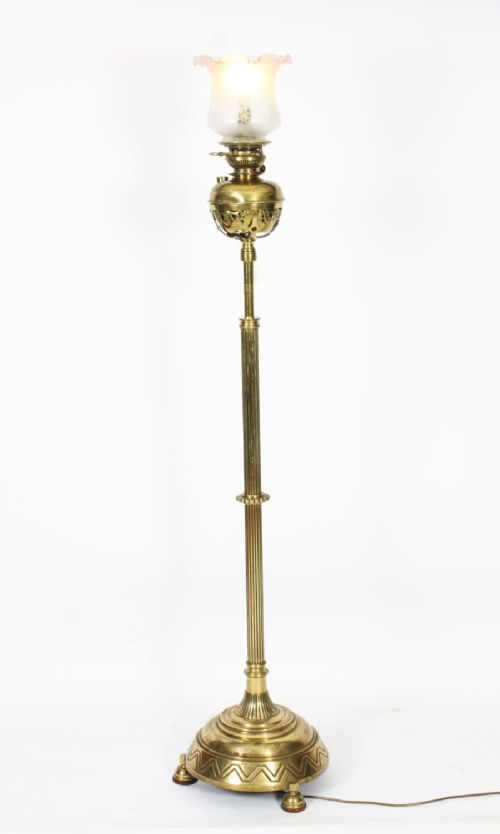
Metal versions utilise cast bronze, ormolu, and brass components, sometimes paired with alabaster or fabric elements. Artisans combined casting, turning, and hand-carving techniques to produce the slender columns and heavy bases required for stability.
Antique Gilt Floor Lamp Retail Price Guide 2026
Typical asking prices for gilt floor lamp among the pieces listed under this phrase on Sellingantiques today, from the lower quarter to the upper quarter. They describe what is for sale here now, not the wider market.
Listings feature items spanning from the Victorian era and 1850 through the Edwardian period up to 1930.
What varies in quality
The depth and execution of hand-carving on the wooden shafts distinguish standard lamps, where crisp acanthus leaves or figural details demonstrate superior artisan skill. Moulded gesso offers a different texture compared to deeply chiselled solid timber.
Finishes range from simple painted surfaces to meticulous parcel gilt and lacquered Chinoiserie schemes that involve multiple layers. The integrity of the underlying bronze, brass, or carved wood structure dictates the overall substance of the piece.
François Christophe Armand Toussaint·Coutan·Maison Bagues
The Antique Gilt Floor Lamp Glossary
- Giltwood
- Wood that has been coated with gold leaf or a gold-coloured metallic finish. This technique creates a bright, reflective surface popular in classical and revival furniture.
- Torchere
- A tall ornamental stand intended to carry a light source or candle. In later periods, these forms were adapted to hold electric lamp fittings.
- Chinoiserie
- A European decorative style influenced by Chinese artistic traditions. It frequently employs lacquered finishes and painted motifs on furniture and lighting.
- Ormolu
- Finely chased and gilt bronze used for decorative mounts and hardware. The term derives from French describing ground gold.
- Gesso
- A plaster mix applied to wood surfaces to prepare them for gilding or painting. It provides a smooth base that can be moulded into relief decoration.
Antique Gilt Floor Lamp: Frequently Asked Questions
How do I wire an antique floor lamp?
Most antique floor lamps require rewiring to meet modern electrical safety standards. A qualified electrician can replace old internal cables while preserving the original lampholders and switches.
Rewiring ensures the tall column and base remain safe for daily use in a modern interior setting.
What styles are common in these lamps?
The selection includes Neoclassical revival designs, Italian Florentine carvings, and decorative Chinoiserie pieces with lacquered finishes. Edwardian and 1930s examples often reflect Hollywood Regency or traditional European aesthetics.
These varied styles allow the lamps to fit into both period rooms and contemporary spaces requiring a vertical statement piece.
Where should I place a standard lamp?
Standard lamps work effectively in corners of living rooms or beside seating areas where ambient lighting is needed. Their height allows them to distribute light across a wider radius than table lamps.
Placement should account for the reach of the power cord and the stability of the floor surface beneath the heavy base.
How do I identify the period of a lamp?
Dating relies on stylistic clues, materials such as gesso or cast bronze, and construction methods visible in the base and column. Edwardian and 1920s pieces often show specific revival motifs like Adam Neoclassical details.
Comparing the turned wood profile and finish against documented furniture eras helps narrow down the decade of manufacture.