

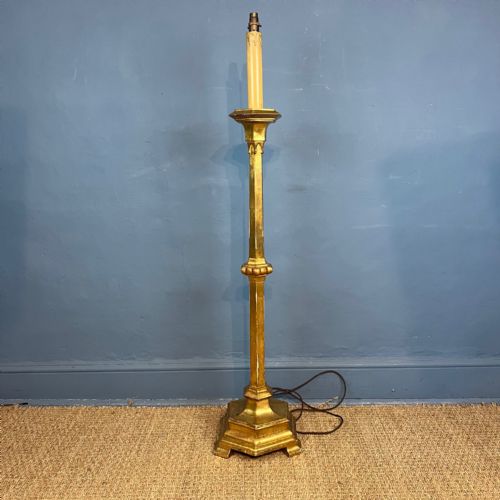
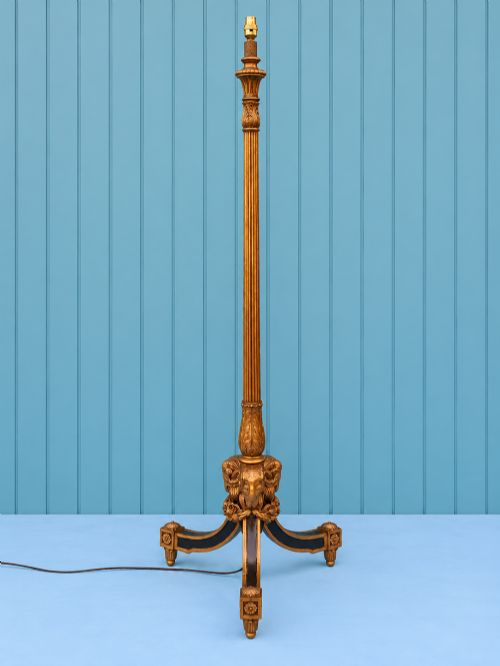
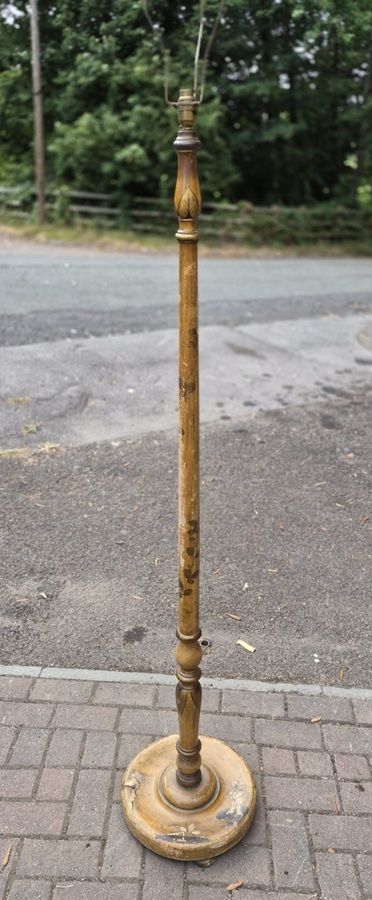
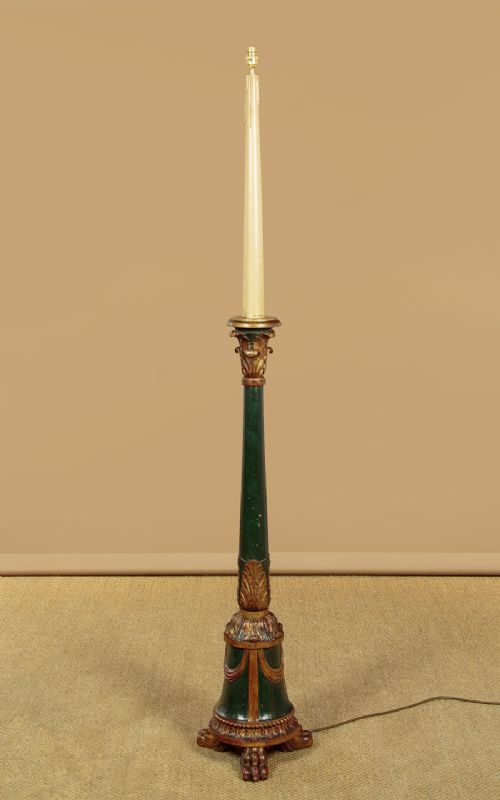


Gilded Tall Standard Lamp
These gilded tall standard lamp designs bring commanding vertical presence and warm illumination to a room, combining substantial height with decorative surface ornament.
Gilded Tall Standard Lamp
A gilded tall standard lamp provides substantial vertical lighting while serving as a commanding architectural presence in a room. When buyers search for a gilded tall standard lamp, they encounter tall lighting fixtures designed to stand on the floor rather than a table.
The selections span multiple eras, encompassing pieces from the eighteenth century through the 1930s. Common stylistic manifestations include Italian Baroque, Edwardian Chinoiserie, and classical revival forms.
Forms include single carved posts and paired floor lamps originating from various European workshops. Most examples integrate decorative carved surfaces with tall proportions intended to elevate a shade above eye level.
How they were made
Maker construction relies heavily on carved wood, gesso, and applied gold leaf to build rich reflective surfaces. Artisans shaped timber into slender columns and elaborate bases before applying layers of gesso to smooth the grain for gilding.
Surface decoration frequently involves parcel gilding or full giltwood finishes, sometimes paired with painted wood or Chinoiserie motifs. Metal components such as brass also appear in structural elements or fittings to support the upright column.
Gilded Tall Standard Lamp Retail Price Guide 2026
Typical asking prices for gilded tall standard lamp among the pieces listed under this phrase on Sellingantiques today, from the lower quarter to the upper quarter. They describe what is for sale here now, not the wider market.
Listings feature periods spanning from the 18th century through the 1930s, utilising materials such as giltwood, brass, gesso, and painted wood.
What varies in quality
Quality separates along the depth and crispness of the hand carving across the wooden shaft and base. Superior examples exhibit deep, fluid relief work in the gesso and wood, whereas lesser items rely on shallow stamping or simpler turned profiles.
The integrity of the original gilded surface distinguishes finer pieces from heavily retouched alternatives. Patination and the subtle interplay of matte and burnished gold leaf indicate skilled workshop execution from periods like the Edwardian era or nineteenth century.
The Gilded Tall Standard Lamp Glossary
- Giltwood
- Timber that has been coated with gold leaf or a gold-coloured metallic finish. This technique creates a luminous surface that reflects ambient light in a room.
- Gesso
- A plaster mixture applied to wood surfaces as a preparation for gilding or painting. It provides a smooth base that artisans can carve intricate details into before applying gold leaf.
- Chinoiserie
- European artistic style reflecting Chinese motifs and decorative techniques. This aesthetic appears on painted and gilded lamp standards from the Edwardian period.
- Parcel gilt
- A decorative treatment where only specific portions of an object are gilded while other areas show painted wood or natural grain. It highlights architectural details through selective contrast.
- Standard lamp
- A tall freestanding floor lamp designed to hold a light source and shade aloft. These fixtures provide ambient illumination without requiring a table surface.
Gilded Tall Standard Lamp: Frequently Asked Questions
Where should a tall floor lamp go?
These tall lighting pieces suit corners or beside large seating arrangements where they provide ambient illumination. Their height allows them to anchor empty vertical space in a room.
Positioning them away from heavy foot traffic protects the delicate gilded surfaces from accidental knocks while maximising their decorative impact.
How do I date a gilded lamp?
Dating relies on identifying stylistic markers such as Italian Baroque carvings, Edwardian Chinoiserie motifs, or nineteenth-century turning patterns. Material choices like gesso over timber also offer clues to the period of manufacture.
Construction methods and the specific quality of the gilding further help narrow down whether a piece originates from the eighteenth century or the 1930s.
Are these lamps wired for modern use?
Most antique and vintage floor lamps have undergone rewiring at various points in their long histories to comply with modern electrical standards. Buyers should inspect the internal wiring upon acquisition to ensure safe operation.
Professional conversion allows these historic fixtures to accept contemporary plugs and bulbs while retaining their original decorative columns.
What styles are common in these lamps?
The available selection includes Italian Baroque, neoclassical revival, and Edwardian Chinoiserie designs. These aesthetic movements dictate the complexity of the carved wooden bases and columns.
Regional influences from Britain, Italy, and Spain introduce distinct regional carving traditions and surface treatments to the overall form.