


Antique Gilt Eagle
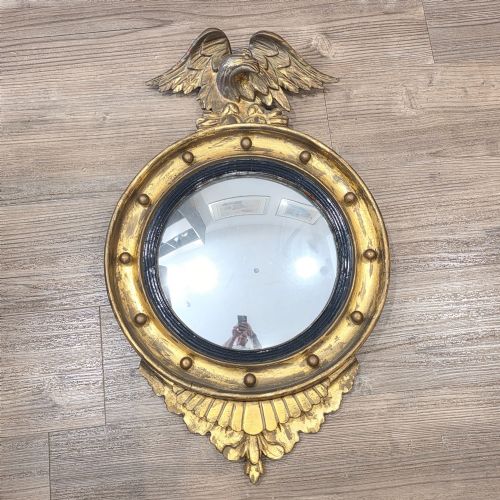
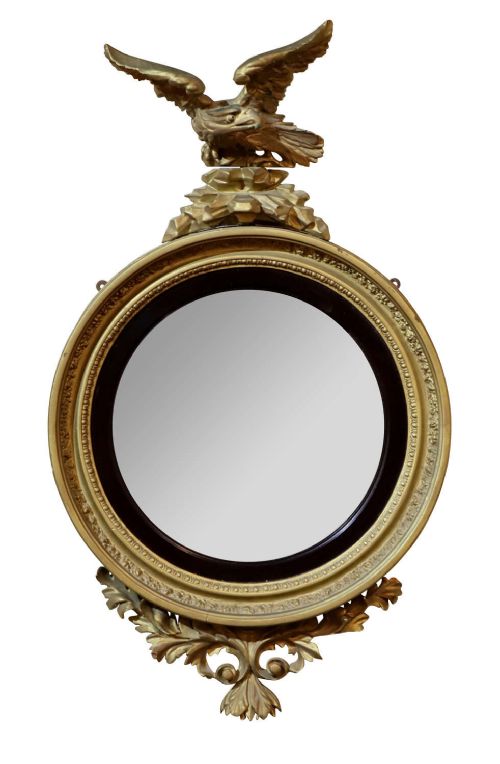
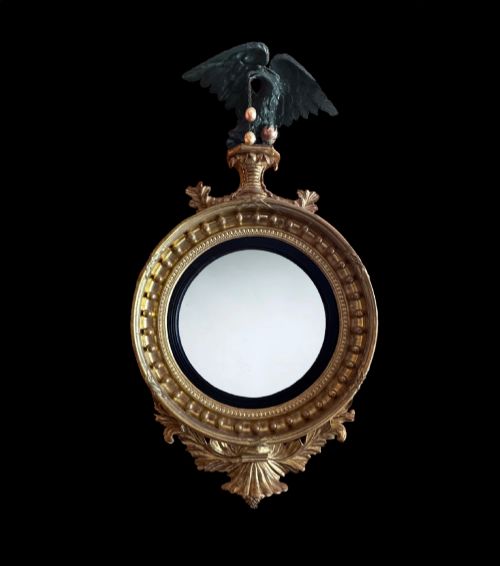
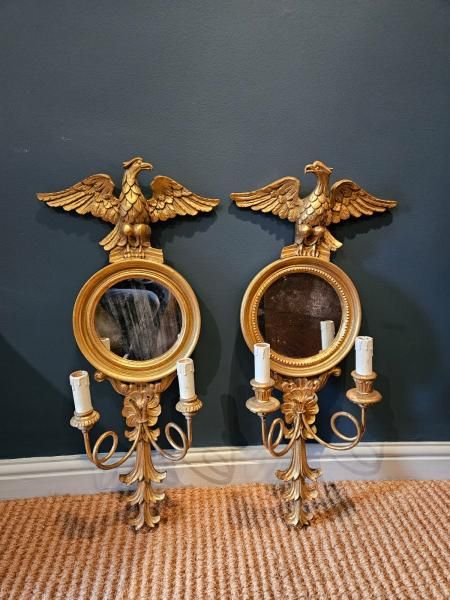
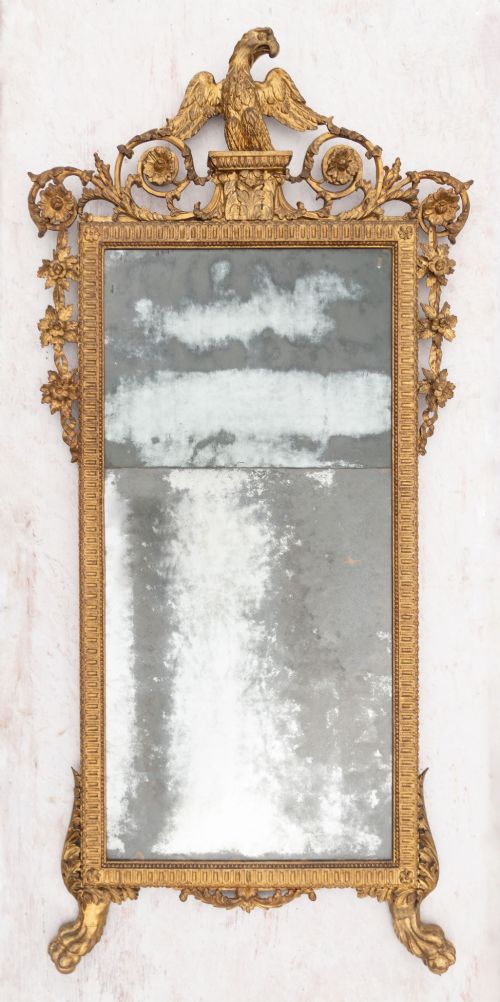
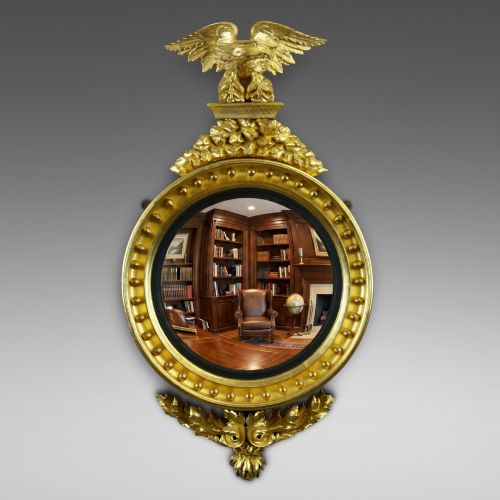
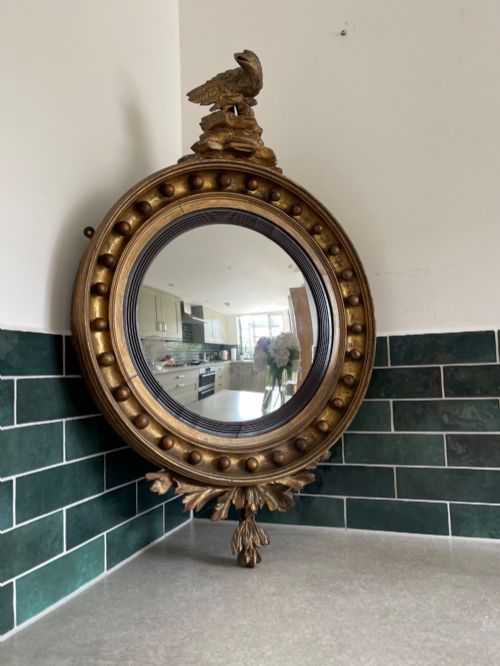
An antique gilt eagle brings a commanding neoclassical presence to a room, most frequently seen here as a convex wall mirror surmounted by a carved bird.
Antique Gilt Eagle
When you search for antique gilt eagle, you are looking at decorative arts dominated by circular convex wall mirrors from the Regency, Georgian, and nineteenth-century periods. These circular glasses are typically crowned with a spread-winged bird perched upon a plinth, often flanked by scrolling foliage or candle sconces.
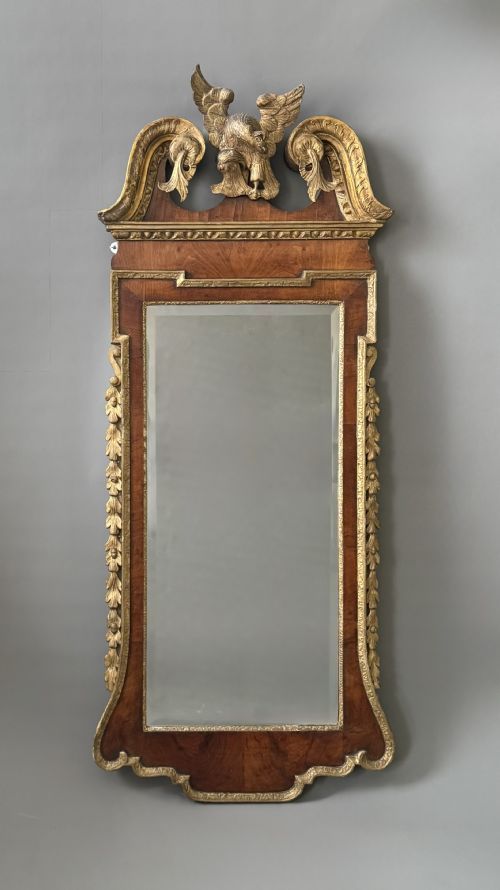
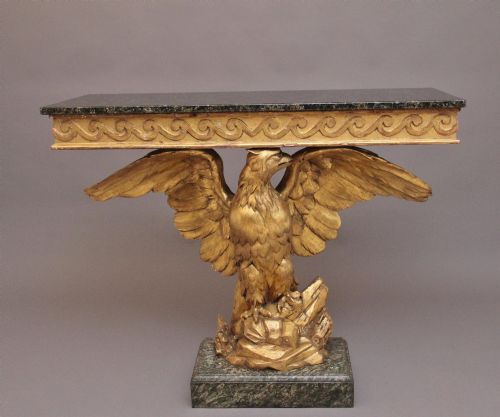
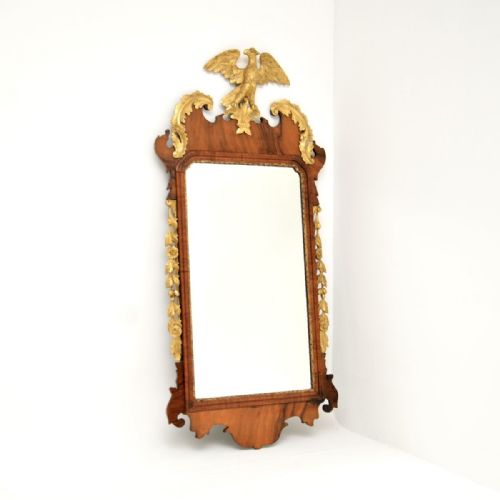
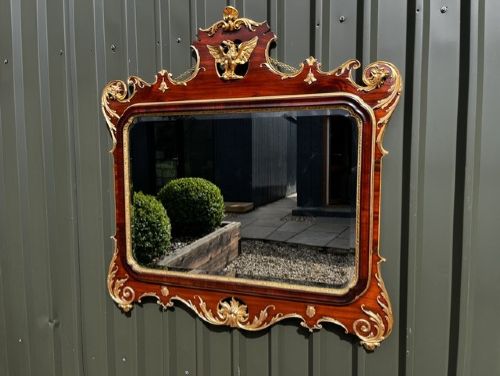
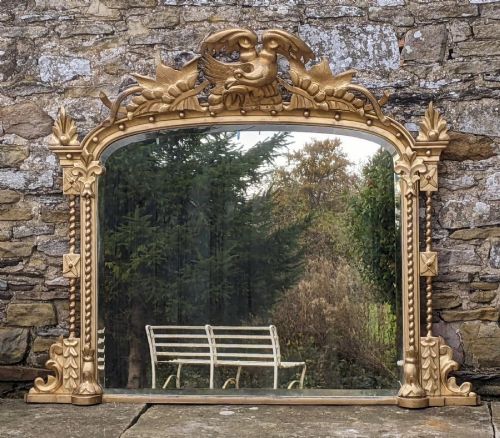
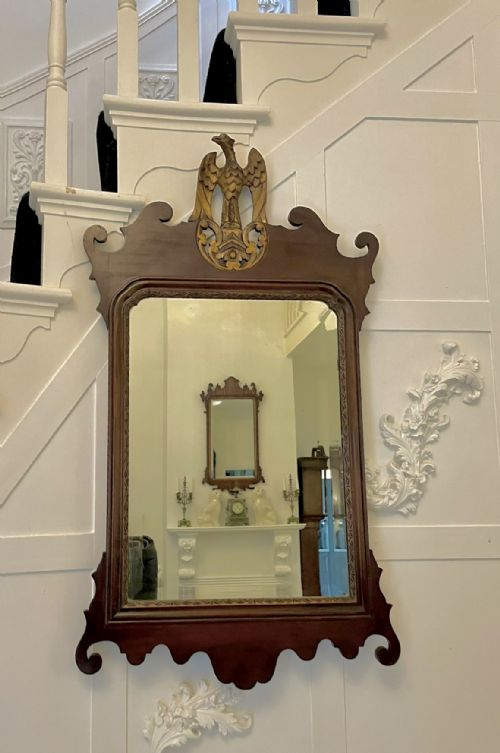
Beyond wall mirrors, the listings include occasional parcel-gilt mahogany pier mirrors, console tables, mantel clocks adorned with bronze mounts, and carved wooden wall brackets. The forms span the eighteenth century through the Edwardian era, with Regency examples forming the largest share of the available stock.
How they were made
The construction of these pieces relies heavily on carved timber frames, using woods such as mahogany, walnut, and ebonised pine beneath layers of gesso and gold leaf. Gesso served as the smooth ground applied directly to the wood to receive water gilding or oil gilding.
Convex mirror plates were cast or blown to create the curved surface that distorts the room in reflection, mounted securely within deep round frames. Details such as the eagle surmounts were frequently carved separately from softwoods and attached to the main frame.
What varies in quality
The distinction between average and exceptional pieces lies primarily in the crispness of the carving on the eagle and the depth of the frame mouldings. Master carvers rendered the feathers and talons with anatomical precision, whereas lesser examples present softer, shallower definition.
The survival of the original gilding surface and the clarity of the convex glass also determine distinction. Pieces retaining their early gold leaf and untouched backboards command greater appreciation than those heavily restored or re-gilded in later centuries.
Baetens London·Samuel Marti·Fritz Marti·William Kent
The Antique Gilt Eagle Glossary
- Convex mirror
- A round looking glass with an outward-curving surface that reflects a wide-angle view of the interior. These were popular in Georgian and Regency drawing rooms.
- Gesso
- A mixture of chalk, gypsum, and size applied to a wooden substrate to create a smooth surface for gilding. It provides the relief base for intricate frame decoration.
- Parcel-gilt
- A finish where only specific portions of a wooden object are highlighted with gold leaf, leaving the underlying grain of mahogany or walnut visible elsewhere.
- Surmount
- An ornamental feature positioned at the very top of a mirror frame or piece of furniture. In these pieces, it takes the form of a carved eagle.
- Girandole
- A branched wall mirror fitted with candle sconces that project from the sides of the frame. The polished metal or glass reflects the candlelight across the room.
Antique Gilt Eagle: Frequently Asked Questions
What rooms suit an antique gilt eagle mirror?
These circular mirrors suit hallways, dining rooms, and living spaces where a focal point is required. Their optical sweep naturally brightens darker corners by capturing light from across the entire room.
Because of their strong architectural presence, they pair effectively with both period interiors and pared-back modern settings. Hanging them at eye level ensures the detail of the eagle crest can be properly appreciated.
How do I identify a Regency convex mirror?
Regency convex mirrors typically feature deep circular frames, often embellished with a reeded ebonised inner ring and gilded balls set into the hollow moulding. The eagle surmount sits atop a plinth, frequently accompanied by carved acanthus leaves.
Comparing the construction methods of the backboards and the thickness of the old glass helps distinguish nineteenth-century examples from later twentieth-century revivals.
Were these mirrors used for lighting?
Many convex mirrors included attached candle arms known as girandoles, which multiplied the illumination of early nineteenth-century parlours. The curved glass threw the candlelight back into the space to make the most of dim interiors.
Even without working candles, the reflective quality served a practical purpose before reliable domestic electricity became widespread.
How should I clean a gilded eagle frame?
Gilded surfaces require gentle dusting with a soft, dry brush to remove particulate matter without disturbing the delicate gold leaf. Moisture and chemical cleaners must be avoided entirely.
Professional restoration is recommended if the gesso is lifting or if the original gilding shows significant flaking along the carved edges of the eagle.