
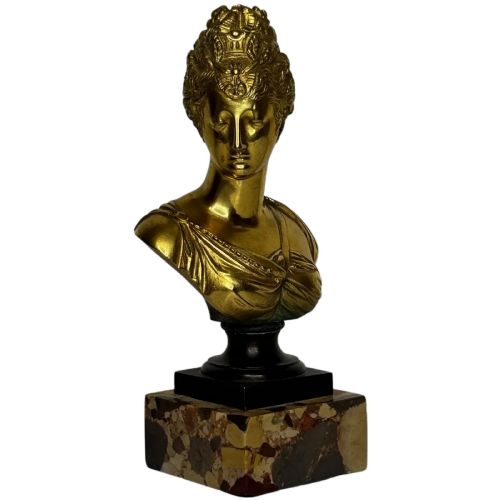


Vintage Gilt Brass Sculpture
These vintage gilt brass sculpture pieces bring classical figures, animals and architectural details into a room through cast metal and rich gilding.
Vintage Gilt Brass Sculpture
Nineteenth-century pieces dominate the listings, particularly French figural works and Grand Tour subjects such as horses and classical busts. Alongside these European examples, you find Tibetan temple lions and Chinese bronze horses representing distinct cultural styles.
Functional items like mantel clocks and automaton beam engine clocks appear frequently alongside standalone sculptures and statuettes. The forms vary from intimate portrait busts to large decorative pairs, utilising mixed materials including marble, slate and wood bases.
Materials and construction
The objects are produced through traditional metal casting techniques utilising bronze, brass and gilt metal, often combined with silver plating or applied gilding. Many pieces incorporate secondary structural elements of marble, slate and wood to provide weight and stable mounting.
Winston Churchill appears ready for victory in a gilt bronze car mascot holding his signature cigar and V-sign.
Distinguishing quality
Quality reveals itself in the crispness of the metal casting and the depth of the chased details across the surface. Superior examples maintain intact gilding that catches the light evenly without obscuring the underlying definition of the form.
The integration of mixed materials, such as fitted marble bases and secondary silver plating, distinguishes more ambitious workshop productions from standard decorative pieces. The precision of mechanical movements in clockwork items further separates functional works of art from simpler static figures.
Andre Guilmet·Japy Freres
The Vintage Gilt Brass Sculpture Glossary
- Gilt bronze
- Metal alloy coated with a thin layer of gold to produce a rich decorative surface. This finish protects the underlying bronze while giving the sculpture a luminous appearance.
- Grand tour
- Nineteenth-century travel phenomenon where wealthy collectors acquired classical art and small sculptures across Europe. These souvenirs typically depicted historical subjects, animals or architectural motifs.
- Car mascot
- Ornamental sculpture mounted on the radiator cap of a vintage automobile. Famous examples include commemorative figures and military symbols rendered in cast bronze.
- Automaton
- Mechanical device designed to mimic human or animal actions, often incorporated into nineteenth-century clockwork mechanisms. These moving parts demonstrate advanced engineering alongside decorative sculpture.
- Relief tableau
- Sculptural artwork where figures project from a flat background plane. This technique creates a sense of depth within framed wall art and decorative panels.
Vintage Gilt Brass Sculpture: Frequently Asked Questions
What periods do these sculptures cover?
The pieces span the nineteenth century through to the mid-twentieth century, capturing distinct historical revival styles and early twentieth-century design movements.
You will find examples representing the French Empire, Art Deco, Tibetan traditions and the Grand Tour era.
How were these decorative pieces used?
Many items served dual purposes as functional timepieces, mantel ornaments or automobile mascots alongside purely decorative statuary and wall art.
They were displayed in studies, libraries and formal reception rooms to demonstrate taste and worldly travel.
How do I style a gilt sculpture at home?
These metallic objects work well placed on wooden sideboards, marble mantelpieces or within glass-fronted cabinets where light can catch the surface.
Pairing them with contrasting materials like slate or dark wood helps anchor their presence in a modern room.
What materials are combined with the brass?
The metalwork frequently sits upon or incorporates natural materials such as marble, slate and polished wood bases.
Some advanced pieces also feature silver plating alongside the primary gilt bronze or brass construction.