


Gold Metal Bird
These gold metal bird pieces span sculpture, jewellery and decorative objects, bringing tactile weight and period character to any interior.
Gold Metal Bird
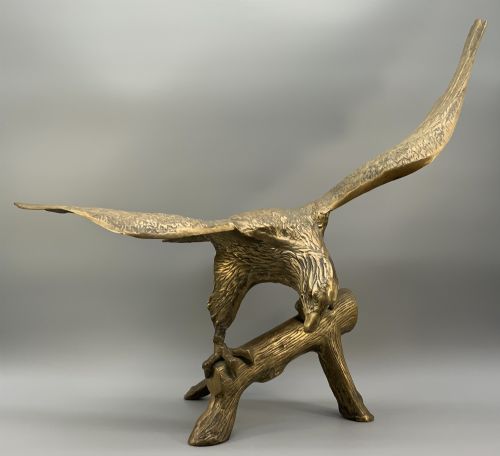
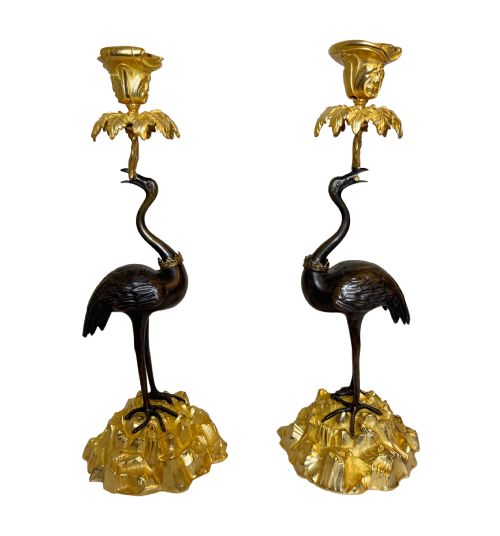
When searching for gold metal bird, collectors encounter objects ranging from Victorian silver and gold cuff bangles to mid-century brass eagle sculptures and gilt bronze candlesticks. These items encompass both decorative furnishings and wearable pieces, reflecting varied periods from the nineteenth century to the mid-twentieth century.
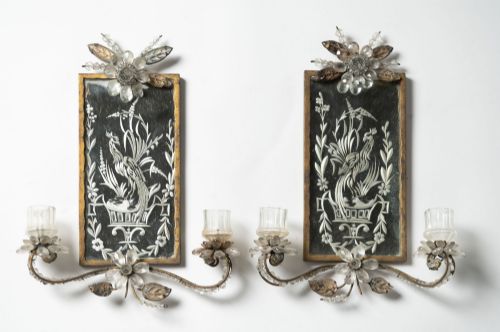
The selections on this page predominantly feature cast brass, gilt bronze and silver compositions styled across Art Deco, Victorian and Art Nouveau aesthetics. Bird cages, wall sconces and miniature paintings further expand the category, showing how diverse the bird motif remains across historical periods.
Materials and construction methods
The pieces rely heavily on cast brass and gilt bronze, utilising metal-working techniques that allow for fine anatomical detail in feathers and branches. Artisans shaped these metals through casting and hand-finishing, applying gilding to create the characteristic golden lustre seen on eagles, flamingos and pheasants.
Other examples integrate mixed media, combining silver and gold in jewellery or incorporating glass and wood within decorative bird cages and miniature paintings. Each material demands specific joining and mounting methods appropriate to its form, whether a heavy sculptural base or a delicate bangle.
Listings feature items from the 19th Century, 1890, 1920, 1930 and 1950, utilising brass, gilt metal, glass, wood, bronze, silver and gold.
Assessing craftsmanship and design
Quality resides in the crispness of the casting and the sensitivity of the finishing work, particularly where feathers, talons and facial expressions are rendered in metal. Superior examples exhibit deliberate proportions and clean joints, whereas simpler items rely on generic mass-produced assembly.
The depth and application of the gilding or surface metal further distinguish finer pieces, showing whether the gold tone is integrated as a rich finish or applied as a basic wash. The integrity of the original structure, from sconce arms to cage wirework, dictates the lasting physical presence of the object.
Maison Baguès
The Gold Metal Bird Glossary
- Gilt bronze
- An object formed from bronze and treated with a gold-coloured finish or mercury gilding. This technique provides a durable metallic sheen favoured in nineteenth-century decorative arts.
- Cast brass
- An alloy of copper and zinc poured into a mould to create solid sculptural forms. It offers significant weight and allows intricate surface detailing.
- Aesthetic movement
- A late nineteenth-century design current emphasising visual beauty over narrative content. It often incorporates natural motifs like birds and floral elements.
- Art Deco
- A twentieth-century style characterised by streamlined geometries and stylized natural forms. It appears in metalwork and decorative objects from the interwar decades.
Gold Metal Bird: Frequently Asked Questions
What periods do these pieces date from?
The selection spans the nineteenth century through to the mid-twentieth century. Dates range from Victorian items to 1950s modernist works.
Specific decades like the 1920s and 1930s represent key periods for Art Deco and decorative brassware.
How were these decorative items used originally?
Many objects served functional domestic roles, such as candlesticks providing illumination or wall sconces mounted in reception rooms.
Other items functioned purely as sculptural ornaments, decorative bird cages or wearable jewellery like cuff bangles.
How do I care for gilt metal?
Gilt metal requires gentle dusting with a soft, dry cloth to prevent abrasion of the delicate surface finish. Avoid harsh chemical cleaners that can strip away the gold tone.
Keep pieces away from direct moisture and humid environments to protect the underlying bronze or brass.
What materials are most common?
Brass and gilt bronze dominate the sculptural and decorative objects in this category. These metals provide the structural rigidity needed for detailed bird figures.
Silver and gold appear frequently in jewellery, while glass and wood support specific items like cages and paintings.