


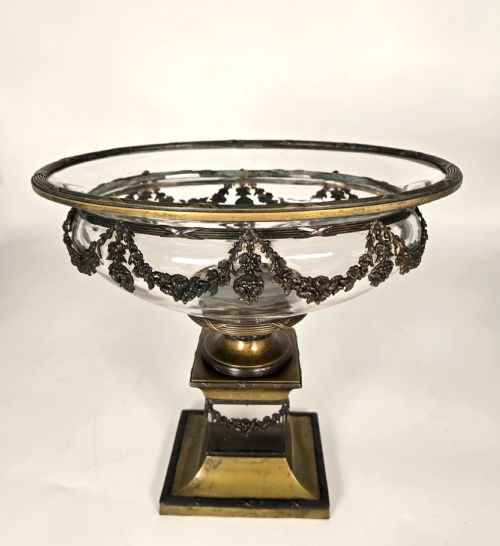


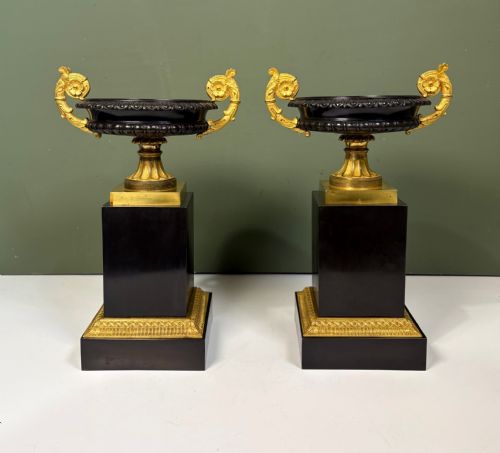


Antique Gilt Compote
An antique gilt compote brings sculptural height to a table, combining raised porcelain, glass, or stone with rich metallic gilding.
Antique Gilt Compote
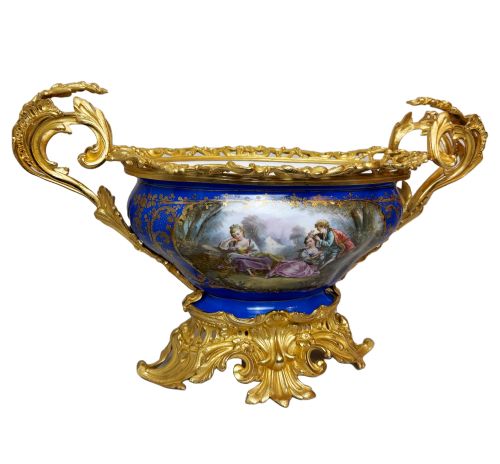
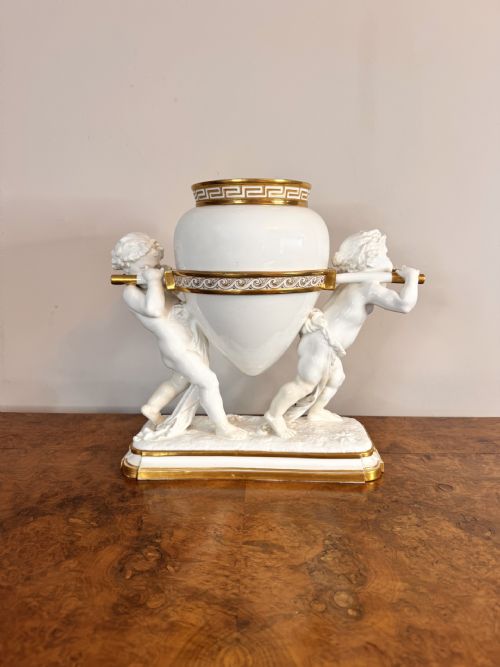
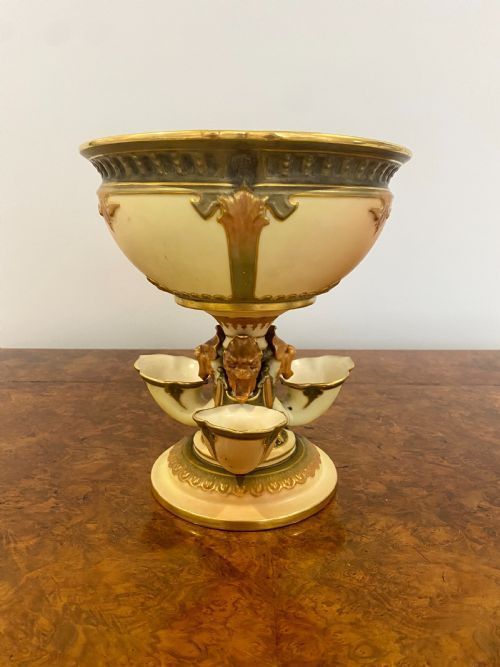
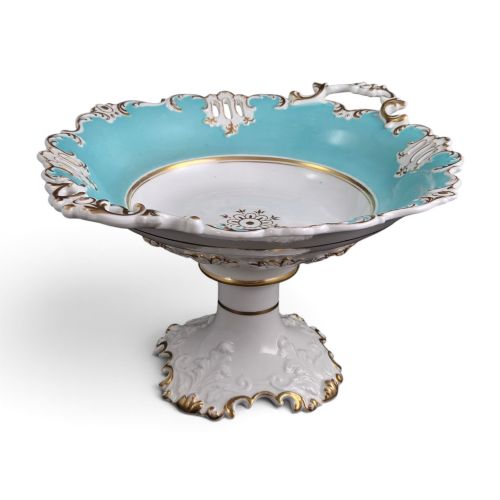
An antique gilt compote encompasses elevated serving vessels, tazzas, centrepieces, and pedestal bowls designed to display fruit, flowers, or confectionery on formal dining tables.
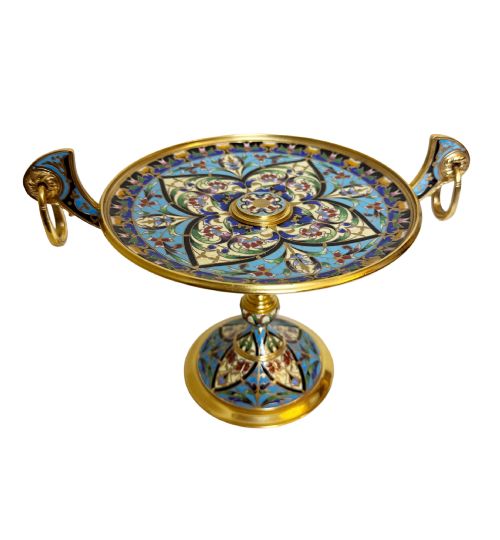
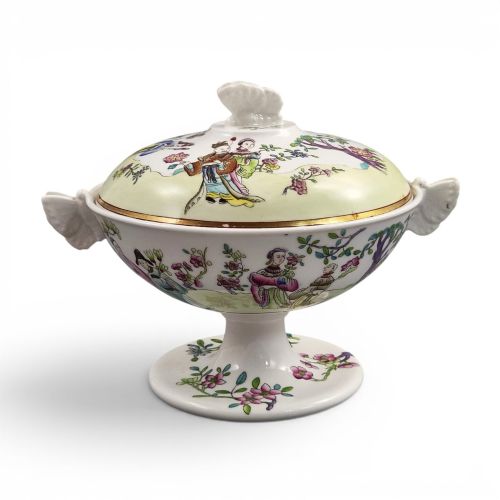
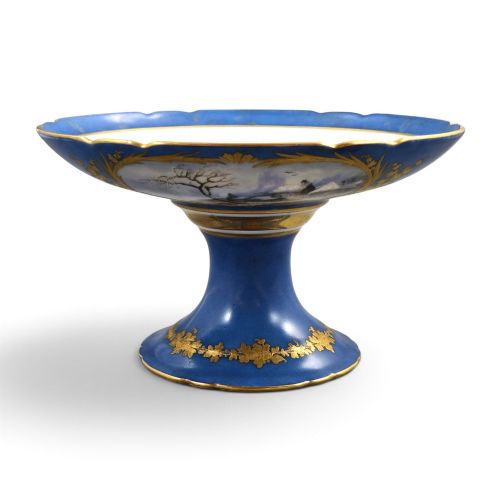
The pieces appearing here span the nineteenth century into the twentieth, taking form in porcelain, enamel, glass, and marble mounted with gilt bronze or ormolu.
Makers and workshops across Britain and continental Europe produced these footed dishes in styles ranging from Regency and French Empire to ornate Victorian Rococo Revival.
Materials and Construction
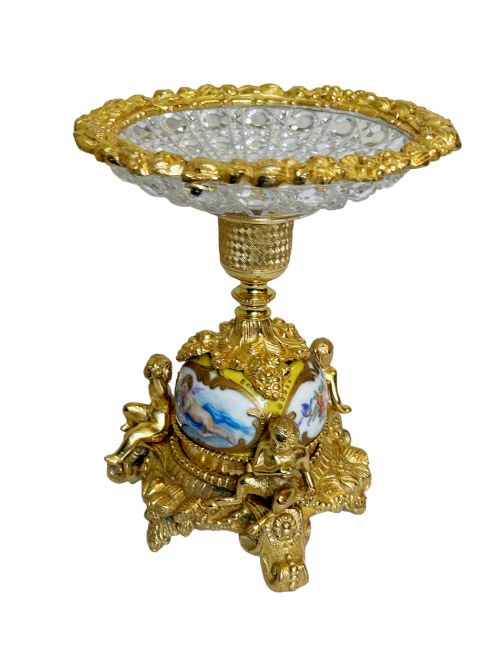
Craftsmen built these vessels by combining cast or chased bronze, ormolu, and gilt bronze with delicate bodies of bone china, hard-paste porcelain, cut crystal, or ruby glass.
Surface ornamentation relied on applied gold leaf, fire gilding, and enamelling techniques such as champlevé and plique-à-jour to catch the light around hand-painted motifs and sculptural cherubs.
Antique Gilt Compote Retail Price Guide 2026
Typical asking prices for gilt compote among the pieces listed under this phrase on Sellingantiques today, from the lower quarter to the upper quarter. They describe what is for sale here now, not the wider market.
Listings feature porcelain, gilt bronze, ormolu, and glass pieces spanning the Regency, Victorian, and Edwardian eras.
Distinguishing Factors of Quality
Superior examples reveal themselves in the crispness of the bronze chasing and the depth of the mercury gilding, where human hands carved every feather and acanthus leaf before plating.
The finer vessels incorporate hardstones like malachite, Blue John, and Sienna marble, contrasting raw mineral weight against the fluid brilliance of porcelain and gilded metal.
Coalport·Spode·C.G. Schierholz and Sohn·Christofle Paris·Royal Worcester
The Antique Gilt Compote Glossary
- Compote
- An elevated bowl or dish used for serving fruit or sweets at table. It shares its function with the tazza and the comport.
- Ormolu
- Finely ground high-carat gold applied to a bronze base using a mercury amalgam. This technique creates a deep, warm lustre characteristic of nineteenth-century French metalwork.
- Champlevé
- An enamel technique where troughs are dug into a metal surface and filled with vitreous paste before firing. It frequently decorates the stems and mounts of nineteenth-century tazzas.
- Tazza
- A shallow bowl mounted on a foot and stem, designed for display. It derives its shape from ancient drinking vessels.
Antique Gilt Compote: Frequently Asked Questions
How were compotes used historically?
Historically, compotes served fruit, sweetmeats, and confections during the dessert course of formal banquets. Their elevated design allowed dishes to be layered on a laden table.
Beyond dining, large examples functioned as permanent centrepieces filled with fresh flowers or left empty to display the artistry of the porcelain or metalwork.
How do I style a compote at home?
A compote adds height and architectural interest to a sideboard, dining table, or mantelpiece. You can display seasonal fruit, glass spheres, or floral arrangements inside the bowl.
Because many pieces feature detailed gilding and painted porcelain, they stand out effectively when placed where natural light can catch the metallic surfaces.
How do I identify the period of a compote?
Dating relies on examining the materials, ceramic bodies, and mounting techniques. Regency pieces often incorporate bronze and sienna marble, while mid-Victorian items lean towards vibrant glass, pate-sur-pate, and elaborate Rococo Revival styling.
Maker marks, factory stamps, and glaze characteristics on the ceramic components provide further clues to the decade of manufacture.