
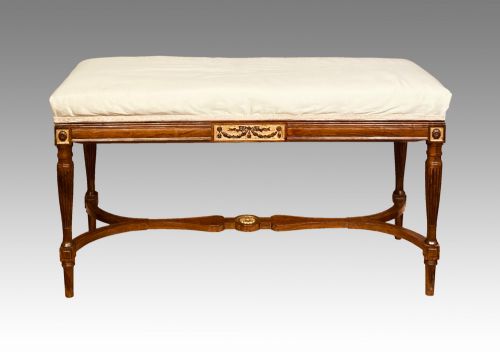


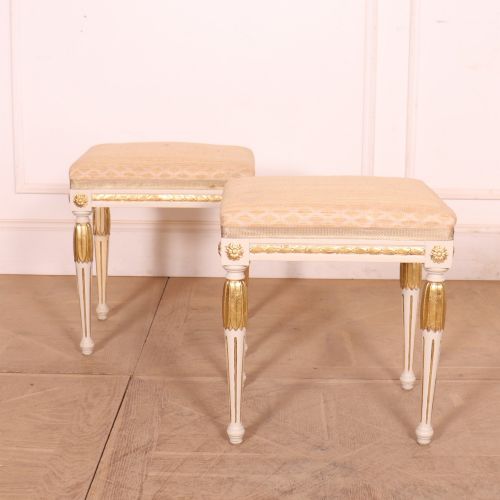


Antique Gilt Bench
An antique gilt bench brings a rich touch of gold and carved timber to a room, offering both a seat and a statement piece.
Antique Gilt Bench
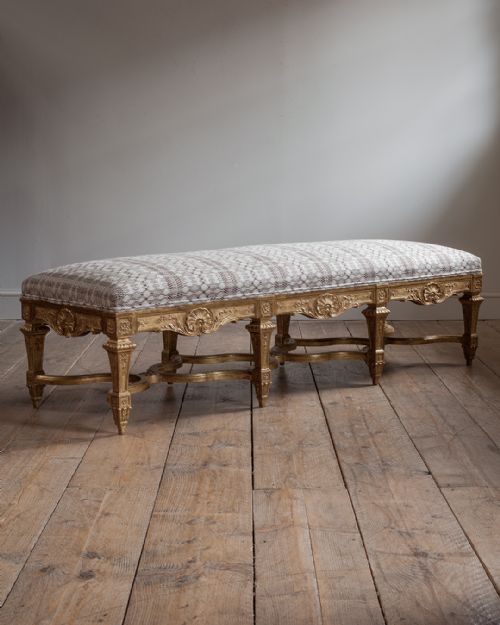
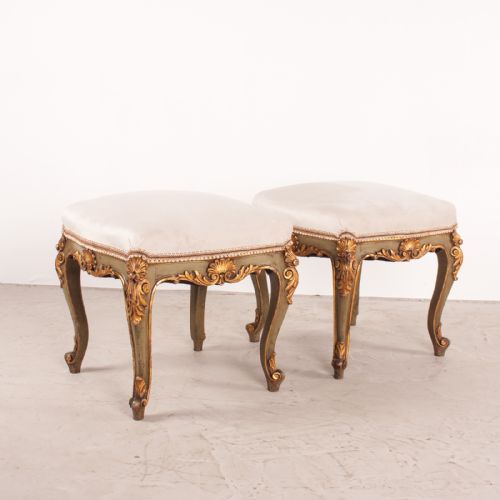
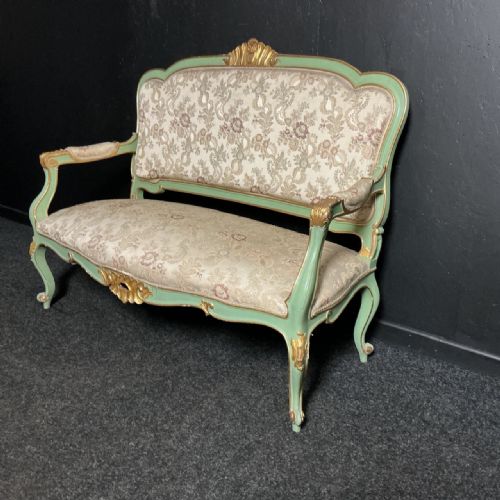
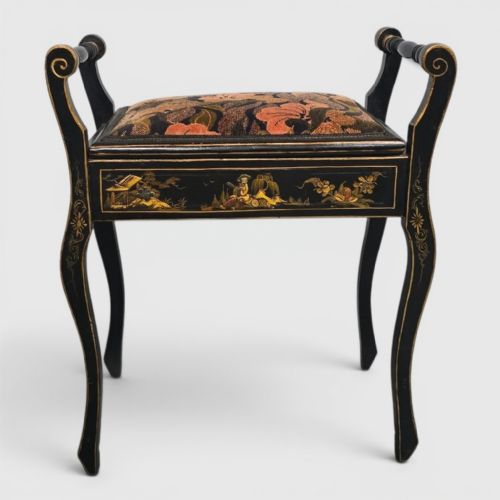
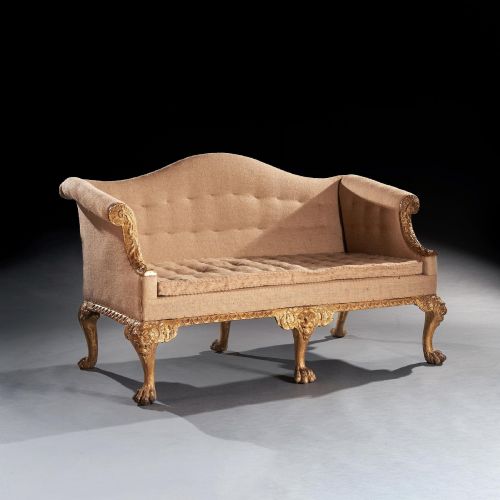
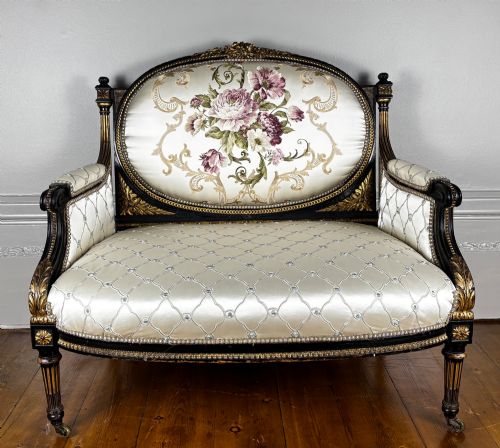
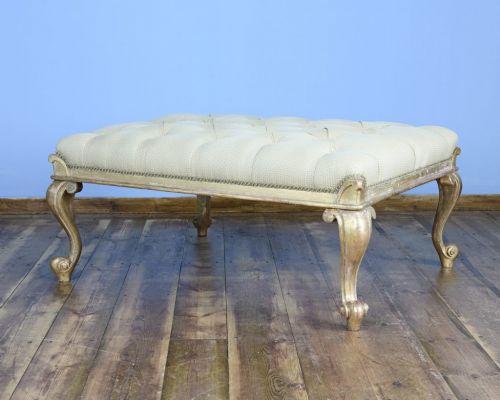
When you search for an antique gilt bench, you encounter various seating forms spanning centuries, from modest footstools to grand country house settees. The selection includes window seats, duet stools, and long French canapés designed for formal rooms.
Nineteenth-century examples dominate the offerings, often drawing inspiration from Louis XV and Louis XVI revivals, alongside Regency and Neoclassical styles. French and Italian workshops produced many of these gilded seats, utilising painted wood or carved giltwood frames.
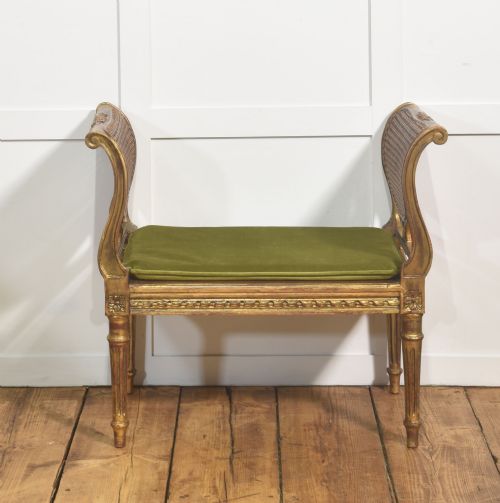
Buyers also find English and Swedish variations, ranging from small cane window stools to large settees resting on carved feet. These pieces serve practical seating needs while displaying traditional decorative woodwork.
Materials and construction methods
Craftsmen built these frames using timber such as wood and rosewood, applying gold leaf, gesso, or paint to achieve a gilded surface. Parcel gilt techniques highlighted specific carved details against ebonised or painted backgrounds.
Upholstery materials included silk, velvet, fabric, and cane work for seats and backrests. Frame construction often featured carved ornamentation, ranging from neoclassical motifs to lion mask hairy paw feet.
Several listings include music stools, proving that pianists once required a touch of giltwood while practising their scales.
Factors determining quality
The precision and depth of the wood carving distinguish finer pieces from simpler decorative items. Crisp lines in the giltwood or gesso indicate careful craftsmanship by the maker.
The integrity of the original surface finish, whether gold leaf or painted gilt, influences the character of the seating. High-grade textiles and well-preserved cane work also elevate the standard of the piece.
Giles Grendey·Charles Nosotti·Miles & Edwards
The Antique Gilt Bench Glossary
- Giltwood
- Timber coated with gold leaf or a gold-coloured substance. This finish provides a bright metallic sheen to carved frames.
- Canapé
- A traditional French sofa or settee. These upholstered seats often feature exposed carved wooden frames in revival styles.
- Curule
- An ancient chair shape featuring X-shaped intersecting legs. This classical form appears in nineteenth-century footstools and benches.
- Parcel gilt
- A decoration method where only specific portions of an object receive gilding. The remaining surface is usually painted or ebonised.
- Bergère
- An enclosed upholstered armchair or sofa style with wooden frames. These seats frequently incorporate cane panels on the sides or back.
Antique Gilt Bench: Frequently Asked Questions
Where should I place an antique gilt bench?
These benches suit the foot of a bed, a hallway, or a drawing room where their gilded frames can catch the light.
Smaller window stools fit well in alcoves, while larger settees anchor a formal seating arrangement.
How do I care for gilded wooden furniture?
Dust the carved giltwood gently with a soft, dry cloth to protect the delicate gold leaf finish from abrasion.
Keep the seating away from direct sunlight and moisture to preserve both the timber frame and the fabric upholstery.
What is the difference between a settee and a canapé?
A settee is a traditional English term for a long upholstered seat accommodating multiple people.
A canapé refers specifically to a French-style decorative sofa with an exposed carved wood frame.
How can I identify a Louis XVI style bench?
Louis XVI style pieces typically display straight, fluted legs and neoclassical geometric motifs.
These designs contrast with the curved lines and asymmetry found in earlier Louis XV style seating.