
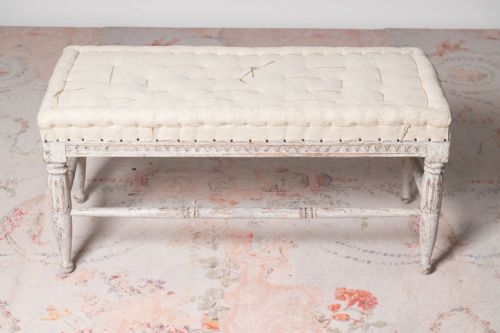


Fluted Leg Padded Bench
These fluted leg padded bench pieces offer seating that brings period character and practical comfort into a room.
Fluted Leg Padded Bench
A fluted leg padded bench combines upholstered seating with carved vertical grooves on the wooden supports. These items appear across periods such as the Victorian era, the nineteenth century, and around nineteen twenty, spanning various regional designs.
You are most likely to meet forms described as stools, hall benches, window seats, and piano stools on this page. They derive from English country house, Gustavian, Louis sixteenth neoclassical, and Adam style traditions.
How they were made
Makers shaped these structures from timbers including walnut, mahogany, teak, and giltwood. Woodworkers turned or carved the legs with vertical fluting to create architectural detail.
The upper sections feature padding covered in fabrics such as linen, velvet, cotton, and woven rattan. Gilt frames and gilded finishes also appear on select seat forms.
Some piano stools hide their musical past entirely until you check the maker.
What varies in quality
The refinement of the woodwork separates finer examples from simpler workshops. Crisp carving on the fluted legs and the choice of solid walnut or mahogany indicate higher ambition in the construction.
The treatment of the frame and the choice of covering material also define the tier of the piece. Giltwood surfaces and tailored upholstery in linen or velvet distinguish more decorative seating forms from utilitarian ones.
Jas Shoolbred
The Fluted Leg Padded Bench Glossary
- Fluting
- Vertical parallel grooves carved into the surface of a furniture leg. This classical architectural detail draws the eye upward along the support.
- Giltwood
- Timber coated with a thin layer of gold leaf or gold paint. It provides a bright, reflective surface characteristic of formal period seating.
- Gustavian
- The Swedish interpretation of French neoclassical design. It relies on lighter proportions, pale painted finishes, and restrained classical carving.
- Window seat
- A long, narrow bench designed to fit within a window recess. These seats often feature upholstered pads and decorative wooden frames.
Fluted Leg Padded Bench: Frequently Asked Questions
Where did people use these benches?
These seats served various rooms depending on their specific form and size. Hall benches and window seats found places in entranceways and reception rooms.
Smaller stools and piano benches functioned in parlours and music rooms for casual sitting or keyboard practice.
How do I identify the period?
Dating relies on the timber choices, carving styles, and overall proportions of the frame. Victorian and nineteenth century pieces often employ heavy mahogany or walnut with dense decoration.
Pieces from nineteen hundred or nineteen twenty tend to reflect lighter neoclassical revivals, including Gustavian and Adam styles.
Are the upholstery fabrics original?
Many pieces on this page feature recovered or updated textiles. Materials like beige linen and various velvets often represent later re-upholstery work.
The underlying wooden frames and seats retain their historical construction while the soft coverings are replaced for modern use.
What is a piano stool?
A piano stool is a specialised seat designed for musicians at a keyboard instrument. These items provide stable, padded surfaces matched to the height needed for playing.
Makers such as Jas Shoolbred produced these practical forms during the early twentieth century.