




Bedroom End Bed Seat
These bedroom end bed seat pieces offer practical seating and classic styling at the foot of a bed, drawn from Victorian and Edwardian traditions.
Bedroom End Bed Seat
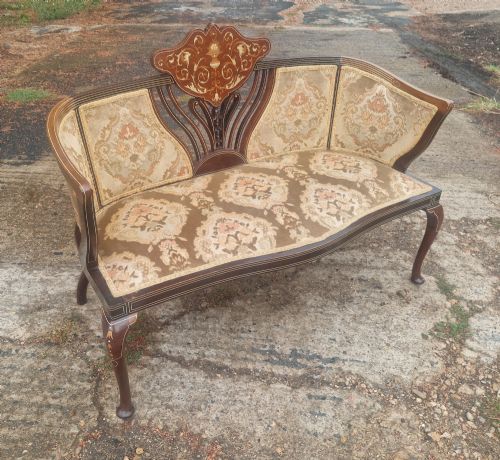
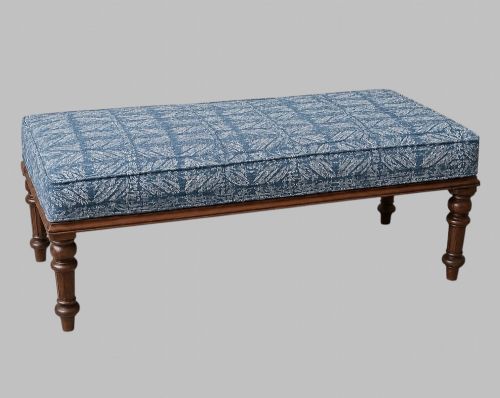
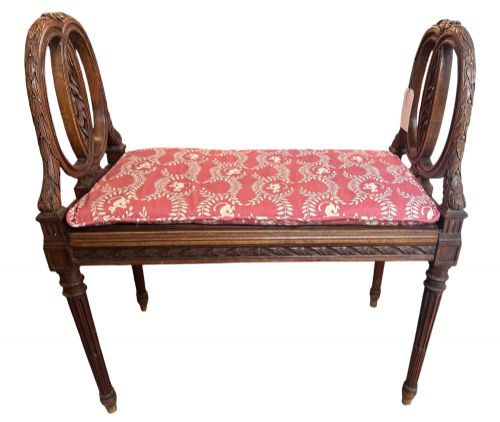
A bedroom end bed seat is designed to sit at the foot of a bed, functioning as a bench, long stool, or small sofa. The selection includes Edwardian and Late Victorian examples alongside French Neoclassical and Regency styles, reflecting diverse aesthetic choices from the nineteenth and twentieth centuries.
Most pieces take the form of window seats, long stools, or end-of-bed sofas, often featuring upholstered surfaces in linen, velvet, or textile. Materials range from mahogany and walnut to beech and birch, frequently displaying period details such as fluted legs, cabriole supports, or inlay.
Makers and workshops across England, France, and Sweden produced these forms for domestic interiors, ranging from simple open-framed benches to inlaid satinwood sofas. Pieces span several decades, including Art Deco piano stools and George III period designs.
Materials and construction
Cabinet makers utilised dense hardwoods such as mahogany, walnut, and satinwood for the frames, ensuring structural integrity for seating. Decorative elements often included bone inlay, carved walnut details, and gilded finishes.
Upholstery techniques varied from deep buttoning to tailored recovers using contemporary fabrics like Robert Kime textiles and beige linen. Frames frequently incorporated traditional joinery alongside turned, fluted, or cabriole legs.
Materials recorded across the current selection include mahogany, walnut, satinwood, birch, beech, brass, and various textiles.
Distinguishing quality in construction and material
Quality rests in the selection of timbers and the precision of the frame construction, where solid mahogany or walnut provides greater durability than softer woods. Finer pieces demonstrate careful attention to carved or inlaid details rather than purely decorative surface treatments.
The standard of upholstery and the choice of covering fabric also separate standard examples from finer ones. Well-executed textiles, professional recovery work, and balanced proportions elevate the character of a piece.
I.M. Gillows of Lancaster
The Bedroom End Bed Seat Glossary
- Cabriole leg
- A furniture leg that curves outward and then tapers inward, mimicking an animal's leg. This form appears frequently on Regency and Victorian seating.
- Satinwood
- A durable hardwood with a lustrous yellowish grain, often utilised for fine inlay and decorative furniture in the Edwardian period.
- Window seat
- A long, narrow bench originally designed for placement in a window recess. These pieces frequently double as bedroom end seating.
- Duet stool
- A wider piano or music stool intended for two players. Examples in this category often feature upholstered tops and long rectangular proportions.
- Deep buttoning
- An upholstery method where stitches pull the fabric inward to create a diamond pattern with creases. This technique adds texture and firmness to the seat.
Bedroom End Bed Seat: Frequently Asked Questions
What is a bedroom end bed seat used for?
These pieces provide a convenient spot for sitting while dressing or placing cushions and throws at night. They bridge the gap between practical furniture and decorative bedroom styling.
Historically, long stools and window seats were adapted for various rooms, but their length makes them well-suited for placement against the footboard of a bed.
How do I identify an Edwardian bed seat?
Edwardian pieces often feature lighter woods like satinwood, delicate inlay work, and refined proportions. They reflect a shift away from heavier Victorian styles toward brighter domestic interiors.
Many incorporate classic Edwardian sofa or chair-back designs adapted specifically for placement at the end of a bed.
Can I use a window seat at the end of a bed?
Window seats share similar proportions to bedroom benches and fit neatly against the foot of most standard bed frames. Their open frames or low profiles ensure they do not overwhelm the surrounding space.
Styles ranging from French carved walnut to simple painted frames integrate easily into modern or traditional bedroom layouts.
What materials were commonly used for these seats?
Frames are constructed predominantly from hardwoods such as mahogany, walnut, beech, and birch. These materials provided the necessary strength for daily seating.
Upholstery materials include traditional textiles, velvet, linen, and fabric coverings by makers such as Robert Kime, often paired with brass or bone details.