

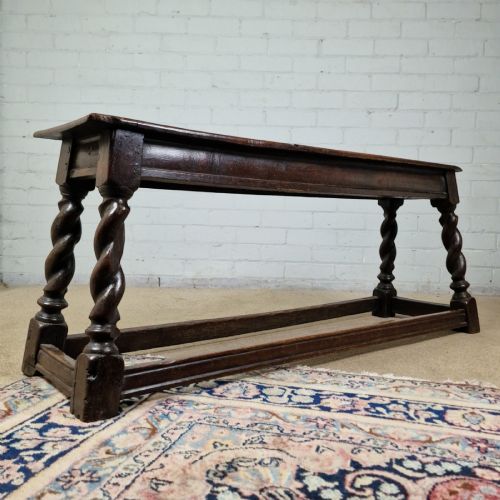
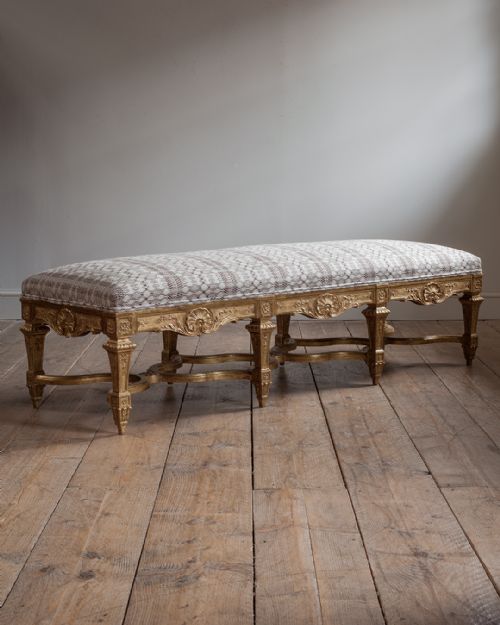
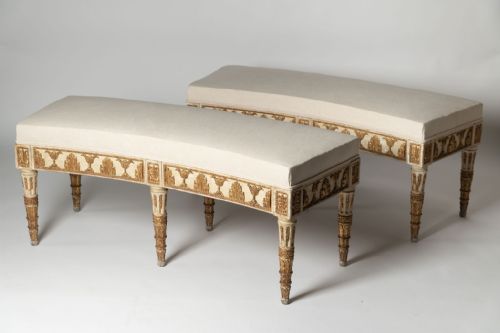


Long Bed End Bench
These long bed end bench pieces offer generous proportions and upholstered comfort at the foot of a bed or beneath a window.
Long Bed End Bench
A long bed end bench takes the form of an elongated stool or window seat, designed to sit comfortably at the foot of a bed or along a hallway. These pieces appear frequently in nineteenth century iterations, alongside examples from the eighteenth and early twentieth centuries.
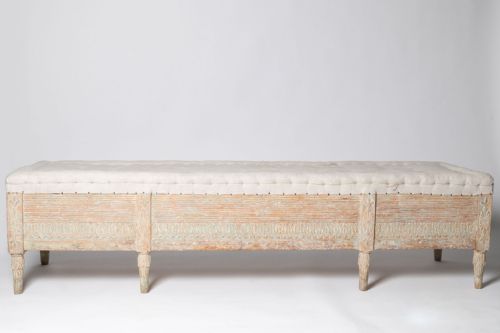
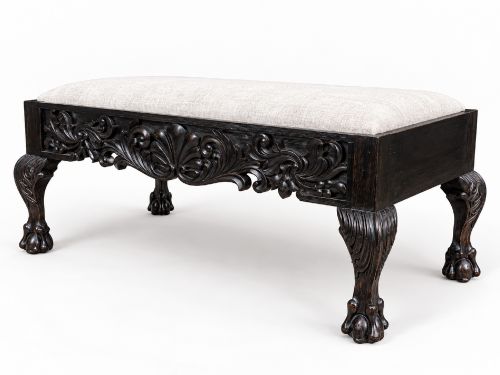
The selection ranges from substantial mahogany centre stools to Swedish birch bedroom seats and carved Italian or French designs. Makers utilised various woods such as walnut, oak, and calamander, often mounting the frames on distinct legs like Georgian styles or ball and claw details.
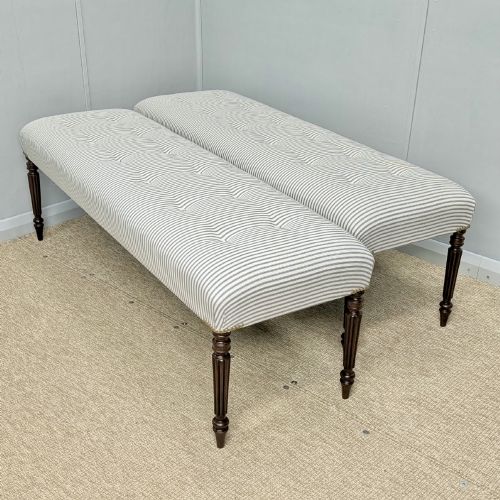
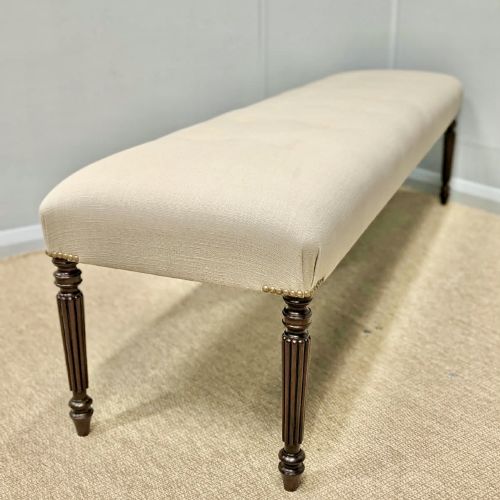
Upholstery defines many of these forms, featuring buttoned ticking, beige linen, navy Liberty William Morris velvet, and standard fabric coverings. Forms span from simple long stools to grander three seater upholstered benches and gilded window seats.
How they were made
Carpenters constructed the structural frames from hardwoods like mahogany, walnut, oak, and birch, employing traditional joinery to support the length of the seat. Carved decoration appears on select frames, utilising giltwood, painted finishes, or intricate woodwork.
Upholstery techniques involved securing fabrics such as linen, velvet, and ticking over padded foundations, occasionally incorporating buttoned detailing across the seating surface.
Long Bed End Bench Retail Price Guide 2026
Typical asking prices for long bed end bench among the pieces listed under this phrase on Sellingantiques today, from the lower quarter to the upper quarter. They describe what is for sale here now, not the wider market.
Some nineteenth century frames hide intricate hand-carved details beneath layers of historic fabric.
What varies in quality
The sophistication of the woodwork sets individual pieces apart, ranging from plain painted surfaces to intricately carved giltwood and calamander frames. Timber selection and the crispness of carved details, such as ball and claw feet or fluted legs, indicate the standard of craftsmanship.
The integration of the upholstery influences the overall finish, with precise buttoning and the use of quality textiles like Liberty velvet distinguishing finer examples.
The Long Bed End Bench Glossary
- Centre stool
- A large freestanding stool designed to sit in the middle of a room or at the foot of a bed rather than against a wall.
- Window seat
- An upholstered bench tailored in length to fit beneath a window recess, often featuring arm supports or low backs.
- Giltwood
- Wood that has been coated with a thin layer of gold leaf or gilt paint for decorative enrichment.
- Calamander
- A heavy, durable hardwood with distinct dark brown and fawn grain patterns, used for high-end furniture.
Long Bed End Bench: Frequently Asked Questions
Where should I place a long bed end bench?
These pieces fit naturally at the foot of a bed to hold cushions or clothing. They also suit hallways and wide corridors as seating.
Window recesses provide another traditional placement, offering a comfortable spot with a view.
How do I identify a nineteenth century piece?
Nineteenth century examples often display characteristic timber choices like mahogany and walnut alongside period upholstery styles such as buttoned ticking. Construction methods and distinct revival aesthetics point directly to this era.
Examining the underside and framing reveals the age of the woodwork and traditional joinery techniques used by makers.
What fabrics are used on these benches?
Upholstery ranges from plain beige linen and standard fabric to patterned textiles like Liberty William Morris velvet. Buttoned ticking also appears frequently on nineteenth century iterations.
Textiles are chosen to complement the underlying wood frame, whether painted, gilded, or polished mahogany.