




Antique Gilded Ottoman
These antique gilded ottoman pieces and related stools bring French and Regency splendour to a room through carved timber and rich upholstery.
Antique Gilded Ottoman
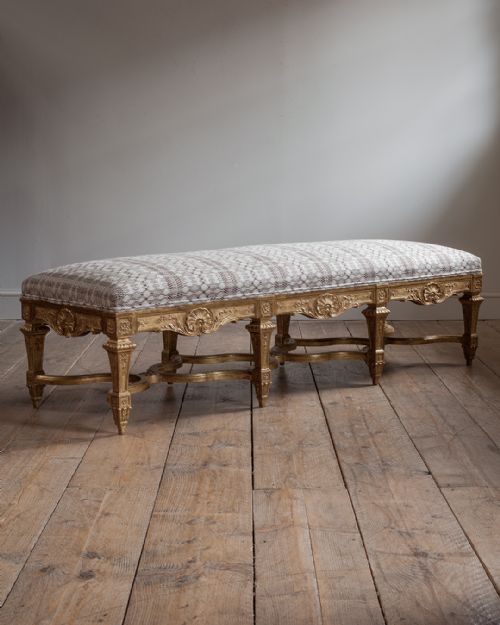
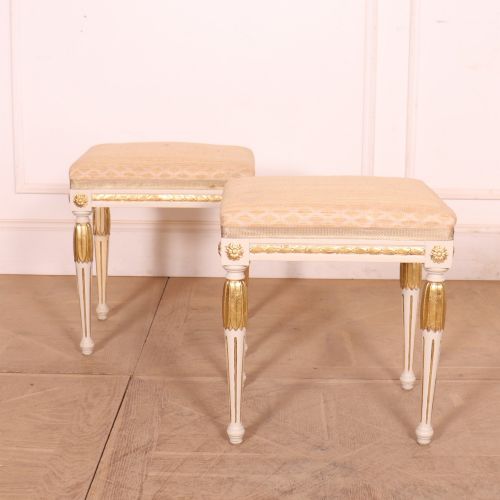
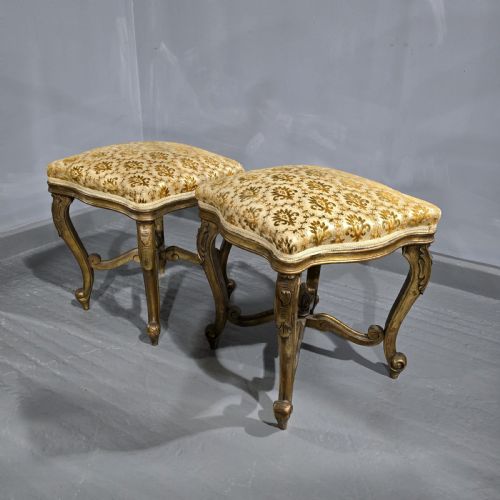
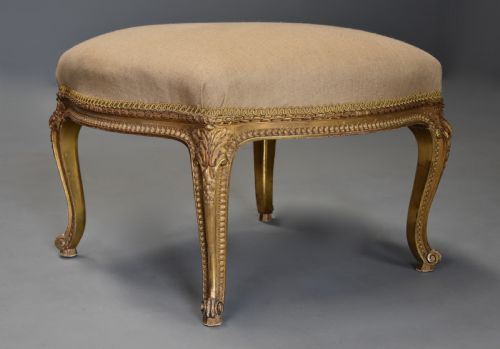
When you search for an antique gilded ottoman, you encounter low seating designed for comfort and display, most frequently taking the form of footstools, benches, and window seats from the nineteenth century.
The pieces on this page span the Regency period through the Edwardian era, showing heavy influence from French Neoclassical, Rococo Revival, and Louis styles.
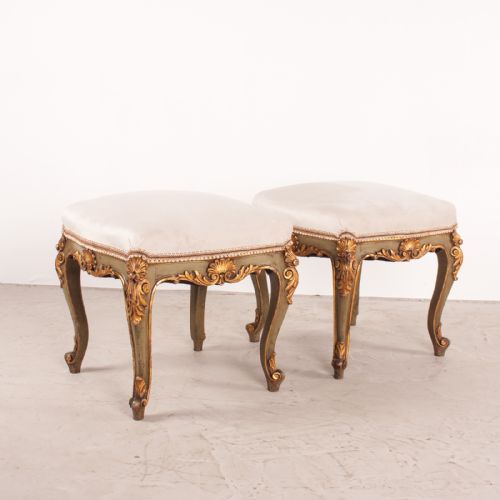
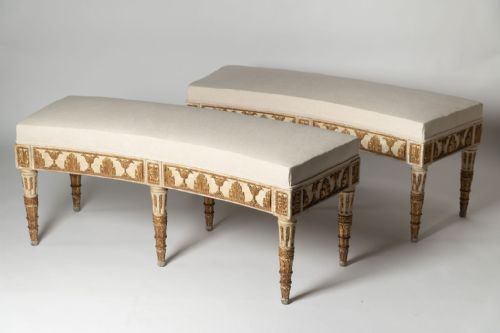
You will regularly meet pairs of carved giltwood stools alongside single window seats and larger chaise longues, reflecting domestic seating fashions across Britain, France, Italy, and Sweden.
How they were made
The frames rely on carved wood, timber, and painted wood, which artisans then treated with gold leaf and gesso to achieve a reflective surface.
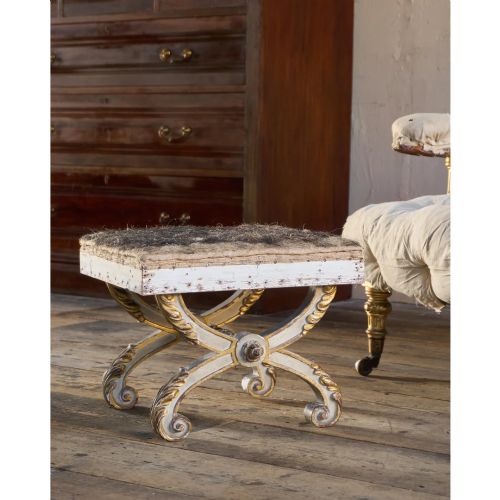
Upholstery relies on traditional textiles and velvet, often fitted over X-frame curule supports or four-legged carved bases.
One rocking gilt gout stool sits quietly among the seating, offering nineteenth-century relief for swollen ankles.
What varies in quality
Depth and crispness of hand-carving separate standard turned timber from pieces shaped with elaborate Rococo scrolls or Neoclassical motifs.
The application of gold leaf and the preservation of original giltwood or painted finishes dictate the visual impact of each frame over time.
Miles & Edwards·Mathew Gregson·Loidrault Freres Paris·A.M.E. Fournier
The Antique Gilded Ottoman Glossary
- Giltwood
- Wood covered with a thin layer of gold leaf. This surface treatment defines the bright metallic finish seen on many nineteenth-century frames.
- Curule stool
- A form of X-framed seating derived from ancient Roman magistrate chairs. It provides a sturdy and balanced structural base.
- Duchesse brisee
- A two or three-piece chaise longue arrangement split into a chair and footstool. It allows the user to recline fully with leg support.
- Gesso
- A plaster-like mixture applied to wood surfaces to prepare them for gilding. It holds sharp carved details beneath the gold leaf.
Antique Gilded Ottoman: Frequently Asked Questions
How were antique gilded ottomans used?
These pieces served primarily as footstools or window seats in formal drawing rooms and parlours. They provided supplementary seating for guests or a surface to rest feet while seated on larger armchairs.
Their decorative gilt frames also functioned as visual anchors in reception rooms, designed to catch candlelight and daylight alike.
How do I live with an antique stool?
Place them at the foot of a bed, beneath a window, or beside a fireplace as an occasional seat. Their modest scale allows them to move easily around a room as needed.
Protect the delicate giltwood frames from knocks, and keep textiles away from direct sunlight to preserve the original fabrics and velvet.
How can I tell French styles apart?
Louis-style pieces often feature scrolling foliage, asymmetry, and elaborate carved cartouches typical of Rococo Revival work. Neoclassical examples display straighter lines, symmetry, and classical motifs like fluting.
Italian and Swedish variants introduce local painted treatments and distinct carved proportions while sharing these broader European revivals.
What is a curule frame?
A curule frame uses crossing curved legs that form an X shape when viewed from the side. This ancient structural form provides inherent strength without needing heavy corner blocks.
Makers adopted this classical silhouette during the Regency and nineteenth century for both stools and formal window seats.