

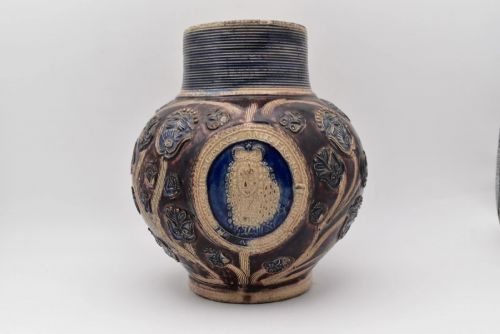


Antique German Pitcher
An antique german pitcher brings heavy salt-glazed stoneware and polished pewter into the room, grounding your table with centuries of Central European craft.
Antique German Pitcher
When you search for an antique german pitcher, you encounter a remarkable span of domestic and decorative vessels originating from German kilns and metal workshops. These pieces range from utilitarian drinking vessels to elaborate display items created across several distinct centuries.
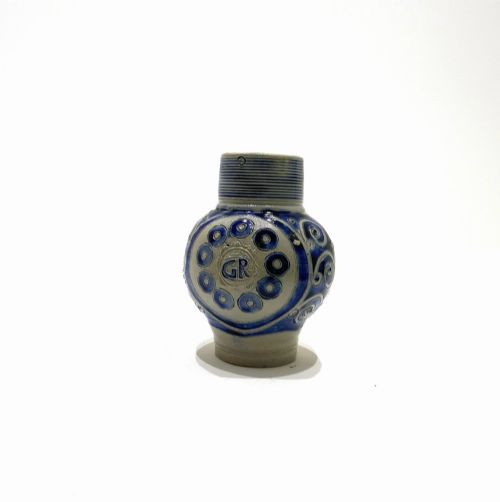
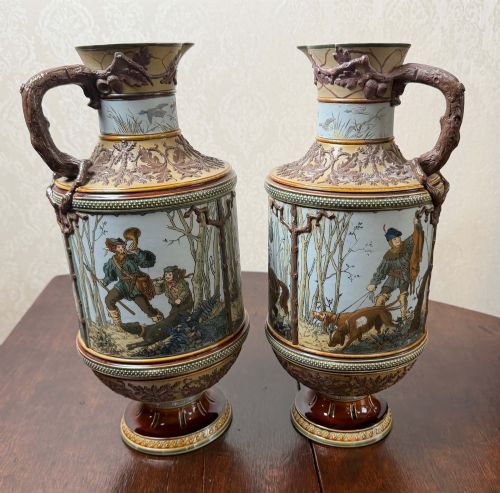
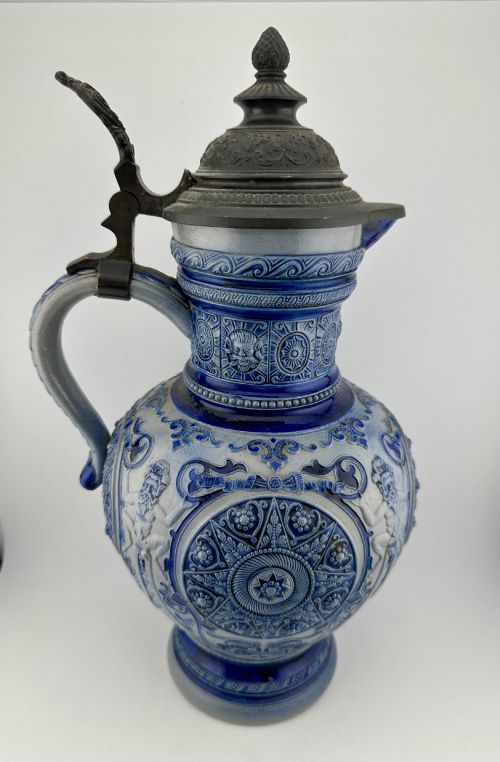
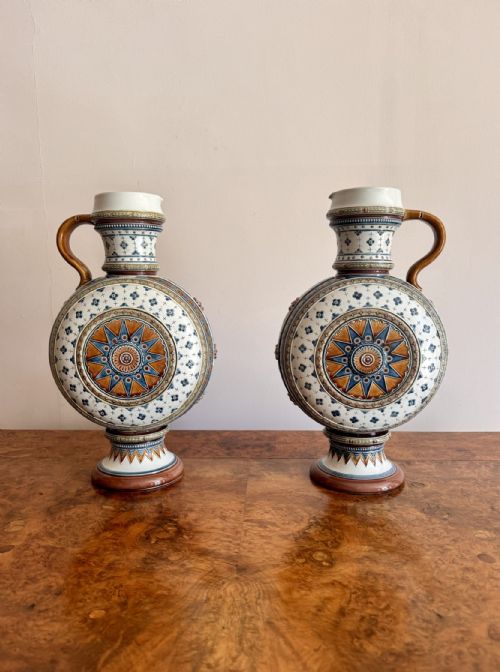
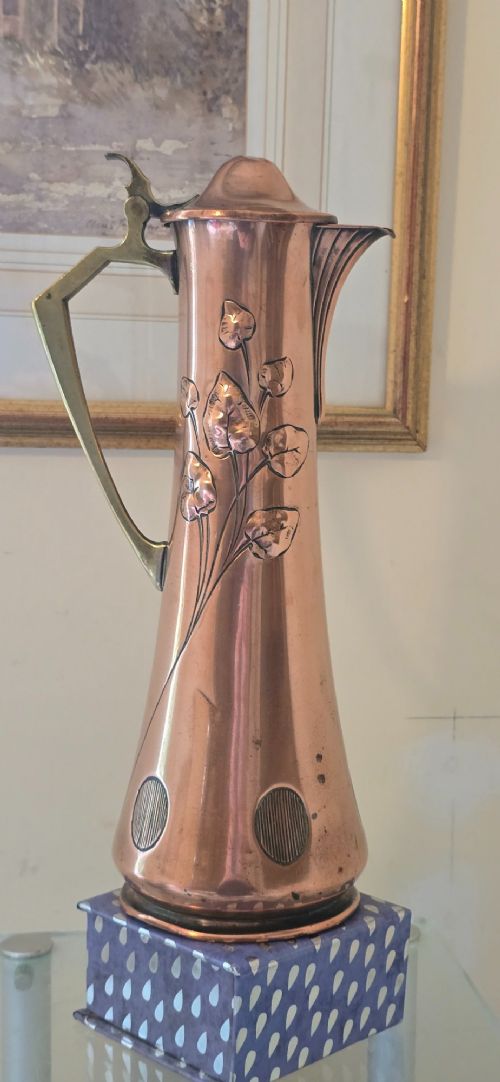
The most common examples on this page are sturdy Westerwald salt-glazed stoneware jugs decorated with cobalt oxide blue, alongside sinuous Art Nouveau metalwork pieces from the turn of the twentieth century. You will also find porcelain milk jugs and grand pewter flagons.
Origins stretch from regional production centres like Westerwald and Siegburg to renowned factories such as Meissen and Villeroy & Boch. Each object reflects the prevailing aesthetic of its era, moving from historicist revivals to fluid botanical forms.
Materials and Techniques
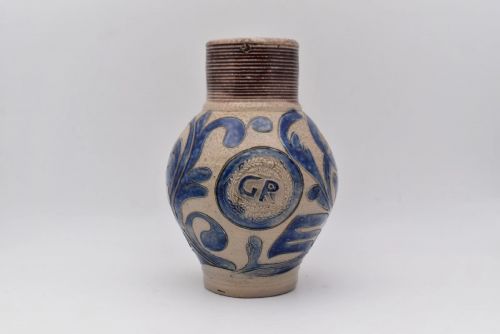
Stoneware vessels were thrown on a wheel and fired at high temperatures before salt was thrown into the kiln to produce a characteristic pitted, orange-peel glaze. Cobalt oxide pigment was then applied by hand to create deep blue motifs against a grey background before firing.
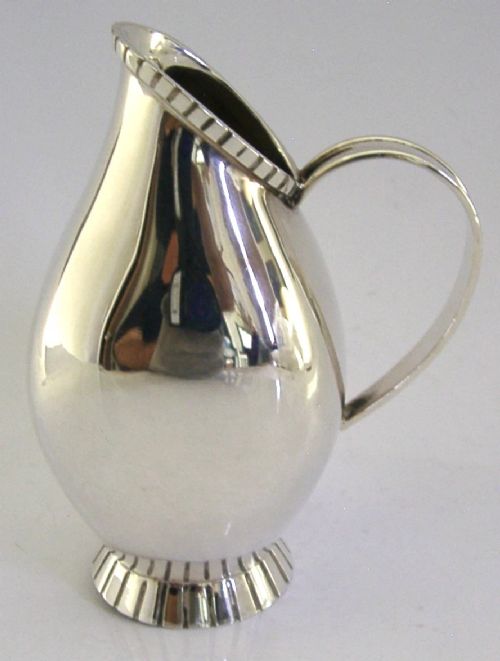
Metal vessels utilise cast pewter, copper, and brass, often finished with a silvered coating to catch the light. Art Nouveau metalwork frequently incorporates high-relief floral designs, figural handles, and applied glass inserts.
Porcelain items rely on refined clay bodies shaped into ribbed forms, then meticulously handpainted with detailed birds, insects, and botanical subjects before undergoing high-heat glazing.
Antique German Pitcher Retail Price Guide 2026
Typical asking prices for german pitcher among the pieces listed under this phrase on Sellingantiques today, from the lower quarter to the upper quarter. They describe what is for sale here now, not the wider market.
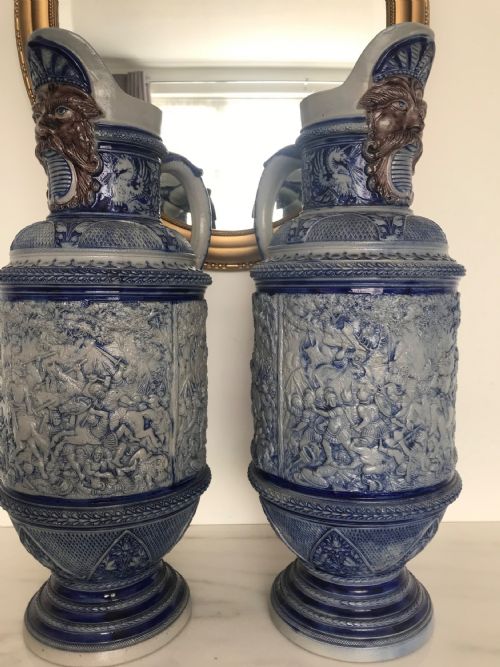
Several German stoneware jugs feature cheerful bearded mask reliefs originally intended to ward off evil spirits while passing around the ale.
Distinctions in Quality
Quality rests upon the crispness of the modelling and the depth of the hand-applied decoration, whether one examines the sharp relief of a Westerwald battle scene or the fluid curves of a metal ewer. Finer examples display confident brushwork and precise detailing rather than flat, mechanical repetition.
The integrity of the materials also dictates standing, visible in the heavy gauge of the pewter, the clarity of the salt glaze, and the preservation of original metal patination. Retaining original fitted lids, particularly cast pewter mounts on stoneware jugs, elevates a piece considerably.
Artistry in design separates standard domestic items from superior studio and factory output. Distinctive figural elements, such as maiden handles or royal ciphers, demonstrate the higher ambition of makers like WMF or Simon Peter Gerz.
Simon Peter Gerz·Villeroy & Boch·Meissen·WMF
The Antique German Pitcher Glossary
- Salt-Glazed Stoneware
- A pottery type finished by throwing common salt into the kiln during high-temperature firing, creating a durable, glossy surface with a fine texture resembling orange peel.
- Cobalt Oxide
- A metallic compound used to paint distinctive blue designs onto stoneware before glazing and firing. It remains stable at extreme kiln temperatures.
- Pewter
- A malleable metal alloy consisting primarily of tin, used historically for flagons, ewers, and decorative mounts. It develops a soft grey patina over time.
- Historismus
- A nineteenth-century German design movement focused on the revival and reinterpretation of historical styles, particularly Renaissance and Baroque forms.
- Bartmann
- A traditional stoneware jug featuring a bearded mask moulded on the neck, also known historically in England as a Bellarmine.
Antique German Pitcher: Frequently Asked Questions
What is a Westerwald jug?
A Westerwald jug is a salt-glazed stoneware vessel produced in the Westerwald region of Germany, typically featuring grey bodies decorated with cobalt blue patterns.
These pieces often display stamped medallions, heraldic motifs, or historical scenes applied by skilled potters using carved wooden moulds.
How were these pitchers used historically?
Many of these vessels served practical roles at the dining table for pouring beer, wine, milk, or water during meals and gatherings.
Larger flagons and ewers were designed for communal drinking or ceremonial display, while smaller creamers and milk jugs suited individual table service.
How do I date a salt-glazed stoneware pitcher?
Dating relies upon examining the shape of the body, the style of the handle, and the specific motifs or ciphers impressed into the clay.
Early pieces often feature rounded globular forms and distinct mask stamps, whereas nineteenth-century examples reflect revivalist tastes and industrial moulding techniques.
How should I clean antique pewter?
Antique pewter requires minimal intervention to preserve the natural historic patina that accumulates across centuries of handling and exposure.
Dust gently with a soft cloth and avoid abrasive polishes or harsh chemical cleaners that strip the surface of its authentic character.